


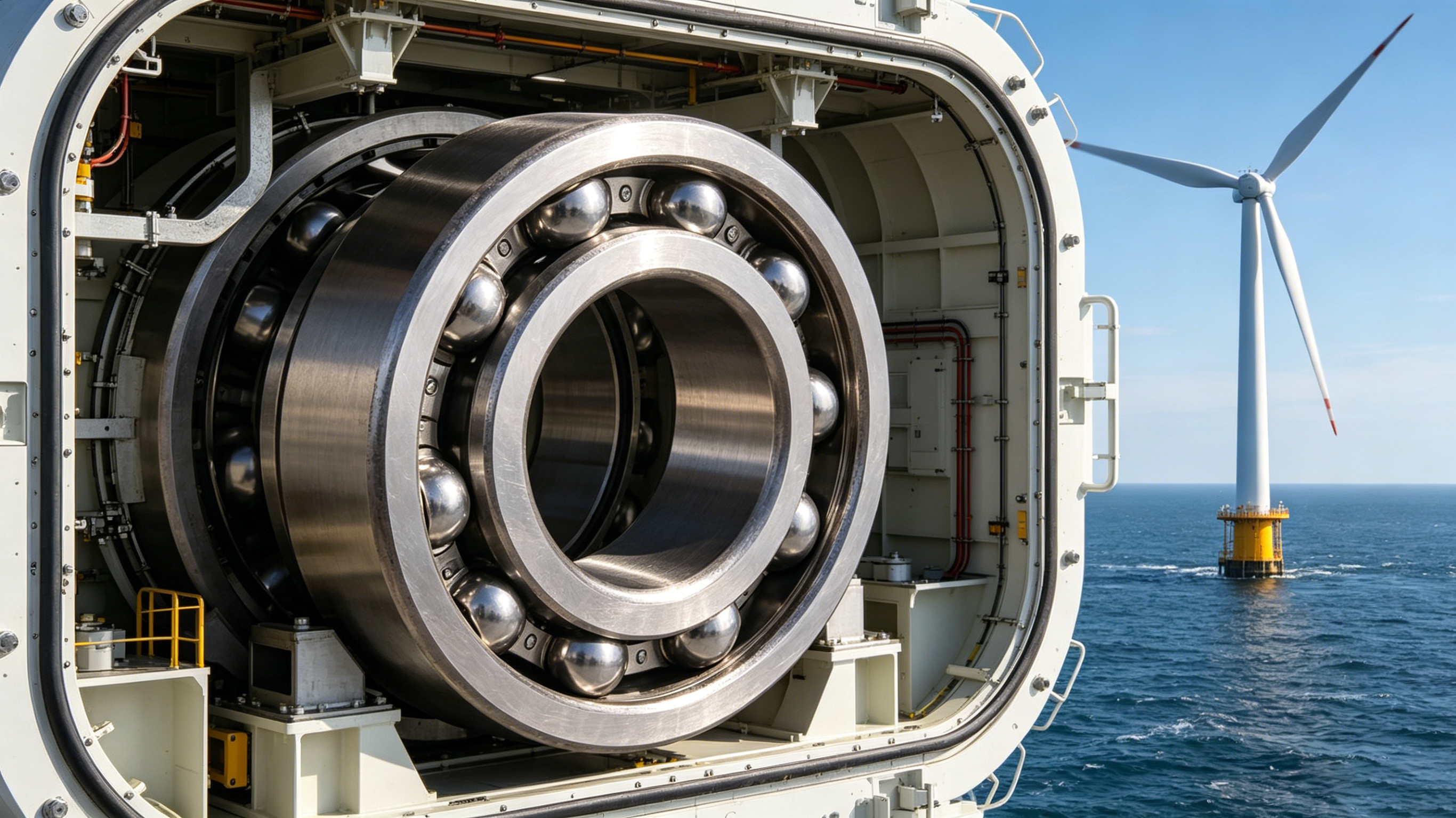
The global transition toward renewable energy has positioned offshore wind farms at the forefront of sustainable power generation. However, operating in harsh marine environments presents unprecedented engineering challenges. At the heart of these colossal structures lie specialized bearings—critical components that dictate the operational lifespan and maintenance frequency of offshore turbines. For wind farm operators and maintenance teams, understanding the intricacies of these components is essential for minimizing downtime and maximizing return on investment.
The Unique Demands of Offshore Environments
Unlike their onshore counterparts, offshore wind turbines face a brutal combination of high winds, turbulent wave loads, and corrosive saltwater exposure. Research indicates that complex wave loads induce alternating forces that cause significant load fluctuations and fatigue damage in main bearings. For instance, under extreme coherent gust conditions caused by sudden wind direction changes, the lateral load on a main bearing can increase dramatically compared to steady winds, accelerating fatigue damage accumulation. Furthermore, wave loads indirectly amplify this damage by inducing tower-top sway, making the wind-wave coupling effect a critical factor in bearing longevity.
To withstand these conditions for a required lifespan of 20 to 25 years without easy access for repairs, bearings must be engineered with exceptional precision.
Table 1: Key Environmental Challenges vs. Bearing Engineering Solutions
| Environmental Challenge | Impact on Bearing Performance | Specialized Engineering Solution |
|---|---|---|
| Saltwater & Humidity | Accelerated corrosion and surface degradation | Advanced anti-corrosion coatings and superior sealing systems |
| Complex Wind-Wave Loads | High fluctuating loads and accelerated fatigue | Optimized internal geometry and premium heat-treated steel |
| Variable Generator Speeds | Risk of electrical arcing (electrical erosion) | Integrated grounding devices or ceramic-coated rolling elements |
| Remote Location | Extremely high logistics costs for replacement | Extended-life lubrication and condition-monitoring integration |
Combating Electrical Erosion
One of the most insidious threats to modern wind turbine drivetrains is electrical erosion. As turbines utilize variable-speed generators and power electronics, stray currents can pass through the bearings, causing microscopic melting and fluting on the raceways. This significantly degrades performance and leads to premature failure.
Addressing this requires a systemic approach. Modern specialized bearings incorporate optimized grounding rings or brushes to safely divert shaft currents away from the bearing. Additionally, applying insulating coatings to the outer or inner rings, or utilizing hybrid bearings with silicon nitride ceramic rolling elements, effectively blocks current flow. Implementing conductive greases and installing dv/dt filters at the inverter output further mitigates this risk, ensuring the mechanical integrity of the bearing remains uncompromised.
The Shift Toward Predictive Maintenance
The era of reactive maintenance in offshore wind is ending. Replacing a failed main bearing on an offshore turbine requires heavy-lift vessels, favorable weather windows, and costs that can easily reach hundreds of thousands of dollars. Therefore, specialized bearings are increasingly being designed with integrated sensors. These smart bearings continuously monitor vital parameters such as temperature, vibration, and rotational speed. By feeding this data into advanced analytics platforms, operators can detect early signs of wear, lubrication breakdown, or misalignment, allowing them to schedule interventions during low-wind periods.
Table 2: Traditional vs. Smart Bearing Maintenance Strategies
| Feature | Traditional Maintenance Approach | Smart Bearing / Predictive Approach |
|---|---|---|
| Failure Detection | Post-failure analysis or scheduled teardowns | Real-time monitoring of vibration and temperature |
| Intervention Timing | Reactive (after failure) or preventive (fixed intervals) | Predictive (based on actual component health) |
| Downtime Duration | Unplanned, extended delays due to weather/logistics | Planned, optimized during low-energy production windows |
| Lifecycle Cost | High (emergency vessel mobilization + parts) | Lower (proactive part ordering + efficient scheduling) |
Material Science and Manufacturing Excellence
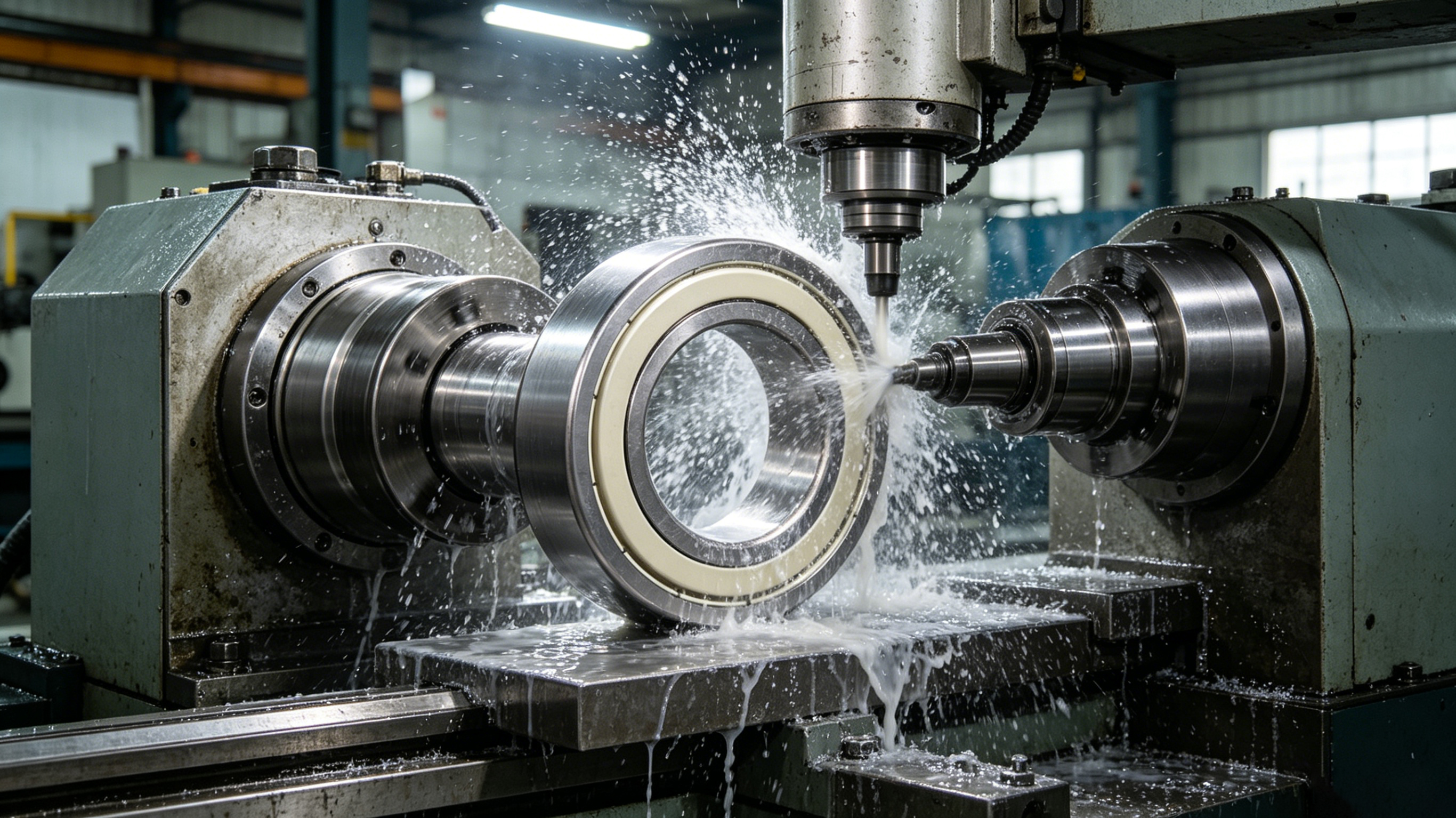
Achieving a 25-year lifespan demands mastery over metallurgy and manufacturing. The forging process must strictly control temperatures to prevent coarse grain structures, while quenching and tempering processes ensure optimal core toughness. Surface hardening techniques, such as medium-frequency induction hardening or case carburizing, provide the necessary resistance to contact fatigue. Moreover, achieving ultra-low surface roughness on raceways is not just about reducing friction; it is critical for maintaining an adequate lubricant film thickness at the low rotational speeds typical of wind turbine gearboxes. A robust oil film prevents metal-to-metal contact, which is especially vital in planetary gear support bearings where load zones can be narrow and sliding risks are high.
Strategic Recommendations for Operators
For wind farm owners and asset managers, selecting the right bearing partner is as important as the technology itself. When planning for offshore turbine longevity, consider the following strategic actions:
- Prioritize Anti-Corrosion Design: Ensure all new procurement specifications mandate robust sealing and coating technologies tailored for marine environments.
- Mandate Electrical Protection: Require comprehensive solutions for shaft current mitigation, including grounded bearings or insulated variants, as standard in modern fleets.
- Invest in Condition Monitoring: Retrofit existing assets with vibration and temperature sensors if not originally equipped, and integrate smart bearings in all future upgrades.
- Demand Transparency and Traceability: Partner with manufacturers who provide full material traceability, rigorous testing documentation, and proven field experience in offshore applications. Trustworthy suppliers will offer transparent更正 policies and clear ethical guidelines regarding product performance claims.
Table 3: Checklist for Offshore Bearing Procurement
| Evaluation Criteria | What to Look For | Why It Matters |
|---|---|---|
| Field Experience | Proven track record in offshore installations | Validates real-world durability against theoretical models |
| Testing Capabilities | In-house large-bearing test rigs and dynamic simulation | Ensures designs can handle complex wind-wave coupling loads |
| Global Service Network | Local technical support and rapid spare parts logistics | Minimizes costly vessel standby times during failures |
| Certification & Standards | Compliance with ISO 281, DNV-GL, or equivalent standards | Guarantees baseline safety, quality, and fatigue calculations |
Conclusion
The longevity of offshore wind turbines is inextricably linked to the performance of their bearings. As turbines grow larger—with rotor diameters exceeding 230 meters and hub heights surpassing 210 meters—the tolerances for error shrink. Specialized bearings, engineered to combat electrical erosion, resist marine corrosion, and enable predictive maintenance, are no longer optional upgrades; they are fundamental requirements for the economic viability of offshore wind. By prioritizing high-quality, intelligently monitored bearing solutions, the industry can ensure that these magnificent structures continue to harness the ocean’s power reliably for decades to come.
Frequently Asked Questions (FAQ)
Q1: What is the expected lifespan of specialized offshore wind turbine bearings?
A: They are typically engineered to last 20 to 25 years, matching the full lifecycle of the turbine.
A: They are typically engineered to last 20 to 25 years, matching the full lifecycle of the turbine.
Q2: How do modern bearings prevent electrical erosion?
A: Through integrated grounding rings, insulating coatings on raceways, or hybrid ceramic rolling elements that safely block stray currents.
A: Through integrated grounding rings, insulating coatings on raceways, or hybrid ceramic rolling elements that safely block stray currents.
Q3: Why is predictive maintenance preferred over traditional repair methods?
A: It uses real-time sensor data to detect early wear, allowing operators to schedule cost-effective repairs during low-wind windows rather than facing expensive emergency vessel mobilizations.
A: It uses real-time sensor data to detect early wear, allowing operators to schedule cost-effective repairs during low-wind windows rather than facing expensive emergency vessel mobilizations.
Q4: What makes marine environments particularly challenging for bearings?
A: The combination of corrosive saltwater exposure, high humidity, and complex fluctuating wind-wave loads accelerates fatigue and surface degradation.
A: The combination of corrosive saltwater exposure, high humidity, and complex fluctuating wind-wave loads accelerates fatigue and surface degradation.
Q5: Can existing turbines be upgraded with smart bearing technology?
A: Yes, operators can retrofit existing assets with vibration and temperature sensors to enable condition-based monitoring without replacing the entire drivetrain.
Post time: Jun-12-2026