


The global transition toward renewable energy is being driven by an unprecedented scale of engineering. Today’s offshore wind turbines are marvels of modern technology, with rotor diameters exceeding 250 meters and single-unit capacities reaching up to 16 MW and beyond. Yet, the true unsung heroes of these colossal structures are not the massive blades or towering masts, but the highly specialized bearings hidden within the nacelle. As the wind energy sector pushes the boundaries of performance, the demand for advanced bearing solutions has become a critical factor in ensuring the reliability, efficiency, and longevity of the world’s largest wind turbines.
The Critical Role of Bearings in Wind Energy
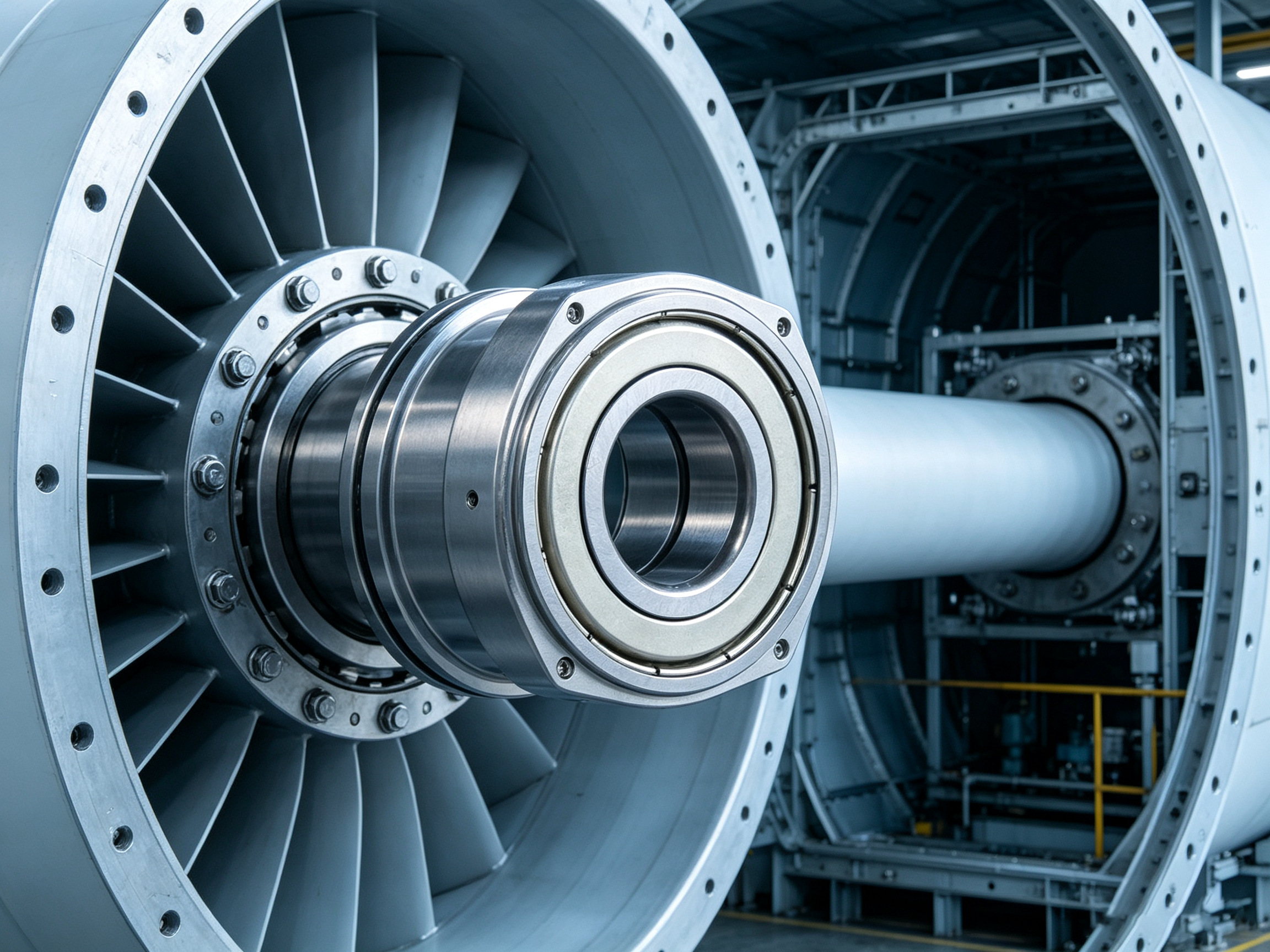
Wind turbine bearings are precision mechanical components designed to facilitate rotation and support immense loads within critical turbine subsystems. Unlike standard industrial applications, wind bearings must withstand continuously changing thrust and radial loads, extreme temperature fluctuations, and the corrosive effects of marine environments.
The main shaft bearing is arguably the most vital component. It supports the entire weight of the rotor and the dynamic forces generated by the wind. As turbines have grown larger, the main shaft bearings have scaled up accordingly, with some now reaching diameters of up to 4 meters (13 feet). Additionally, yaw and pitch slewing ring bearings are essential for optimizing energy capture. Yaw bearings allow the nacelle to rotate horizontally to face the prevailing winds, while pitch bearings adjust the angle of individual blades to maximize efficiency and provide storm protection.
Engineering Challenges in Mega-Turbine Bearings
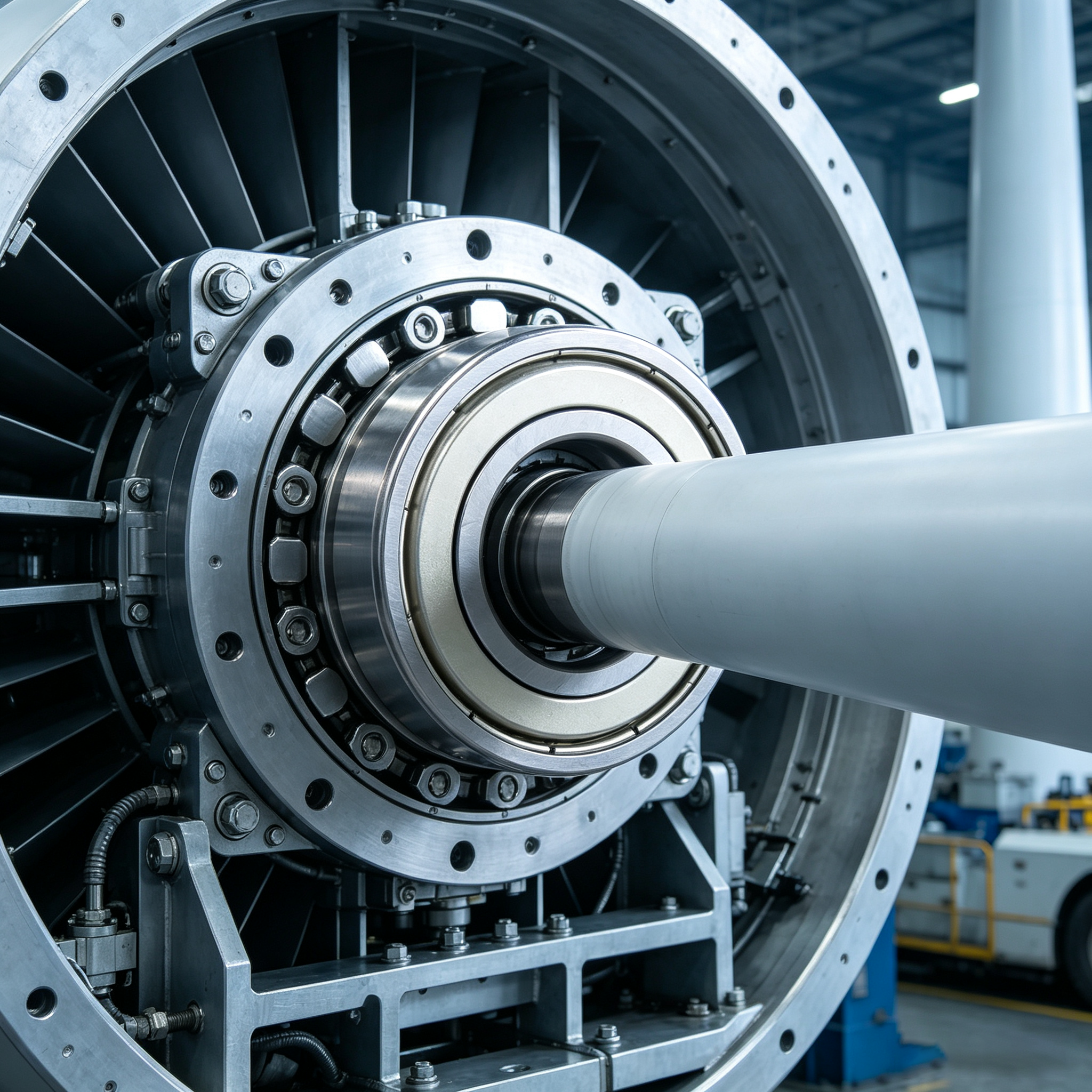
Designing bearings for mega-turbines presents significant engineering challenges. The industry is moving away from simply scaling up traditional designs, as field performance has shown that larger turbines require fundamentally different approaches to handle increased stresses.
One major innovation is the shift toward using two ultra-large bearings separated along the main shaft to effectively share the load, rather than relying on a single support point. This design improves operational efficiency and supports the turbine for its entire 25-year service life. Furthermore, material science plays a pivotal role. Manufacturers are developing custom steel alloys, such as TMS-25, and utilizing recycled steel to ensure components can withstand extreme operational demands while maintaining sustainability. Advanced sealing technologies, including multi-stage labyrinth seals, are also critical to preventing saltwater and abrasive particles from degrading the raceways in harsh offshore conditions.
Key Bearing Types and Their Functions
To understand how these machines operate, it is essential to look at the specific types of bearings utilized in modern wind turbines. Each serves a distinct mechanical purpose:
| Bearing Type | Primary Location | Core Function | Key Engineering Requirement |
|---|---|---|---|
| Main Shaft Bearing | Main drivetrain | Supports rotor weight and wind thrust | High load capacity, fatigue resistance, 25-year lifespan |
| Yaw Bearing | Nacelle-to-tower interface | Rotates nacelle to face wind direction | Handles combined axial, radial, and moment loads |
| Pitch Bearing | Blade root | Adjusts blade angle for wind speed | Withstands continuous oscillating motion and vibration |
| Gearbox Bearing | Internal gearbox | Supports gear shafts and power transmission | High precision, optimized for low structural noise |
Sustainability and Manufacturing Innovations
The push for net-zero emissions requires that the manufacturing of wind turbine components be as sustainable as the energy they produce. Bearing manufacturers are leading this charge through process innovations. For example, advanced heat treatment processes for ultra-large bore bearings now use electricity and are only activated while the bearing’s raceways are being hardened. This prevents the need to maintain hot furnaces 24/7, drastically reducing energy consumption and emissions compared to traditional hydrocarbon-burning furnaces.
Furthermore, the integration of condition monitoring systems has revolutionized turbine maintenance. Modern bearings are equipped with sensors that continuously track temperature, noise, and vibration parameters. This allows operators to detect potential issues early, shifting from reactive repairs to proactive, planned maintenance, which significantly reduces the Levelized Cost of Energy (LCOE).
Global Market Dynamics and Supply Chain
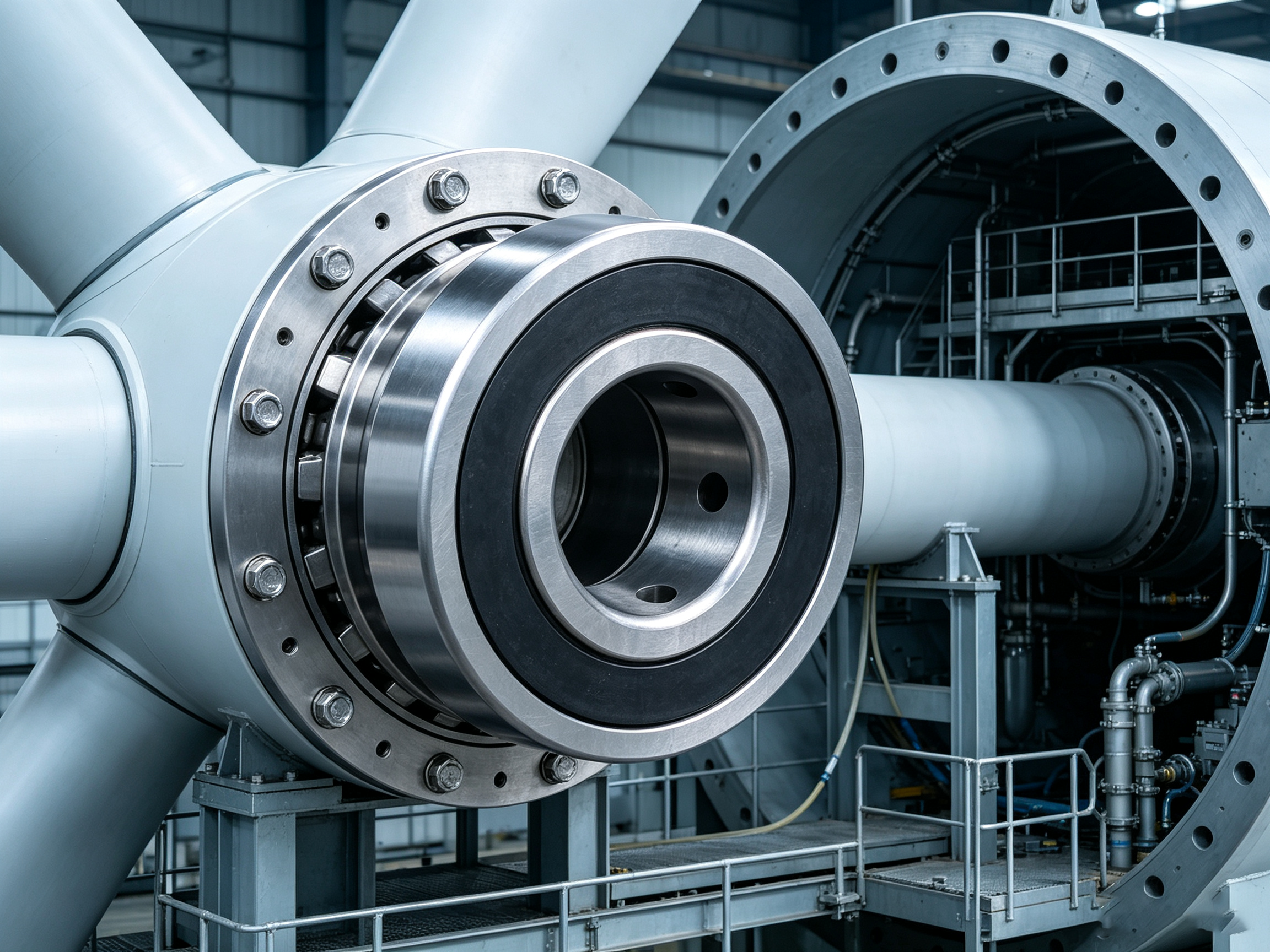
The global wind power bearing market is experiencing robust growth, projected to expand from USD 8.11 billion in 2025 to USD 16.42 billion by 2031, driven by the rapid expansion of offshore wind capacity. However, this growth brings supply chain challenges. The specialized nature of these components means that lead times for precision slewing bearings can exceed six months.
| Region | Market Status | Primary Growth Drivers |
|---|---|---|
| Asia Pacific | Largest Market | Rapid industrialization, massive offshore wind deployments |
| Europe | Established Leader | EU Green Deal, aggressive offshore expansion targets |
| North America | Growing Market | Inflation Reduction Act, grid infrastructure scaling |
To meet this demand, leading manufacturers are making significant capital investments to expand renewable energy capabilities. The industry is also seeing a rise in domestic manufacturing initiatives, particularly in China, where companies have successfully developed and deployed main shaft bearings for 16 MW and even 26 MW offshore turbines, achieving high localization rates and reducing reliance on global supply chains.
Conclusion
As the world’s largest wind turbines continue to push the limits of performance, the bearing industry remains at the forefront of mechanical innovation. Through advanced metallurgy, sustainable manufacturing processes, and intelligent monitoring systems, bearings are not just supporting massive rotors; they are powering the future of clean energy. For wind farm operators and turbine manufacturers, partnering with experienced bearing suppliers is no longer just a procurement decision—it is a critical strategy for ensuring the long-term viability and profitability of renewable energy infrastructure.
Frequently Asked Questions (FAQ)
Q: What is the main function of bearings in wind turbines?
A: Bearings support massive loads, facilitate rotation, and ensure the smooth operation of critical turbine subsystems like the main shaft, yaw, and pitch systems.
A: Bearings support massive loads, facilitate rotation, and ensure the smooth operation of critical turbine subsystems like the main shaft, yaw, and pitch systems.
Q: How large are the bearings used in modern wind turbines?
A: Main shaft bearings in mega-turbines can reach up to 4 meters in diameter and weigh over 40 tons.
A: Main shaft bearings in mega-turbines can reach up to 4 meters in diameter and weigh over 40 tons.
Q: Why are offshore wind bearings so difficult to manufacture?
A: They must withstand extreme dynamic forces, severe temperature fluctuations, and highly corrosive marine environments for up to 25 years without failing.
A: They must withstand extreme dynamic forces, severe temperature fluctuations, and highly corrosive marine environments for up to 25 years without failing.
Q: What are the key types of bearings in a wind turbine?
A: The three primary types are main shaft bearings (supporting the rotor), yaw bearings (turning the nacelle), and pitch bearings (adjusting blade angles).
A: The three primary types are main shaft bearings (supporting the rotor), yaw bearings (turning the nacelle), and pitch bearings (adjusting blade angles).
Q: How do bearings impact wind turbine maintenance?
A: Modern bearings feature integrated sensors for real-time condition monitoring, allowing operators to shift from reactive repairs to proactive, cost-saving maintenance.
A: Modern bearings feature integrated sensors for real-time condition monitoring, allowing operators to shift from reactive repairs to proactive, cost-saving maintenance.
Q: Are there sustainable innovations in bearing manufacturing?
A: Yes. Manufacturers are adopting energy-efficient electric heat treatments and utilizing recycled steel to reduce the carbon footprint of production.
A: Yes. Manufacturers are adopting energy-efficient electric heat treatments and utilizing recycled steel to reduce the carbon footprint of production.
Post time: Jul-20-2026