


In the world of industrial machinery and electric vehicles, the hum of a motor is the sound of productivity. But for maintenance engineers and plant managers, that hum can sometimes mask a ticking time bomb. We are not talking about mechanical overload or lubrication starvation—the usual suspects in bearing failure. We are talking about a far more insidious threat: Electrical Pitting, also known as Electric Discharge Machining (EDM).
At our company, we have seen a surge in inquiries regarding premature bearing failures in motors driven by Variable Frequency Drives (VFDs). This is not a manufacturing defect; it is a physics problem. If you are replacing bearings only to have them fail again in a few months, you are likely dealing with stray currents.
Here is a deep dive into why this happens, how to spot it, and the engineering solutions that actually work.
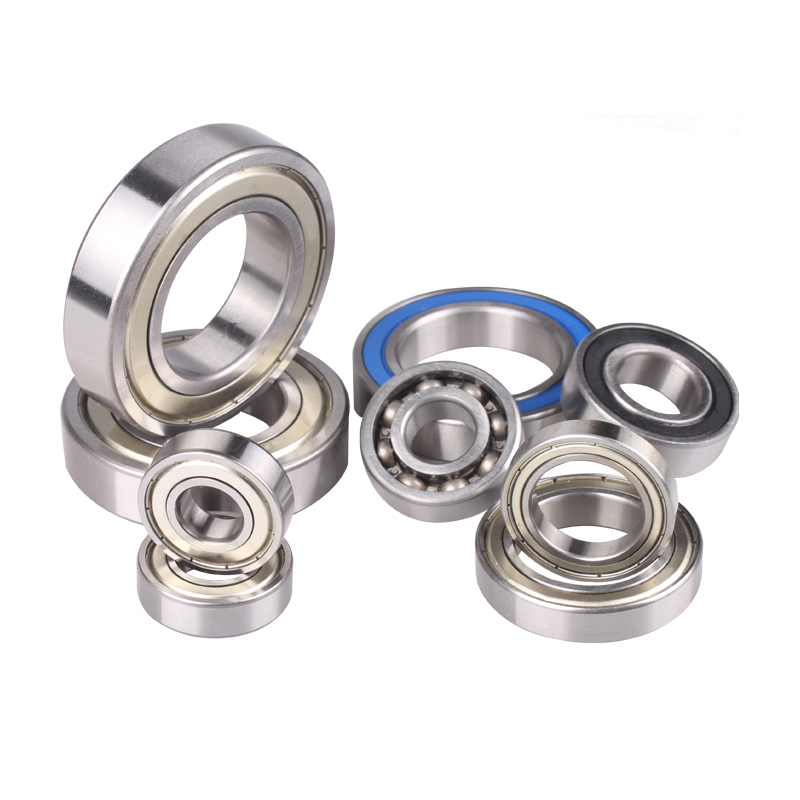
The Physics of Failure: It’s Not Just Friction
To understand electrical pitting, you have to look at the bearing not as a mechanical component, but as an electrical one. In a perfect world, the lubricant film separating the rolling elements from the raceway acts as a perfect insulator.
However, modern motor designs and the widespread use of PWM (Pulse Width Modulation) inverters have changed the landscape. These drives create high-frequency common-mode voltages. When this voltage builds up on the motor shaft, it seeks a path to the ground. The path of least resistance? Through the bearings.
Think of the bearing as a capacitor. As the shaft voltage rises, it charges this “capacitor.” Once the voltage exceeds the breakdown voltage of the lubricant film (the dielectric), a high-energy discharge occurs. This is essentially a microscopic lightning strike.
The Result: These discharges happen thousands of times per second. They melt tiny craters into the raceway surface. Over time, these craters accumulate, creating a washboard pattern known as fluting. This leads to excessive vibration, noise, and catastrophic failure.
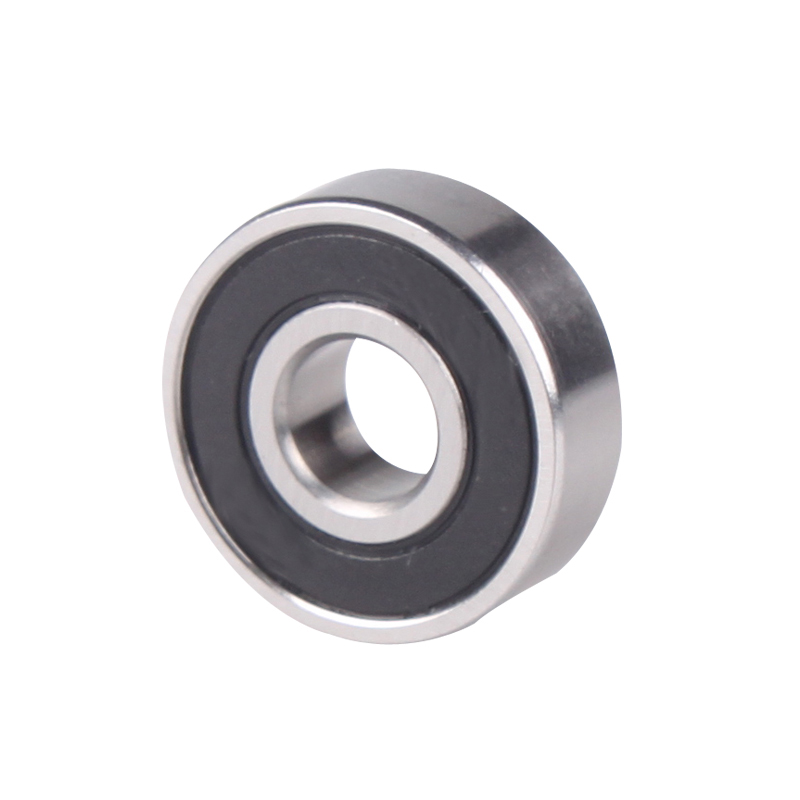
Diagnosis: Is It Electrical Pitting?
One of the biggest challenges we see is misdiagnosis. A failed bearing is often sent back to the manufacturer with a claim of “material defect,” when in reality, the application environment was the culprit.
Visual inspection is your first line of defense. Mechanical wear usually looks like polishing or spalling. Electrical pitting looks different. It often manifests as frosting (a gray, matte appearance) or distinct craters.
To help you identify the issue, we have compiled a comparison of failure modes:
| Feature | Mechanical Wear | Electrical Pitting (EDM) |
|---|---|---|
| Primary Cause | Overload, contamination, or poor lubrication | Stray current passing through the bearing |
| Visual Appearance | Smooth polishing, peeling, or scoring | Frosting, Craters, or Fluting (ridges) |
| Noise Level | Grinding or rumbling | High-pitched whine or vibration |
| Lubricant Condition | Often degraded, dark, or contaminated | May appear normal, but chemically altered |
| Time to Failure | Gradual degradation | Can be rapid and unpredictable |
Pro Tip: If you see “fluting”—regularly spaced ridges across the raceway—it is almost certainly caused by electrical erosion. This pattern is created by the resonant vibration of the rollers passing over the damaged areas.
The Frequency Factor
Why is this happening more now than 20 years ago? The answer lies in frequency.
Research indicates that the frequency of the shaft voltage plays a critical role in the type of damage incurred. In the era of simple sinusoidal power, shaft voltages were low frequency. Today, with IGBTs and SiC (Silicon Carbide) modules switching at high speeds, the
dV/dt (rate of voltage change) is incredibly fast.
Studies show that high-frequency alternating electric fields (up to 1 MHz) significantly alter the impedance of the bearing. At high frequencies, the bearing behaves less like a capacitor and more like a resistor, allowing current to flow more easily. Furthermore, the skin effect comes into play. High-frequency currents travel on the surface of the conductor. This concentrates the heat in a very thin layer of the bearing steel, accelerating the degradation of the oil film and the metal itself.
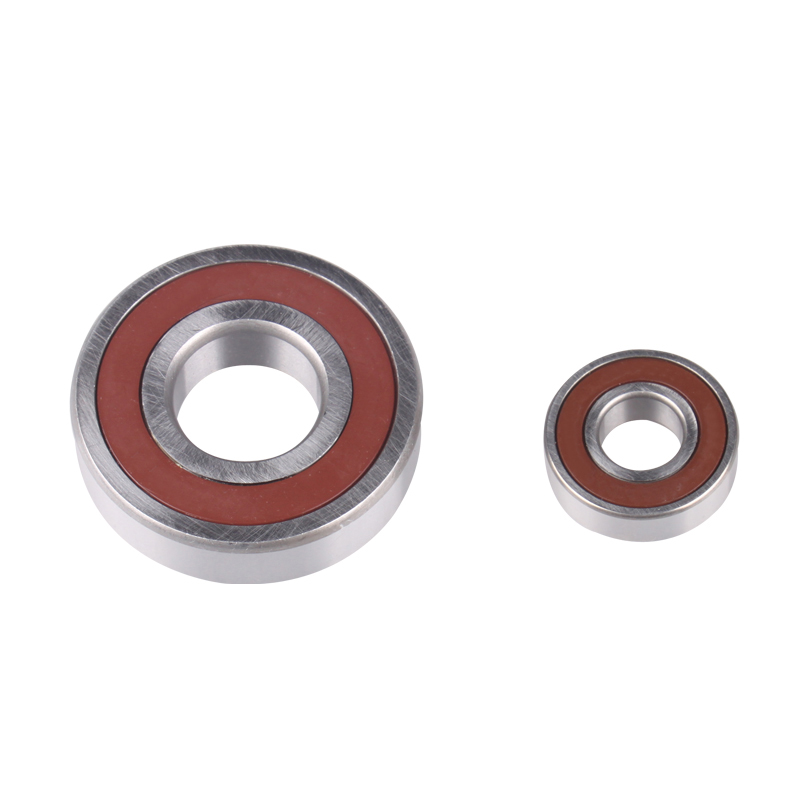
Solutions: How to Stop the Current
Stopping electrical pitting requires a system-level approach. You cannot simply “grease” the problem away, although specialized greases with conductive additives (like silver nanoparticles) are showing promise in research to inhibit pitting.
Here are the three most effective strategies to protect your assets:
1. Insulated Bearings:
This is often the most reliable solution. By coating the outer ring (or inner ring) with a ceramic layer (usually aluminum oxide), you physically break the electrical circuit.
* Note: For larger motors (NEMA 500 frame and above), insulating one bearing is usually sufficient. For smaller motors driven by inverters, you may need to insulate both bearings or the non-drive end, depending on the current path.
This is often the most reliable solution. By coating the outer ring (or inner ring) with a ceramic layer (usually aluminum oxide), you physically break the electrical circuit.
* Note: For larger motors (NEMA 500 frame and above), insulating one bearing is usually sufficient. For smaller motors driven by inverters, you may need to insulate both bearings or the non-drive end, depending on the current path.
2. Shaft Grounding Rings:
These devices use conductive micro-fibers to provide a low-resistance path for the current to flow from the shaft to the frame, bypassing the bearings entirely. Think of it as a lightning rod for your motor.
These devices use conductive micro-fibers to provide a low-resistance path for the current to flow from the shaft to the frame, bypassing the bearings entirely. Think of it as a lightning rod for your motor.
3. Common Mode Chokes:
Installing filters on the output of the VFD can reduce the high-frequency common-mode voltage at the source, reducing the stress on the entire system.
Installing filters on the output of the VFD can reduce the high-frequency common-mode voltage at the source, reducing the stress on the entire system.
Choosing the Right Protection:
| Solution | Effectiveness | Cost Implication | Best Application |
|---|---|---|---|
| Insulated Bearings | High (Blocks current) | Medium (Higher unit cost) | Motors > 100kW or harsh VFD environments |
| Grounding Rings | High (Diverts current) | Medium (Installation req.) | Existing motors with recurring failures |
| Conductive Grease | Low/Medium (Inhibits) | Low | Supplemental protection only |
Conclusion: Don’t Wait for the Noise
Electrical pitting is a silent killer. By the time you hear the bearing noise, the damage is already done. In an era where energy efficiency and electric vehicles are driving motor technology to its limits, understanding the electrical life of your bearings is just as important as the mechanical life.
If you are seeing unexplained failures, check the shaft voltages. If they exceed the dielectric strength of your lubricant film (often calculated around 15kV/mm breakdown strength), you are in the danger zone.
At DEMY, we specialize in electrically insulated bearings designed specifically for these high-frequency environments. Don’t let stray currents dictate your maintenance schedule.
Frequently Asked Questions (FAQ)
Q: What is electrical pitting in bearings?
A: Electrical pitting is damage caused by electrical currents passing through a bearing. It creates microscopic craters on the raceway, leading to premature failure.
A: Electrical pitting is damage caused by electrical currents passing through a bearing. It creates microscopic craters on the raceway, leading to premature failure.
Q: What causes electrical pitting?
A: It is primarily caused by stray currents from Variable Frequency Drives (VFDs) seeking a path to ground through the motor bearings.
A: It is primarily caused by stray currents from Variable Frequency Drives (VFDs) seeking a path to ground through the motor bearings.
Q: How can I identify electrical pitting?
A: Look for distinct “fluting” (washboard ridges) or “frosting” (gray matte spots) on the bearing raceways, often accompanied by high-pitched noise.
A: Look for distinct “fluting” (washboard ridges) or “frosting” (gray matte spots) on the bearing raceways, often accompanied by high-pitched noise.
Q: What is the best way to prevent it?
A: The most effective solutions are using insulated bearings to block the current or installing shaft grounding rings to divert it away from the bearings.
A: The most effective solutions are using insulated bearings to block the current or installing shaft grounding rings to divert it away from the bearings.
Q: Can lubrication stop electrical pitting?
Post time: Jun-01-2026