


The automotive industry is undergoing a seismic shift. As we transition from internal combustion engines (ICE) to electric vehicles (EVs), the criteria for vehicle quality and performance are being rewritten. For decades, the roar of an engine masked many imperfections in the drivetrain. Today, in the silent world of electric mobility, those imperfections are no longer whispers—they are shouts.
At the forefront of this challenge is NVH—Noise, Vibration, and Harshness. For bearing manufacturers and drivetrain engineers, understanding and diagnosing NVH issues is no longer just a technical requirement; it is the defining factor of brand reputation and passenger comfort.
The Silent Challenge: Why EVs Are Different
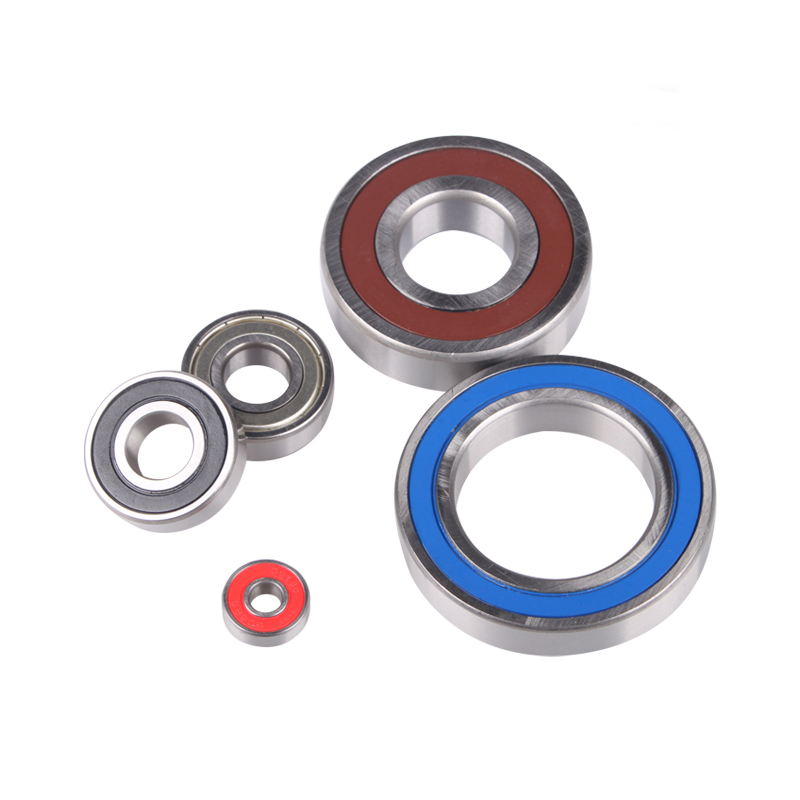
In a traditional combustion vehicle, the engine generates a significant amount of background noise. This “acoustic masking” often hides the high-frequency whine of a bearing or the subtle resonance of a gearbox. In an EV, that masking effect is gone. The powertrain is quiet, meaning that even minor vibration or noise generated by a bearing is immediately perceptible to the driver and passengers.
This phenomenon, often referred to as the “loss of masking,” has elevated the importance of bearing quality. A bearing that might have been acceptable in an ICE vehicle could be a dealbreaker in an EV. The industry is now hunting for “Ghost Orders”—vibration frequencies that don’t match the rotational speed of the shaft but appear due to bearing defects or gear interactions.
The Physics of Bearing Noise
Bearings are the heart of the electric drivetrain, supporting high-speed rotation (often exceeding 15,000 RPM in modern EVs). When we diagnose NVH issues, we are rarely looking at a simple “grinding” noise. We are looking for specific signatures in the frequency domain.
The primary culprit is often the Transfer Error or the interaction between the bearing raceways and the rolling elements. If a bearing has a defect—whether it’s a microscopic surface roughness, a waviness in the raceway, or damage from electrical arcing (EDM)—it creates a periodic excitation.
This excitation travels through the housing and manifests as:
- Structure-borne noise: Vibrations felt in the chassis or steering wheel.
- Air-borne noise: The audible “whine” or “howl” heard inside the cabin.
Diagnostic Methodology: A Data-Driven Approach
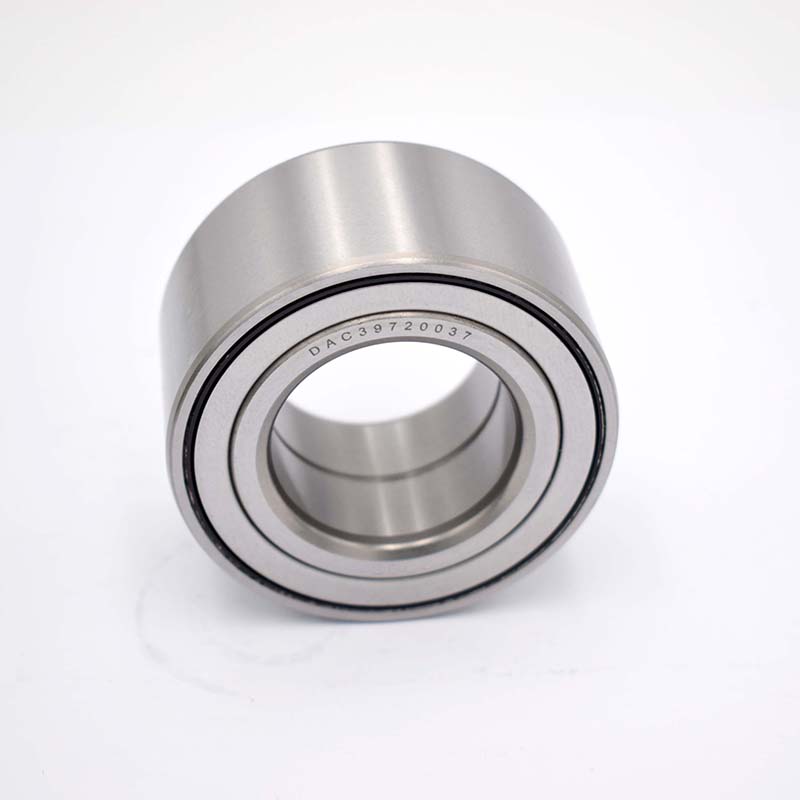
Modern diagnosis goes beyond the human ear. We utilize advanced telemetry and spectral analysis to pinpoint issues. A recent case study involving a pure electric vehicle experiencing a “woo-woo” sound during急 acceleration and cornering highlights this process.
By placing accelerometers on the suspension knuckles and the reducer housing, engineers can visualize the vibration data.
Table 1: Typical NVH Sensor Configuration for Drivetrain Diagnosis
| Sensor Location | Measurement Axis | Target Component | Purpose |
|---|---|---|---|
| Left/Right Knuckle | Vertical (Y-axis) | Wheel Bearings | Isolate road noise vs. drivetrain noise. |
| Reducer Housing | Vertical/Horizontal (Z-axis) | Bearings & Gears | Capture high-frequency motor/gear whine. |
| Cabin Microphone | Audio (dBA) | Human Perception | Correlate physical vibration with audible sound. |
In the aforementioned case, spectral analysis revealed a distinct peak at 255Hz. By comparing the amplitude of this frequency across different sensors, it was evident that the vibration was strongest at the reducer (gearbox) rather than the wheel bearings. This data-driven approach ruled out the wheel bearings and pointed directly to the transmission bearings or gear meshing issues.
Distinguishing the Source: Bearing vs. Gear
One of the most common challenges in NVH engineering is distinguishing between gear noise and bearing noise. They often occur in the same frequency ranges.
Gears generate noise based on “Orders”—multiples of the rotational speed. For example, a gear with 20 teeth rotating at a specific speed will generate a 20th-order vibration. However, bearings have their own specific frequencies based on their geometry (ball pass frequency inner/outer race).
Table 2: Characteristics of Gear Noise vs. Bearing Noise
| Feature | Gear Noise | Bearing Noise |
|---|---|---|
| Frequency Source | Tooth Mesh Frequency (Teeth × RPM) | Ball Pass Frequencies (Geometry dependent) |
| Sound Character | Tonal Whine (changes pitch with speed) | Broadband “Rumble” or “Hiss” |
| Load Sensitivity | Highly sensitive to load/torque | Often sensitive to speed and preload |
| Primary Cause | Transmission Error, Misalignment | Surface Roughness, Electrical Pitting, Lubrication |
If the noise frequency tracks perfectly with the motor RPM and its harmonics, it is likely gear-related. If the noise is a “non-synchronous” frequency or appears as a broadband hiss that doesn’t shift pitch linearly, the bearings are the likely suspect.
The Electric Erosion Factor
A unique challenge for EV bearings is Electrical Discharge Machining (EDM). Because EV motors operate on high-frequency switching currents, stray currents can travel through the motor shaft, pass through the bearings, and arc to the housing.
These micro-arcs melt tiny craters into the bearing raceways. Over time, this creates a “fluting” pattern. This surface damage is a massive generator of NVH issues. It transforms a smooth rolling motion into a bumpy, vibrating ride, creating a distinct acoustic signature that grows louder over the vehicle’s lifespan.
To mitigate this, the industry is moving toward:
- Hybrid Bearings: Using ceramic rolling elements which are electrically insulating.
- Shaft Grounding: Providing a lower resistance path for the current to bypass the bearings.
Optimization Strategies
Solving NVH issues isn’t just about fixing bad parts; it’s about optimizing the system.
1. Micro-Geometry and Surface Finish
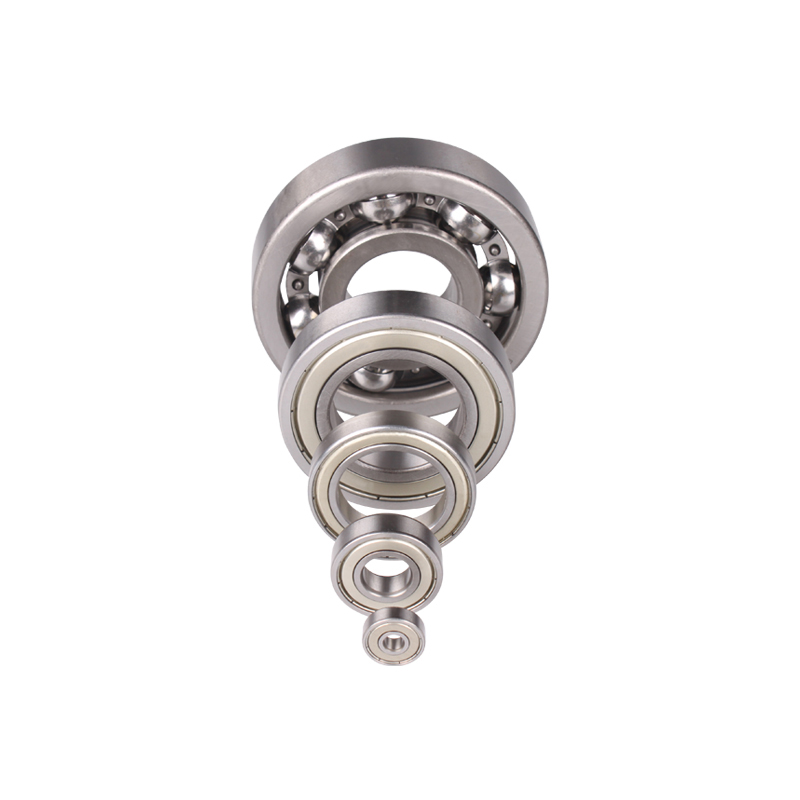
We are seeing a trend toward “super-finished” raceways. By reducing the surface roughness (Ra value) of the bearing races, we reduce the excitation force. A smoother surface means less vibration, even under high loads.
We are seeing a trend toward “super-finished” raceways. By reducing the surface roughness (Ra value) of the bearing races, we reduce the excitation force. A smoother surface means less vibration, even under high loads.
2. System Stiffness and Resonance
Sometimes the bearing is fine, but the system amplifies the noise. If a bearing’s natural frequency aligns with the motor’s operating speed, resonance occurs. As seen in recent analyses of electric drive units, a system resonance at 696 Hz can amplify a standard gear order (like the 22nd order) into a deafening whine. Adjusting the stiffness of the bearing seat or the housing can shift this natural frequency away from the critical operating range.
Sometimes the bearing is fine, but the system amplifies the noise. If a bearing’s natural frequency aligns with the motor’s operating speed, resonance occurs. As seen in recent analyses of electric drive units, a system resonance at 696 Hz can amplify a standard gear order (like the 22nd order) into a deafening whine. Adjusting the stiffness of the bearing seat or the housing can shift this natural frequency away from the critical operating range.
3. Lubrication
The choice of grease is critical. EV-specific greases must handle higher speeds and temperatures while providing excellent damping characteristics to absorb sound energy.
The choice of grease is critical. EV-specific greases must handle higher speeds and temperatures while providing excellent damping characteristics to absorb sound energy.
Conclusion
In the era of electrification, the bearing is no longer just a mechanical component; it is an acoustic component. The ability to diagnose and resolve NVH issues defines the boundary between a “good” electric car and a “great” one.
By leveraging advanced diagnostic tools—analyzing frequency spectrums, identifying specific order signatures, and understanding the unique electrical challenges of EVs—we can ensure that the only sound you hear in your electric vehicle is the one you choose to play on the radio.
Frequently Asked Questions (FAQ)
Q: Why is NVH more critical in electric vehicles compared to traditional cars?
A: Electric vehicles lack the background noise of an internal combustion engine. This “loss of masking” means that even minor bearing noises or vibrations, which would be drowned out in a gas car, become clearly audible and annoying to passengers.
A: Electric vehicles lack the background noise of an internal combustion engine. This “loss of masking” means that even minor bearing noises or vibrations, which would be drowned out in a gas car, become clearly audible and annoying to passengers.
Q: How can you tell if a noise is coming from a bearing or a gear?
A: Engineers use spectral analysis. Gear noise typically appears as specific “orders” (multiples of rotation speed) that change pitch linearly with speed. Bearing noise often manifests as a broadband “hiss” or specific non-synchronous frequencies related to the bearing’s geometry.
A: Engineers use spectral analysis. Gear noise typically appears as specific “orders” (multiples of rotation speed) that change pitch linearly with speed. Bearing noise often manifests as a broadband “hiss” or specific non-synchronous frequencies related to the bearing’s geometry.
Q: What is Electrical Discharge Machining (EDM) in bearings?
A: EDM occurs when stray electric currents pass through a bearing, creating micro-arcs that pit the raceways. This damage creates a “fluting” pattern, leading to significant vibration and noise over time.
A: EDM occurs when stray electric currents pass through a bearing, creating micro-arcs that pit the raceways. This damage creates a “fluting” pattern, leading to significant vibration and noise over time.
Q: How do manufacturers prevent bearing noise in EVs?
A: Solutions include using hybrid bearings with ceramic balls (which are electrically insulating), implementing shaft grounding rings, optimizing surface finishes (super-finishing), and selecting specialized greases that dampen sound.
Post time: Jun-03-2026