


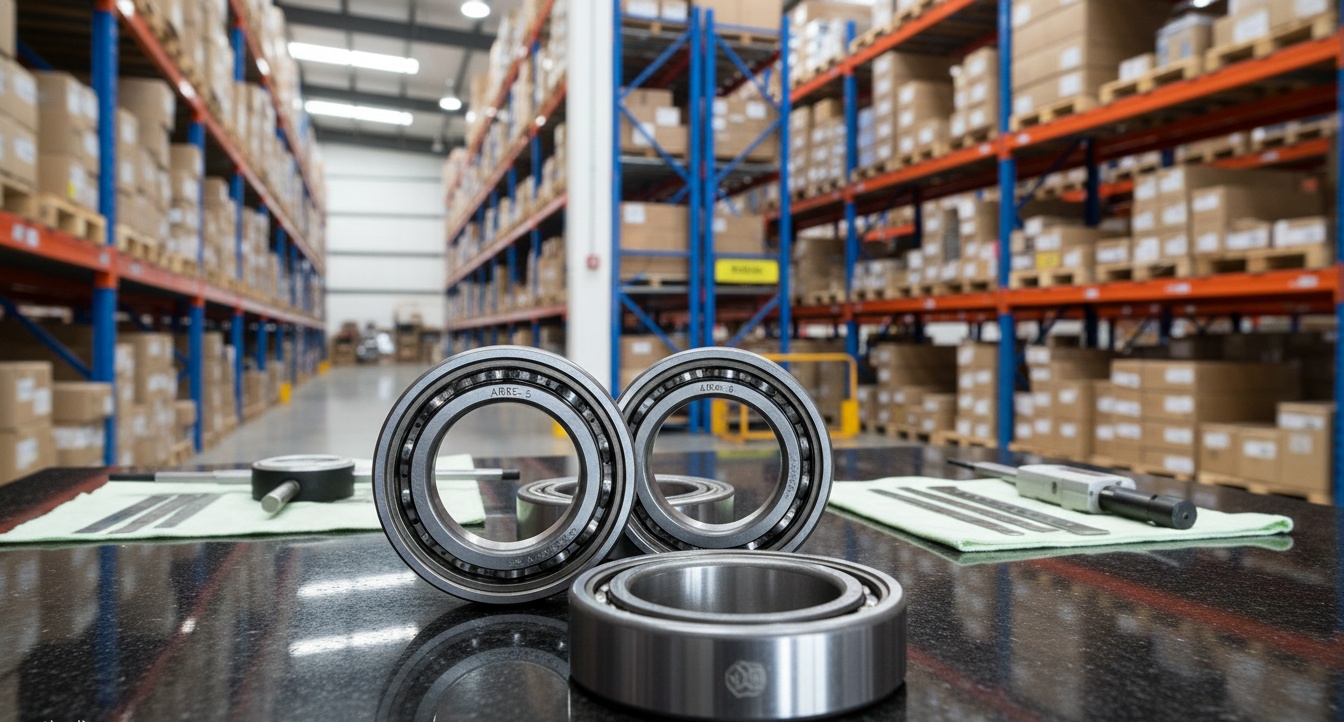
TL;DR: Mexican auto distributors sourcing ABEC-5 deep groove ball bearings at 500-unit MOQ rely on four non-negotiable tolerance checks — noise testing, vibration analysis, radial clearance measurement, and surface roughness profiling — to protect their reputation in the replacement parts market. Without these checks documented per batch, warranty claims and customer returns destroy margins. A quality supplier with ISO 9001:2015 certification and traceable heat numbers is your best hedge against costly field failures.
Why Mexican Auto Distributors Are Standardizing on ABEC-5 Bearings
The Mexican automotive aftermarket is undergoing a quiet transformation. As vehicle parc in Mexico City, Guadalajara, and Monterrey grows denser — the association ANPACT reported over 5.2 million light commercial vehicles in active service as of 2024 — the demand for reliable replacement bearings has shifted from a commodity conversation to a quality conversation. Distributors who once bought bearings on price alone are now qualifying suppliers against technical specifications.
The shift is driven by three converging forces. First, Mexican auto repair shops are serving a more diverse vehicle parc than ever before — a mix of aging US imports under USMCA provisions, Korean and Japanese brands assembled locally under MB-2023 preferential tariffs, and Chinese EVs entering through Manzanillo and Lázaro Cárdenas ports. Each origin brings different bearing specifications, and the distributor must stock cross-compatible parts that work across multiple applications. Second, NOM-ENERGY-2018 efficiency standards now require that electric motors used in industrial fan assemblies, HVAC pumps, and automotive production line equipment meet minimum efficiency ratings — and the bearing is a direct contributor to motor efficiency. Third, automotive OEM supply chains in Puebla and Aguascalientes are pushing tier-2 and tier-3 distributors to document incoming quality data, shifting the burden of tolerance verification upstream.
This is why ABEC-5 deep groove ball bearings have become the default specification for Mexican auto distributors serving the mid-market. ABEC-5 sits in the sweet spot between precision and cost: precise enough for high-speed shaft applications (up to 12,000 RPM for standard sizes), yet produced in high enough volumes to be economical at 500-unit MOQ. The four tolerance checks described in this article are the ones progressive Mexican distributors are running — not because their suppliers ask for them, but because skipping them has cost too many of them money.
Understanding ABEC-5 Tolerance: What the Numbers Actually Mean
Before diving into the checks, it helps to understand what ABEC-5 actually requires — because the tolerance band is tighter than most buyers realize.
The ABEC (Annular Bearing Engineers Committee) tolerance system is administered by AMEC (American Society of Mechanical Engineers) and defines tolerance classes designated as ABEC-1, ABEC-3, ABEC-5, ABEC-7, and ABEC-9. The higher the number, the tighter the tolerance. ABEC-5 specifies that the bore diameter on a standard 6200-series bearing must be held to±0.00005 inches (±0.00127 mm), and the outside diameter to a similar tight band. The internal radial clearance — the space between the rolling elements and the raceways — must fall within a defined range that allows thermal expansion without binding.
For Mexican distributors, this means ABEC-5 covers the bearing sizes most commonly used in automotive wheel hubs, transmission shafts, and alternator bearing positions — sizes like 6202, 6204, 6305ZZ, and 6306. When these bearings are used in electric motors operating above 3,600 RPM, the ABEC-5 tolerance becomes the difference between a motor that runs quietly for 50,000 hours and one that fails prematurely due to bearing-induced vibration. One of the most frequently requested ABEC-5 deep groove ball bearings in our export catalog is the 6305ZZ sealed deep groove ball bearing, which features dual metal shields, C3 clearance, and is widely used in electric motor, pump, and transmission shaft applications across the Americas.
Key ABEC-5 Dimensional Tolerances (6200 Series, mm):
| Parameter | ABEC-5 Tolerance | Measurement Method |
|---|---|---|
| Bore diameter (d) | ±0.00127 mm | Bore gauge, 3-point measurement |
| Outside diameter (D) | ±0.00127 mm | Outside micrometer, 2-point measurement |
| Inner ring radial clearance | 0.010–0.025 mm (C3) | Dial indicator with spring-loaded plunger |
| Outer ring radial clearance | 0.013–0.028 mm (C3) | Plastic gauge wire method |
| Inner ring width | ±0.025 mm | Width gauge |
Check 1: Noise Testing — The Sound That Tells You Everything
Noise testing is the fastest and most revealing check in the ABEC-5 qualification sequence. A deep groove ball bearing that will perform poorly in the field often starts making its complaint audible within the first 30 seconds on the test bench.
The standard test setup involves a noise-grade testing bench — a spindle motor driving the bearing at a controlled speed (typically 1,800 RPM for automotive applications) while a calibrated microphone array captures the sound pressure level in dB(A). The test bench must be in an environment meeting ISO 16890 acoustic requirements — essentially, a room with controlled ambient noise below 55 dB(A) so that the bearing signal is not masked.
Mexican distributors running this check look for three noise signatures. First, the steady-state noise floor: a well-made ABEC-5 bearing at 1,800 RPM should produce a noise level below 40 dB(A). Anything above 45 dB(A) indicates contamination, surface damage, or inadequate heat treatment. Second, theperiodic noise pattern: if the noise spikes at regular intervals corresponding to the number of rolling elements passing a raceway defect, this indicates brinelling (a form of surface damage from overload). Third, impact noise events: sharp transient peaks — even brief ones — suggest a deformed rolling element or a chip in the raceway.
When purchasing at 500-unit MOQ, the practical protocol is to test the first 5 pieces and the last 5 pieces of each batch. If the noise performance of the last-5 differs significantly from the first-5, the production run may have experienced tooling drift or a heat treatment inconsistency that needs investigation.
Check 2: Vibration Analysis — Beyond the Feel of the Hand
While noise testing captures what the human ear perceives, vibration analysis captures what the bearing is actually doing at the structural level. Vibration is measured asRMS (Root Mean Square) velocity in millimeters per second across three orthogonal axes — axial, radial, and tangential.
A properly manufactured ABEC-5 deep groove ball bearing should produce an RMS velocity below0.28 mm/s at 1,800 RPM when measured on a properly calibrated vibration analyzer with an accelerometer mounted on the bearing housing. Values between 0.28 and 0.45 mm/s indicate a bearing that will function but is operating below its design potential — typically due to slight roughness in the raceway finish. Anything above 0.45 mm/s signals a serious problem that will accelerate bearing wear in the field.
The critical frequency analysis — FFT (Fast Fourier Transform) of the vibration signal — reveals specific defect signatures. A dominant frequency at the ball pass frequency (BPFO) indicates an outer raceway defect. A frequency at the ball spin frequency (BSF) points to a rolling element defect. A frequency at the fundamental train frequency (FTF) — typically0.38 to 0.42 times the shaft speed — indicates a cage defect. Each of these has a different root cause in manufacturing and a different remediation path.
For Mexican distributors, the practical application is this: before accepting a 500-unit batch, request the supplier’s vibration test data for a minimum of 10% of the order — ideally from a third-party lab such as those certified by EMA. If the supplier cannot provide this data, the cost of independent testing (typically USD $3-8 per bearing) should be factored into the landed cost comparison.
Check 3: Radial Clearance Measurement — The Most Ignored Check
Radial clearance is the amount of play between the rolling elements and the raceways when the bearing is mounted with no external load. It is the single most misunderstood and most frequently skipped check in the Mexican aftermarket — and it is the one that causes the most field failures.
Deep groove ball bearings are manufactured with different clearance classes:C0 (C2), C3, C4, and C5. The most common for automotive applications is C3, which provides internal radial clearance of 0.010–0.025 mm for standard sizes. For high-temperature environments — such as electric motors in Mexican climate conditions where ambient temperatures can reach 40°C in northern desert regions — a high-temperature grease bearing with polyurea cage and premium lithium complex grease rated for continuous operation up to 150°C is the appropriate choice over standard C3 bearings.
The measurement method is straightforward in concept but requires careful execution. A dial indicator with a spring-loaded plunger is positioned against the outer ring while a load is applied to the inner ring to push it against the balls. The total movement reading on the dial indicator is the radial clearance. Each bearing must be measured individually — there is no shortcut.
Why does this matter so much in the Mexican context? Because the ambient temperature range in operations across Mexico is extreme. A bearing installed in a wheel hub in Tijuana operates in a fundamentally different thermal environment than one in a motor housing in Mérida. A bearing with insufficient C3 clearance will have zero clearance at operating temperature — it will run hot, seize the lubricant, and fail within months. A bearing with excessive clearance will be noisy, allow vibration to transfer into the housing, and wear out prematurely. The correct clearance class is not optional — it is a performance specification.
When negotiating MOQ 500 with a supplier, confirm in writing that the clearance class is C3 (or whatever class your application requires) and that the supplier’s quality plan includes100% inspection of radial clearance on each bearing in the batch, not just first-piece inspection. Our 6305ZZ deep groove ball bearing product page provides full dimensional specifications, ABEC-5 tolerance data, and C3 clearance certification for buyers evaluating this SKU at wholesale volumes.
Check 4: Surface Roughness Profiling — The Final Gate Before Assembly
Surface roughness — measured as Ra (Roughness Average) in micrometers — determines how well the bearing raceway retains lubricant, how low the friction coefficient will be, and ultimately how long the bearing will last. For ABEC-5 deep groove ball bearings, the raceway surface finish should achieveRa ≤ 0.2 μm on the inner and outer raceways.
The measurement instrument is a profilometer — a stylus-based device that traces a 5mm sample length across the raceway surface and outputs an Ra value. The test is non-destructive and takes approximately 90 seconds per bearing. Progressive Mexican distributors are now requiring this test as a standard incoming inspection step for premium-bearing SKUs, even though it is not mandated by ISO 15:2017.
The reason is economics. A bearing with Ra = 0.35 μm raceway surface — technically acceptable under many standards — will generate approximately 15-20% more friction heat than one at Ra = 0.2 μm. In a motor bearing application running 24/7, this additional heat compounds over thousands of operating hours into measurable efficiency losses. Over a 500-unit inventory that sits in motors for 3 years, the cumulative energy cost difference is significant.
4-Check Protocol at MOQ 500 — Summary:
- Noise test: 10 pieces/sample from batch (first 5 + last 5), threshold ≤ 40 dB(A) at 1,800 RPM
- Vibration analysis: 10% of order, RMS ≤ 0.28 mm/s, FFT defect frequency check
- Radial clearance: 100% inspection or statistical sample plan (AQL 1.0), C3 class confirmed
- Surface roughness: 5 pieces/sample from batch, Ra ≤ 0.2 μm on raceway
Negotiating the 500-Unit MOQ: Beyond Price
When Mexican auto distributors approach a bearing supplier at500-unit MOQ, the negotiation tends to start and end with unit price. Experienced buyers know that the real negotiation has four other dimensions that matter more than the quoted price.
First: tooling registration fees. Many Chinese bearing manufacturers charge a one-time tooling registration fee of USD $200-500 when a new SKU is firsttooled. At500 units, this amortizes to $0.40–$1.00 per unit — small in isolation but worth negotiating away if you commit to a multi-order relationship. Ask the supplier to absorb the tooling fee as part of the first-order value.
Second: first article inspection (FAI) package. Before the first shipment under a new MOQ arrangement, the supplier should provide a complete FAI package including material certificates, the four tolerance check results, and dimensional report cards for every piece or every 10th piece. This package is your quality insurance and should not cost extra.
Third: packaging and labeling. For Mexican market entry, packaging must include Spanish-language labels with country of origin, supplier lot number, and NOM compliance markings. Confirm these requirements in the purchase order and agree on labeling costs upfront — retrofitting labels at the Mexican border is expensive.
Fourth: payment terms. The standard opening position for Mexican SME distributors is Letter of Credit at sight (LC at sight) or 30% TT deposit / 70% LC at sight. As the relationship matures and payment history is established, net-60 open account terms become achievable — but only after2-3 successful order cycles.
Mexico’s Regulatory Landscape: NOM Standards and Import Compliance
Sourcing ABEC-5 deep groove ball bearings from international suppliers into Mexico requires navigating three overlapping regulatory frameworks: NOM standards,USMCA rules of origin, and import customs procedures.
The most directly relevant NOM standard is NOM-ENERGY-2018, which establishes minimum energy efficiency performance levels (MEPS) for electric motors sold in Mexico. Deep groove ball bearings used in motor bearing housings are considered critical components under this standard — and motor manufacturers sourcing components for MEPS-certified products must be able to demonstrate bearing quality data upon audit. This means that even if your end customer is an auto repair shop rather than a motor manufacturer, the bearing’s quality documentation must be sufficient to support a NOM audit trail.
Under USMCA (United States-Mexico-Canada Agreement), bearings imported from China face tariff classification under HTS Code 8482.10.50 with a most-favored-nation (MFN) duty rate of 9.6%. Distributors who can demonstrate substantial transformation in Mexico — for example, by mounting bearings into bearing housings or motor assemblies in a Mexican Maquiladora (IMMEX) facility — may benefit from reduced duty rates on the finished product.
The practical import compliance checklist for a Mexican distributor receiving a 500-unit bearing order includes: (1) commercial invoice with HS code 8482.10.50, (2) certificate of origin or supplier declaration, (3) NOM compliance declaration from the supplier, (4) material safety data sheet (MSDS) for any corrosion-inhibiting packaging treatments, and (5) proof of ISO 9001:2015 certification from the bearing manufacturer.
Building a Long-Term Bearing Wholesale Partnership
The distributors who extract the most value from ABEC-5 bearing wholesale procurement are those who treat their supplier relationship as a technical partnership rather than a transactional price negotiation. When you commit to 500+ units per order with a quarterly replenishment cycle, you become a strategically important customer to a bearing manufacturer — and that status translates into benefits that do not appear on the price sheet.
Long-term customers typically receive access to new product development samples before mass production — important when the bearing sizes you stock are evolving with new vehicle platforms entering the Mexican parc. They also receive priority manufacturing slot allocation during peak production seasons (typically Q3 for bearings targeting year-end automotive service demand), and expedited RMA processing when rare quality issues do occur.
The most important partnership element is data sharing. Mexican distributors who share their field failure data with their bearing suppliers — even rough estimates of returns per SKU — enable the supplier to adjust manufacturing processes proactively. A supplier that knows which bearing position is generating complaints can modify the heat treatment cycle or tighten the polishing specification on the relevant production run. This feedback loop is the foundation of a continuously improving supply relationship that compounds in value over years.
Conclusion
Procuring ABEC-5 deep groove ball bearings at 500-unit MOQ is not simply a cost-reduction strategy — it is a quality management commitment that protects your inventory, your customers, and your reputation in the Mexican automotive aftermarket. The four tolerance checks — noise testing, vibration analysis, radial clearance measurement, and surface roughness profiling — are not optional verification steps; they are the minimum standard of care that the market now requires of professional distributors.
For Mexican auto parts distributors, the path forward is clear: qualify your bearing supplier against all four checks, negotiate the MOQ relationship with technical rigor rather than price alone, and invest in the documentation and compliance infrastructure that NOM standards and USMCA rules of origin demand. When your bearing supply chain is running with documented quality, your reputation in the market follows — and that reputation is the most durable competitive advantage in the automotive aftermarket.
To explore deep groove ball bearing specifications, ABEC-5 tolerance data sheets, and wholesale pricing at500-unit MOQ for your application, visit our 6305ZZ deep groove ball bearing product page or review our complete high-temperature grease bearing configurations designed for demanding automotive environments.
Post time: Jun-08-2026