


Water is the lifeblood of industrial manufacturing, yet it is also one of the most vulnerable resources in the face of global climate change. For the bearing manufacturing industry, water plays an indispensable role in key processes such as cooling, grinding, cleaning, and heat treatment. However, traditional production methods often lead to excessive freshwater consumption and the discharge of wastewater containing mineral oils, surfactants, metal shavings, and heavy metal ions, posing a significant threat to the ecological environment.
In the context of the global push for carbon neutrality and green transformation, water conservation is no longer just a regulatory compliance requirement; it has become a core indicator of a company’s sustainable development capabilities and a critical factor in enhancing market competitiveness. The bearing industry is currently undergoing a profound water management revolution, shifting from the traditional “take-make-dispose” linear model to a circular, efficient, and intelligent water use model.
The Urgency of Water Conservation in Bearing Manufacturing
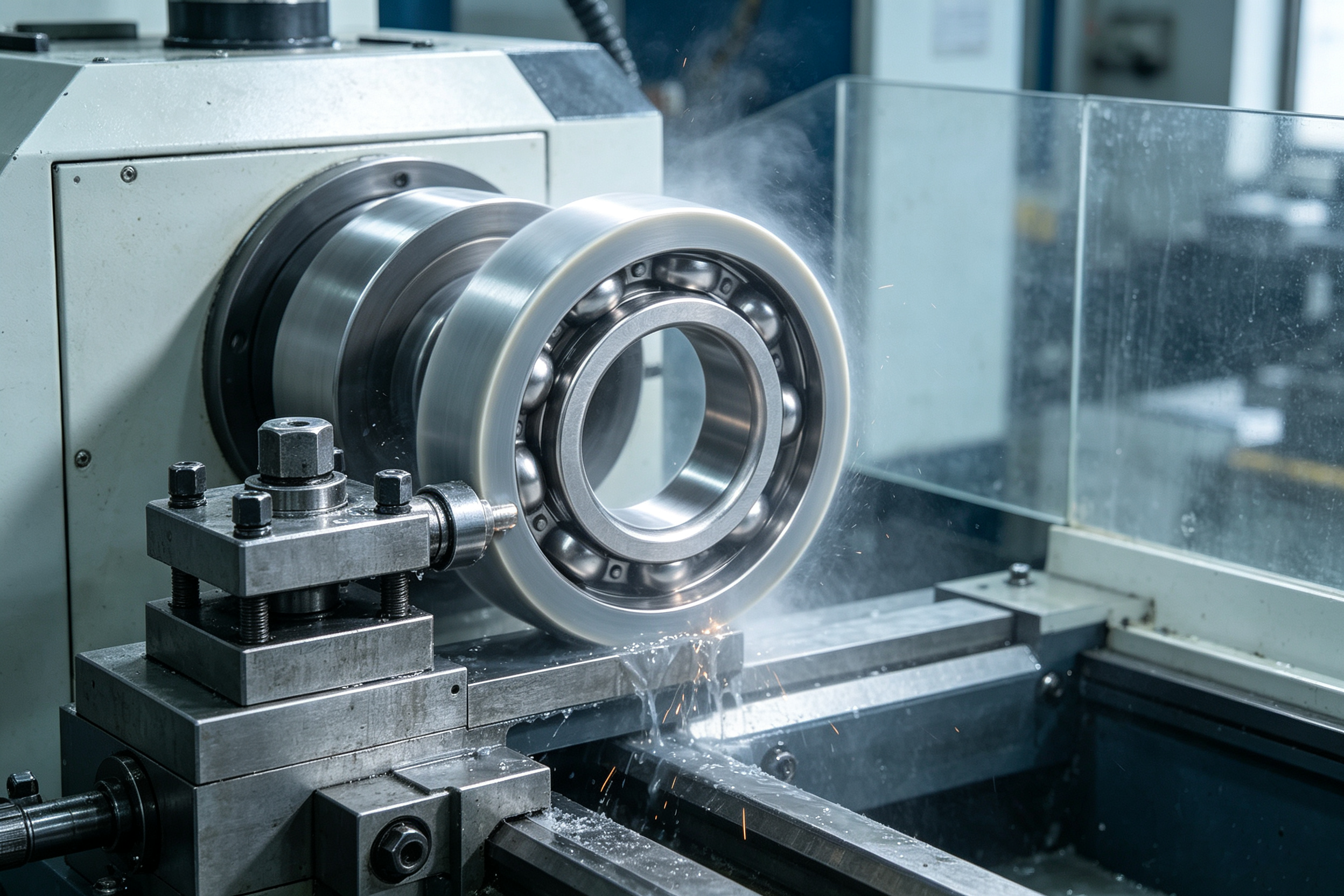
Bearing manufacturing involves multiple high-precision processes, including forging, heat treatment, grinding, and cleaning. Among these, grinding and cleaning are the primary sources of water consumption and wastewater generation. Wastewater from bearing production typically has a pH value between 8 and 11 and contains complex pollutants such as mineral oils, suspended solids, and chemical oxygen demand (COD). If discharged directly without effective treatment, it can cause severe pollution to soil and water bodies.
Furthermore, water management is directly related to product quality. Even trace amounts of moisture (as low as 500ppm) can lead to bearing corrosion, lubricant failure, and a significant reduction in service life. Therefore, efficient water use and precise wastewater treatment are not only environmental responsibilities but also essential guarantees for maintaining product precision and reliability.
Core Strategies for Water Conservation
To reduce the ecological footprint, leading bearing enterprises are implementing comprehensive water conservation strategies across three dimensions: source reduction, process control, and terminal recycling.
1. Process Innovation: Source Reduction
The most effective water conservation measure is to reduce water demand at the source through technological innovation.
The most effective water conservation measure is to reduce water demand at the source through technological innovation.
- Adoption of Dry Processing Technologies: In certain cleaning and heat treatment processes, manufacturers are replacing traditional wet methods with dry processing technologies. For example, the use of vacuum heat treatment replaces salt bath treatment, eliminating wastewater containing toxic substances like cyanide.
- Optimization of Cooling Systems: Traditional cooling towers consume vast amounts of water due to evaporation. Modern factories are adopting closed-loop cooling systems and seawater direct cooling technologies (for coastal areas) to drastically reduce freshwater evaporation losses.
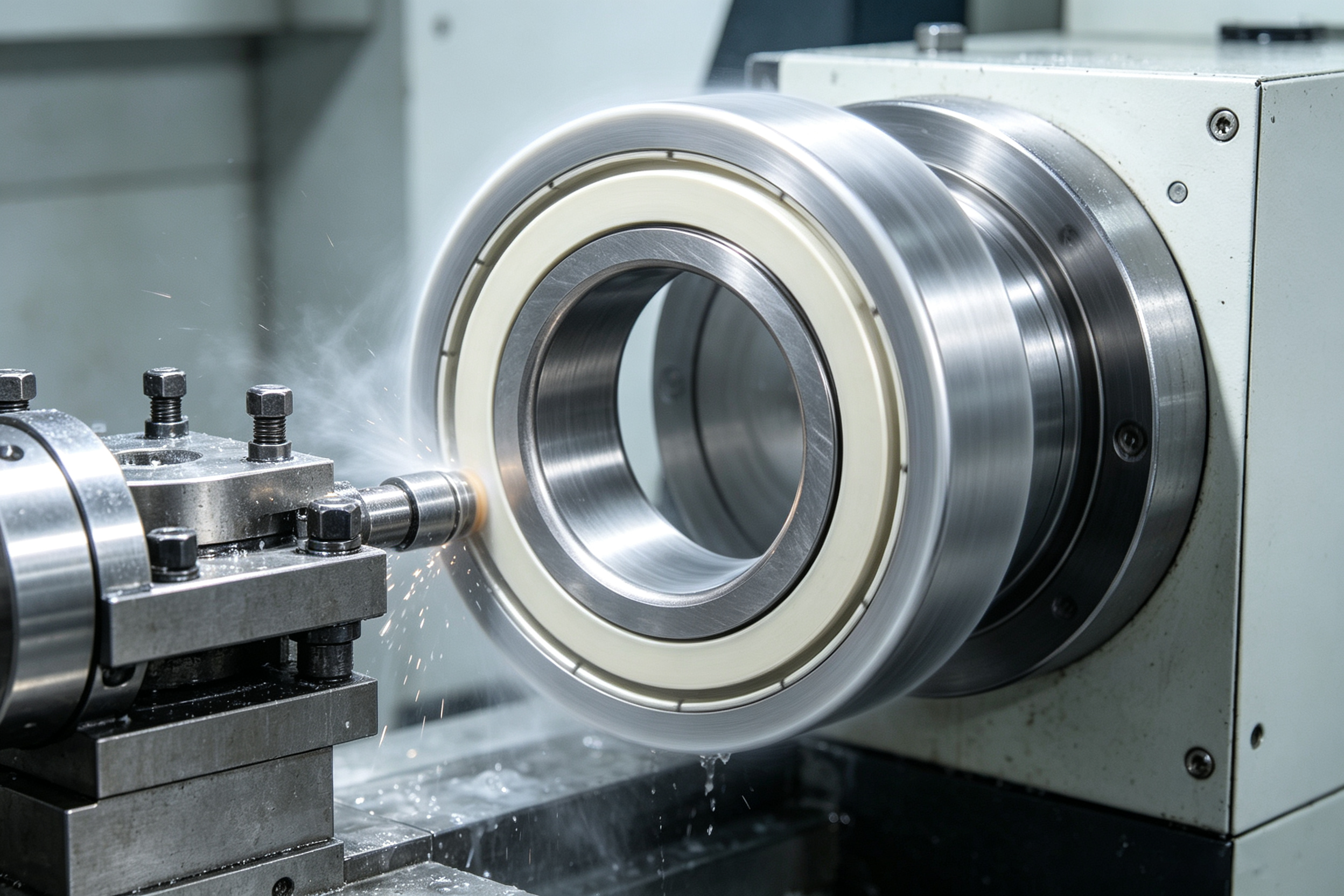
- High-Efficiency Cleaning Equipment: New generation steel ball cleaning conveying systems utilize precise flow control and drainage assemblies to minimize the use of fresh water during the cleaning process, stopping operations once a preset wastewater weight is reached to avoid waste.
2. Smart Management: Process Control
Digitalization provides “smart eyes” for water conservation.
Digitalization provides “smart eyes” for water conservation.
- Intelligent Water Monitoring: Leading companies, such as Luoyang Bearing Group, have implemented smart water management models. By installing intelligent remote control adjustment devices, they monitor and regulate pipe network pressure in real-time. This systematic approach reduces water consumption by 10% and saves significant costs annually.
- Leakage Prevention: Advanced sensor technologies are used to detect leaks in pipe networks and equipment instantly, preventing “running, leaking, dripping, and leaking” phenomena that waste resources.
3. Circular Economy: Terminal Recycling
Treating wastewater as a “misplaced resource” is key to achieving zero emissions.
Treating wastewater as a “misplaced resource” is key to achieving zero emissions.
- Deep Treatment and Reuse: Technologies such as “coagulation air flotation + filtration” and membrane separation (ultrafiltration, reverse osmosis) are widely used to treat grinding wastewater. For instance, Schaeffler’s plant in Nanjing improved its multi-stage wastewater treatment process, saving 21,000 tons of water annually.
- Zero Liquid Discharge (ZLD): Some advanced “Green Factories,” like Jianlong Harbin Bearing, have achieved the recycling of pickling wastewater and the goal of “zero discharge” of production wastewater through process optimization.
Technological Comparison of Water Conservation Solutions
To intuitively demonstrate the effectiveness of different water conservation technologies, the following table compares several mainstream solutions:
| Technology Solution | Application Scenario | Water Saving Principle | Expected Benefit |
|---|---|---|---|
| Closed-Loop Cooling System | Heat treatment, Equipment cooling | Replaces once-through cooling;循环利用 cooling water to reduce evaporation loss. | Reduces freshwater consumption by >90% in cooling links. |
| Membrane Separation Technology | Grinding wastewater, Cleaning wastewater | Uses ultrafiltration/reverse osmosis membranes to intercept pollutants and regenerate high-quality water. | Water reuse rate can reach >75%, reducing fresh water intake. |
| Vacuum Evaporation System | Oily wastewater, Emulsion treatment | Uses vacuum low-temperature evaporation to separate water from oil/impurities; distillate is reused. | Recovers ~95% of water volume; reduces waste liquid transport costs. |
| Smart Water Control Platform | Whole plant water network | Monitors flow and pressure in real-time via IoT sensors; dynamically adjusts supply to eliminate waste. | Reduces overall plant water consumption by ~10% and lowers maintenance costs. |
Economic and Environmental Benefits
Water conservation initiatives deliver a dual win for both the economy and the environment.
From an economic perspective, water conservation directly reduces water resource fees and wastewater treatment costs. More importantly, the recycled water can be reused in production, reducing dependence on external water supply and enhancing the company’s resilience to risks such as water shortages. For example, by optimizing water use processes, some enterprises have saved millions of yuan in operating costs annually.
From an environmental perspective, reducing freshwater extraction protects local water ecosystems, while reducing wastewater discharge lowers the environmental load. Additionally, water conservation is often accompanied by energy conservation (e.g., reducing the electricity consumption of pumps and heating water), further lowering the carbon footprint of products.
Future Outlook
Looking ahead, water conservation in the bearing industry will develop towards greater intelligence and systematization.
- Digital Twin Technology: By creating digital twins of water systems, companies can simulate and optimize water use strategies, predicting potential leaks or efficiency bottlenecks.
- Green Product Design: Future bearing designs will place greater emphasis on sealing performance and maintenance-free features (such as solid oil lubrication technology) to reduce water demand during the product’s usage phase.
- Supply Chain Collaboration: Leading enterprises will drive green water management standards across the supply chain, forming an industry-wide ecological barrier for water conservation.
In conclusion, water conservation in manufacturing is a systematic project that requires continuous investment in technology and management. For the bearing industry, this is not only a response to global environmental challenges but also a necessary path to achieve high-quality development. By implementing every drop of water efficiently, we are guarding the blue planet while forging a more sustainable industrial future.
Frequently Asked Questions (FAQ)
Q1: Why is water conservation critical in bearing manufacturing?
A: Water is essential for cooling, grinding, and cleaning in bearing production. Conservation reduces environmental impact, lowers operational costs, and ensures product quality by preventing corrosion caused by poor water management.
A: Water is essential for cooling, grinding, and cleaning in bearing production. Conservation reduces environmental impact, lowers operational costs, and ensures product quality by preventing corrosion caused by poor water management.
Q2: What are the main sources of water consumption in bearing plants?
A: The primary sources are grinding processes, cleaning lines, cooling towers, and heat treatment systems. These stages require significant water volumes for temperature control and contaminant removal.
A: The primary sources are grinding processes, cleaning lines, cooling towers, and heat treatment systems. These stages require significant water volumes for temperature control and contaminant removal.
Q3: How can manufacturers reduce water usage at the source?
A: Manufacturers can adopt dry processing technologies, optimize cooling systems with closed-loop designs, and use high-efficiency cleaning equipment with precise flow control to minimize fresh water demand.
A: Manufacturers can adopt dry processing technologies, optimize cooling systems with closed-loop designs, and use high-efficiency cleaning equipment with precise flow control to minimize fresh water demand.
Q4: Can wastewater from bearing production be reused?
A: Yes. Advanced treatment technologies such as membrane separation (ultrafiltration/reverse osmosis) and vacuum evaporation can purify wastewater to high standards, allowing it to be reused in production processes.
A: Yes. Advanced treatment technologies such as membrane separation (ultrafiltration/reverse osmosis) and vacuum evaporation can purify wastewater to high standards, allowing it to be reused in production processes.
Q5: What is Zero Liquid Discharge (ZLD) in the context of bearing manufacturing?
A: ZLD is a system where all wastewater is treated and recycled, with no liquid waste discharged into the environment. It maximizes water recovery and minimizes ecological footprint.
A: ZLD is a system where all wastewater is treated and recycled, with no liquid waste discharged into the environment. It maximizes water recovery and minimizes ecological footprint.
Post time: Sep-20-2026