


In high-precision machining, thermal stability is one of the most important factors determining cutting quality. Machine tools generate heat from spindle rotation, cutting forces, lubrication friction, and ambient temperature changes. If this heat is not properly managed, it can cause thermal deformation, dimensional drift, and surface-quality loss. Among the many factors influencing thermal behavior, bearing preload plays a central role.
Bearing preload is the internal load applied to rolling elements before external forces act on the bearing. Proper preload improves stiffness, reduces vibration, and enhances positional accuracy. However, excessive preload increases friction, raises temperature, and may accelerate wear. Insufficient preload can allow internal clearance to grow under thermal expansion, reducing rigidity and leading to chatter or poor surface finish.
For machine tool manufacturers and end users, understanding the relationship between bearing preload and thermal stability helps improve spindle life, maintain cutting accuracy, and reduce unplanned downtime.
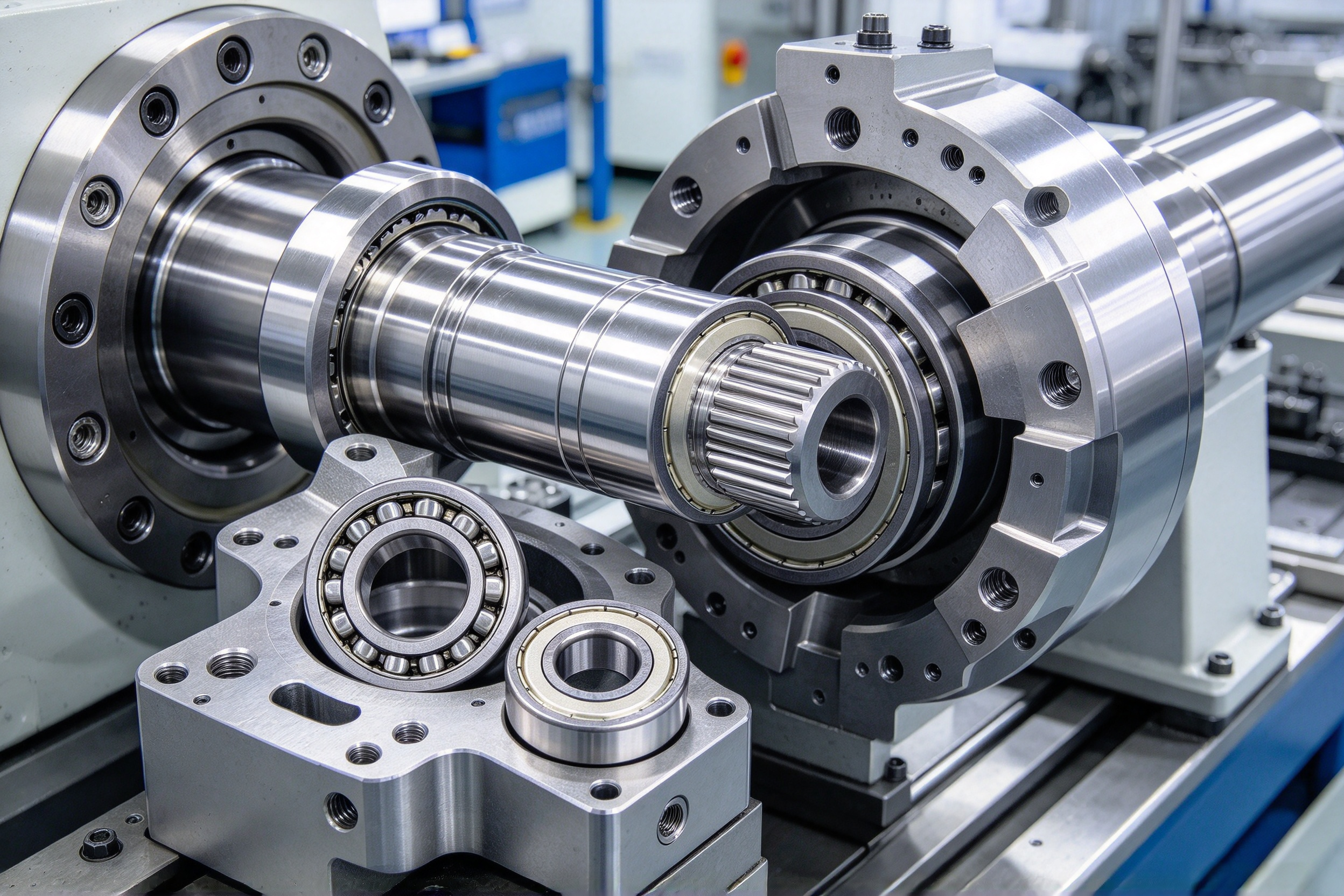
Why Thermal Stability Matters in Machine Tool Spindles
The spindle is the core component of a machine tool. Its performance directly affects tool life, surface roughness, roundness, and dimensional consistency. During operation, the spindle system must maintain stable geometry even as temperature changes.
Thermal instability usually appears as:
- Axial growth of the spindle shaft
- Radial displacement of bearing seats
- Changes in bearing internal clearance
- Increased vibration during high-speed rotation
- Loss of repeatability after warm-up cycles
Even small temperature variations can produce measurable errors in precision machining. For example, steel expands when heated, and spindle components expand at different rates depending on material, geometry, and heat distribution. If bearing preload is not correctly matched to operating conditions, these thermal changes can quickly degrade cutting quality.
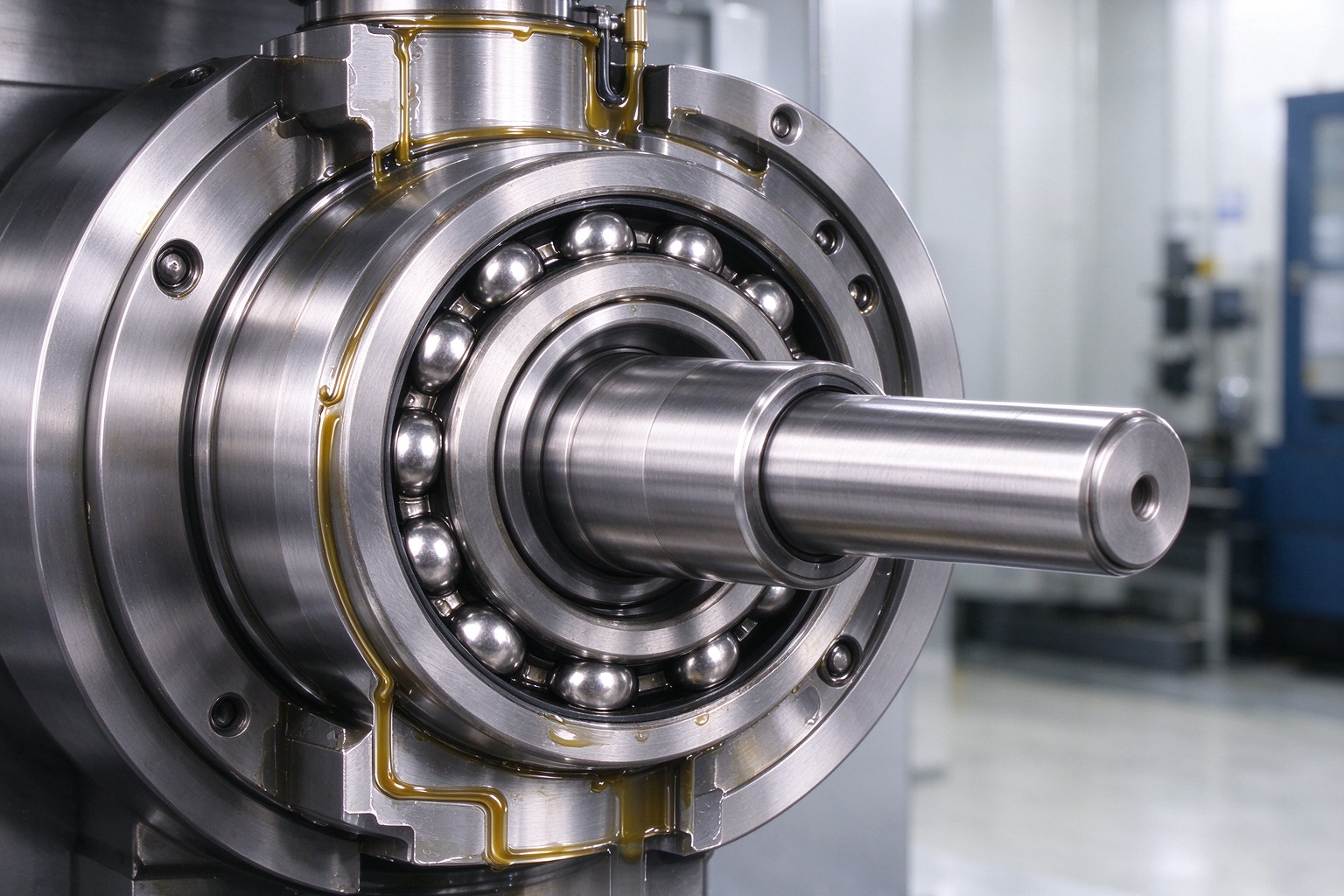
How Bearing Preload Influences Heat Generation
Bearing preload affects how rolling elements interact with raceways. When preload increases, contact between balls or rollers and raceways becomes tighter. This improves load distribution and stiffness but also increases frictional torque.
Friction generates heat. In a high-speed spindle, heat mainly comes from:
- Rolling friction between elements and raceways
- Sliding friction in contact zones
- Lubricant shear resistance
- Seal friction
- External cutting heat transferred into the spindle
If preload is too high, the bearing may operate in an overheated state. This can reduce lubricant film thickness, increase wear, and shorten service life. If preload is too low, the bearing may not maintain sufficient contact stiffness, allowing vibration and micro-movement under cutting loads.
| Preload Level | Thermal Effect | Influence on Cutting Quality |
|---|
| Preload Level | Thermal Effect | Influence on Cutting Quality |
|---|---|---|
| Too low | Lower heat generation but reduced stiffness | Higher risk of chatter and poor surface finish |
| Proper | Balanced friction and stable temperature | Better accuracy, rigidity, and repeatability |
| Too high | Higher friction and temperature rise | Faster wear, thermal drift, possible premature failure |
The Link Between Preload, Stiffness, and Surface Finish
Cutting quality depends on more than just tool geometry. Spindle stiffness determines how well the system resists deformation under cutting forces. Bearing preload directly contributes to this stiffness.
When preload is properly set, the bearing maintains consistent contact between rolling elements and raceways. This helps reduce deflection during milling, turning, or grinding operations. As a result, tool paths remain more stable, and surface roughness improves.
However, thermal expansion changes internal clearance. A bearing that has correct preload at room temperature may behave differently after the spindle reaches operating temperature. If the preload increases excessively due to thermal expansion, friction and temperature may rise further. This creates a feedback loop where heat increases preload, and higher preload generates more heat.
| Operating Condition | Bearing Behavior | Expected Cutting Result |
|---|
| Operating Condition | Bearing Behavior | Expected Cutting Result |
|---|---|---|
| Cold start | Higher initial clearance | Possible instability until warm-up |
| Stable temperature | Controlled preload | Consistent surface finish and accuracy |
| Overheated spindle | Excessive internal load | Increased vibration and dimensional error |
| Uneven heating | Asymmetric deformation | Reduced roundness and repeatability |
Choosing the Right Preload Strategy
There is no single preload value suitable for all machine tools. The optimal preload depends on spindle speed, bearing type, lubrication method, load conditions, and required accuracy.
Common preload strategies include:
- Fixed preload: Uses springs or matched bearing sets to maintain a relatively constant preload. It is often used where thermal expansion must be accommodated.
- Position preload: Sets a fixed axial position between bearing rings. It provides high stiffness but is more sensitive to thermal expansion.
- Adjustable preload: Allows preload to be tuned during assembly or maintenance. It requires careful measurement and experienced setup.
For high-speed spindles, excessive position preload can be risky because thermal growth may significantly increase internal load. For heavy-cutting applications, higher stiffness may be necessary, but heat generation must still be controlled through proper lubrication and cooling.
| Preload Strategy | Main Advantage | Main Limitation |
|---|
| Preload Strategy | Main Advantage | Main Limitation |
|---|---|---|
| Fixed preload | Better compensation for thermal expansion | May provide lower maximum stiffness |
| Position preload | High rigidity and accuracy | Sensitive to temperature changes |
| Adjustable preload | Flexible tuning for specific applications | Requires precise assembly and monitoring |
Practical Ways to Improve Thermal Stability
Improving thermal stability is not only about selecting the correct preload. It also involves system-level design and maintenance.
Lubrication plays an important role. The right lubricant type and quantity help form a stable film between rolling elements and raceways. Too much lubricant can increase churning heat, while too little may cause boundary friction and wear.
Cooling methods such as oil-air lubrication, jet lubrication, or spindle cooling jackets can help control temperature. Housing design, fit tolerances, and shaft material also influence how heat spreads through the spindle system.
Regular monitoring is equally important. Temperature sensors, vibration analysis, and periodic accuracy checks can reveal early signs of improper preload or bearing degradation. If a spindle shows increasing temperature, unusual noise, or declining surface finish, preload and lubrication conditions should be reviewed.
Conclusion
Bearing preload is a key factor in machine tool thermal stability. It affects stiffness, friction, temperature rise, and ultimately cutting quality. Proper preload helps maintain accuracy and reduces vibration, while excessive or insufficient preload can lead to thermal drift, premature wear, or poor surface finish.
For machine tool builders and maintenance teams, the goal is not simply to increase preload for higher stiffness. The better approach is to balance preload with speed, load, lubrication, and thermal behavior. When bearing preload is correctly matched to operating conditions, machine tools can achieve more stable performance, longer spindle life, and consistent cutting quality.
FAQ
Q: What is bearing preload in machine tool spindles?
A: Bearing preload is an internal load applied to rolling elements before external forces act on the bearing. It controls internal clearance and improves spindle stiffness and accuracy.
A: Bearing preload is an internal load applied to rolling elements before external forces act on the bearing. It controls internal clearance and improves spindle stiffness and accuracy.
Q: How does bearing preload affect thermal stability?
A: Proper preload balances stiffness and friction. Excessive preload increases friction and heat, while insufficient preload reduces rigidity and may cause vibration during operation.
A: Proper preload balances stiffness and friction. Excessive preload increases friction and heat, while insufficient preload reduces rigidity and may cause vibration during operation.
Q: What happens if preload is too high?
A: Too much preload raises temperature, reduces lubricant film thickness, accelerates wear, and may cause thermal drift or premature spindle failure.
A: Too much preload raises temperature, reduces lubricant film thickness, accelerates wear, and may cause thermal drift or premature spindle failure.
Q: What happens if preload is too low?
A: Too little preload reduces contact stiffness, increases the risk of chatter, and can lead to poor surface finish and reduced machining accuracy.
A: Too little preload reduces contact stiffness, increases the risk of chatter, and can lead to poor surface finish and reduced machining accuracy.
Q: Which preload strategy is best for high-speed spindles?
A: Fixed preload is often preferred for high-speed spindles because it better accommodates thermal expansion. Position preload provides higher stiffness but is more sensitive to temperature changes.
A: Fixed preload is often preferred for high-speed spindles because it better accommodates thermal expansion. Position preload provides higher stiffness but is more sensitive to temperature changes.
Q: How can thermal instability be detected early?
A: Monitor spindle temperature, vibration levels, noise, and surface finish. Rising temperature or declining accuracy after warm-up may indicate improper preload or bearing issues.
A: Monitor spindle temperature, vibration levels, noise, and surface finish. Rising temperature or declining accuracy after warm-up may indicate improper preload or bearing issues.
Q: Does lubrication affect bearing preload performance?
A: Yes. Correct lubricant type and quantity help control friction and heat. Too much lubricant increases churning heat, while too little may cause boundary friction and wear.
A: Yes. Correct lubricant type and quantity help control friction and heat. Too much lubricant increases churning heat, while too little may cause boundary friction and wear.
Post time: Nov-02-2026