


In food and beverage processing, hygiene is non-negotiable. Production lines undergo rigorous daily washdowns with high-pressure water, caustic detergents, and acidic sanitizers to meet strict food safety standards like HACCP and ISO 22000. These harsh cleaning regimes, while essential for public health, create a hostile environment for standard mechanical components. Traditional chrome steel bearings are particularly vulnerable; moisture and chemicals can penetrate seals, wash out lubricants, and cause rapid corrosion, leading to premature failure, unplanned downtime, and potential product contamination.
This is where washdown-ready stainless steel bearings become a critical engineering solution. Designed specifically for these demanding applications, they offer superior corrosion resistance, enhanced sealing, and food-safe lubrication, ensuring production lines run reliably and safely.
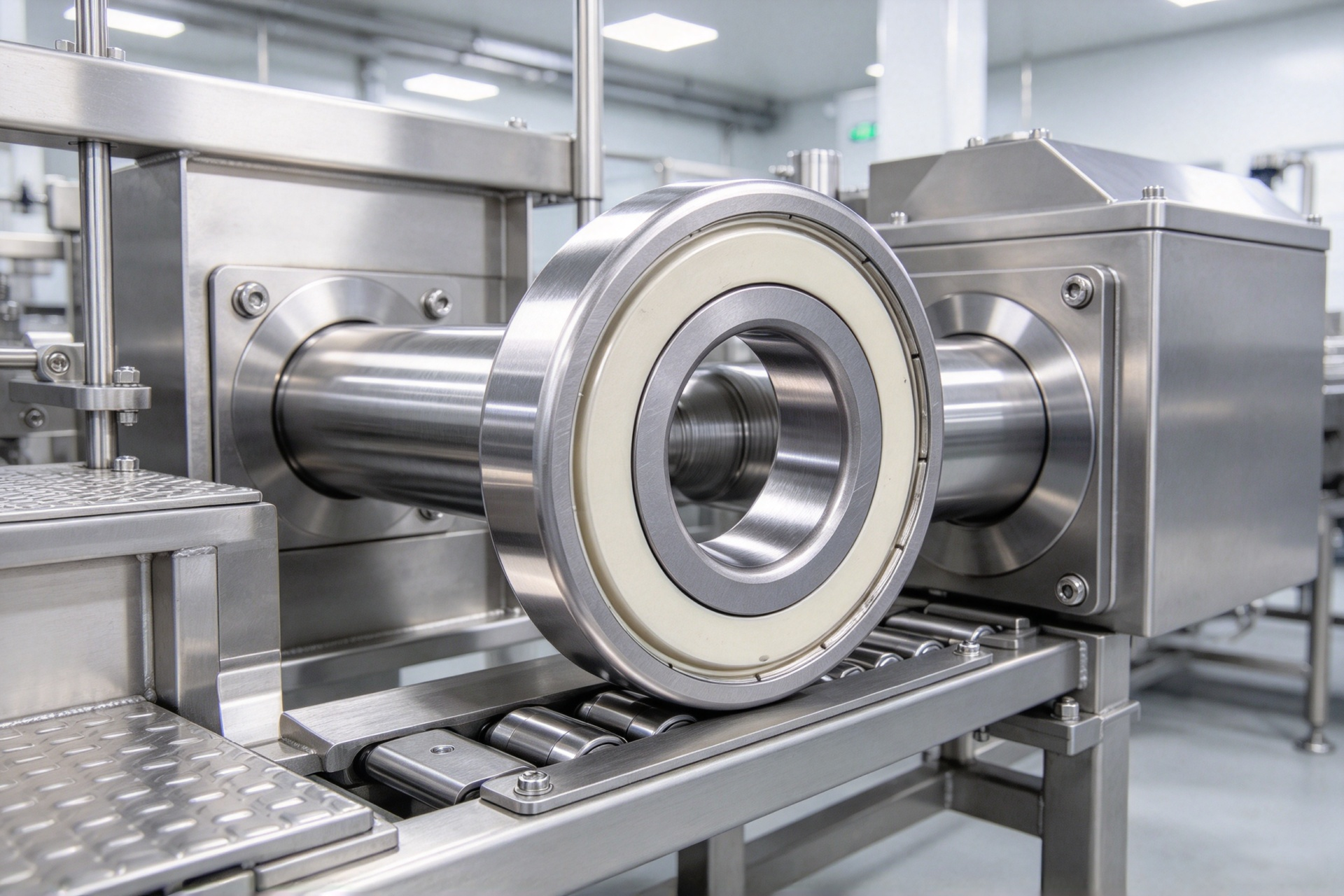
Why Standard Bearings Fail in Food Processing
The primary enemies of bearings in food processing are water ingress and chemical attack. Standard bearings, often made from chrome steel, rely on thin oil films and basic seals. During a washdown, high-pressure sprays can force water and cleaning agents past these seals. This leads to two major problems:
- Corrosion: Water reacts with the steel, causing rust on the raceways and rolling elements. This rust creates pits and roughness, increasing friction, vibration, and noise, ultimately leading to seizure.
- Lubricant Washout: The cleaning agents can emulsify and wash away the standard grease, leaving the bearing running dry. This causes rapid wear and heat generation, accelerating failure.
Furthermore, if a standard bearing fails catastrophically, metal fragments or degraded lubricant can contaminate the food product, posing a severe safety risk and potentially triggering a costly recall.
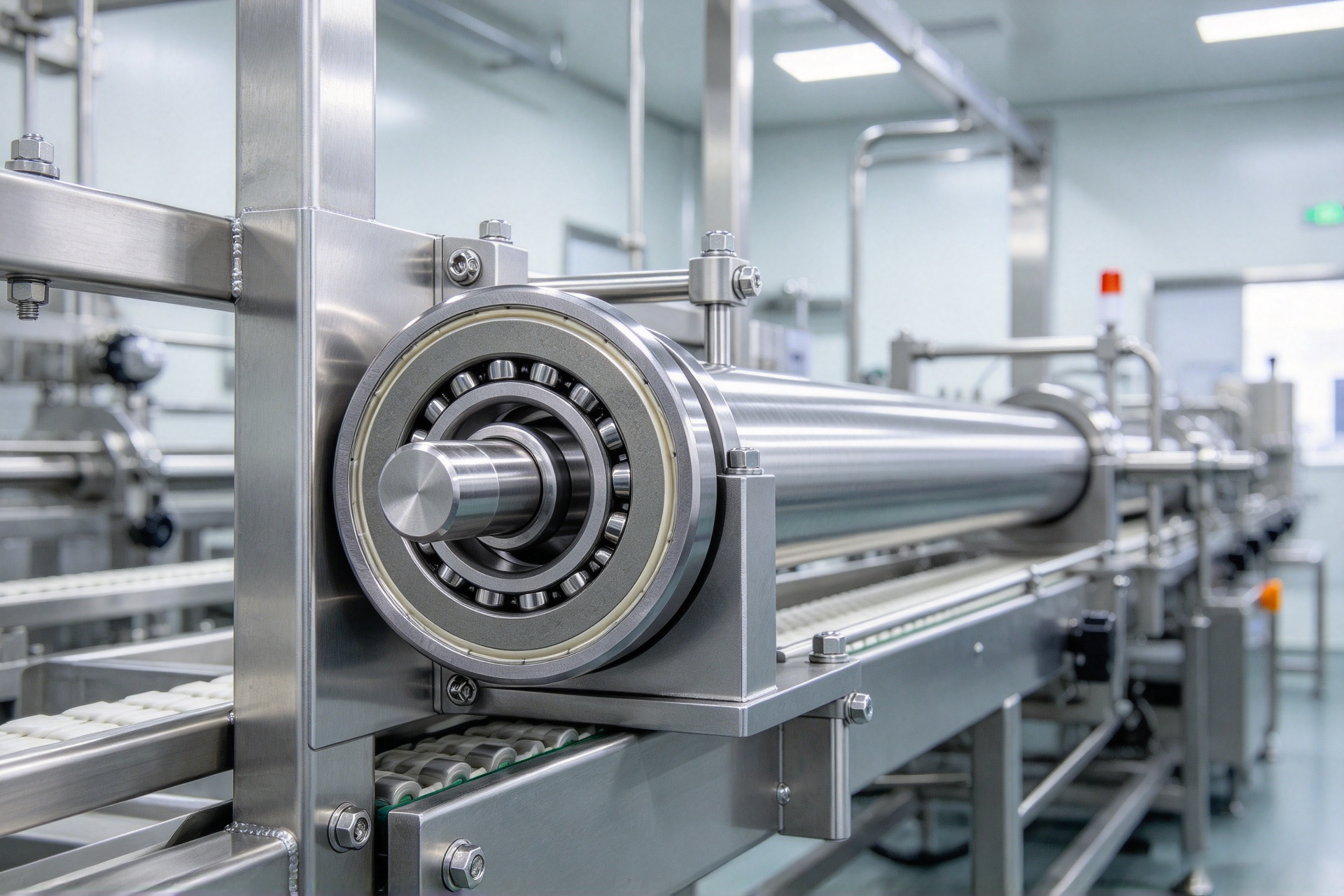
The Stainless Steel Advantage
Stainless steel bearings address these challenges head-on through specialized materials and design features.
1. Superior Corrosion Resistance
The core benefit lies in the material. Stainless steel contains chromium, which forms a passive, protective oxide layer on the surface. This layer is self-repairing in the presence of oxygen and provides excellent resistance to rust and corrosion from water, steam, and many cleaning chemicals. Common grades include:
The core benefit lies in the material. Stainless steel contains chromium, which forms a passive, protective oxide layer on the surface. This layer is self-repairing in the presence of oxygen and provides excellent resistance to rust and corrosion from water, steam, and many cleaning chemicals. Common grades include:
- AISI 304 (1.4301): Offers good general corrosion resistance and is suitable for many food processing environments. It is non-magnetic in its annealed state.
- AISI 316 (1.4401/1.4404): Contains molybdenum, providing enhanced resistance to chlorides (like salt) and acidic environments, making it ideal for harsher washdowns or processing salty or acidic foods.
- AISI 440C (1.4125): A martensitic stainless steel that can be hardened, offering higher load capacity and wear resistance than 304 or 316, while still providing good corrosion resistance. It is magnetic.
2. Advanced Sealing Solutions
Washdown-ready bearings feature robust sealing systems designed to keep contaminants out and lubricant in. Common seal types include:
Washdown-ready bearings feature robust sealing systems designed to keep contaminants out and lubricant in. Common seal types include:
- Contact Seals (e.g., RS, 2RS): Made from materials like nitrile rubber (NBR) or fluorocarbon (FKM/Viton), these seals lip against the inner ring, creating a physical barrier against water and particles. FKM seals offer better chemical and temperature resistance.
- Non-Contact Seals (e.g., Z, ZZ): Typically metal shields with a small gap, offering protection against larger particles but less effective against high-pressure water ingress. Often used in combination with contact seals or in less severe environments.
- Triple-Lip Seals & Flinger Designs: Some specialized units incorporate multiple sealing lips or flingers (rotating discs) that actively deflect water and contaminants away from the seal interface, significantly enhancing protection during high-pressure washdowns.
3. Food-Safe Lubrication
Even with excellent seals, incidental contact between lubricant and food is possible. Therefore, washdown-ready bearings are lubricated with NSF H1 registered food-grade greases. These lubricants are formulated with non-toxic ingredients and are safe for incidental food contact, meeting stringent FDA regulations (21 CFR 178.3570). Some advanced designs use solid lubricants or “Molded-Oil” technology, where oil is contained within a specialized resin matrix, eliminating the risk of grease leakage entirely and providing maintenance-free operation.
Even with excellent seals, incidental contact between lubricant and food is possible. Therefore, washdown-ready bearings are lubricated with NSF H1 registered food-grade greases. These lubricants are formulated with non-toxic ingredients and are safe for incidental food contact, meeting stringent FDA regulations (21 CFR 178.3570). Some advanced designs use solid lubricants or “Molded-Oil” technology, where oil is contained within a specialized resin matrix, eliminating the risk of grease leakage entirely and providing maintenance-free operation.
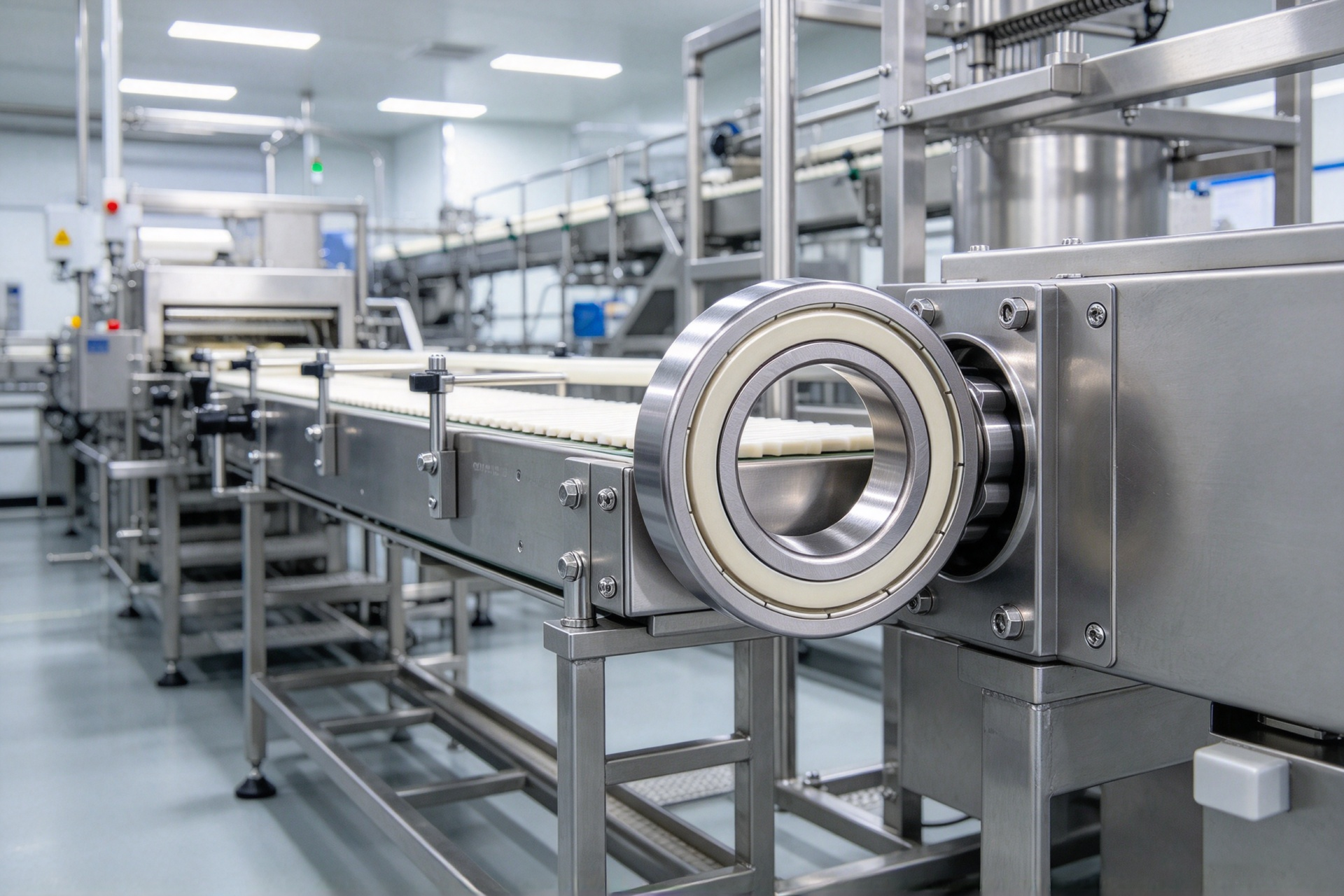
Key Design Features for Washdown Environments
Beyond material and lubrication, several design aspects contribute to the effectiveness of stainless steel bearings in food processing:
- Smooth Surfaces & Minimal Crevices: Bearings and their housings are designed with smooth, polished surfaces and minimal gaps or “bug traps” where bacteria, mold, or food particles could accumulate, facilitating easier and more effective cleaning.
- Corrosion-Resistant Housings: When used in mounted units (e.g., pillow blocks, flange units), the housings are also made from corrosion-resistant materials like stainless steel or high-performance thermoplastics (e.g., PBT), preventing housing corrosion from compromising the bearing.
- High-Temperature Stability: Bearings must withstand the elevated temperatures often used in cleaning cycles (e.g., hot water or steam). Stainless steel and appropriate seals/lubricants ensure performance isn’t degraded.
Selecting the Right Washdown-Ready Bearing
Choosing the optimal bearing involves considering several factors:
| Factor | Consideration | Recommendation |
|---|---|---|
| Corrosion Level | Mild (occasional washdown) vs. Harsh (daily, high-pressure, caustic/acidic) | 304 SS for mild; 316 SS or 440C for harsh |
| Load & Speed | Light/Moderate vs. Heavy/High-Speed | 304/316 SS for light/moderate; 440C for heavy/high-speed |
| Sealing Needs | Splash vs. High-Pressure Direct Spray | Contact seals (RS/2RS) for splash; Triple-lip/flinger for direct spray |
| Lubrication Type | Standard Food-Grade Grease vs. Maintenance-Free | H1 Grease for standard; Solid Lubricant/Molded-Oil for maintenance-free |
| Temperature Range | Ambient vs. High-Temp Cleaning | Ensure seals & grease rated for max cleaning temp |
Conclusion
Investing in washdown-ready stainless steel bearings is not just a maintenance decision; it’s a critical investment in food safety, operational efficiency, and cost reduction. By resisting corrosion, preventing lubricant washout, and utilizing food-safe materials, these specialized components help food and beverage manufacturers minimize unplanned downtime, reduce maintenance costs, extend equipment life, and, most importantly, ensure the highest standards of product hygiene and consumer safety. When specifying bearings for any food processing application exposed to moisture or cleaning agents, prioritizing washdown-ready stainless steel solutions is an essential best practice.
Frequently Asked Questions (FAQ)
Q: Why are stainless steel bearings necessary for food processing?
A: Standard chrome steel bearings rust quickly when exposed to water and cleaning chemicals. Stainless steel bearings prevent corrosion, ensuring hygiene compliance and preventing product contamination.
A: Standard chrome steel bearings rust quickly when exposed to water and cleaning chemicals. Stainless steel bearings prevent corrosion, ensuring hygiene compliance and preventing product contamination.
Q: What is the difference between AISI 304 and AISI 316 stainless steel?
A: AISI 316 contains molybdenum, offering superior resistance to chlorides (salt) and acids compared to AISI 304. Use 316 for harsh washdowns or salty environments; 304 is sufficient for general food processing.
A: AISI 316 contains molybdenum, offering superior resistance to chlorides (salt) and acids compared to AISI 304. Use 316 for harsh washdowns or salty environments; 304 is sufficient for general food processing.
Q: Can these bearings withstand high-pressure washdowns?
A: Yes. When equipped with triple-lip seals or flinger designs, stainless steel bearings effectively block high-pressure water and contaminants from entering the bearing interior.
A: Yes. When equipped with triple-lip seals or flinger designs, stainless steel bearings effectively block high-pressure water and contaminants from entering the bearing interior.
Q: Is the lubricant used safe for food contact?
A: Absolutely. We use NSF H1 registered food-grade lubricants. These are non-toxic and safe for incidental food contact, meeting strict FDA regulations.
A: Absolutely. We use NSF H1 registered food-grade lubricants. These are non-toxic and safe for incidental food contact, meeting strict FDA regulations.
Q: Do stainless steel bearings have the same load capacity as chrome steel?
A: Generally, standard stainless steel (304/316) has a slightly lower load capacity than chrome steel. However, AISI 440C stainless steel is hardened to provide high load capacity comparable to chrome steel while maintaining corrosion resistance.
A: Generally, standard stainless steel (304/316) has a slightly lower load capacity than chrome steel. However, AISI 440C stainless steel is hardened to provide high load capacity comparable to chrome steel while maintaining corrosion resistance.
Q: Are these bearings maintenance-free?
A: Many models are designed to be maintenance-free, especially those using solid lubricants or specialized resin matrices that prevent grease leakage and eliminate the need for re-lubrication.
A: Many models are designed to be maintenance-free, especially those using solid lubricants or specialized resin matrices that prevent grease leakage and eliminate the need for re-lubrication.
Post time: Sep-28-2026