


Bearing internal clearance is one of the most frequently misunderstood parameters in rolling bearing selection. Too little clearance can cause overheating and premature seizure; too much clearance can increase vibration, noise, and reduce fatigue life. For engineers, procurement teams, and maintenance professionals, understanding the difference between C2, CN, C3, and C4 clearance is essential for reliable equipment performance.
What Is Bearing Internal Clearance?
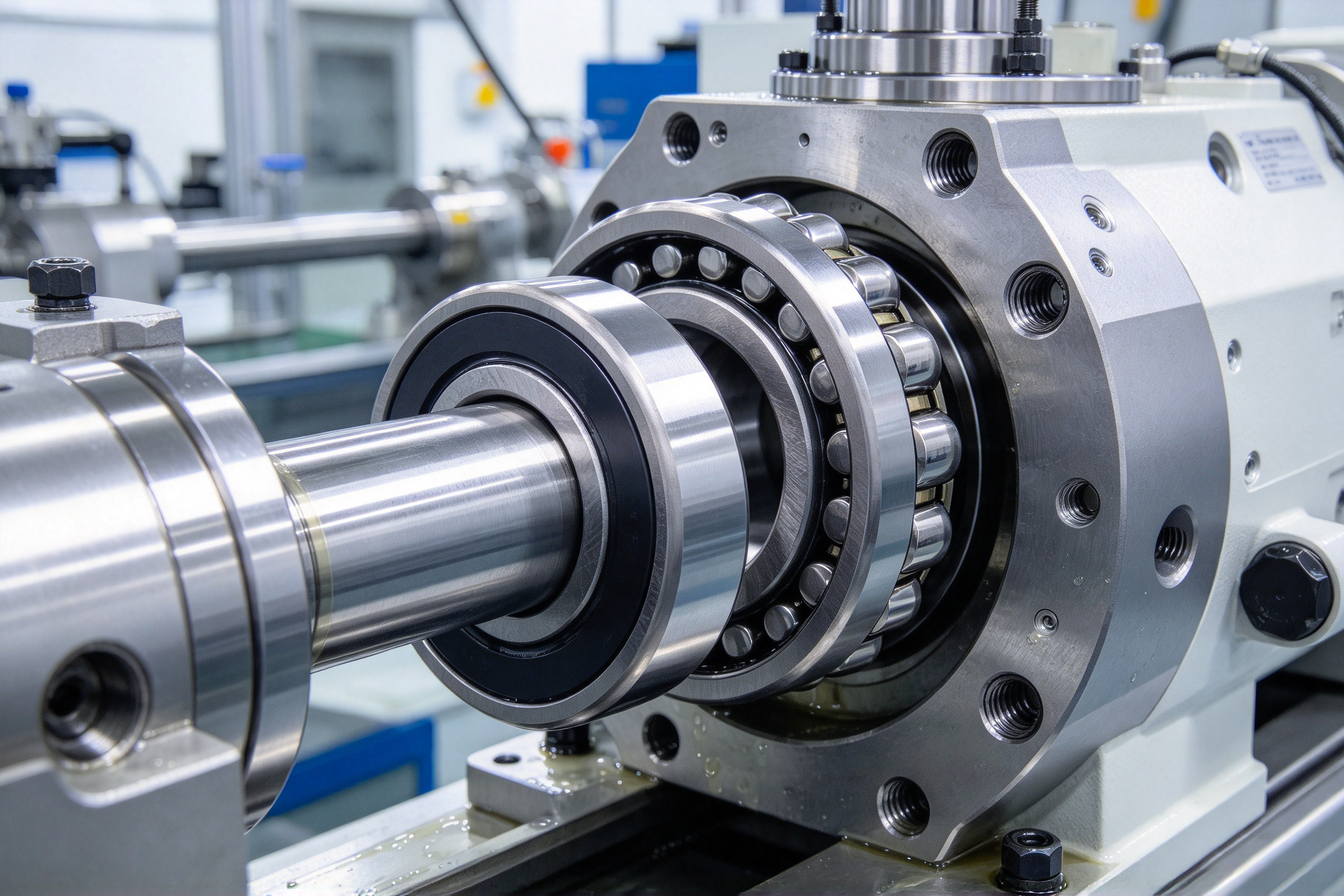
Bearing internal clearance refers to the amount of free movement between the inner ring, outer ring, and rolling elements before the bearing is mounted and subjected to operating conditions. It is usually expressed as radial internal clearance, although axial clearance also exists depending on bearing type.
There are three important states of clearance:
| Clearance State | Definition | Why It Matters |
|---|
| Clearance State | Definition | Why It Matters |
|---|---|---|
| Initial clearance | Clearance measured before mounting | Shown in manufacturer catalogs |
| Residual clearance | Clearance after mounting | Reduced by interference fits |
| Operating clearance | Clearance during operation | Affected by temperature, load, and fit |
A bearing’s initial clearance is not the same as its operating clearance. During operation, interference fits expand the inner ring and compress the outer ring, reducing clearance. Temperature differences between the inner and outer rings further reduce clearance, while load-induced elastic deformation may slightly increase it.
The simplified relationship is:
Operating clearance ≈ Initial clearance − Fit reduction − Thermal reduction + Load effect
The design goal is usually a small positive operating clearance. If operating clearance becomes zero or negative, the bearing may overheat. If it is excessively large, vibration and rolling element slip can occur.
Clearance Groups Explained: C2, CN, C3, C4
Bearing clearance groups are standardized according to ISO and national standards. CN, sometimes called C0, represents normal clearance. C2 is smaller than normal, while C3 and C4 are progressively larger.
| Clearance Group | Relative Size | Typical Applications |
|---|
| Clearance Group | Relative Size | Typical Applications |
|---|---|---|
| C2 | Smaller than CN | Precision spindles, low-noise instruments, light-load applications with tight fits |
| CN / C0 | Normal | General industrial equipment, standard motors, conveyors, gearboxes |
| C3 | Larger than CN | High-speed motors, pumps, fans, compressors, heavy interference fits |
| C4 | Larger than C3 | High-temperature equipment, severe shock loads, large interference fits, vibrating machinery |
C2 bearings are chosen when high rotational accuracy and low vibration are required. However, C2 is not suitable for high-temperature or heavy interference fit applications because the already small clearance can disappear during operation.
CN clearance remains the default choice for most general applications. It offers a balanced compromise between noise, vibration, thermal behavior, and load distribution.
C3 is the most common “upgraded” clearance in industrial practice. It provides additional space to compensate for clearance loss caused by interference fits and thermal expansion. This is why C3 is widely used in electric motors, industrial fans, water pumps, and compressors.
C4 clearance is reserved for more demanding conditions. It is typically used where temperature differences between the inner and outer rings are large, where heavy shock loads exist, or where very tight fits are unavoidable.
Typical Radial Clearance Values
The following table shows typical radial internal clearance ranges for deep groove ball bearings with cylindrical bores. Values are indicative and should always be confirmed against the applicable ISO standard or manufacturer catalog.
| Bore Diameter d (mm) | CN (μm) | C3 (μm) | C4 (μm) |
|---|
| Bore Diameter d (mm) | CN (μm) | C3 (μm) | C4 (μm) |
|---|---|---|---|
| 10 – 18 | 3 – 18 | 11 – 25 | 18 – 33 |
| 30 – 40 | 5 – 20 | 15 – 33 | 28 – 46 |
| 50 – 65 | 8 – 28 | 23 – 43 | 38 – 61 |
| 80 – 100 | 12 – 36 | 30 – 58 | 53 – 84 |
These values apply to unmounted bearings under zero measuring load. Once the bearing is press-fitted onto a shaft or into a housing, the actual clearance will decrease.
How to Select the Right Clearance
Clearance selection should not be based on a single factor. The most reliable approach considers fit, temperature, speed, load, and precision requirements together.
1. Fit and Mounting Method
Interference fits reduce internal clearance. When the inner ring is mounted with a tight fit on a solid steel shaft, the inner ring expands, and clearance decreases. A common engineering estimate is that radial clearance may reduce by approximately 70 to 90 percent of the effective interference.
If a heavy interference fit is required, CN clearance may become insufficient after mounting. In such cases, C3 or C4 is often more appropriate.
2. Operating Temperature
During operation, the inner ring is usually hotter than the outer ring. This temperature difference causes differential thermal expansion, which further reduces internal clearance.
Applications such as dryers, kilns, paper machines, steel mills, and high-speed motors often require larger initial clearance. If the temperature difference between rings is significant, C3 or C4 should be considered.
3. Speed and Load
High-speed bearings generate more heat, so they generally benefit from larger clearance. Heavy or shock loads may also require more clearance to accommodate deformation and thermal effects. However, excessively large clearance can reduce load-carrying uniformity and increase vibration.
For high-precision, low-speed, and low-vibration applications, C2 or CN may be preferred.
4. Noise and Precision Requirements
Smaller clearance can improve rotational accuracy and reduce axial play, which is beneficial for precision spindles and measuring instruments. However, if the operating environment involves heat or tight fits, C2 may cause premature failure. In electric motors, CM clearance is sometimes specified as a specialized option between CN and C3 to balance noise performance and thermal compensation.

Common Selection Mistakes
One frequent mistake is assuming that larger clearance is always safer. C4 is not a universal upgrade. Using C4 in a low-speed, low-temperature application may increase noise and reduce bearing life.
Another common error is replacing a C3 bearing with CN without checking fit and temperature conditions. A bearing that runs correctly with C3 clearance may overheat if CN clearance becomes negative after mounting.
A third mistake is ignoring the difference between initial clearance and operating clearance. Catalog values describe the bearing before installation, not its condition during service.
Practical Selection Checklist
Before confirming a clearance group, review the following points:
- Confirm whether the inner ring, outer ring, or both use interference fits.
- Estimate the temperature difference between the inner and outer rings.
- Consider operating speed and expected heat generation.
- Check whether low noise or high precision is required.
- Verify the bearing type, size, and applicable standard.
- Consult the manufacturer when operating conditions are extreme.

Final Recommendation
For most general industrial applications, CN clearance remains the safest starting point. When interference fits are heavy, speeds are high, or operating temperatures are elevated, C3 is usually the better choice. C4 should be reserved for severe thermal or mechanical conditions. C2 is suitable only when precision, low vibration, and controlled temperature are guaranteed.
Selecting bearing internal clearance is not about choosing the largest or smallest value. It is about ensuring that the bearing maintains a small positive clearance under real operating conditions. When fit, temperature, speed, and load are evaluated together, clearance selection becomes a reliable tool for extending bearing life and improving machine performance.
FAQ: Bearing Internal Clearance (C2, CN, C3, C4)
Q: What does bearing internal clearance mean?
A: It is the free movement between the inner ring, outer ring, and rolling elements before the bearing is mounted and loaded.
A: It is the free movement between the inner ring, outer ring, and rolling elements before the bearing is mounted and loaded.
Q: What is the difference between C2, CN, C3, and C4?
A: C2 is smaller than normal, CN is normal clearance, C3 is larger than normal, and C4 is larger than C3.
A: C2 is smaller than normal, CN is normal clearance, C3 is larger than normal, and C4 is larger than C3.
Q: Which clearance is best for general industrial applications?
A: CN (normal clearance) is usually the default choice for standard motors, gearboxes, conveyors, and general machinery.
A: CN (normal clearance) is usually the default choice for standard motors, gearboxes, conveyors, and general machinery.
Q: When should I choose C3 clearance?
A: Choose C3 when the bearing has a heavy interference fit, high speed, elevated operating temperature, or significant heat generation.
A: Choose C3 when the bearing has a heavy interference fit, high speed, elevated operating temperature, or significant heat generation.
Q: Is C4 clearance always better than C3?
A: No. C4 is only suitable for severe conditions such as high temperature, heavy shock loads, or very tight fits. In normal applications, it may increase noise and reduce life.
A: No. C4 is only suitable for severe conditions such as high temperature, heavy shock loads, or very tight fits. In normal applications, it may increase noise and reduce life.
Q: Can I replace a C3 bearing with a CN bearing?
A: Not without checking fit and temperature. Replacing C3 with CN can cause negative operating clearance and lead to overheating.
A: Not without checking fit and temperature. Replacing C3 with CN can cause negative operating clearance and lead to overheating.
Q: Does mounting affect bearing clearance?
A: Yes. Interference fits reduce internal clearance. The tighter the fit, the greater the reduction.
A: Yes. Interference fits reduce internal clearance. The tighter the fit, the greater the reduction.
Q: How does temperature affect bearing clearance?
A: If the inner ring runs hotter than the outer ring, thermal expansion reduces internal clearance during operation.
A: If the inner ring runs hotter than the outer ring, thermal expansion reduces internal clearance during operation.
Q: What is the difference between initial clearance and operating clearance?
A: Initial clearance is measured before mounting. Operating clearance is the actual clearance during service, after fit and temperature effects.
A: Initial clearance is measured before mounting. Operating clearance is the actual clearance during service, after fit and temperature effects.
Q: Should I always choose larger clearance to be safe?
A: No. Excessive clearance can increase vibration, noise, rolling element slip, and reduce bearing fatigue life.
A: No. Excessive clearance can increase vibration, noise, rolling element slip, and reduce bearing fatigue life.
Post time: Nov-09-2026