


In the high-stakes world of industrial manufacturing, the pressure to cut costs is relentless. When it comes to maintenance, procurement managers are often faced with a simple choice on a spreadsheet: a standard bearing for $50 or a premium, high-performance bearing for $80.
In a vacuum, the decision seems obvious. Why pay 60% more for a component that looks identical?
However, this “sticker price” mentality is a dangerous trap. It ignores the silent profit killer that haunts factories worldwide: unplanned downtime. As industry data increasingly shows, the purchase price of a bearing is often less than 1% of the total cost associated with its failure.
To understand the true Return on Investment (ROI) of premium bearings, we must look beyond the invoice and calculate the cost of reliability.
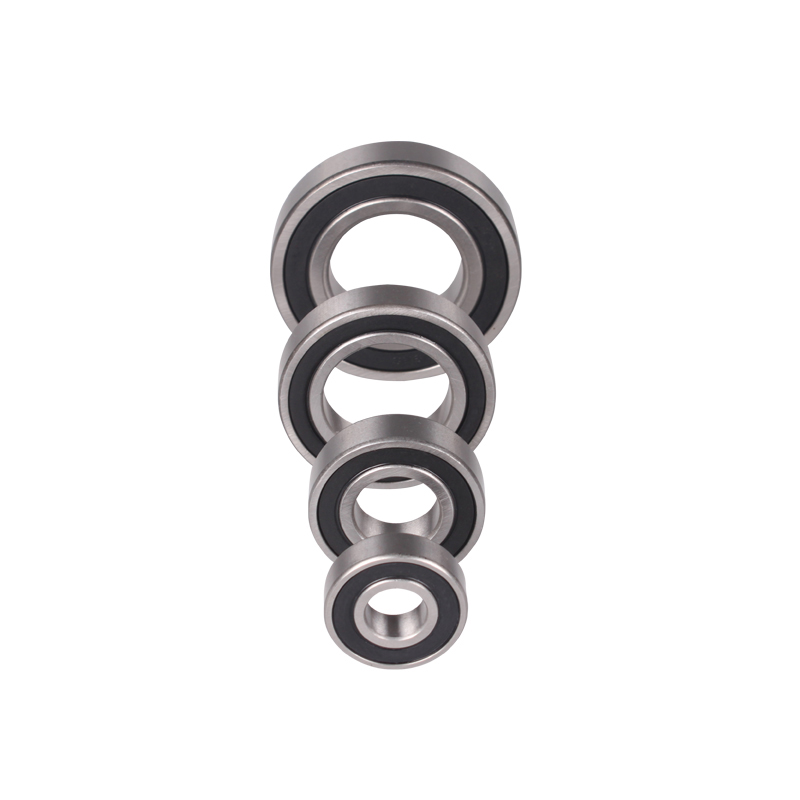
The Iceberg of Maintenance Costs
The concept of “Total Cost of Ownership” (TCO) is well known in logistics, but often ignored in component selection. When a bearing fails, the cost isn’t just the replacement part. It is an iceberg. The price of the bearing is the tip; the massive, hidden costs lie beneath the surface.
The Multiplier Effect of Failure
Industry research suggests that the indirect costs of a machine breakdown can be 10 to 20 times higher than the direct repair costs. When a critical bearing seizes, the financial impact ripples through the entire operation:
Industry research suggests that the indirect costs of a machine breakdown can be 10 to 20 times higher than the direct repair costs. When a critical bearing seizes, the financial impact ripples through the entire operation:
- Production Loss: This is the most immediate hit. If a bottling line produces $5,000 worth of product per hour and goes down for 4 hours, you have lost $20,000 in revenue.
- Labor Premiums: Emergency repairs rarely happen during a 9-to-5 shift. They happen at 2 AM on a Sunday. This triggers overtime pay for maintenance teams or premium “emergency call-out” fees for external contractors.
- Secondary Damage: A failing bearing rarely dies alone. It can damage shafts, seals, and housings. A $100 bearing failure can easily lead to a $5,000 motor replacement.
- Waste and Quality: During the instability leading up to a failure (vibration, heat), the machine often produces out-of-spec parts that must be scrapped.
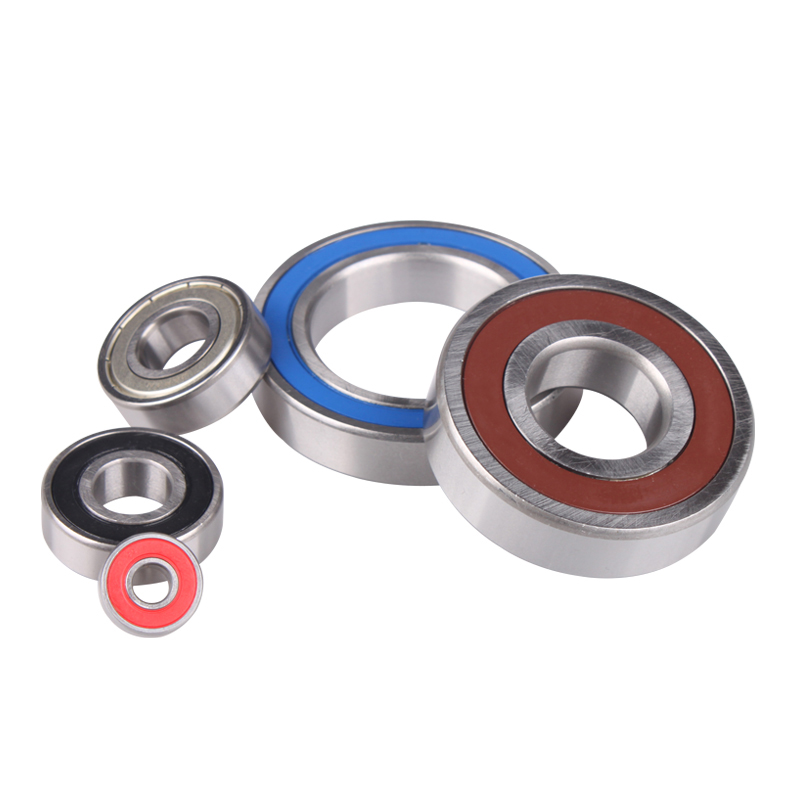
The “False Economy” of Standard Components
Standard bearings are designed for general applications with moderate loads and speeds. When pushed to the limits of modern high-speed manufacturing, they become the weak link.
Consider the issue of lubrication and contamination, which are responsible for the vast majority of premature bearing failures. Premium bearings often come with advanced sealing technologies and optimized lubrication packages that standard bearings lack.
Comparative Failure Analysis
| Feature | Standard Bearing | Premium Bearing |
|---|---|---|
| Sealing | Basic rubber seals (prone to wear) | Advanced labyrinth or magnetic seals |
| Lubrication | Generic grease (50% fill) | High-performance grease (optimized fill) |
| Material | Standard chrome steel | Vacuum degassed steel (cleaner) |
| Primary Failure Mode | Contamination & Lubrication loss | Fatigue (after design life) |
By choosing the standard option, a facility is essentially accepting a higher probability of “infant mortality”—failure that occurs long before the component reaches its theoretical lifespan.
Calculating the ROI: A Real-World Scenario
Let’s apply this to a concrete example to see how the math works. Imagine a packaging facility with a critical conveyor motor running 24/7.
Scenario A: The “Cheap” Route
The facility uses standard bearings costing $50. Due to the harsh environment (dust and vibration), these bearings fail every 12 months.
The facility uses standard bearings costing $50. Due to the harsh environment (dust and vibration), these bearings fail every 12 months.
- Part Cost: $50
- Labor (4 hours @ $100/hr overtime): $400
- Downtime (4 hours @ $2,000/hr lost production): $8,000
- Total Annual Cost: $8,450
Scenario B: The Premium Investment
The facility switches to a premium, sealed-for-life bearing costing $120. The superior sealing extends the life to 3 years.
The facility switches to a premium, sealed-for-life bearing costing $120. The superior sealing extends the life to 3 years.
- Part Cost: $120 (amortized over 3 years = $40/year)
- Labor (Planned maintenance, 2 hours @ $50/hr): $100 (amortized = $33/year)
- Downtime (Planned, minimal impact): $0
- Total Annual Cost: $73
The Result: By spending more upfront, the facility saves over $8,300 per year, per machine. On a factory floor with 50 such machines, that is a recurring saving of over $400,000 annually.
The Strategic Advantage of Predictability
Beyond the immediate financial savings, premium bearings offer a strategic advantage: predictability.
Modern premium components are often designed to work in tandem with Condition Monitoring (CM) systems. Because they fail more predictably (through gradual fatigue rather than sudden seizure), they allow maintenance teams to transition from reactive “fire-fighting” to predictive maintenance.
Reactive vs. Predictive Maintenance Costs
| Cost Category | Reactive (Standard Parts) | Predictive (Premium Parts) |
|---|---|---|
| Repair Timing | Emergency (Unplanned) | Scheduled (Planned) |
| Spare Parts Inventory | High (Must stock everything) | Low (Just-in-time ordering) |
| Equipment Life | Reduced (Shock loads) | Maximized |
| Safety Risk | High | Low |
Conclusion: Reliability is an Investment, Not an Expense
In the current economic climate, where supply chains are fragile and energy costs are high, the reliability of your assets is your most valuable currency.
Calculating the ROI of premium bearings requires a shift in mindset. It requires looking at the purchase order not as a cost center, but as an insurance policy against the catastrophic costs of downtime. When you factor in the prevention of lost production, the elimination of overtime labor, and the protection of secondary assets, the “expensive” bearing becomes the most profitable purchase you can make.
Don’t let a $30 saving on a component cost you $30,000 in production. Choose reliability. Choose premium.
Frequently Asked Questions (FAQ)
-
Why are premium bearings more cost-effective in the long run?
Although premium bearings have a higher initial purchase price, they significantly extend service life and reduce the risk of unexpected failure. By minimizing unplanned downtime, emergency labor costs, and secondary equipment damage, the Total Cost of Ownership (TCO) is drastically lower compared to standard bearings. -
How is the ROI of a premium bearing calculated?
ROI is calculated by comparing the Total Cost of Ownership (TCO) of both options. You must factor in the purchase price, installation labor, and—most critically—the cost of production loss during downtime. Premium bearings typically offer a higher ROI because they prevent expensive, unplanned停机 (downtime). -
What is the “Iceberg Theory” in bearing maintenance?
This theory suggests that the visible cost (the price of the bearing) is only a small fraction of the total expense. The hidden costs beneath the surface—such as lost production revenue, overtime pay for repairs, and scrap material—often exceed the component cost by 10 to 20 times. -
Do premium bearings help with predictive maintenance?
Yes. Premium bearings are often manufactured with higher precision and cleaner steel, leading to more predictable wear patterns (fatigue) rather than sudden failure. This reliability allows condition monitoring systems to detect issues early, enabling maintenance teams to schedule repairs rather than reacting to emergencies. -
What are the risks of using standard bearings in harsh environments?
Standard bearings often lack the advanced sealing and high-performance lubrication found in premium models. In environments with dust, moisture, or high vibration, standard bearings are prone to contamination and lubrication failure, leading to significantly shorter lifespans and higher replacement frequency.
Post time: May-20-2026