


In the high-stakes world of pharmaceutical research and development, precision and purity are non-negotiable. At the heart of countless critical processes, from isolating delicate cellular components to purifying complex protein structures, lies the centrifuge. This workhorse of the lab subjects samples to immense gravitational forces, or “High-G forces,” to achieve rapid and efficient separation. However, the reliability of a centrifuge is only as strong as its core mechanical component: the bearing.
For pharmaceutical R&D, the demands on centrifuge bearings are exceptionally stringent. They must not only withstand extreme rotational speeds and dynamic loads but also operate with unwavering stability to ensure sample integrity and process reproducibility. A bearing failure can mean the loss of irreplaceable samples, costly downtime, and compromised research timelines. This article delves into the critical role of advanced bearing solutions in powering the centrifuges that drive pharmaceutical innovation.
The Challenge of High-G Environments
Modern laboratory centrifuges, especially ultracentrifuges, operate at speeds that can exceed 100,000 revolutions per minute (RPM), generating forces hundreds of thousands of times greater than gravity. In this demanding environment, bearings face a unique set of challenges:
- Extreme Rotational Speeds: High speeds generate significant heat and centrifugal forces within the bearing itself, which can lead to lubricant breakdown and premature material fatigue.
- Precision and Low Vibration: Any imbalance or runout in the bearing translates directly into vibration, which can disrupt the delicate separation gradients within the centrifuge rotor, leading to poor resolution and cross-contamination of samples.
- Rigidity and Load Capacity: During acceleration and deceleration, bearings must support substantial radial and axial loads without deflecting, ensuring the rotor remains perfectly centered.
- Cleanliness and Contamination Control: In pharmaceutical applications, preventing contamination is paramount. Bearings must be sealed effectively to prevent lubricant from migrating into the sample chamber and to keep external contaminants out.
Engineering Solutions for Unmatched Performance
To meet these formidable challenges, bearing manufacturers have developed specialized solutions that go far beyond standard industrial components. The focus is on a holistic system approach, integrating advanced materials, precision engineering, and tailored lubrication.
1. Advanced Materials: The Foundation of Reliability
The choice of material is critical. While high-carbon chromium steel (like GCr15) remains a robust choice for many applications, the most demanding centrifuge environments often call for more advanced options.
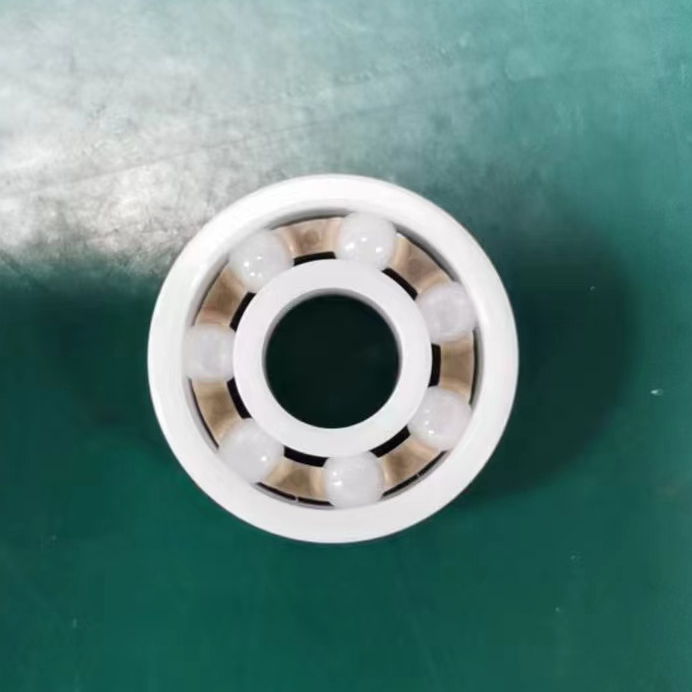
- Ceramic Hybrid Bearings: These bearings feature rings made from high-grade bearing steel but utilize rolling elements (balls) made from silicon nitride (Si3N4). Silicon nitride is significantly lighter than steel, which reduces centrifugal forces and heat generation at high speeds. Its inherent hardness and corrosion resistance also contribute to a longer operational life and better performance in various chemical environments.
- Specialized Coatings: Coatings like Diamond-Like Carbon (DLC) can be applied to bearing surfaces to drastically reduce friction and wear. This not only enhances efficiency but also minimizes the generation of particulate matter, a critical factor in maintaining a clean separation environment.
2. Precision Manufacturing and Design
The performance of a centrifuge bearing is a direct result of its manufacturing precision.
- Super-Finishing: The raceways of high-performance bearings undergo super-finishing processes to achieve surface roughness in the nanometer range (e.g., Ra < 0.01µm). This ultra-smooth surface minimizes friction, reduces heat, and ensures exceptionally quiet and vibration-free rotation.
- Optimized Internal Geometry: The internal design, including the raceway curvature and cage design, is meticulously engineered to handle the specific load and speed requirements of centrifuge applications. This ensures optimal stress distribution and prevents skidding of the rolling elements.
3. Intelligent Lubrication Strategies
Lubrication is the lifeblood of any bearing, and in high-speed centrifuges, it becomes even more critical. The wrong lubricant or an incorrect quantity can lead to rapid failure.
- Specialized Greases: For applications where grease lubrication is preferred for its sealing properties, specialized high-speed greases are used. These are formulated to maintain their structural integrity and viscosity under high shear forces and temperatures, preventing bleed-out and ensuring consistent lubrication.
- Oil-Air or Oil-Mist Lubrication: For the highest-speed applications, a precise oil-air or oil-mist system provides a continuous, minimal amount of fresh oil to the bearing. This method effectively removes heat while maintaining a thin, stable lubricating film, allowing for maximum speed and longevity.
Selecting the Right Bearing for Your Applicatio
Choosing the appropriate bearing solution requires a clear understanding of the centrifuge’s operational parameters. The table below provides a comparative overview of common bearing types used in centrifuge applications.
| Bearing Type | Key Characteristics | Ideal For |
|---|---|---|
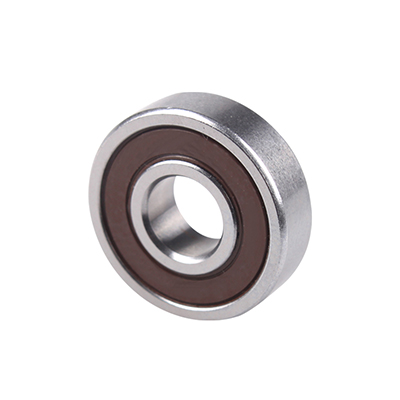
| Deep Groove Ball Bearing | Versatile, handles both radial and axial loads, cost-effective. | General-purpose centrifuges with moderate speeds and loads. |
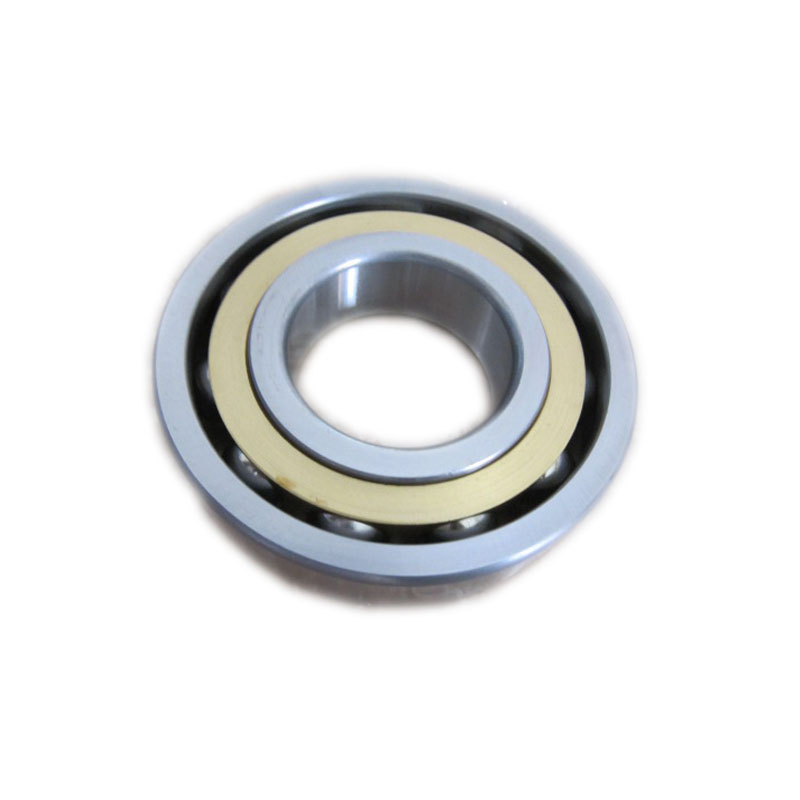
| Angular Contact Ball Bearing | Designed to handle high axial loads in one direction, excellent rigidity. | High-speed centrifuges where precise axial positioning of the rotor is critical. Often used in pairs. |
| Ceramic Hybrid Bearing | Lower density, higher speed capability, reduced heat generation, corrosion-resistant. | Ultracentrifuges and applications requiring the highest levels of purity and performance. |
A Partnership for Innovation
The development of a reliable centrifuge is a collaborative effort. Leading bearing manufacturers work closely with centrifuge designers from the earliest stages of development. This partnership involves extensive testing on specialized rigs to simulate real-world operating conditions, allowing for the optimization of the entire bearing system—material, geometry, lubrication, and fit.
This collaborative approach ensures that the final bearing solution is not just a component, but a fully integrated and validated part of the centrifuge’s performance ecosystem. It is this synergy between bearing technology and centrifuge engineering that empowers pharmaceutical researchers to push the boundaries of science, confident in the reliability and precision of their equipment.
In conclusion, as pharmaceutical R&D continues to demand faster, cleaner, and more precise separations, the role of the bearing becomes ever more critical. By leveraging advanced materials, nano-level precision, and intelligent lubrication, modern bearing solutions are engineered to conquer the challenges of High-G forces, providing the stable, reliable foundation upon which groundbreaking discoveries are made.
FAQ
Q1: What is the main advantage of ceramic hybrid bearings in high-speed centrifuges?
A1: Ceramic (silicon nitride) balls are lighter than steel, which reduces centrifugal force and heat generation at high speeds, allowing for higher RPMs and longer life.
Q2: Why is super-finishing important for centrifuge bearings?
A2: Super-finishing creates an ultra-smooth surface that minimizes friction and vibration, which is critical for preventing sample disturbance and ensuring precise separation.
Q3: How do manufacturers prevent lubricant contamination in pharmaceutical centrifuges?
A3: Manufacturers use specialized high-speed greases that resist bleed-out, or oil-air lubrication systems that provide precise, minimal lubrication without excess.
Q4: Which bearing type is best suited for an ultracentrifuge?
A4: Ceramic hybrid bearings or precision angular contact ball bearings are typically best suited for ultracentrifuges due to their ability to handle extreme speeds and rigidity requirements.
Post time: May-13-2026