


The global textile industry is undergoing a seismic shift. Driven by the dual pressures of rising labor costs and the demand for higher efficiency, manufacturers are rapidly transitioning toward high-speed, wide-width, and intelligent automated looms. However, this technological leap brings a significant challenge: noise pollution.
As a premier bearing manufacturer, we understand that the heart of a quiet loom lies in its precision components. In this article, we explore how next-generation low-noise bearings are not just reducing decibels but are actively extending the lifespan of modern weaving machinery.
The Acoustic Challenge in Modern Weaving
According to international standards like ISO 23771:2015, a “significant noise hazard” is defined as an A-weighted sound pressure level exceeding 70 dB(A) at operating positions. In high-speed weaving workshops, where dozens of machines operate simultaneously, noise levels can easily exceed safe limits, leading to operator fatigue and regulatory non-compliance.
The primary sources of this noise are often mechanical vibrations caused by:
- High-speed rotation of main shafts.
- Impact forces during the “beat-up” phase of weaving.
- Friction in bearing assemblies due to inadequate lubrication or poor sealing.
To combat this, bearing design must evolve from simple load-bearing components to sophisticated systems engineered for silence and stability.
Engineering Silence: The Technology Behind Low-Noise Bearings
Our latest R&D initiatives focus on three critical areas to mitigate noise in automated looms:
1. Optimized Raceway Geometry
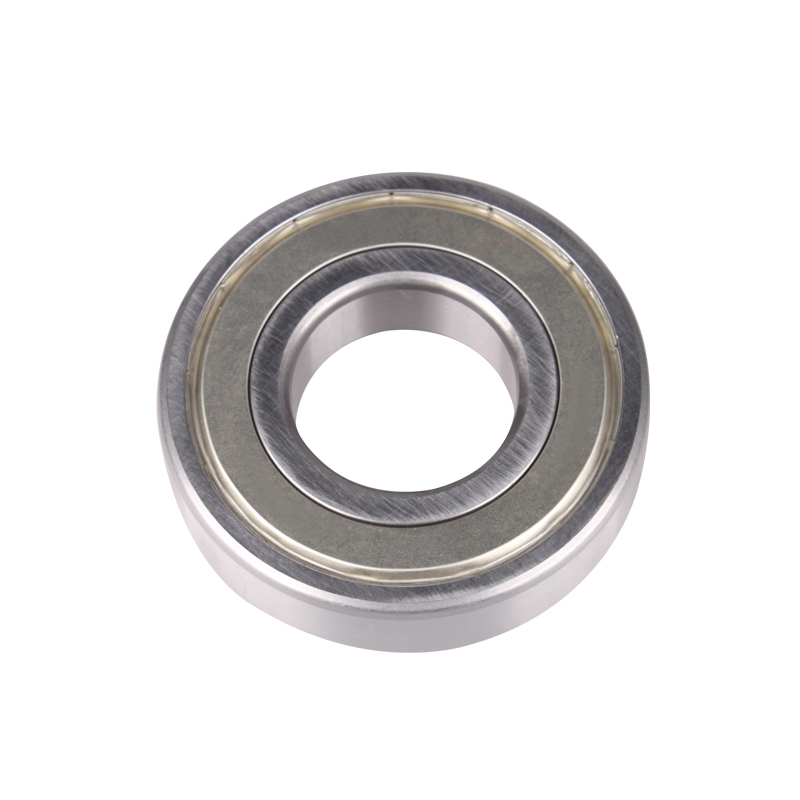
Unlike standard bearings, low-noise variants for textile machinery feature raceways with ultra-precision grinding. By minimizing surface waviness, we reduce the vibration generated by rolling elements. For instance, our new Upper Roller Bearings utilize a double-groove design that significantly lowers friction and radial clearance, ensuring smoother rotation even at high RPMs.
Unlike standard bearings, low-noise variants for textile machinery feature raceways with ultra-precision grinding. By minimizing surface waviness, we reduce the vibration generated by rolling elements. For instance, our new Upper Roller Bearings utilize a double-groove design that significantly lowers friction and radial clearance, ensuring smoother rotation even at high RPMs.
2. Advanced Sealing Solutions
Textile mills are harsh environments filled with lint and dust. Contamination is the enemy of silence. We have developed high-performance sealing structures—such as labyrinth seals combined with felt rings—that prevent fiber ingress. This not only keeps the noise levels down by maintaining clean lubrication but also extends the bearing’s service life by preventing abrasive wear.
Textile mills are harsh environments filled with lint and dust. Contamination is the enemy of silence. We have developed high-performance sealing structures—such as labyrinth seals combined with felt rings—that prevent fiber ingress. This not only keeps the noise levels down by maintaining clean lubrication but also extends the bearing’s service life by preventing abrasive wear.
3. Specialized Lubrication
The choice of grease is paramount. We utilize low-noise greases with optimal viscosity that maintain a stable oil film under the high temperatures and speeds typical of modern rapier and air-jet looms.
The choice of grease is paramount. We utilize low-noise greases with optimal viscosity that maintain a stable oil film under the high temperatures and speeds typical of modern rapier and air-jet looms.
Comparative Analysis: Standard vs. Next-Gen Bearings
To illustrate the impact of these technological upgrades, we have compiled a comparison of standard bearings versus our specialized low-noise solutions designed for next-gen automated looms.
| Feature | Standard Industrial Bearing | Next-Gen Low-Noise Textile Bearing |
|---|---|---|
| Radial Clearance | Standard (C0/C3) | Precision Pre-load / Small Clearance |
| Sealing Type | Basic Rubber Seal (RS/2RS) | Multi-stage Labyrinth & Felt Seal |
| Raceway Finish | Standard Grind | Super-finished / Polished |
| Noise Level | > 75 dB(A) | < 65 dB(A) |
| Primary Benefit | Cost-effective for general use | Extended life & Regulatory Compliance |
Real-World Application: The “Zero-Modification” Upgrade
A recent case study involving a strategic partnership in the (chemical fiber) industry highlights the tangible benefits of upgrading bearing technology. A major manufacturer sought to revamp their spinning and winding lines to reduce downtime and noise.
By implementing our German-engineered bearing units, which featured optimized sealing and raceway designs, the facility achieved a “zero-modification” retrofit—meaning the new bearings fit existing equipment perfectly without structural changes.
The results over a two-year period were significant:
- Cost Reduction: Procurement costs dropped by 30% due to localized service and optimized manufacturing.
- Efficiency Gain: Unplanned downtime decreased by over 40%, saving approximately 3 million RMB in potential production losses.
- Performance: The bearings matched or exceeded the performance of top-tier international brands in terms of temperature resistance and load capacity.
Technical Specifications for Automated Looms
When selecting bearings for a machinery revamp, engineers must consider specific parameters. The following table outlines the recommended specifications for common loom components.
| Loom Component | Recommended Bearing Type | Key Requirement |
|---|---|---|
| Main Shaft | High-Speed Cylindrical Roller Bearing | High rigidity, low vibration (P5/P4 class) |
| Take-Up Roller | Sealed Ball Bearing with Eccentric Lock | Easy maintenance, dust-proof sealing |
| Let-off Mechanism | Needle Roller Bearing | High load capacity in compact space |
The Path Forward: Intelligence and Sustainability
The future of textile machinery is not just quiet; it is smart. We are currently integrating sensor technology into bearing units to monitor vibration and temperature in real-time. This allows for predictive maintenance, ensuring that a bearing is replaced before it begins to generate excess noise or heat, further aligning with the industry’s move toward Industry 4.0.
Furthermore, as the industry adheres to green manufacturing standards, our low-noise bearings contribute to a safer, more sustainable work environment. By reducing friction, we also reduce energy consumption, offering a dual benefit of acoustic comfort and energy efficiency.
Conclusion
For textile manufacturers looking to revamp their facilities, the choice of bearings is a strategic decision. Low-noise bearings are no longer a luxury but a necessity for meeting international safety standards and ensuring the longevity of high-speed automated looms. By investing in precision-engineered components, manufacturers can achieve a quieter, more efficient, and more profitable production floor.
Frequently Asked Questions (FAQ)
Q: Why are low-noise bearings critical for modern textile machinery?
A: Modern automated looms operate at high speeds, generating significant noise. Low-noise bearings reduce vibration and friction, helping facilities comply with safety standards (like ISO 23771) and reducing operator fatigue.
A: Modern automated looms operate at high speeds, generating significant noise. Low-noise bearings reduce vibration and friction, helping facilities comply with safety standards (like ISO 23771) and reducing operator fatigue.
Q: Can I replace standard bearings with low-noise bearings without modifying my machines?
A: Yes. In most cases, low-noise bearings are designed as direct replacements. For example, recent upgrades in the chemical fiber industry achieved a “zero-modification” retrofit, fitting existing equipment perfectly without structural changes.
A: Yes. In most cases, low-noise bearings are designed as direct replacements. For example, recent upgrades in the chemical fiber industry achieved a “zero-modification” retrofit, fitting existing equipment perfectly without structural changes.
Q: How do these bearings handle the dust and lint in a textile mill?
A: Textile environments are harsh. Our low-noise bearings feature advanced sealing solutions, such as labyrinth seals and felt rings, which prevent fiber and dust ingress. This keeps the lubrication clean and prevents premature failure.
A: Textile environments are harsh. Our low-noise bearings feature advanced sealing solutions, such as labyrinth seals and felt rings, which prevent fiber and dust ingress. This keeps the lubrication clean and prevents premature failure.
Q: What is the expected lifespan of these bearings compared to standard ones?
A: By utilizing super-finished raceways and specialized lubrication, these bearings significantly reduce wear. Real-world data indicates they can extend service life by over 40% compared to standard industrial bearings, reducing unplanned downtime.
A: By utilizing super-finished raceways and specialized lubrication, these bearings significantly reduce wear. Real-world data indicates they can extend service life by over 40% compared to standard industrial bearings, reducing unplanned downtime.
Q: Do low-noise bearings improve energy efficiency?
A: Yes. Because they are engineered to minimize friction and operate at lower temperatures, they consume less energy than standard bearings, contributing to greener manufacturing processes.
A: Yes. Because they are engineered to minimize friction and operate at lower temperatures, they consume less energy than standard bearings, contributing to greener manufacturing processes.
Post time: May-18-2026