


In the race to produce smaller, faster, and more powerful semiconductors, the manufacturing environment is just as critical as the design itself. As process nodes shrink to the nanometer scale, the tolerance for contamination approaches zero. For Original Equipment Manufacturers (OEMs) and facility managers, the choice of motion control components—specifically bearings—is no longer just a matter of mechanical load and speed. It is a matter of vacuum compatibility.
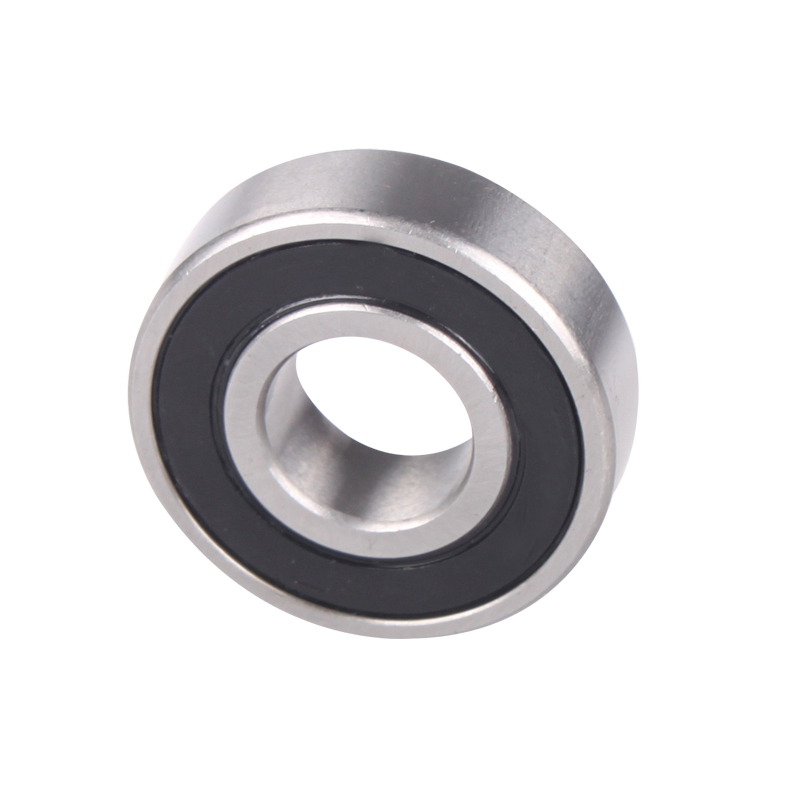
The Invisible Enemy: What is Outgassing?
- Wafer Contamination: The evaporated molecules can condense on the sensitive surfaces of the silicon wafers, creating defects during lithography or deposition processes. This directly lowers the yield rate.
- Component Failure: As the lubricant evaporates, the bearing is left dry. This leads to increased friction, heat generation, and eventual seizure. Furthermore, in ultra-high vacuum (UHV) environments, clean metal surfaces in contact can undergo “cold welding,” where the parts fuse together due to the absence of oxide layers.
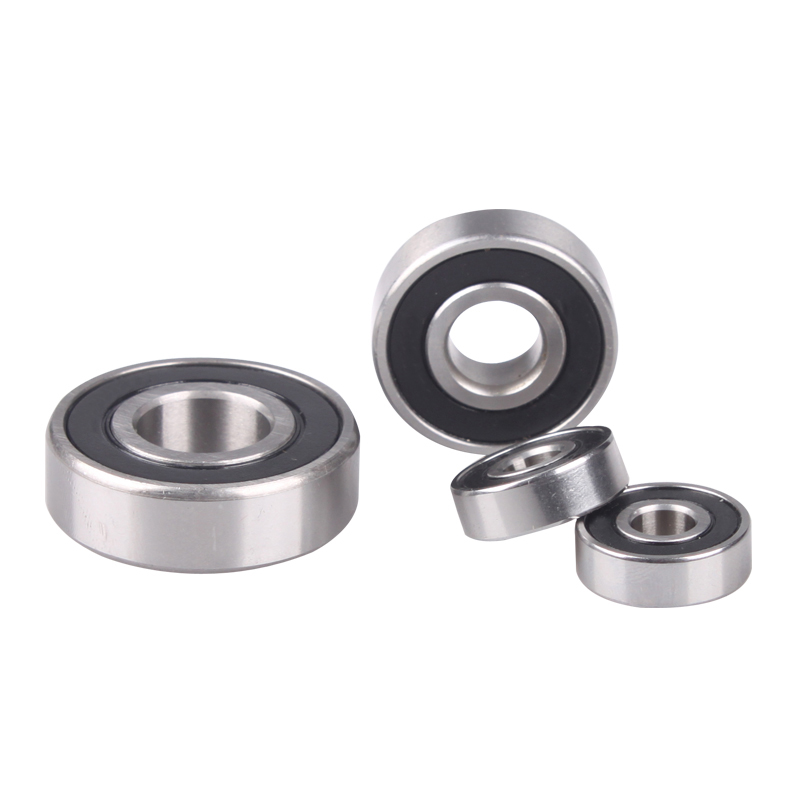
Material Science: The Shift to Ceramics and Specialized Alloys
Silicon Nitride ( Si3N4 ) and Zirconia ( ZrO2 ) ceramics are becoming the gold standard for semiconductor bearings. Unlike steel, ceramics are chemically inert and have a much lower density.
- Zero Corrosion: They do not rust, which is vital when dealing with corrosive process gases.
- Low Friction: Ceramics have a naturally lower coefficient of friction, reducing the heat that drives outgassing.
- Cleanliness: If a ceramic bearing does wear, it produces non-conductive dust, whereas steel dust can cause short circuits and catastrophic tool failure.
For applications where ceramic is not feasible, martensitic stainless steels (like AISI 440C) or austenitic stainless steels (like ES1) are treated with vacuum degassing processes during manufacturing to remove internal gases before the bearing ever reaches the customer.
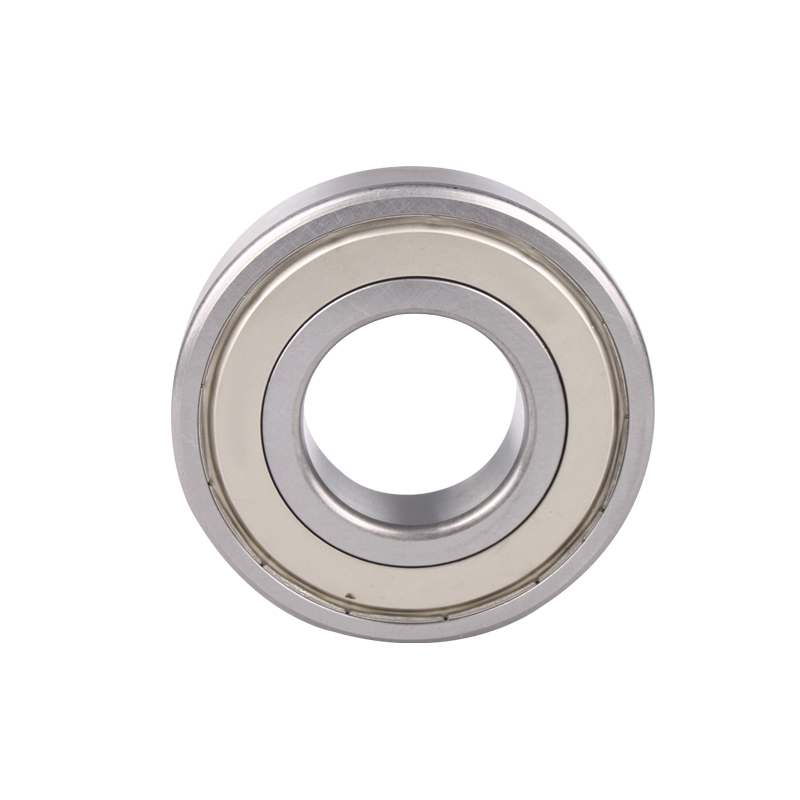
Lubrication: The Critical Differentiator
For Ultra-High Vacuum (UHV) applications (pressures <10−6 Pa), liquid lubricants are often avoided entirely. Instead, bearings are coated with solid films such as Molybdenum Disulfide ( MoS2 ) or Tungsten Disulfide ( WS2 ). These materials have a layered lattice structure that shears easily, providing lubrication without any vapor pressure.
For high vacuum applications where grease is necessary, Perfluoropolyether (PFPE) is the industry standard. PFPE oils have an extremely low vapor pressure and high chemical stability. They are often thickened with Polytetrafluoroethylene (PTFE), creating a lubricant that resists evaporation and chemical attack from process gases.
Comparison of Bearing Technologies
| Bearing Configuration | Typical Vacuum Range | Outgassing Risk | Primary Application |
|---|---|---|---|
| Standard Steel + Oil | Atmospheric Only | Critical (High) | Non-vacuum assembly areas |
| Stainless Steel + PFPE Grease | High Vacuum (10−3 to 10−6 Pa) | Moderate (Low) | Load locks, transfer chambers |
| Ceramic ( Si3N4 ) + Solid Film | Ultra-High Vacuum ( <10−7 Pa) | Negligible (Near Zero) | Process chambers, E-beam lithography |
| Full Ceramic + PEEK Cage | Extreme Vacuum | None | Wafer handling robots, R&D tools |
The Economic Impact of Yield Rates
Standards and Testing
- Total Mass Loss (TML): The total amount of volatile matter lost by a material in a vacuum.
- Collected Volatile Condensable Materials (CVCM): The amount of that lost mass that condenses on a collector (simulating contamination on a wafer or lens).
Summary Table: Key Selection Criteria
| Parameter | Requirement for Semiconductor Vacuum | Reason |
|---|---|---|
| Material |
Si3N4 , ZrO2 , or Vacuum-Grade Stainless Steel |
Prevents rust, reduces particle generation, lowers mass. |
| Lubrication | PFPE Grease or Solid Film (
MoS2 ) |
Prevents evaporation (outgassing) and maintains lubricity. |
| Cage Material | PEEK, PTFE, or Brass (Vacuum baked) | Polymers must be vacuum-grade to prevent gas release. |
| Cleaning | Class 100 / ISO 4 Cleanroom Pack | Bearings must be free of particulate before installation. |
Conclusion
FAQ
Q: What is outgassing in the context of semiconductor bearings?
A: Outgassing is the release of trapped gases or volatile compounds from a bearing’s materials (especially lubricants) when placed in a vacuum. This can contaminate wafers and cause the bearing to fail.
Q: Why are ceramic bearings preferred for vacuum applications?
A: Ceramic bearings (like Silicon Nitride) are chemically inert, corrosion-resistant, and generate less friction and heat than steel. They also produce non-conductive dust if they wear, preventing catastrophic electrical shorts.
Q: Can standard bearings be used in semiconductor tools? A: No. Standard bearings use oils and greases that will evaporate rapidly in a vacuum, leading to immediate contamination of the process chamber and seizure of the bearing.
Post time: May-15-2026