


In the highly competitive world of original equipment manufacturing (OEM), standard components often fall short of meeting the rigorous demands of specialized applications. Whether it’s a high-speed motor racing gearbox, a precision CNC machine spindle, or a massive shield tunneling machine, off-the-shelf bearings can become the bottleneck for performance, reliability, and efficiency. This is where tailor-made bearing solutions emerge as a critical driver of OEM success. By collaborating closely with bearing manufacturers, OEMs can unlock optimized performance, reduced friction, extended lifespan, and significant cost savings over the product’s entire lifecycle.
The Shift from Standard to Custom
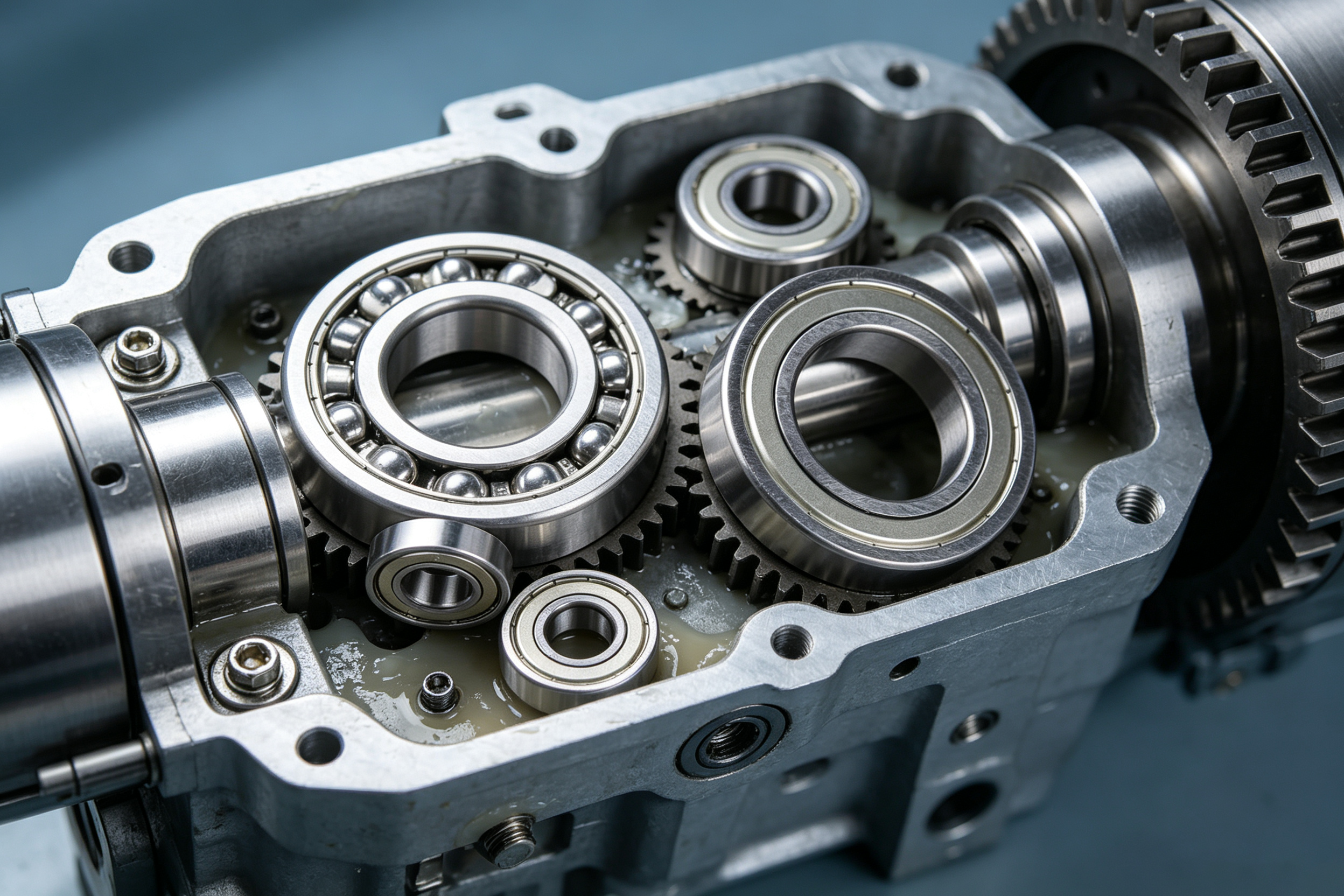
The decision to move from a standard to a custom bearing is rarely about aesthetics; it is fundamentally about engineering performance. Custom design allows for the modification of internal geometry, materials, and surface treatments to suit specific operational conditions. For instance, if an application requires exceptional axial stiffness, the contact angle of an angular contact ball bearing can be increased without compromising other vital requirements. This level of customization ensures that the bearing is not just a part, but a highly tuned component integral to the machine’s overall function.
Furthermore, modern custom bearing design is supported by advanced calculation tools and digital assets. Over 58% of equipment engineers now use mobile platforms for initial component screening, demanding 3D models, CAD integration, and dynamic load simulation interfaces. This digital-first approach accelerates the design cycle, allowing OEMs to rapidly prototype, test, and validate bespoke solutions before committing to production.
Key Customization Parameters
The scope of customization in bearing design is vast, extending far beyond simple dimensional changes. Engineers can tailor a wide array of features to match the exact needs of the application.
| Customizable Feature | Description & Engineering Impact |
|---|---|
| Internal Geometry | Adjusting contact angles, raceway profiles, and curvature to optimize load distribution and stiffness for specific directional forces. |
| Rolling Elements | Modifying the size, number, and material of balls or rollers (e.g., hybrid ceramic) to enhance speed capability, reduce weight, and increase rigidity. |
| Clearance & Preload | Fine-tuning internal clearance or applying specific preload levels to control vibration, noise, and operational temperature under varying loads. |
| Materials & Coatings | Utilizing specialized steels (e.g., NitroMax), ceramic components, or surface treatments (e.g., INSOCOAT, NoWear) for superior corrosion resistance, electrical insulation, and wear protection. |
| Lubrication & Sealing | Integrating custom grease, oil lubrication holes, or advanced seal designs to ensure optimal lubricant retention and contamination exclusion in harsh environments. |
Real-World Applications Driving Success
The tangible benefits of custom bearing design are best illustrated through real-world applications across diverse industries.
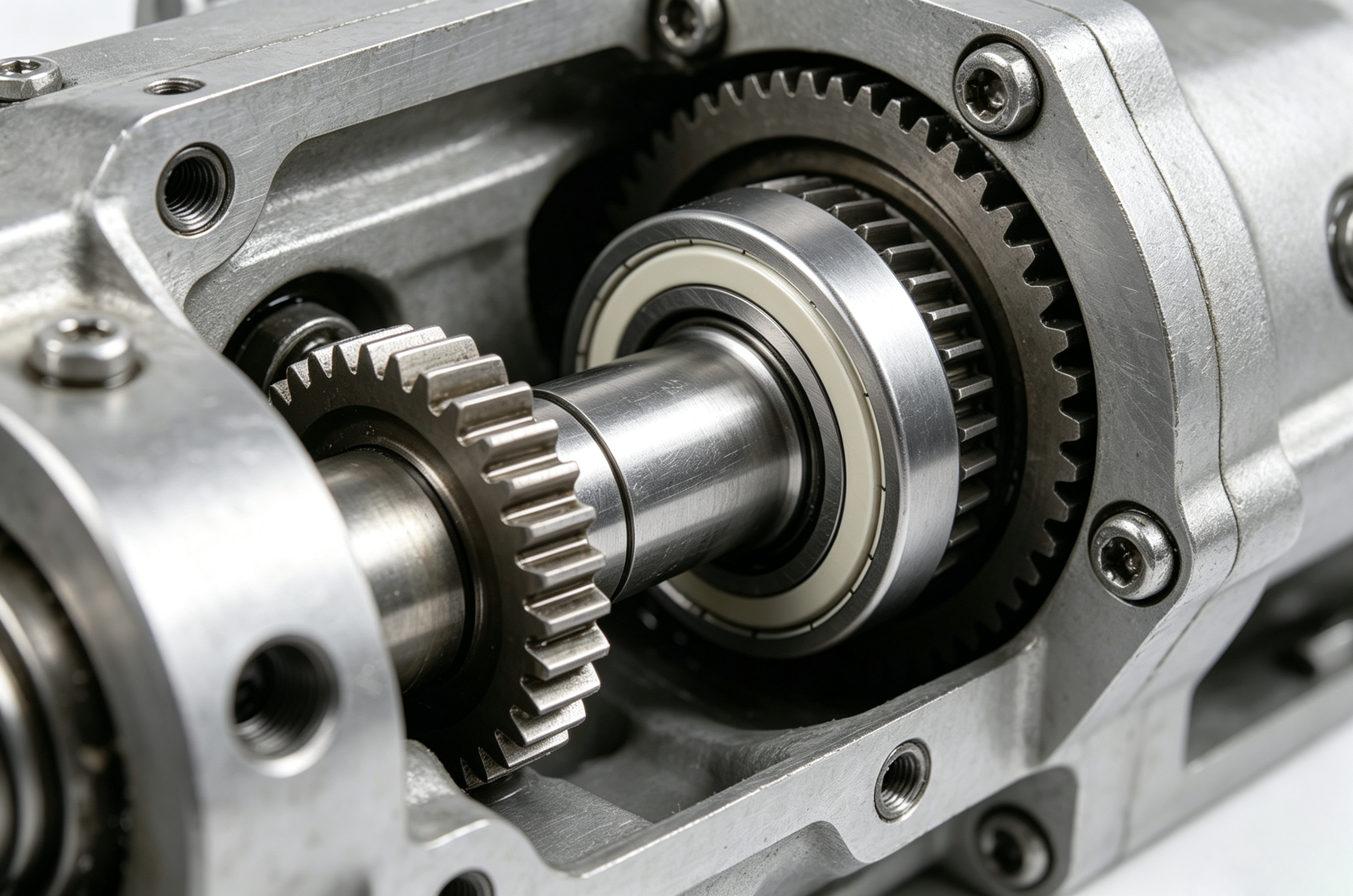
In the realm of motorsport, racing teams operate in an environment where milliseconds and grams matter. Specially designed wheel and gearbox bearings help teams react to specific track conditions. By reducing friction and weight while increasing radial or axial stiffness, these custom solutions directly translate to improved vehicle dynamics and competitive advantage.
For precision manufacturing, the performance of a CNC machine spindle is paramount. The quality of the machined part and the machine’s overall equipment effectiveness (OEE) hinge on the spindle’s ability to maintain precision under high speeds, varying loads, and potential vibration. Custom bearing solutions for spindle units are engineered to minimize heat generation and thermal growth, ensuring consistent accuracy and reducing unplanned downtime.
At the extreme end of the scale, heavy infrastructure projects present monumental challenges. The development of the world’s largest shield tunneling machine main bearing, with a diameter of 8.61 meters and a weight of 62 tons, is a testament to bespoke engineering. This single bearing had to withstand super-heavy, eccentric, and frequently changing loads. Success required not only custom design but also breakthroughs in material science and heat treatment processes, such as developing a specialized “golden armor” surface layer with unprecedented hardness and depth, and innovating grinding techniques to achieve micron-level flatness on a massive scale.
The Role of Advanced Manufacturing & Materials
Custom design is inextricably linked to advanced manufacturing capabilities. Techniques like super-finishing are critical for achieving the surface quality required in high-precision bearings. This process can improve the contact area of the bearing’s working surface from 15-40% after grinding to 80-95%, significantly enhancing load-carrying capacity and fatigue life. It also introduces beneficial compressive residual stresses into the surface, further boosting durability.
Material innovation is equally crucial. The use of high-nitrogen stainless steels like NitroMax offers enhanced corrosion resistance, fatigue strength, and impact toughness. Hybrid ceramic bearings, featuring silicon nitride rolling elements, provide higher rigidity and can operate at significantly higher speeds than their all-steel counterparts due to the ceramic balls’ lower mass and superior hardness.
Lifecycle Value and Sustainability
The value of a tailor-made bearing extends well beyond its initial installation. A growing trend in 2026 is the focus on the total cost of ownership and full lifecycle services. Bearing failure can lead to non-planned downtime costs that far exceed the price of the component itself. Consequently, OEMs are increasingly valuing extended services such as lubricant compatibility databases, condition monitoring recommendations, and even bearing remanufacturing.
Remanufacturing offers a sustainable and cost-effective alternative to replacement. By repairing and upgrading used bearings to original performance specifications, OEMs can achieve significant savings while reducing their environmental footprint. For example, remanufactured components in industrial applications have demonstrated extended service life and reduced maintenance frequency, proving that a circular economy approach is both economically and ecologically viable.
Conclusion
In conclusion, tailor-made bearing solutions are no longer a luxury for niche applications; they are a strategic imperative for OEMs seeking to differentiate their products in a crowded market. By leveraging deep engineering expertise, advanced digital tools, and cutting-edge manufacturing processes, bearing manufacturers can co-create components that unlock new levels of performance, reliability, and efficiency. From the racetrack to the factory floor and deep underground, custom bearings are the silent enablers of innovation, proving that when it comes to mechanical success, one size definitely does not fit all.
FAQ: Tailor-Made Bearing Solutions
Why choose a custom bearing over a standard one?
Standard bearings often fall short in specialized applications. Custom designs optimize performance, reduce friction, and extend lifespan to meet your exact operational demands.
Standard bearings often fall short in specialized applications. Custom designs optimize performance, reduce friction, and extend lifespan to meet your exact operational demands.
What features can be customized?
You can tailor internal geometry, rolling elements, clearance/preload, specialized materials/coatings, and lubrication/sealing systems.
You can tailor internal geometry, rolling elements, clearance/preload, specialized materials/coatings, and lubrication/sealing systems.
How does customization benefit OEMs?
It unlocks optimized machine performance, ensures consistent precision under extreme conditions, and significantly reduces total cost of ownership.
It unlocks optimized machine performance, ensures consistent precision under extreme conditions, and significantly reduces total cost of ownership.
Are custom bearings sustainable?
Yes. Custom solutions often integrate with remanufacturing services, allowing used bearings to be upgraded to original specs, saving costs and reducing environmental impact.
Yes. Custom solutions often integrate with remanufacturing services, allowing used bearings to be upgraded to original specs, saving costs and reducing environmental impact.
Does custom design take longer to develop?
While initial engineering takes time, modern digital tools, 3D CAD integration, and dynamic simulations accelerate prototyping and validation before production.
While initial engineering takes time, modern digital tools, 3D CAD integration, and dynamic simulations accelerate prototyping and validation before production.
Post time: Aug-28-2026