


In modern industrial applications, bearings are no longer judged only by load capacity and rotational speed. They must also survive extreme temperatures, poor lubrication, high acceleration, corrosive media, vacuum environments, and long maintenance intervals. Under these conditions, all-steel bearings can reach their material limits. Silicon nitride balls, especially when used in hybrid bearings, have become one of the most effective solutions for improving reliability and service life.
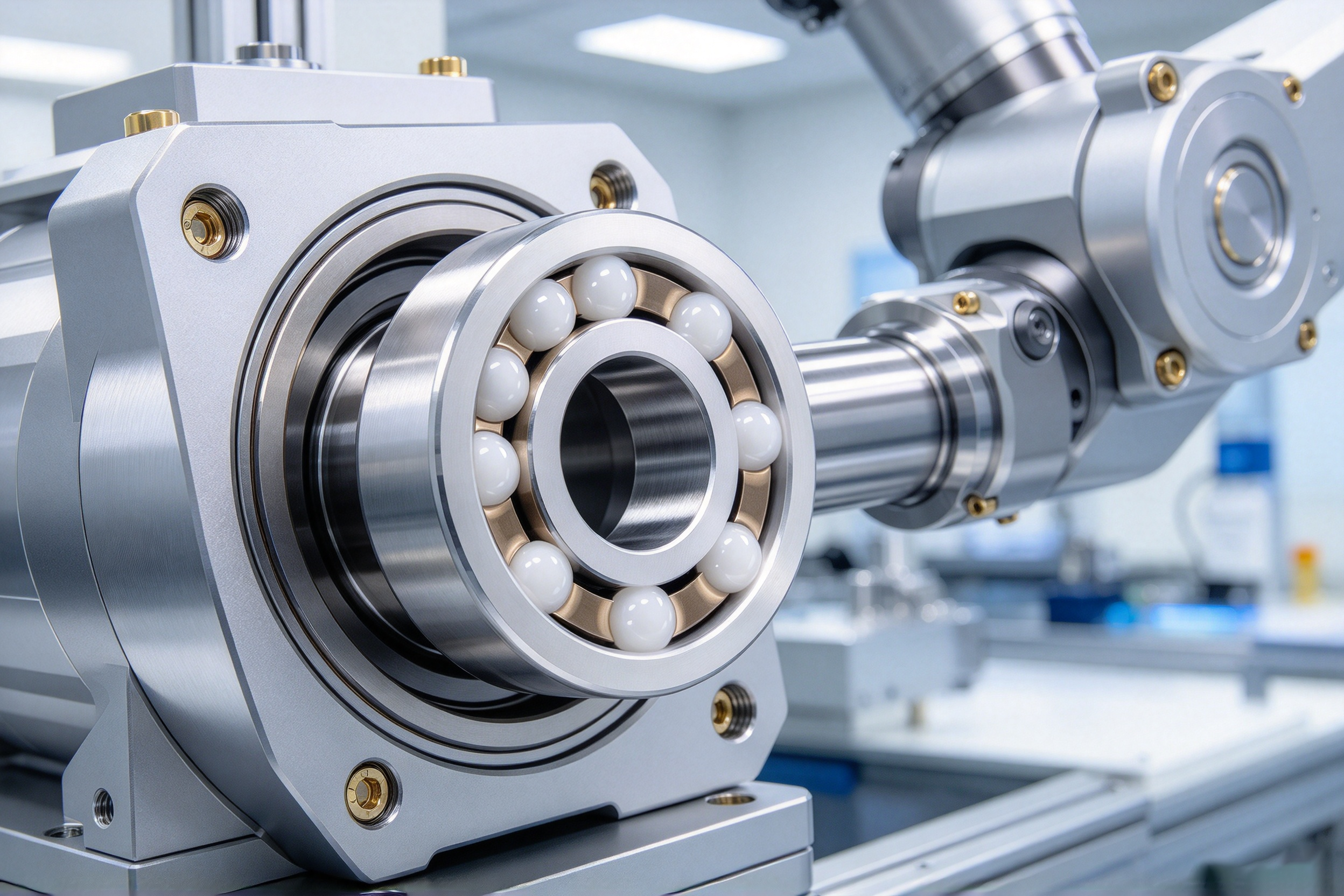
Hybrid bearings combine silicon nitride rolling elements with steel rings. This design does not simply replace steel balls with ceramic ones. It creates a more balanced bearing system that reduces friction, lowers heat generation, improves electrical insulation, and maintains stable performance where conventional steel bearings may fail early.
What makes silicon nitride balls different
Silicon nitride is an advanced ceramic material with high hardness, low density, and strong resistance to wear and corrosion. Compared with bearing steel, silicon nitride balls are significantly lighter and much harder. This difference changes how the bearing behaves under load and speed.
Because silicon nitride balls are lighter, centrifugal force inside the bearing is reduced at high speeds. Lower centrifugal force means less contact stress between the balls and raceways, which helps reduce heat and wear. The high hardness of silicon nitride also improves resistance to abrasive particles, surface fatigue, and adhesive wear.
Another important advantage is thermal stability. Silicon nitride has a lower coefficient of thermal expansion than steel. In applications with rapid temperature changes, hybrid bearings can maintain more stable internal clearance and contact conditions. This helps prevent sudden increases in friction or premature seizure.
| Property | Silicon Nitride Balls | Bearing Steel Balls |
|---|---|---|
| Density | Low | High |
| Hardness | Very high | Moderate to high |
| Thermal expansion | Lower | Higher |
| Electrical conductivity | Insulating | Conductive |
| Corrosion resistance | Strong | Limited without special treatment |
These properties explain why silicon nitride balls are especially useful in demanding environments. They do not eliminate the need for proper bearing selection, lubrication, and installation, but they expand the operating window where a bearing can perform reliably.
Why hybrid bearings often outperform all-steel bearings
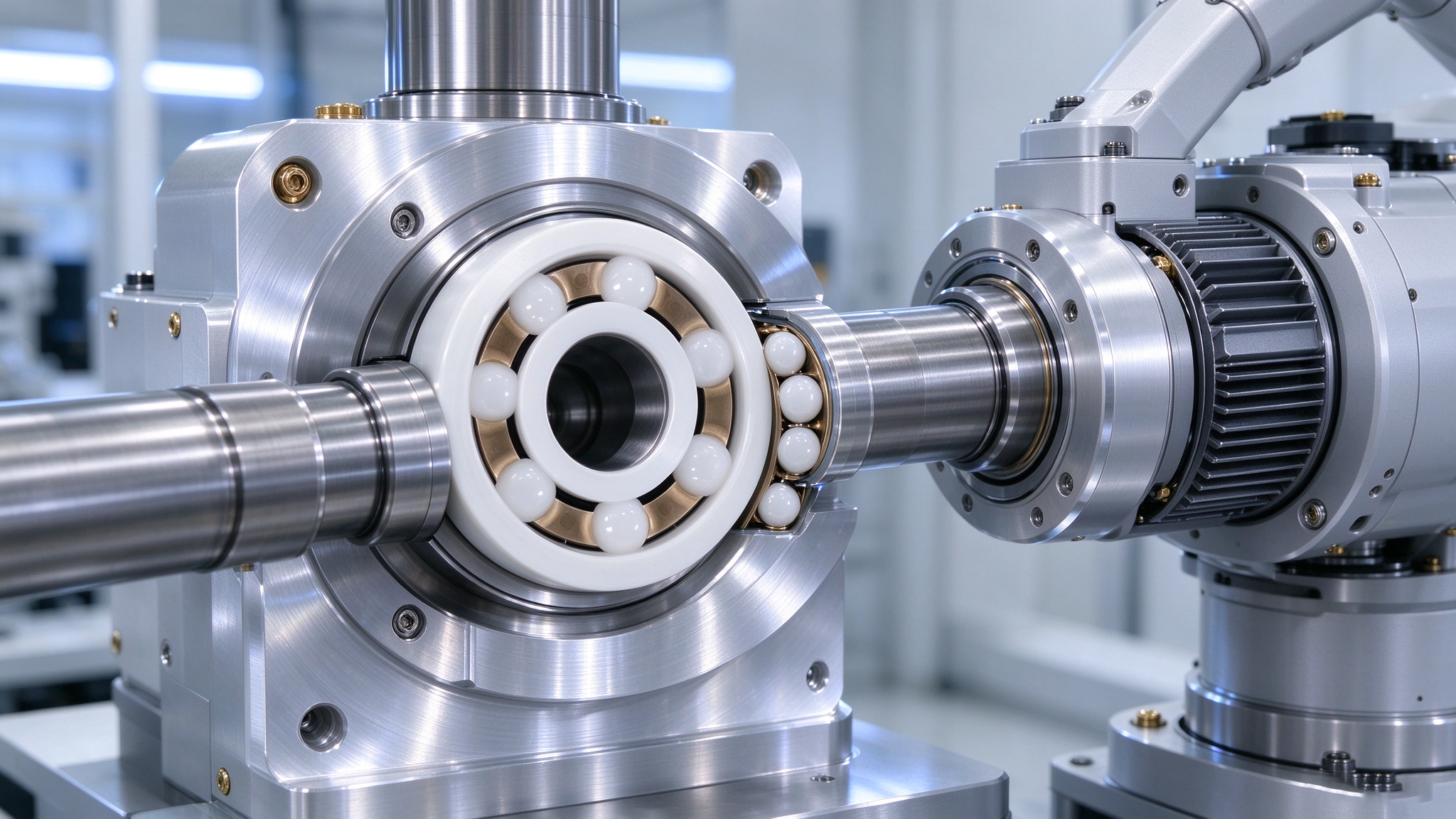
A hybrid bearing usually consists of silicon nitride balls running against hardened steel inner and outer rings. This combination keeps the toughness and load-carrying strength of steel rings while adding the low friction and high-speed advantages of ceramic balls.
One major benefit is reduced friction. Silicon nitride balls can form more favorable contact conditions under marginal lubrication. This is important in high-speed spindles, compressors, pumps, and gearboxes where heat buildup directly affects accuracy, efficiency, and bearing life.
Hybrid bearings also perform better in electrically sensitive environments. Steel bearings can suffer from electrical erosion when stray currents pass through the rolling contacts. Because silicon nitride is electrically insulating, hybrid bearings help interrupt current paths and reduce the risk of fluting damage on raceways. This makes them valuable in electric motors, generators, inverters, and electrified drivetrains.
In corrosive or chemically aggressive environments, silicon nitride balls add another layer of protection. While the steel rings still require appropriate material selection, coatings, or lubrication, the ceramic balls themselves resist many forms of chemical attack. This can be helpful in food processing, chemical pumps, marine equipment, and certain medical or laboratory systems.
| Extreme condition | Main challenge for all-steel bearings | How hybrid bearings help |
|---|---|---|
| High speed | High centrifugal force and heat | Lower ball mass reduces stress and temperature rise |
| Poor lubrication | Surface wear and scuffing | Harder balls and lower friction improve margin |
| Electrical currents | Raceway fluting and pitting | Ceramic balls provide electrical insulation |
| Corrosive media | Rust and surface degradation | Silicon nitride resists many corrosive agents |
| Temperature variation | Clearance change and seizure risk | Lower thermal expansion improves stability |
Typical applications where hybrid bearings add value
Hybrid bearings with silicon nitride balls are widely used in industries where downtime is costly and operating conditions are severe.
In high-speed machine tool spindles, they help achieve higher rotational speeds with lower heat generation. This supports better machining accuracy and longer lubrication intervals.
In electric motors and powertrain systems, hybrid bearings can reduce the risk of electrical damage caused by high-frequency currents. As switching frequencies and system voltages increase, bearing protection becomes part of overall drivetrain reliability.
In vacuum and cleanroom equipment, silicon nitride balls are attractive because they generate less wear debris and can operate with minimal lubrication. This makes them suitable for semiconductor manufacturing, analytical instruments, and precision automation.
In aerospace and turbo machinery, weight reduction, high-speed capability, and temperature stability are critical. Hybrid bearings can contribute to lighter rotating assemblies and more stable performance under rapid thermal cycles.
In chemical pumps and compressors, hybrid bearings may extend service life when contamination, moisture, or aggressive fluids are present. Even in these cases, bearing performance still depends on correct sealing, lubrication, and housing design.
When all-steel bearings may still be preferable
Hybrid bearings are not a universal replacement for all-steel bearings. In many standard industrial applications, high-quality steel bearings remain cost-effective, reliable, and easier to source.
All-steel bearings are often the better choice when operating conditions are moderate, loads are heavy, shock loads are frequent, or the application does not involve high speed, poor lubrication, or electrical currents. Steel bearings also offer well-established design data, broad availability, and predictable performance in conventional environments.
Hybrid bearings should be considered when specific risks exist, such as high-speed heating, electrical erosion, limited lubrication, corrosion exposure, or the need for longer maintenance intervals. The decision should be based on actual operating conditions rather than material novelty alone.
| Application factor | All-steel bearing | Hybrid bearing with silicon nitride balls |
|---|---|---|
| Initial cost | Generally lower | Generally higher |
| High-speed performance | Good | Excellent |
| Electrical insulation | No | Yes |
| Corrosion resistance of balls | Limited | Strong |
| Suitability for marginal lubrication | Moderate | Better |
| Best use case | Standard industrial conditions | Extreme or specialized conditions |
Design and selection considerations
Choosing a hybrid bearing requires more than specifying ceramic balls. Engineers should evaluate load, speed, temperature, lubrication type, sealing method, housing fit, and environmental exposure. The steel rings still determine much of the bearing’s mechanical strength, so ring material, heat treatment, and surface finish remain important.
Lubrication must also be matched to the application. Silicon nitride balls can tolerate marginal lubrication better than steel balls, but they do not eliminate the need for proper lubricant selection. In some high-speed or vacuum applications, specialized greases or oil mist systems may be required.
Installation practices should follow standard bearing procedures. Hybrid bearings are precision components, and improper mounting, misalignment, or contamination during assembly can reduce their advantages. For critical systems, consultation with a bearing supplier or application engineer is recommended.
The practical advantage of silicon nitride hybrid bearings
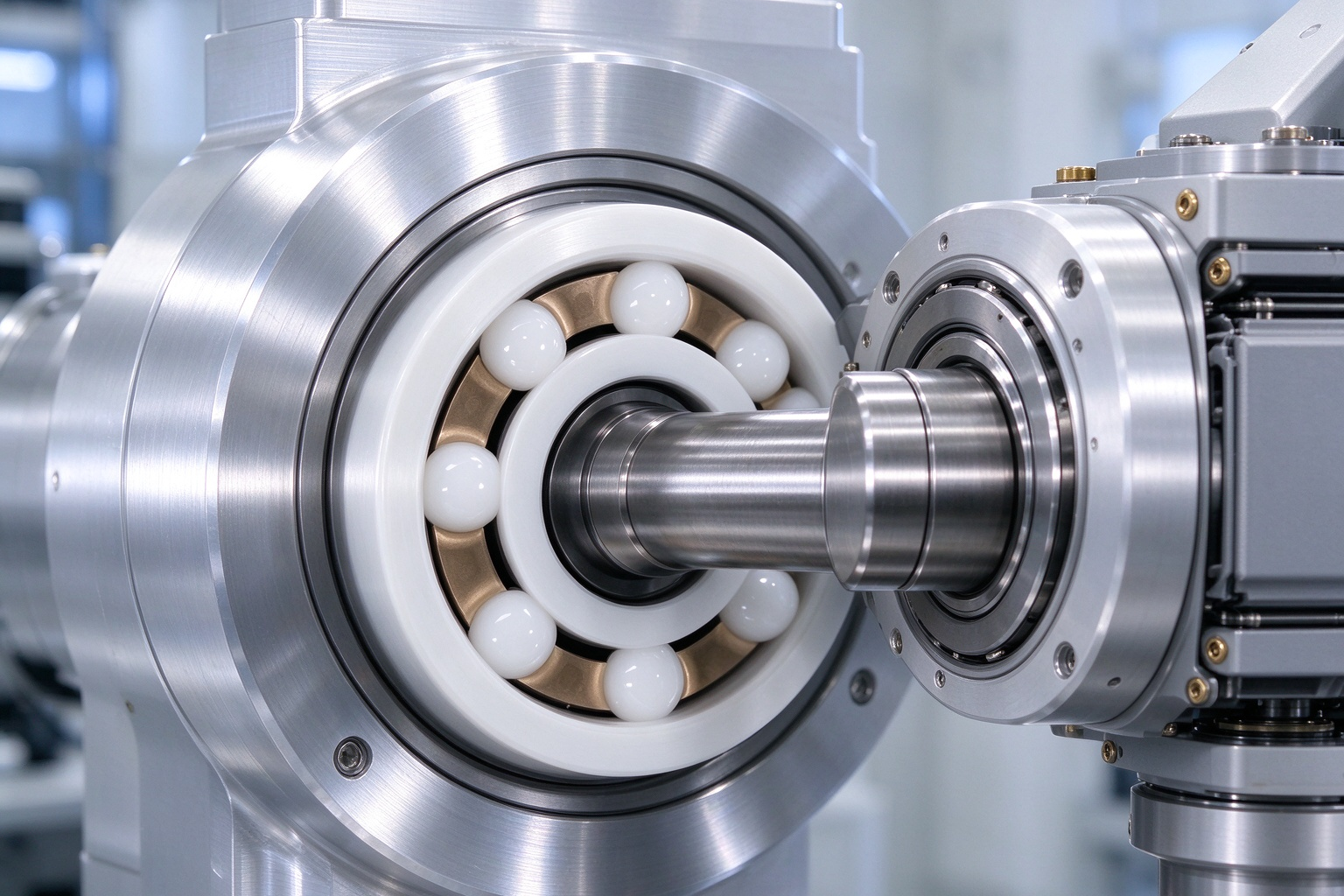
Silicon nitride balls bring a clear set of benefits to modern bearing design: lower density, higher hardness, better thermal stability, electrical insulation, and improved resistance to wear and corrosion. When these properties are combined with steel rings in a hybrid bearing, the result is often higher speed capability, lower friction, and longer service life in extreme conditions.
For engineers and maintenance teams, hybrid bearings are not just a premium alternative. They are a practical solution when conventional steel bearings struggle with heat, speed, electrical currents, contamination, or corrosive environments. Used correctly, silicon nitride hybrid bearings can improve equipment reliability, reduce unplanned downtime, and support more efficient industrial operation.
FAQ: Silicon Nitride Hybrid Bearings
What is a hybrid bearing?
A hybrid bearing uses silicon nitride ceramic balls with steel inner and outer rings.
A hybrid bearing uses silicon nitride ceramic balls with steel inner and outer rings.
Why choose silicon nitride balls over steel balls?
They are lighter, harder, more thermally stable, and electrically insulating, which helps reduce friction and wear.
They are lighter, harder, more thermally stable, and electrically insulating, which helps reduce friction and wear.
Do hybrid bearings eliminate the need for lubrication?
No. They tolerate marginal lubrication better, but proper lubrication is still required.
No. They tolerate marginal lubrication better, but proper lubrication is still required.
Are hybrid bearings suitable for high-speed applications?
Yes. Lower ball mass reduces centrifugal force, making them well suited for high-speed spindles and rotating equipment.
Yes. Lower ball mass reduces centrifugal force, making them well suited for high-speed spindles and rotating equipment.
Can hybrid bearings prevent electrical erosion?
They help reduce the risk because silicon nitride balls are electrically insulating, but full system protection should still be evaluated.
They help reduce the risk because silicon nitride balls are electrically insulating, but full system protection should still be evaluated.
Are hybrid bearings more expensive than all-steel bearings?
Yes, the initial cost is usually higher, but they can deliver longer service life in demanding conditions.
Yes, the initial cost is usually higher, but they can deliver longer service life in demanding conditions.
Post time: Oct-16-2026