


In the rapidly evolving landscape of electric mobility, every gram counts. While battery technology often dominates the headlines, a quiet revolution is happening at the heart of the powertrain. Lightweight bearing designs are emerging as a critical, yet often overlooked, factor in extending electric vehicle (EV) range. For automotive engineers and fleet managers, understanding this shift is no longer optional—it’s a strategic imperative.
The Weight-Range Equation
The relationship between vehicle weight and energy consumption in EVs is direct and unforgiving. Unlike internal combustion engines, which are less sensitive to mass at highway speeds, electric motors must constantly accelerate the vehicle’s total mass. Industry data suggests that a 10% reduction in vehicle weight can translate to a 5-7% increase in range.
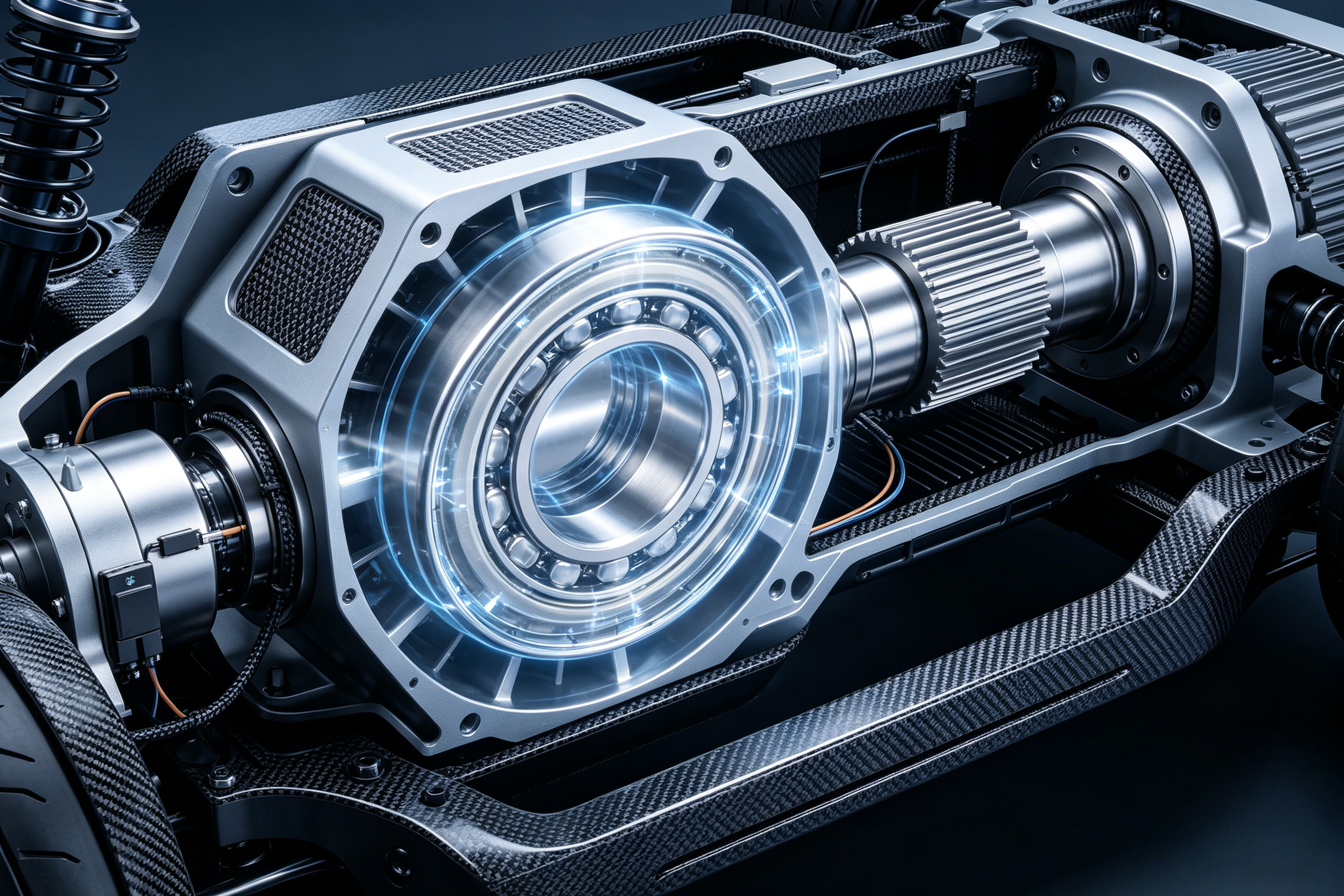
Bearings, though small, are numerous. A single EV powertrain can contain dozens of bearings across the e-Axle, motor, and wheel hubs. When engineers shave grams off each component, the cumulative effect is substantial. Modern lightweight bearings utilize advanced materials like high-performance polymers, ceramics, and optimized steel geometries to reduce mass without compromising load capacity or durability.
Beyond Weight: The Friction Factor
Weight reduction is only half the story. The primary enemy of EV range is friction. In an electric drivetrain, energy losses due to friction can account for a significant portion of total consumption. Next-generation bearings are engineered with low-friction seals, optimized internal geometries, and specialized lubricants that reduce torque losses.
Recent industry benchmarks indicate that low-friction bearing designs can improve overall drivetrain efficiency by up to 1.5%. In practical terms, for a vehicle with a 300-mile range, this translates to an additional 4-5 miles of real-world driving—achieved without adding a single kilowatt-hour of battery capacity.
Material Innovation: The New Standard
The shift toward lightweighting is driving a material revolution. Traditional all-steel bearings are being supplemented or replaced by hybrid and polymer solutions.
| Material Type | Key Characteristics | Primary EV Application |
|---|---|---|
| Hybrid Ceramic | Steel rings with silicon nitride balls; lower density, higher stiffness, electrically insulating. | High-speed motor shafts; prevents electrical erosion. |
| Polymer Composites | High-strength engineering plastics; significant weight reduction, self-lubricating properties. | Auxiliary systems, HVAC, lightweight e-Axle housings. |
| Optimized Steel | Thin-section rings, hollow rollers; reduced mass via geometry rather than material change. | Wheel hubs, transmission shafts where cost is a factor. |
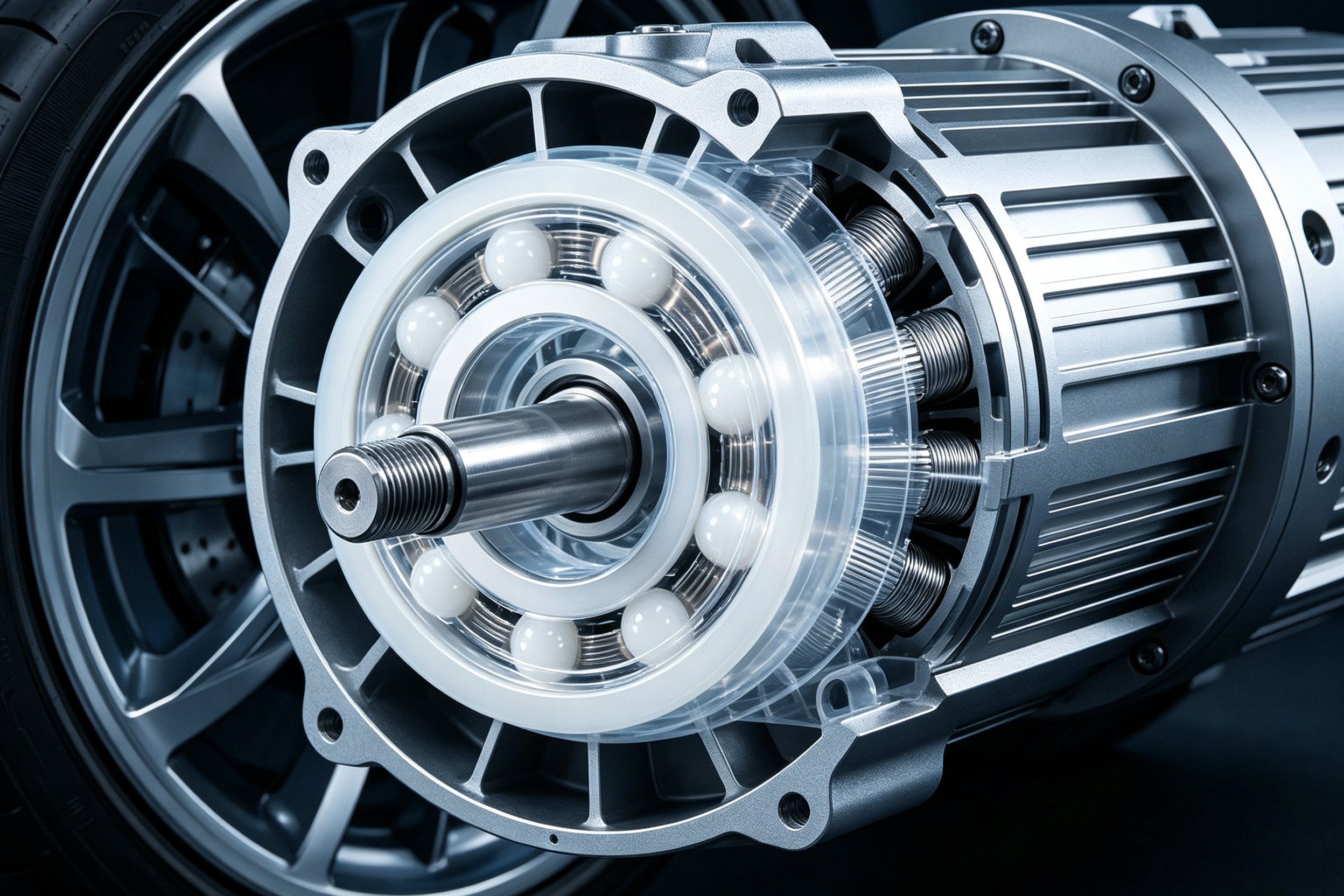
Hybrid ceramic bearings, in particular, have become a gold standard for main motor applications. Silicon nitride balls are approximately 40% lighter than steel, reducing centrifugal forces at high RPMs and lowering friction. More importantly, ceramics are electrical insulators, protecting bearings from the stray currents common in high-voltage EV architectures.
Design Trends: Narrower, Faster, Smarter
The physical form factor of bearings is changing. The trend toward coaxial e-Axle designs demands significantly narrower bearings to save axial space. Manufacturers are responding with “slim” bearing profiles that reduce width by up to 30% while maintaining load ratings through advanced heat treatment and raceway profiling.
Furthermore, smart bearing integration is on the rise. Embedded sensors within the bearing housing can monitor temperature, vibration, and load in real-time. This data feeds into the vehicle’s thermal management and predictive maintenance systems, ensuring the bearing operates in its optimal efficiency zone and alerting fleets to potential failures before they cause downtime.
The NVH Imperative
Lightweighting cannot come at the cost of Noise, Vibration, and Harshness (NVH). Without the masking noise of a combustion engine, EV drivetrains are unforgiving of bearing whine or rumble.
Modern lightweight bearings are designed with precision surface finishes and optimized cage geometries to minimize noise generation. Polymer cages, for instance, not only reduce weight but also dampen vibrations better than traditional brass or steel cages. The result is a bearing that is lighter, more efficient, and quieter—a trifecta that directly enhances the premium feel expected in modern EVs.
Strategic Implications for Buyers
For procurement teams and engineers, the message is clear: the lowest unit price is no longer the best metric. The Total Cost of Ownership (TCO) must now include energy efficiency and range impact.
| Selection Criteria | Traditional Focus | Modern EV Focus |
|---|---|---|
| Primary Metric | Load rating & price | Friction torque & weight |
| Material | Standard chrome steel | Hybrid ceramic / Polymer |
| Lubrication | Standard grease | Low-viscosity, EV-specific fluids |
| Sealing | Basic contact seals | Low-friction, non-contact labyrinth |
| Validation | Durability testing | Efficiency mapping & NVH analysis |
When evaluating suppliers, ask for efficiency maps, not just catalog dimensions. Request data on friction torque across the expected speed and load range. Inquire about their electrical erosion testing protocols. The best bearing partners are those who understand system-level integration and can provide simulation data showing how their component impacts the overall vehicle range.
The Road Ahead
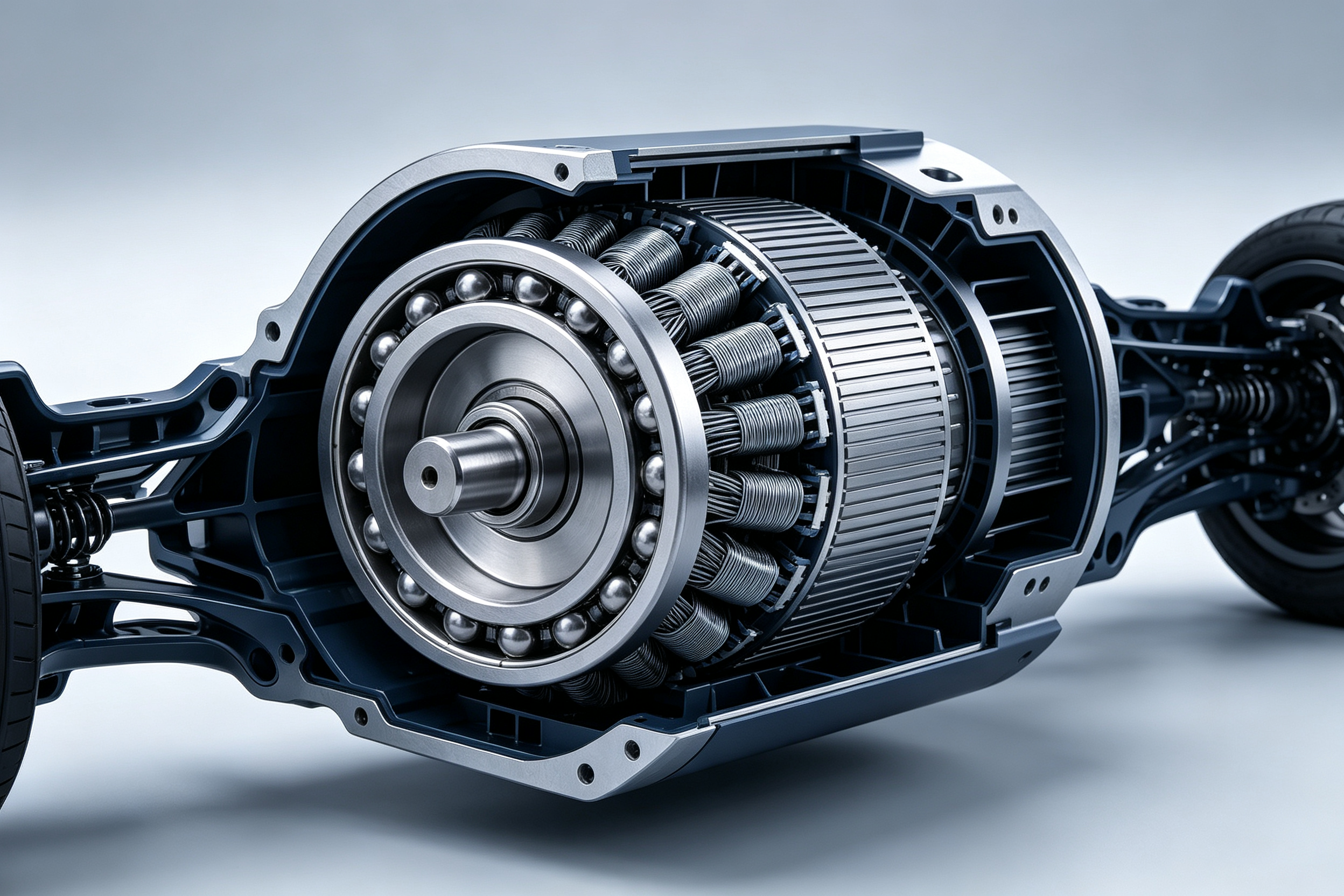
As EV platforms evolve toward 800V architectures and higher motor speeds (exceeding 20,000 RPM in some concepts), the demands on bearings will only intensify. We can expect to see further adoption of ceramic coatings, integrated sensor units, and even more aggressive lightweighting through topology optimization.
For the industry, this is an opportunity. Lightweight bearing designs represent one of the most cost-effective ways to boost EV range. They require no changes to battery chemistry, no new charging infrastructure, and no compromises on safety. They are simply smarter engineering, applied where it matters most.
In the race to eliminate range anxiety, the solution might not be a bigger battery. It might just be a better bearing.
Frequently Asked Questions (FAQ)
Q: How do lightweight bearings actually increase EV range?
A: They reduce overall vehicle weight and minimize friction losses in the drivetrain, allowing the battery’s energy to be used more efficiently for driving.
A: They reduce overall vehicle weight and minimize friction losses in the drivetrain, allowing the battery’s energy to be used more efficiently for driving.
Q: What materials are used to make these bearings lighter?
A: Manufacturers use advanced materials like silicon nitride ceramics, high-strength engineering polymers, and optimized thin-section steel geometries to reduce mass.
A: Manufacturers use advanced materials like silicon nitride ceramics, high-strength engineering polymers, and optimized thin-section steel geometries to reduce mass.
Q: Do lightweight bearings compromise durability?
A: No. Modern lightweight bearings are engineered to maintain or even exceed the load capacity, stiffness, and lifespan of traditional steel bearings.
A: No. Modern lightweight bearings are engineered to maintain or even exceed the load capacity, stiffness, and lifespan of traditional steel bearings.
Q: What is the main benefit of hybrid ceramic bearings?
A: They are about 40% lighter than steel and electrically insulating, which prevents electrical erosion caused by stray currents in high-voltage EV motors.
A: They are about 40% lighter than steel and electrically insulating, which prevents electrical erosion caused by stray currents in high-voltage EV motors.
Q: How much range can be gained by upgrading bearings?
A: While it varies by vehicle, low-friction and lightweight bearing designs can improve drivetrain efficiency by up to 1.5%, potentially adding several miles of real-world range without a larger battery.
A: While it varies by vehicle, low-friction and lightweight bearing designs can improve drivetrain efficiency by up to 1.5%, potentially adding several miles of real-world range without a larger battery.
Post time: Aug-05-2026