


In the rapidly evolving landscape of industrial automation and robotics, the pursuit of flawless execution is paramount. While software algorithms and advanced actuators often steal the spotlight, the true unsung heroes of robotic precision are the mechanical components that translate digital commands into physical reality. Among these, precision bearings serve as the foundational joints of robotic arms, dictating their accuracy, repeatability, and operational lifespan. For engineers and procurement specialists, understanding how seamless bearing integration drives robotic arm accuracy is no longer optional—it is a critical component of system design.
The Mechanical Heart of Robotic Precision
A robotic arm is essentially a complex kinematic chain, where each joint represents a potential point of error. Precision bearings, particularly cross-roller bearings and thin-section bearings, are engineered to minimize this error. Unlike standard bearings, precision variants are manufactured to ultra-tight tolerances, ensuring minimal internal clearance and exceptional rotational smoothness.
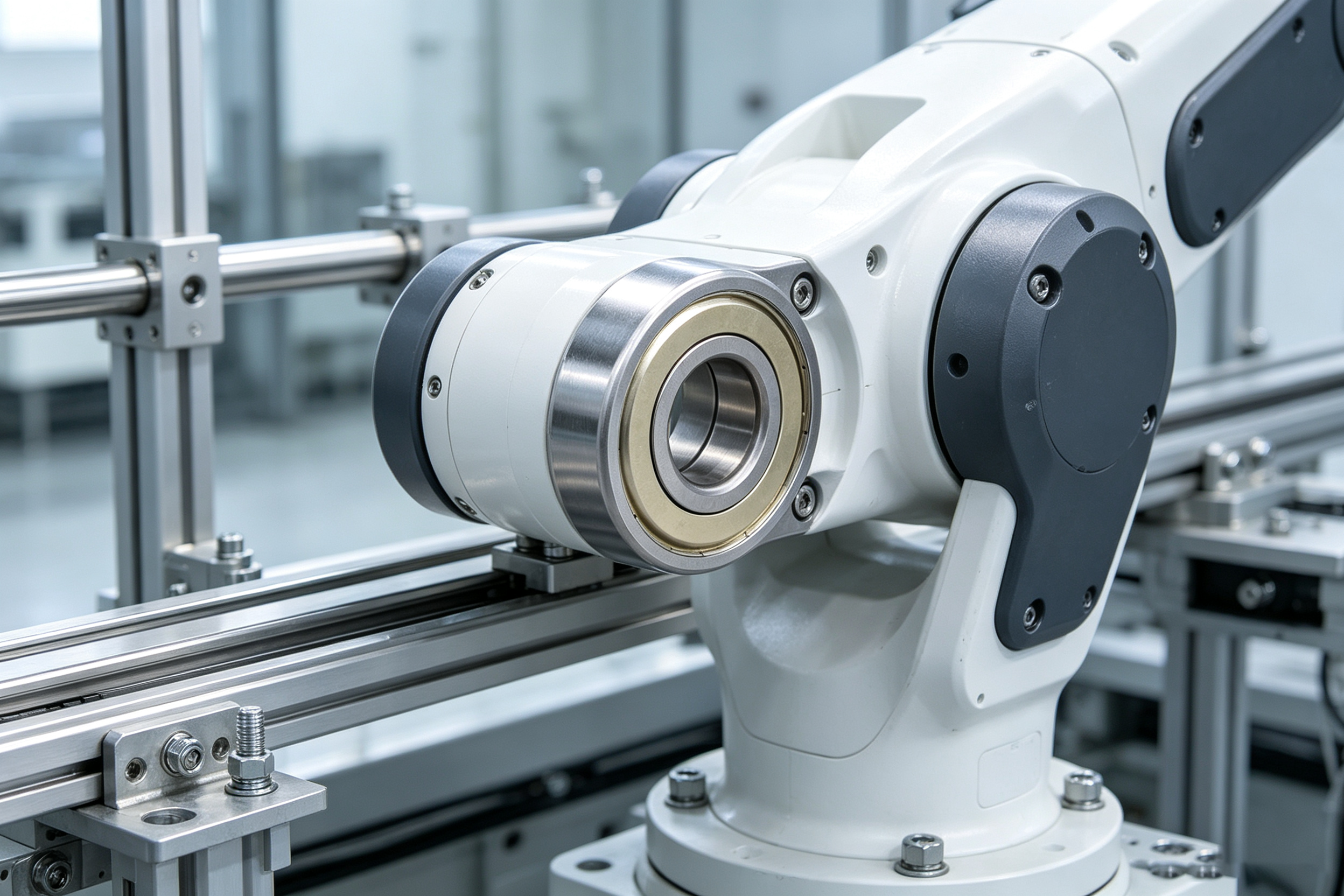
When a robotic arm attempts to place a microchip or weld a car chassis, it relies on the bearing to maintain exact positional integrity under dynamic loads. Any microscopic deviation, backlash, or friction in the bearing is magnified at the end-effector. Therefore, the seamless integration of these bearings directly correlates to the robot’s ability to achieve sub-millimeter accuracy consistently.
Key Performance Metrics: What Matters in Integration
Selecting the right bearing is not merely about size; it is about matching specific performance characteristics to the robotic application. The following table outlines the critical parameters that dictate how a bearing will influence overall arm accuracy:
| Performance Metric | Definition | Impact on Robotic Arm Accuracy |
|---|---|---|
| Rotational Precision | The allowable deviation in the bearing’s rotation path. | Directly determines the positional repeatability of the joint. High precision prevents path deviation. |
| Rigidity & Stiffness | Resistance to deformation under axial and radial loads. | Maintains accuracy under heavy payloads or high-speed acceleration, preventing structural flex. |
| Friction Torque | The resistance to smooth rotation within the bearing. | Low friction ensures smooth motion, reducing stick-slip phenomena that cause positioning errors. |
| Service Life | The operational duration before performance degrades. | Consistent accuracy over time; worn bearings introduce backlash and unpredictable errors. |
Overcoming Integration Challenges
Seamless integration goes beyond simply pressing a bearing into a housing. It requires a holistic approach to mechanical design. One of the primary challenges in robotic arm design is managing cumulative tolerances. As noted by industry experts, every additional axis in a robot introduces potential error stacking. If a six-axis robot has a 0.01mm deviation per joint, the end-effector could be significantly off-target. Precision bearings mitigate this by offering superior consistency and concentricity.
Furthermore, modern robotic arms demand miniaturization without sacrificing load capacity. Thin-section bearings have revolutionized this space by providing high load ratings in incredibly compact profiles. This allows designers to place actuators closer to the joint center, reducing the moment of inertia and improving the arm’s dynamic response and settling time.
Material Science and Manufacturing Excellence
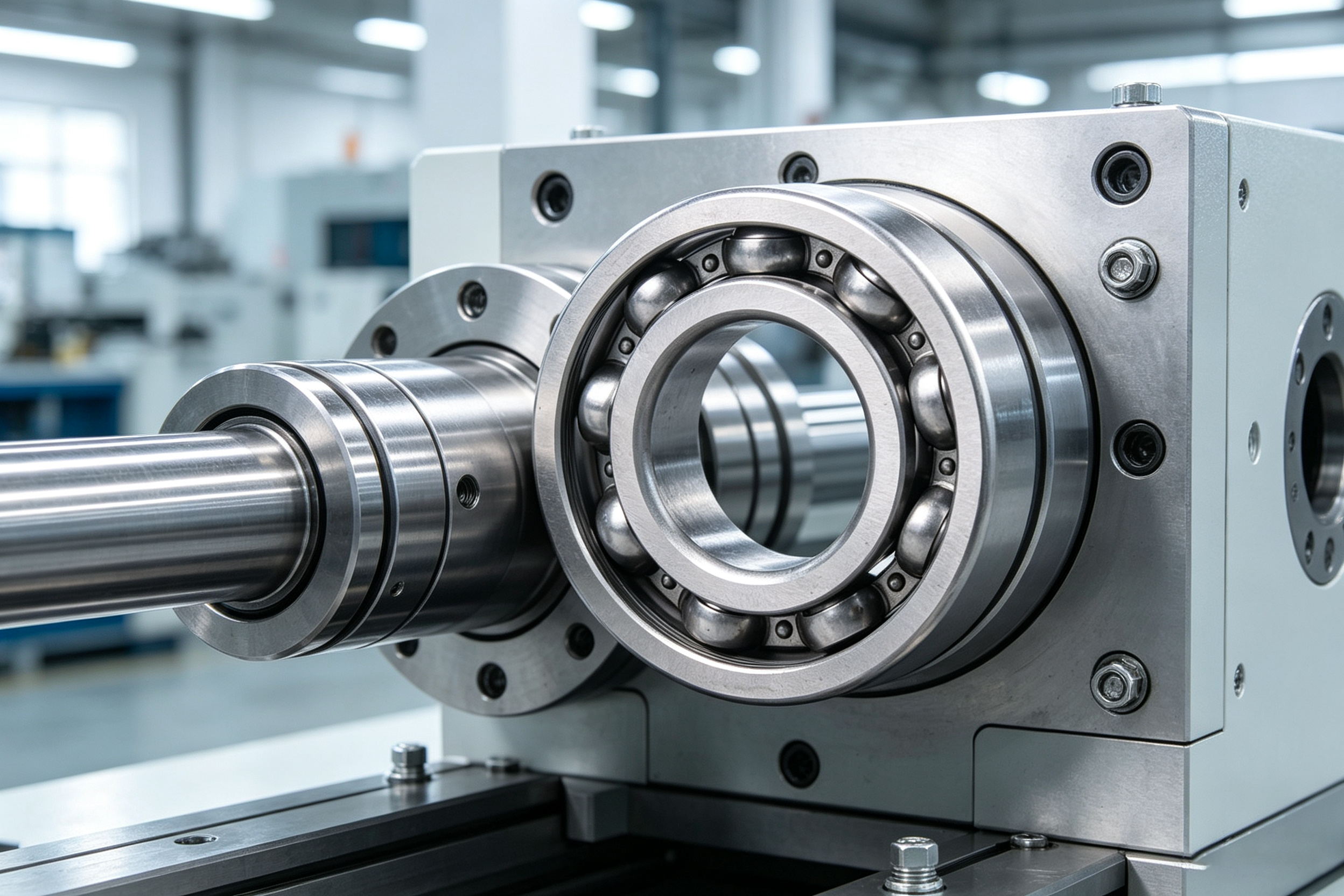
The accuracy of a precision bearing is born in the manufacturing process. Advanced grinding and super-finishing techniques are required to achieve the necessary surface finishes and geometric accuracy. The quality of the steel, the heat treatment process, and the cleanliness of the assembly environment all play vital roles.
For instance, specialized heat treatment enhances the fatigue life of the bearing raceways, ensuring that the precision achieved on day one is maintained through millions of cycles. In high-precision applications, such as semiconductor handling or medical robotics, even microscopic debris can cause catastrophic failure. Thus, cleanroom assembly and advanced sealing solutions are integral to seamless integration, protecting the bearing’s internal geometry from contamination.
Comparative Analysis: Bearing Types in Robotics
Different joints within a robotic arm have different requirements. The shoulder joint may require high load capacity, while the wrist joint demands extreme precision and low friction. The table below compares common precision bearing types used in robotic arm integration:
| Bearing Type | Primary Robotic Application | Key Advantage for Accuracy |
|---|---|---|
| Cross-Roller Bearings | Base rotation, Shoulder joints | High rigidity and load capacity; handles combined loads with minimal deflection. |
| Thin-Section Bearings | Wrist joints, End-effectors | Lightweight and compact; reduces inertia for faster, more precise positioning. |
| Angular Contact Ball Bearings | High-speed spindles, Actuators | High-speed capability with precise axial preload control for zero-backlash operation. |
The Role of Lubrication and Maintenance
Even the most perfectly integrated bearing will fail to deliver accuracy if lubrication is neglected. The choice of grease or oil affects friction, temperature, and wear. In robotic arms, lubricants must maintain their viscosity across a wide temperature range and resist oxidation over long service intervals.
Seamless integration also means designing for maintainability. Features like integrated lubrication channels or self-lubricating materials can extend service intervals and ensure consistent performance. Predictive maintenance, utilizing vibration analysis and temperature monitoring, can detect early signs of bearing degradation, allowing for intervention before accuracy is compromised.
Future Trends: Smart Bearings and IoT
The future of robotic accuracy lies in the convergence of mechanical precision and digital intelligence. Smart bearings, equipped with embedded sensors, are beginning to emerge. These components can monitor their own condition in real-time, providing data on load, temperature, and vibration.
This data can be fed directly into the robot’s control system, allowing for dynamic compensation. If a bearing begins to show signs of wear, the control algorithm can adjust its parameters to maintain accuracy until maintenance is performed. This proactive approach represents the next evolution in seamless integration, transforming the bearing from a passive component into an active participant in the robotic control loop.
Conclusion: Precision as a Strategic Imperative
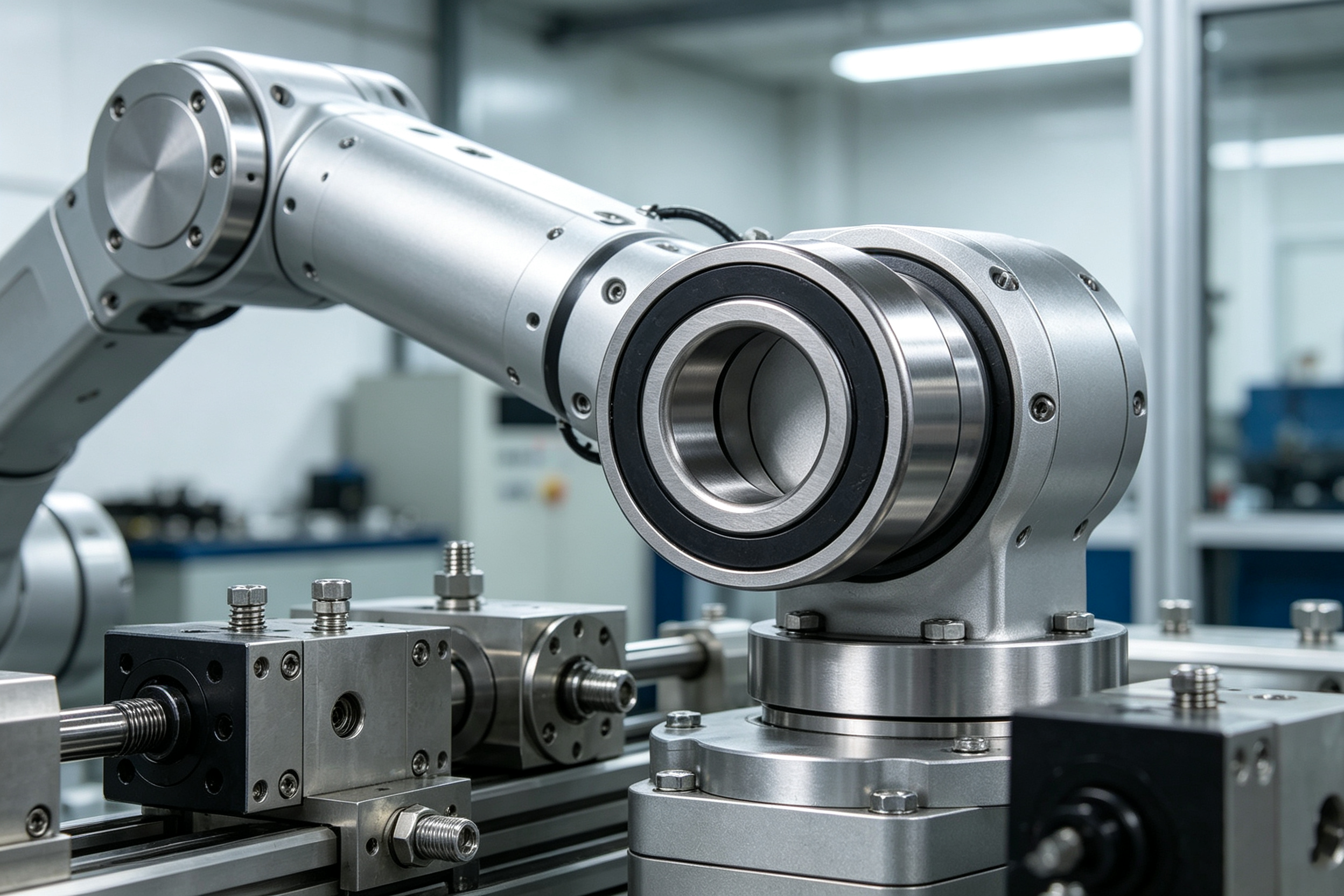
In the competitive world of robotics, accuracy is a primary differentiator. The seamless integration of precision bearings is not merely a mechanical detail; it is a strategic imperative that dictates the performance, reliability, and value of the entire robotic system.
For manufacturers and integrators, partnering with bearing suppliers who understand the unique demands of robotics is crucial. It requires a shared commitment to quality, innovation, and continuous improvement. By prioritizing precision bearing integration, robotic arm designers can unlock new levels of performance, ensuring their machines can meet the ever-increasing demands of modern automation.
As we look toward the next generation of collaborative robots, autonomous mobile manipulators, and industrial automation, the role of the precision bearing will only grow in importance. They are the silent guardians of accuracy, the mechanical foundation upon which the future of robotics is built. Investing in their seamless integration is, ultimately, an investment in the future of precision manufacturing.
Frequently Asked Questions (FAQ)
Q: Why are precision bearings critical for robotic arm accuracy?
A: They minimize internal clearance and friction, translating digital commands into flawless physical movement without microscopic deviations.
A: They minimize internal clearance and friction, translating digital commands into flawless physical movement without microscopic deviations.
Q: Which bearing type is best for high-load robotic joints?
A: Cross-roller bearings are ideal due to their high rigidity and ability to handle combined radial, axial, and moment loads.
A: Cross-roller bearings are ideal due to their high rigidity and ability to handle combined radial, axial, and moment loads.
Q: How do thin-section bearings improve robotic performance?
A: They offer high load capacity in a compact profile, reducing rotational inertia for faster and more precise positioning.
A: They offer high load capacity in a compact profile, reducing rotational inertia for faster and more precise positioning.
Q: Does lubrication affect robotic accuracy?
A: Yes. Proper lubrication reduces friction and prevents stick-slip motion, ensuring smooth and repeatable joint movements.
A: Yes. Proper lubrication reduces friction and prevents stick-slip motion, ensuring smooth and repeatable joint movements.
Q: What is the future trend in robotic bearings?
A: Smart bearings with embedded sensors that provide real-time data for predictive maintenance and dynamic control compensation.
A: Smart bearings with embedded sensors that provide real-time data for predictive maintenance and dynamic control compensation.
Post time: Sep-03-2026