


The global transition to renewable energy is accelerating at an unprecedented pace, with offshore wind power emerging as a cornerstone of this green revolution. As turbine manufacturers push the boundaries of engineering to develop 8MW+ and even 14MW+ offshore wind turbines, the demand for highly specialized, durable, and reliable components has never been greater. At the heart of these colossal machines lie bearings, the unsung heroes that facilitate rotation, support immense loads, and ensure decades of uninterrupted clean energy generation. For bearing manufacturers, engineering for the harsh offshore environment is not just a technical challenge; it is a commitment to the future of our planet.
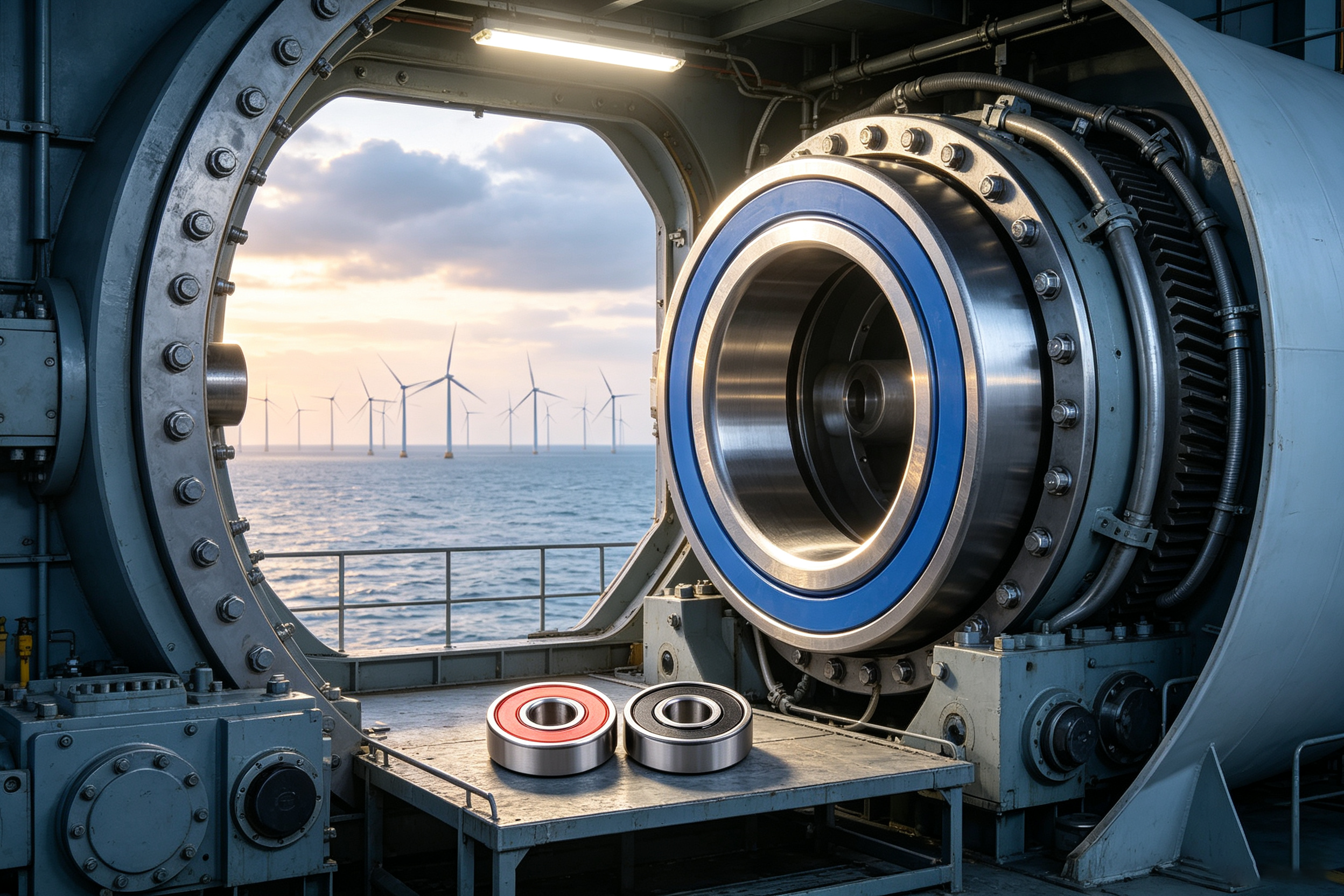
The Unique Demands of the Offshore Environment
Offshore wind farms are situated in some of the most demanding industrial environments on Earth. Unlike their onshore counterparts, offshore turbines must withstand relentless salt spray, extreme humidity, corrosive seawater, and unpredictable, high-intensity wind loads. The consequences of a bearing failure in this setting are catastrophic, leading to exorbitant maintenance costs, prolonged downtime, and significant revenue loss. Therefore, the engineering focus for 8MW+ turbine bearings has shifted from mere functionality to achieving exceptional longevity and reliability.
The main shaft bearing, in particular, is a critical component. It must support the entire weight of the rotor and nacelle while absorbing complex, variable loads from wind gusts and wave action. Recent academic research has delved into the dynamic response characteristics of these bearings under real-world service conditions, highlighting the importance of advanced modeling techniques like rigid-flexible coupling analysis to predict performance and prevent early failures. This level of scientific rigor is now a standard part of the engineering process for leading bearing manufacturers.
Engineering for Reliability: A Multi-Faceted Approach
To meet the stringent requirements of 8MW+ offshore turbines, bearing engineers are employing a holistic approach that encompasses advanced materials, precision manufacturing, and sophisticated design. The goal is to create components that can operate for 20-25 years with minimal maintenance.
| Engineering Focus Area | Key Challenges in Offshore Environment | Advanced Engineering Solutions |
|---|---|---|
| Material Science | Corrosion from salt spray; hydrogen embrittlement; high cyclic stress. | Development of proprietary, corrosion-resistant steel alloys; advanced surface treatments and coatings; ultra-clean steel manufacturing to reduce inclusions. |
| Bearing Design | Extreme and variable loads from wind and waves; need for high load-carrying capacity. | Optimized internal geometry (e.g., tapered roller bearings); multi-row designs for increased load distribution; integrated sensor systems for condition monitoring. |
| Sealing & Lubrication | Ingress of water and contaminants; lubricant degradation over decades. | Highly effective, multi-lip sealing solutions; specialized, long-life grease formulations; sealed-for-life bearing units to prevent contamination. |
This table illustrates how specific challenges are met with targeted engineering solutions. For instance, the shift towards larger, multi-megawatt turbines has directly fueled the demand for specialized pitch, yaw, and main shaft bearings capable of withstanding extreme stress. Companies are making significant capital investments to expand their renewable energy capabilities, recognizing that this sector represents their largest and most critical end-market.
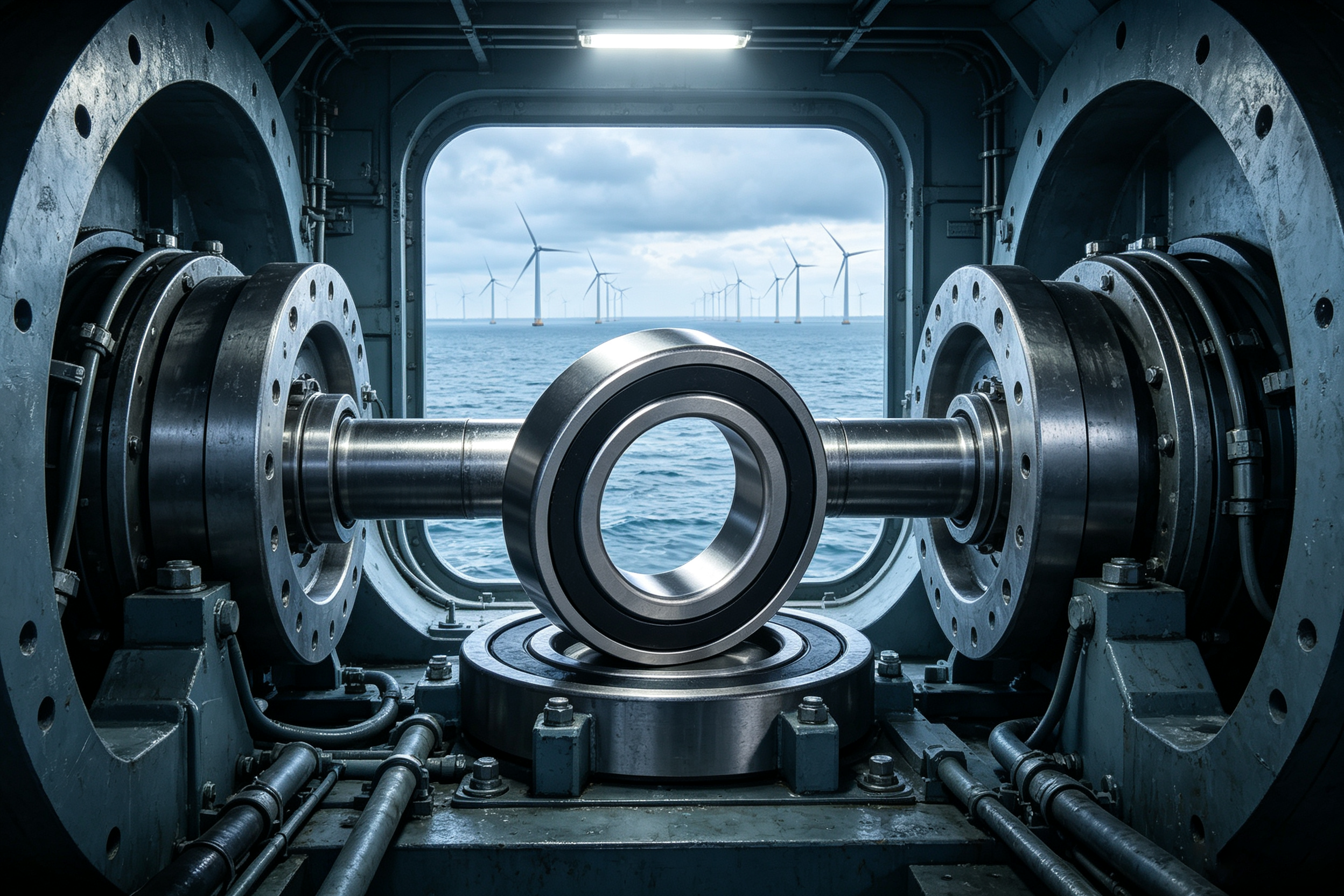
The Role of Data and Collaboration
The engineering of next-generation bearings is no longer a solitary endeavor. It is a collaborative process that involves close partnerships with turbine OEMs (Original Equipment Manufacturers), research institutions, and end-users. This collaborative ecosystem is essential for validating designs and ensuring that bearings can meet the real-world demands of offshore wind farms.
A prime example of this collaboration is the partnership between leading bearing manufacturers and turbine giants like GE Renewable Energy. When GE developed its Haliade-X, one of the world’s most powerful offshore wind turbines with a capacity of up to 14MW, it relied on specialized engineering expertise to supply the main shaft bearings. This collaboration was not a one-off project but the culmination of years of shared experience, dating back to earlier 6MW models. Such long-term partnerships are built on a foundation of trust, proven performance, and a shared commitment to innovation.
Furthermore, the industry is increasingly leveraging data to drive improvements. The integration of sensors into bearings allows for real-time condition monitoring, providing a continuous stream of data on temperature, vibration, and load. This data is invaluable for validating engineering models, predicting potential failures, and optimizing maintenance schedules, thereby enhancing the overall reliability of the wind farm.
Commitment to Quality and Sustainability
For a bearing company, adhering to the highest standards of quality and sustainability is paramount. This commitment is reflected in every stage of the product lifecycle, from the sourcing of raw materials to the final manufacturing process.
| Aspect of Commitment | Practical Implementation | Impact on Offshore Wind Industry |
|---|---|---|
| Quality Assurance | Rigorous testing protocols that exceed international standards; traceability of all materials and components. | Ensures every bearing can withstand the specified design life, reducing the risk of costly field failures. |
| Sustainable Manufacturing | Investment in energy-efficient production facilities; reduction of waste and carbon footprint in the supply chain. | Aligns with the core mission of the wind industry, providing a truly sustainable product from cradle to grave. |
| Technical Support | Providing comprehensive engineering support, installation guidelines, and lifecycle management services. | Empowers customers to maximize the performance and lifespan of their turbines, ensuring a higher return on investment. |
This table underscores that engineering excellence extends beyond the product itself. It encompasses the entire value proposition offered to the customer. In an industry where the total cost of ownership is a critical metric, a bearing manufacturer’s ability to provide reliable products and comprehensive support is a key differentiator.
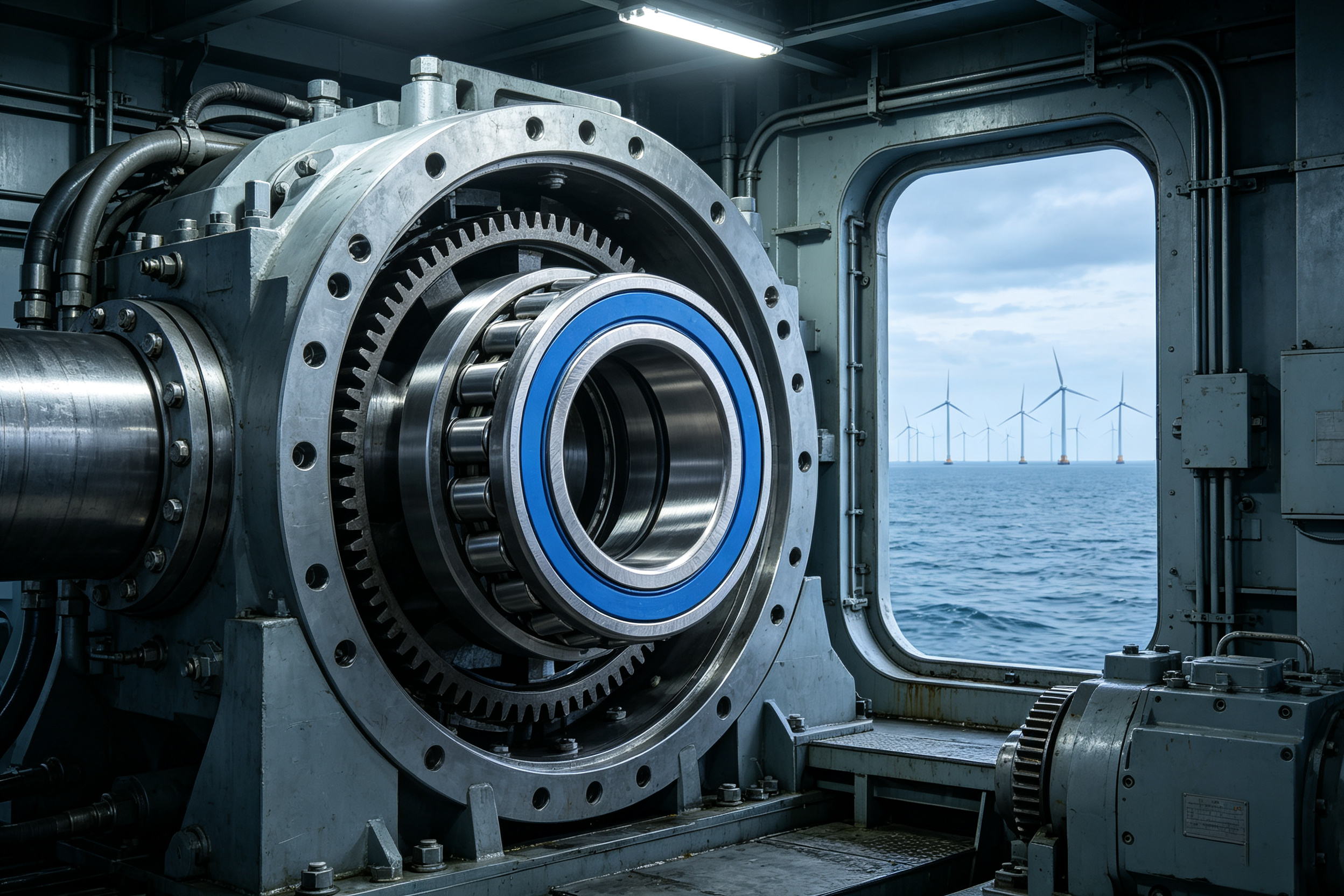
Conclusion: A Foundation for a Greener Future
The engineering of bearings for 8MW+ offshore wind turbines is a testament to human ingenuity and our collective resolve to combat climate change. It is a field that demands unwavering expertise, a commitment to quality, and a deep understanding of the unique challenges posed by the marine environment. As the global wind industry continues its record-breaking expansion, with forecasts predicting nearly 1 TW of additional wind energy installations by 2030, the role of specialized bearings will only become more critical.
For bearing manufacturers, this is more than a market opportunity; it is a profound responsibility. By continuing to innovate, collaborate, and uphold the highest standards of engineering, we can ensure that these vital components continue to power the breeze, turning the kinetic energy of the wind into a reliable, sustainable, and clean energy source for generations to come. The future of offshore wind is bright, and it is built on a foundation of precision-engineered bearings.
FAQ: Engineering Bearings for Offshore Wind Turbines
Q: Why are bearings so critical for offshore wind turbines?
A: They support massive rotor loads and ensure smooth rotation. A failure can lead to catastrophic downtime and extremely high repair costs in harsh marine environments.
A: They support massive rotor loads and ensure smooth rotation. A failure can lead to catastrophic downtime and extremely high repair costs in harsh marine environments.
Q: What is the main challenge for offshore bearings?
A: They must withstand relentless salt spray, high humidity, and extreme, variable wind and wave loads for 20-25 years without failing.
A: They must withstand relentless salt spray, high humidity, and extreme, variable wind and wave loads for 20-25 years without failing.
Q: How do engineers make bearings last longer offshore?
A: By using corrosion-resistant steel alloys, advanced protective coatings, and highly effective multi-lip sealing systems to prevent water ingress.
A: By using corrosion-resistant steel alloys, advanced protective coatings, and highly effective multi-lip sealing systems to prevent water ingress.
Q: What role does data play in modern bearing engineering?
A: Integrated sensors provide real-time data on vibration and temperature, allowing for predictive maintenance and preventing unexpected failures.
A: Integrated sensors provide real-time data on vibration and temperature, allowing for predictive maintenance and preventing unexpected failures.
Q: Why is collaboration with turbine manufacturers important?
A: Close partnerships ensure bearings are perfectly customized to handle the specific loads and design requirements of next-generation 8MW+ turbines.
A: Close partnerships ensure bearings are perfectly customized to handle the specific loads and design requirements of next-generation 8MW+ turbines.
Post time: Jul-31-2026