


The healthcare sector is undergoing a profound transformation driven by the relentless pursuit of miniaturization. From leadless pacemakers the size of a multivitamin to handheld surgical devices, shrinking medical technologies are enabling minimally invasive procedures and at-home diagnostics. However, this shift toward human-scale integration presents immense engineering challenges. At the heart of these compact, high-performance devices lies a critical, often unseen component: the micro bearing.
In dental and laboratory equipment, micro bearings are the unsung heroes that dictate precision, reliability, and patient comfort. As medical device manufacturers push the boundaries of what’s possible, the demand for miniature ball bearings that meet stringent regulatory and performance standards has never been higher.
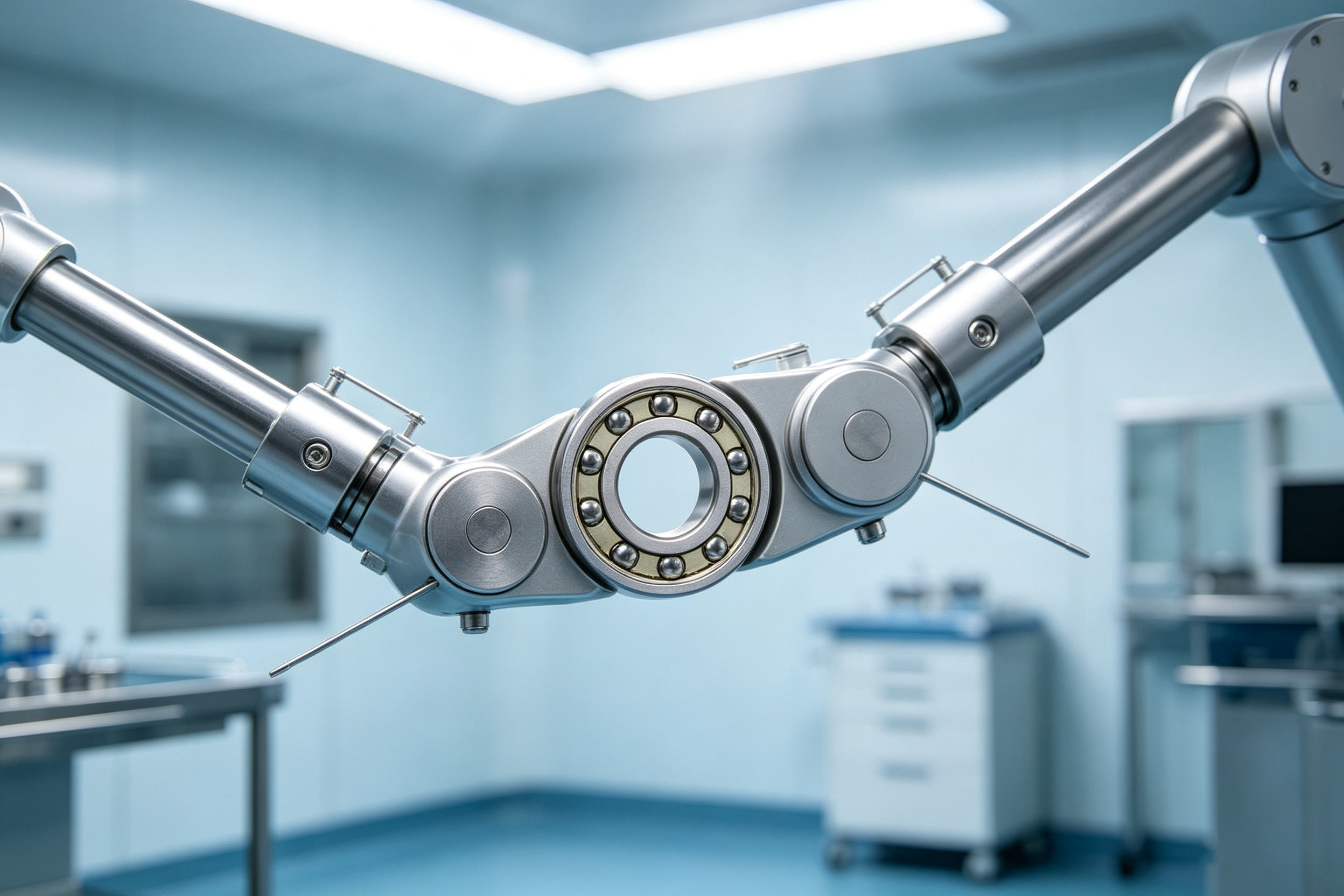
The Critical Role of Micro Bearings in Dentistry
Dental high-speed handpieces, commonly known as dental drills, represent one of the most demanding applications for micro bearings. Driven pneumatically by a turbine wheel, these instruments require bearings with outer diameters as small as 6.35 mm to achieve rotational speeds of up to 500,000 RPM.
At these extreme velocities, traditional steel bearings face significant limitations. Centrifugal forces can cause metal balls to deform, leading to increased friction, excessive heat generation, and premature failure. To overcome this, modern dental micro bearings utilize advanced material science, specifically hybrid ceramic designs.
表格
| Feature | Traditional Steel Bearings | Hybrid Ceramic Bearings |
|---|---|---|
| Rolling Element | Stainless Steel (e.g., AISI 440C) | Silicon Nitride (Si₃N₄) Ceramic |
| Max Speed | Limited by heat & centrifugal force | Up to 500,000 RPM |
| Thermal Performance | High friction leads to significant heat | Low thermal expansion, runs cooler |
| Lifespan | Shorter due to wear at high speeds | 2-3x longer lifespan |
| Noise & Vibration | Higher micro-vibrations | Ultra-quiet, smooth operation |
By replacing steel balls with silicon nitride ceramics, which are significantly lighter and harder, manufacturers can drastically reduce centrifugal force and friction. This not only extends the bearing’s lifespan but also ensures a cooler, quieter, and more comfortable experience for the patient. Furthermore, specialized stainless steel alloys, such as ES1, are often used for the bearing rings to provide superior corrosion resistance against frequent autoclave sterilization.
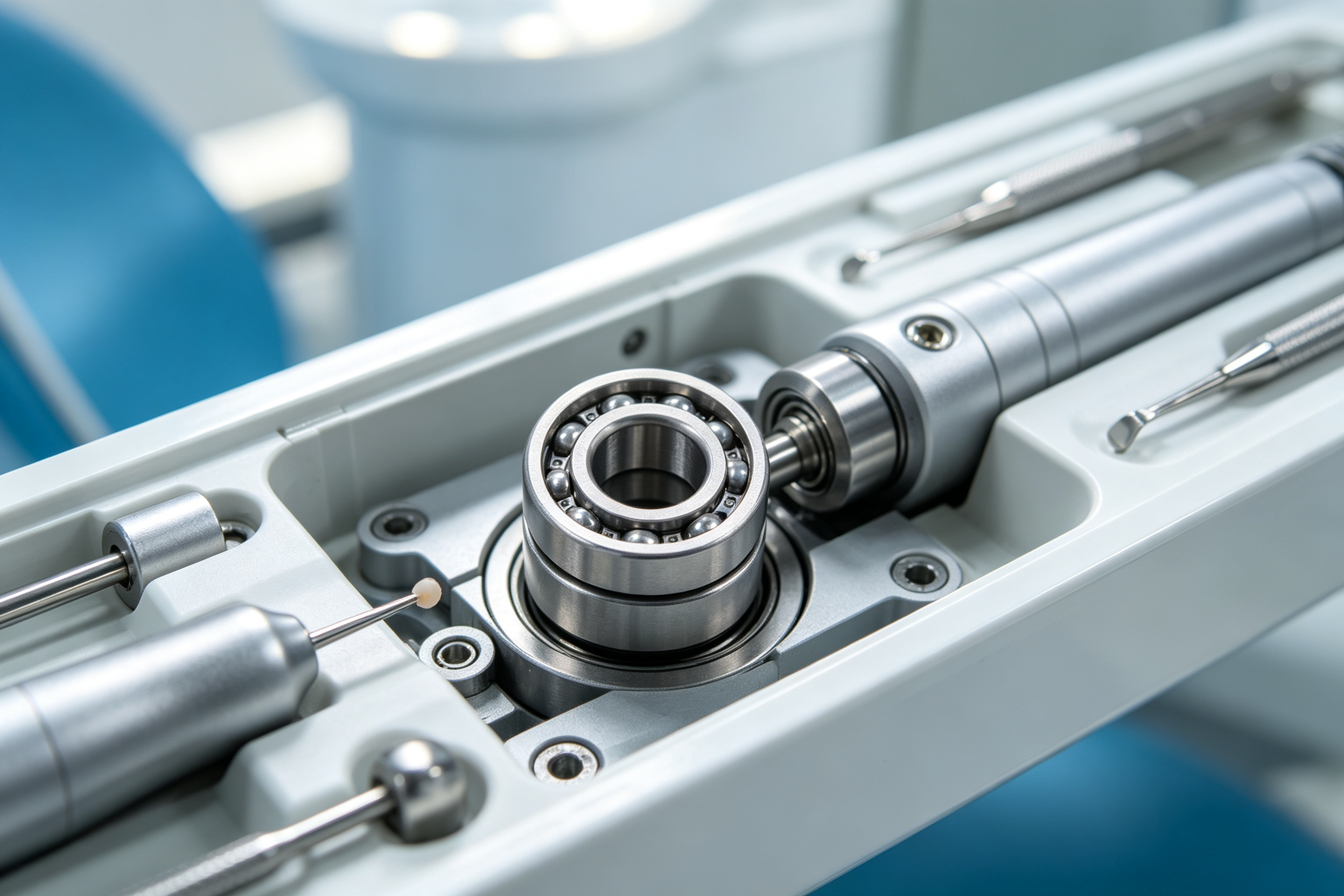
Precision Demands in Laboratory Automation
Beyond dentistry, laboratory automation equipment relies heavily on micro bearings to ensure diagnostic accuracy and operational efficiency. In devices like automated pipettes, centrifuges, and analytical instruments, even microscopic deviations can compromise test results.
The precision requirements for lab equipment are exacting. Bearings must maintain radial runout of ≤1μm and control vibrations to V4 levels (<0.28μm/s) to prevent interference with sensitive optical or electronic sensors. Additionally, these components must withstand rigorous cleaning protocols, including exposure to harsh chemicals and repeated sterilization cycles, without degrading.
表格
| Application | Key Bearing Requirement | Technical Specification |
|---|---|---|
| Dental Handpieces | Extreme High-Speed Stability | 400,000 – 500,000 RPM, Hybrid Ceramic |
| Lab Centrifuges | High Load & Balance | High radial load capacity, low vibration |
| Automated Pipettes | Smooth, Low-Friction Motion | Low starting torque, precise positioning |
| Analytical Sensors | Electromagnetic Compatibility | Non-magnetic materials (Ceramic/PEEK) |
Navigating the Pitfalls of Miniaturization
While miniaturization offers tremendous benefits, it is not without its design risks. As components approach the scale of their material grain structure, standard datasheet properties may no longer apply. Manufacturing tolerances, assembly forces, and sterilization techniques can all alter the performance of a micro bearing in ways that are difficult to predict.
Regulators globally are increasingly focusing on these human-factor and reliability risks. Medical device creators must move beyond standard component selection and engage in custom component-level bench testing. This includes validating bearing performance under simulated clinical conditions, such as sustained loading, thermal cycling, and repeated exposure to high-pressure steam or gamma radiation.
Choosing the right bearing also involves understanding the specific load dynamics of the application. For instance, angular contact bearings are often preferred for high-speed dental handpieces due to their ability to handle combined radial and axial loads, whereas radial contact bearings may suffice for lower-speed lab equipment with primarily radial forces.
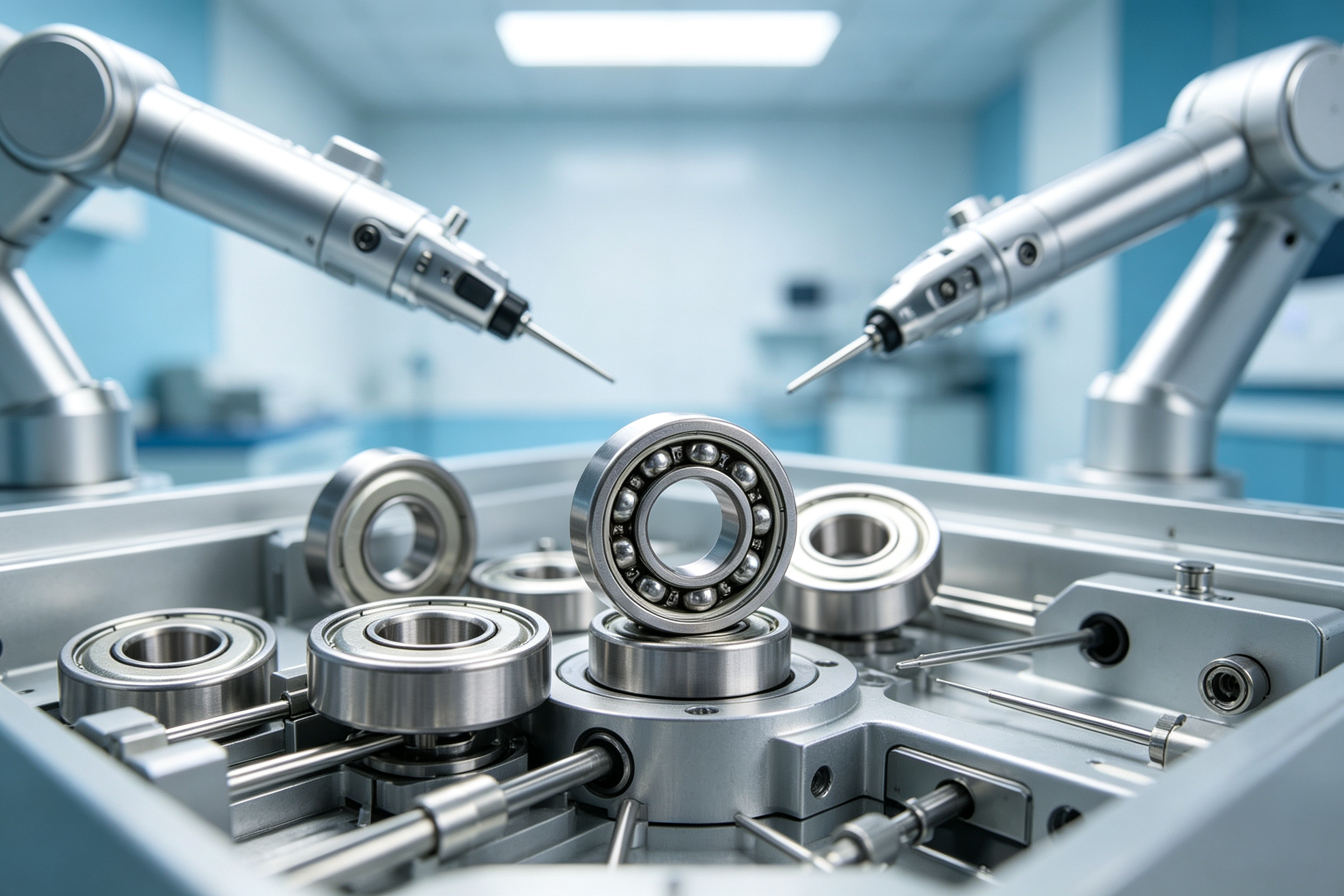
The Future of Micro Bearings in Healthcare
The trajectory of medical miniaturization points toward even smaller, smarter, and more integrated devices. Future micro bearings are expected to incorporate embedded MEMS sensors for real-time monitoring of temperature, vibration, and wear, enabling predictive maintenance and preventing unexpected failures during critical procedures.
Furthermore, advancements in self-lubricating polymers like PEEK and Torlon® PAI are reducing the reliance on traditional greases, which can degrade under sterilization. These materials offer excellent chemical resistance and biocompatibility, making them ideal for next-generation implantable and wearable devices.
For healthcare manufacturers, partnering with bearing suppliers who understand the unique intersection of precision engineering, material science, and medical regulations is no longer optional—it is a strategic imperative. As we continue to think big by going small, the micro bearing will remain a foundational element in delivering safer, more effective, and more accessible healthcare.
Frequently Asked Questions (FAQ)
Why are hybrid ceramic bearings preferred for dental handpieces?
They are significantly lighter and harder than steel, reducing centrifugal force and friction at extreme speeds (up to 500,000 RPM), which results in cooler operation and a longer lifespan.
They are significantly lighter and harder than steel, reducing centrifugal force and friction at extreme speeds (up to 500,000 RPM), which results in cooler operation and a longer lifespan.
How do micro bearings withstand frequent sterilization?
They are manufactured using specialized, highly corrosion-resistant stainless steel (like ES1 or 440C) for the rings and advanced polymers (like PEEK or Torlon®) for the cages, allowing them to endure harsh autoclave cycles.
They are manufactured using specialized, highly corrosion-resistant stainless steel (like ES1 or 440C) for the rings and advanced polymers (like PEEK or Torlon®) for the cages, allowing them to endure harsh autoclave cycles.
What makes micro bearings critical for laboratory equipment?
They provide ultra-high precision and low vibration, which is essential to prevent interference with sensitive optical sensors and ensure accurate diagnostic test results.
They provide ultra-high precision and low vibration, which is essential to prevent interference with sensitive optical sensors and ensure accurate diagnostic test results.
What are the design risks of miniaturizing medical devices?
As components shrink, standard material properties may change. Extreme tolerances, assembly stresses, and repeated sterilization can alter performance, making custom component-level testing necessary.
As components shrink, standard material properties may change. Extreme tolerances, assembly stresses, and repeated sterilization can alter performance, making custom component-level testing necessary.
What is the future trend for micro bearings in healthcare?
Future bearings are expected to integrate embedded sensors for real-time health monitoring and utilize self-lubricating materials to eliminate grease degradation during sterilization.
Future bearings are expected to integrate embedded sensors for real-time health monitoring and utilize self-lubricating materials to eliminate grease degradation during sterilization.
Post time: Sep-09-2026