


In the high-stakes environment of modern operating rooms, the margin for error is measured in microns. Surgical robotics has revolutionized minimally invasive procedures, offering unprecedented precision, reduced patient trauma, and faster recovery times. Yet, the seamless articulation of a robotic arm or the delicate advancement of a catheter relies on a component often unseen but absolutely critical: the precision bearing. For medical device manufacturers, selecting the right bearing is not merely a mechanical decision; it is a clinical imperative. At DEMY, we understand that in surgical robotics, every rotation is life-saving.
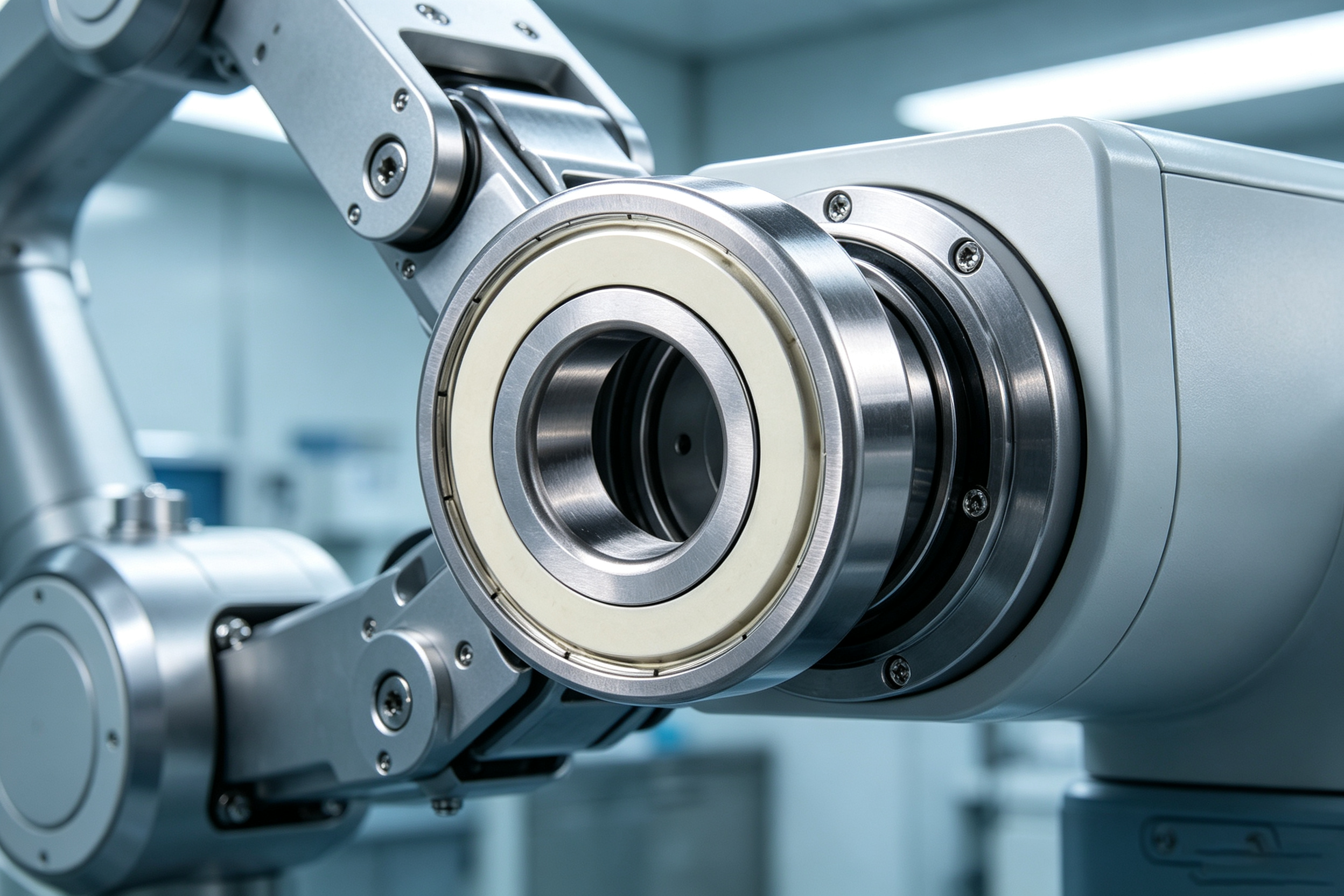
The Unforgiving Demands of the Surgical Environment
Surgical robots operate in one of the most challenging environments for mechanical components. Unlike industrial automation, medical robotics must navigate a unique set of constraints that dictate bearing performance:
- Sub-Millimeter Precision: Procedures like coronary stent deployment require sub-millimeter accuracy. Bearings must exhibit ultra-low friction and high rotational precision to ensure the surgeon’s hand movements are translated to the instrument tip without lag or backlash.
- Sterilization Resilience: Medical devices undergo repeated sterilization cycles using high-pressure steam, ethylene oxide, or gamma radiation. Standard lubricants can degrade, and metals can corrode. Bearings must withstand these harsh chemical and thermal processes without performance loss.
- Silent and Vibration-Free Operation: Any unexpected noise or micro-vibration can distract the surgical team or interfere with delicate tissue manipulation. Bearings must run with exceptional smoothness and acoustic quietness.
- MRI Compatibility: When surgical robots are used in conjunction with Magnetic Resonance Imaging (MRI), ferromagnetic materials are strictly prohibited. Bearings must be entirely non-magnetic to prevent image distortion or dangerous projectile hazards.
- Space and Weight Constraints: Portable and intraoperative robots demand compact designs. Bearings must deliver high load capacity within minimal envelopes, often requiring thin-section or miniature designs.
These requirements elevate bearing selection from a standard engineering task to a specialized discipline where material science and tribology directly impact patient outcomes.
Bearing Architectures for Robotic Precision
Different joints and mechanisms within a surgical robot demand specialized bearing solutions. The following table outlines the primary bearing types utilized in state-of-the-art surgical systems:
| Bearing Type | Key Characteristics | Primary Application in Surgical Robotics |
|---|---|---|
| Crossed Roller Bearings | Rollers arranged at 90°; handles radial, axial, and moment loads simultaneously; extreme rigidity. | Robot arm joints, rotational bases requiring absolute positional accuracy. |
| Thin-Section Bearings | Minimal cross-section; lightweight; space-saving design with multi-directional load support. | Compact robotic arms, end-effector joints, and portable device mechanisms. |
| Angular Contact Ball Bearings | Designed for combined radial/axial loads; high-speed capability; often paired for rigidity. | Precision drive systems, spindle assemblies, and high-RPM transmission units. |
| Miniature Stainless Steel | Ultra-compact size; quiet operation; stable support in confined spaces. | Catheter drive mechanisms, endoscope articulation, and micro-instrument housings. |
Each of these architectures must be engineered to tolerances far exceeding industrial standards, with surface finishes and geometric accuracies optimized for the unique demands of medical intervention.
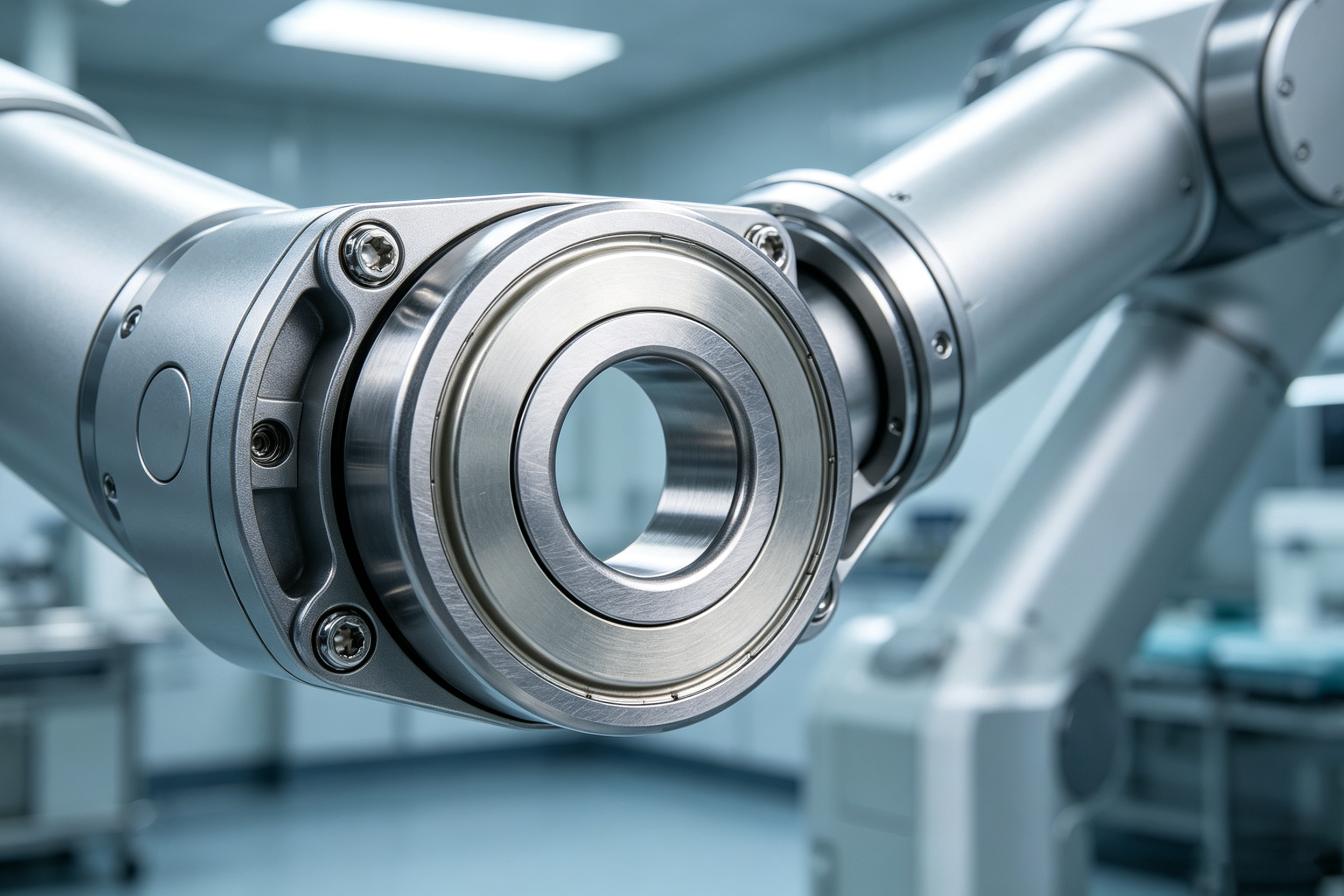
Material Science: The Foundation of Reliability
The choice of bearing material is perhaps the most critical factor in ensuring long-term reliability and biocompatibility. Traditional martensitic stainless steel has been the industry standard, but advanced materials are increasingly necessary for next-generation devices.
| Material | Core Advantages | Ideal Use Cases & Considerations |
|---|---|---|
| Specialty Stainless Steel | High strength; cost-effective; established manufacturing processes. | General surgical robotics where extreme corrosion resistance is not paramount; traditional mainstream choice. |
| Full Ceramic (ZrO₂ / Si₃N₄) | Non-magnetic; chemically inert; no lubrication required; high-temperature resistant; extremely hard. | MRI-compatible robots; high-cleanliness environments; applications requiring zero maintenance and washdown capability. |
| Hybrid Ceramic (Steel Rings + Si₃N₄ Balls) | Combines steel’s toughness with ceramic’s speed and corrosion resistance; lower density reduces centrifugal forces. | High-speed spindles; applications needing balance of performance and cost; improved fatigue life over all-steel. |
| High-Nitrogen Stainless Alloys | Superior corrosion & fatigue resistance; excellent biocompatibility; withstands blood & disinfectant exposure. | Implants or instruments in direct contact with biological fluids; extreme durability requirements in harsh bio-environments. |
The Ceramic Advantage in Medical Settings
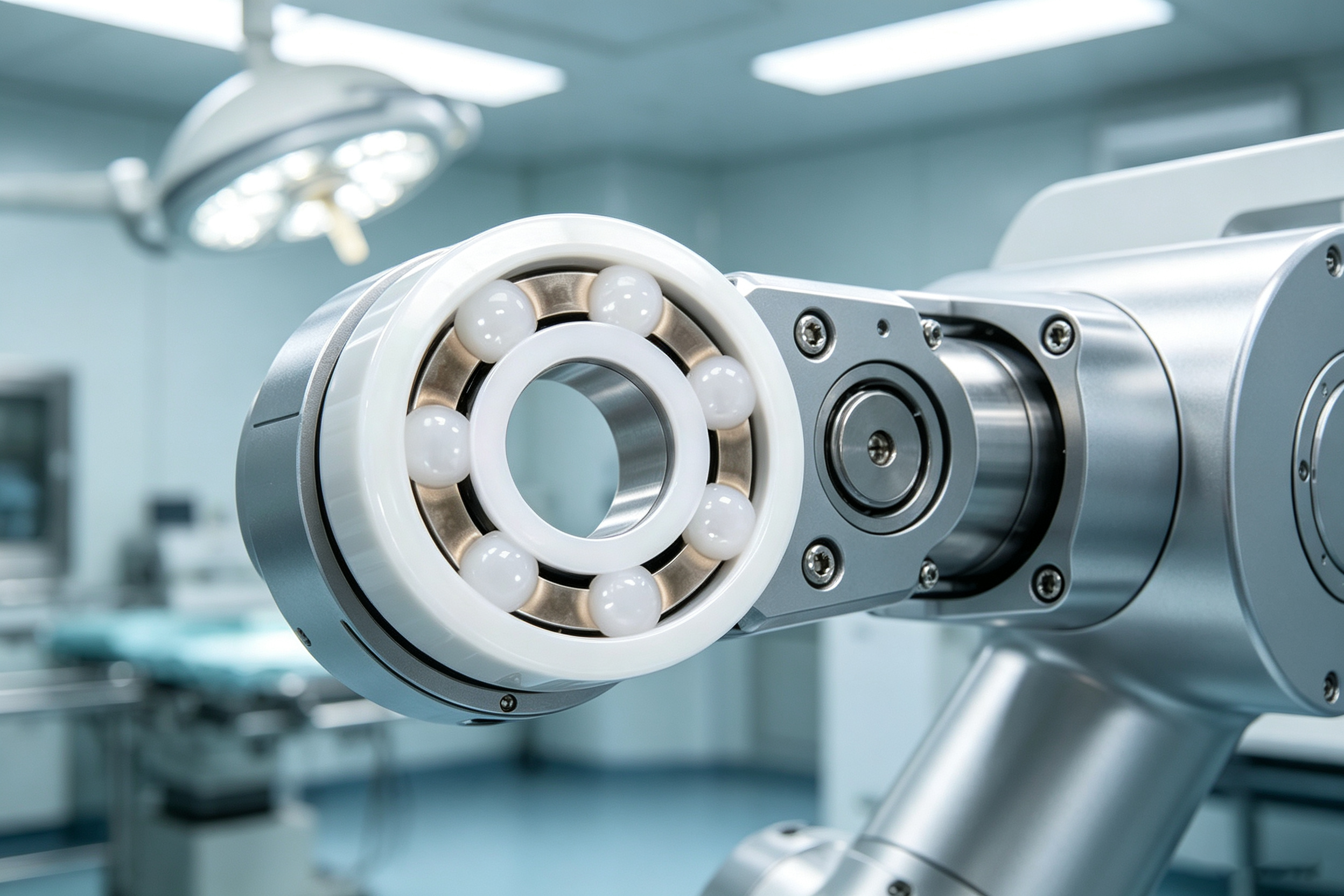
Full ceramic and hybrid ceramic bearings are transforming surgical robotics. Their inherent non-magnetic properties make them indispensable for MRI-guided interventions. More importantly, ceramics are chemically inert—they do not corrode when exposed to sterilization agents or bodily fluids, and they eliminate the need for lubricants that could attract contaminants or leach into sterile fields. This “lubrication-free” operation also removes a maintenance point, reducing lifecycle costs and failure risks. While the initial investment is higher, the total cost of ownership often favors ceramics in critical applications where downtime or failure is not an option.
Full ceramic and hybrid ceramic bearings are transforming surgical robotics. Their inherent non-magnetic properties make them indispensable for MRI-guided interventions. More importantly, ceramics are chemically inert—they do not corrode when exposed to sterilization agents or bodily fluids, and they eliminate the need for lubricants that could attract contaminants or leach into sterile fields. This “lubrication-free” operation also removes a maintenance point, reducing lifecycle costs and failure risks. While the initial investment is higher, the total cost of ownership often favors ceramics in critical applications where downtime or failure is not an option.
Beyond the Component: A Partnership in Precision
At DEMY, we recognize that a bearing is never just a bearing in surgical robotics. It is a safety-critical interface between human intent and mechanical execution. Our engineering team works directly with medical device OEMs from the prototype phase, offering:
- Application-Specific Design: Custom bearing geometries, seals, and cage designs tailored to your robot’s kinematics and sterilization protocol.
- Material Selection Guidance: Data-driven recommendations balancing performance, regulatory compliance, and budget constraints.
- Rigorous Validation: Testing protocols that simulate real-world surgical conditions, including sterilization cycling, biocompatibility screening, and lifetime fatigue analysis.
- Regulatory Support: Comprehensive documentation and traceability to support your FDA, CE, and other regulatory submissions.
The future of surgical robotics will demand even greater miniaturization, integration with imaging modalities, and autonomous capabilities. Bearings will remain at the heart of this evolution, enabling the smooth, silent, and precise motions that define successful outcomes. When you choose [Your Company Name], you are not just sourcing a component—you are partnering with a team that understands that every rotation, every degree of freedom, and every micron of precision carries the weight of a life-saving mission.
Frequently Asked Questions (FAQ)
1. Why are standard industrial bearings unsuitable for surgical robots?
Surgical environments demand sub-millimeter precision, silent operation, and the ability to withstand repeated harsh sterilization cycles, which standard bearings cannot guarantee.
Surgical environments demand sub-millimeter precision, silent operation, and the ability to withstand repeated harsh sterilization cycles, which standard bearings cannot guarantee.
2. Which bearing type is best for robotic arm joints?
Crossed roller bearings are ideal due to their extreme rigidity and ability to handle combined radial, axial, and moment loads simultaneously.
Crossed roller bearings are ideal due to their extreme rigidity and ability to handle combined radial, axial, and moment loads simultaneously.
3. Can these bearings be used inside an MRI room?
Yes. We offer full ceramic (ZrO₂ / Si₃N₄) bearings that are 100% non-magnetic and completely safe for MRI environments.
Yes. We offer full ceramic (ZrO₂ / Si₃N₄) bearings that are 100% non-magnetic and completely safe for MRI environments.
4. Do surgical robot bearings require regular lubrication?
Many medical-grade bearings are designed to be maintenance-free, utilizing solid lubricants or self-lubricating materials to ensure clean, uninterrupted operation.
Many medical-grade bearings are designed to be maintenance-free, utilizing solid lubricants or self-lubricating materials to ensure clean, uninterrupted operation.
5. What materials ensure biocompatibility and corrosion resistance?
Specialty stainless steels (like 316L), high-nitrogen alloys, and advanced ceramics are highly resistant to blood, bodily fluids, and harsh chemical disinfectants.
Specialty stainless steels (like 316L), high-nitrogen alloys, and advanced ceramics are highly resistant to blood, bodily fluids, and harsh chemical disinfectants.
6. How do you ensure the bearings meet medical regulatory standards?
We provide comprehensive traceability, material certifications, and testing data to support FDA, CE, and other medical device regulatory submissions.
We provide comprehensive traceability, material certifications, and testing data to support FDA, CE, and other medical device regulatory submissions.
Post time: Sep-07-2026