


Rail transport remains one of the most efficient and safest ways to move passengers and freight. Behind every smooth departure, reliable braking, and stable ride lies a network of precision components, with tapered roller bearings playing a central role. These bearings support rotating axles, transmit heavy loads, and help maintain alignment under demanding operating conditions. For railway operators, maintenance teams, and rolling stock manufacturers, understanding how tapered roller bearings work, where they are applied, and how to maintain them is essential for safety, uptime, and long-term cost control.
What are tapered roller bearings?
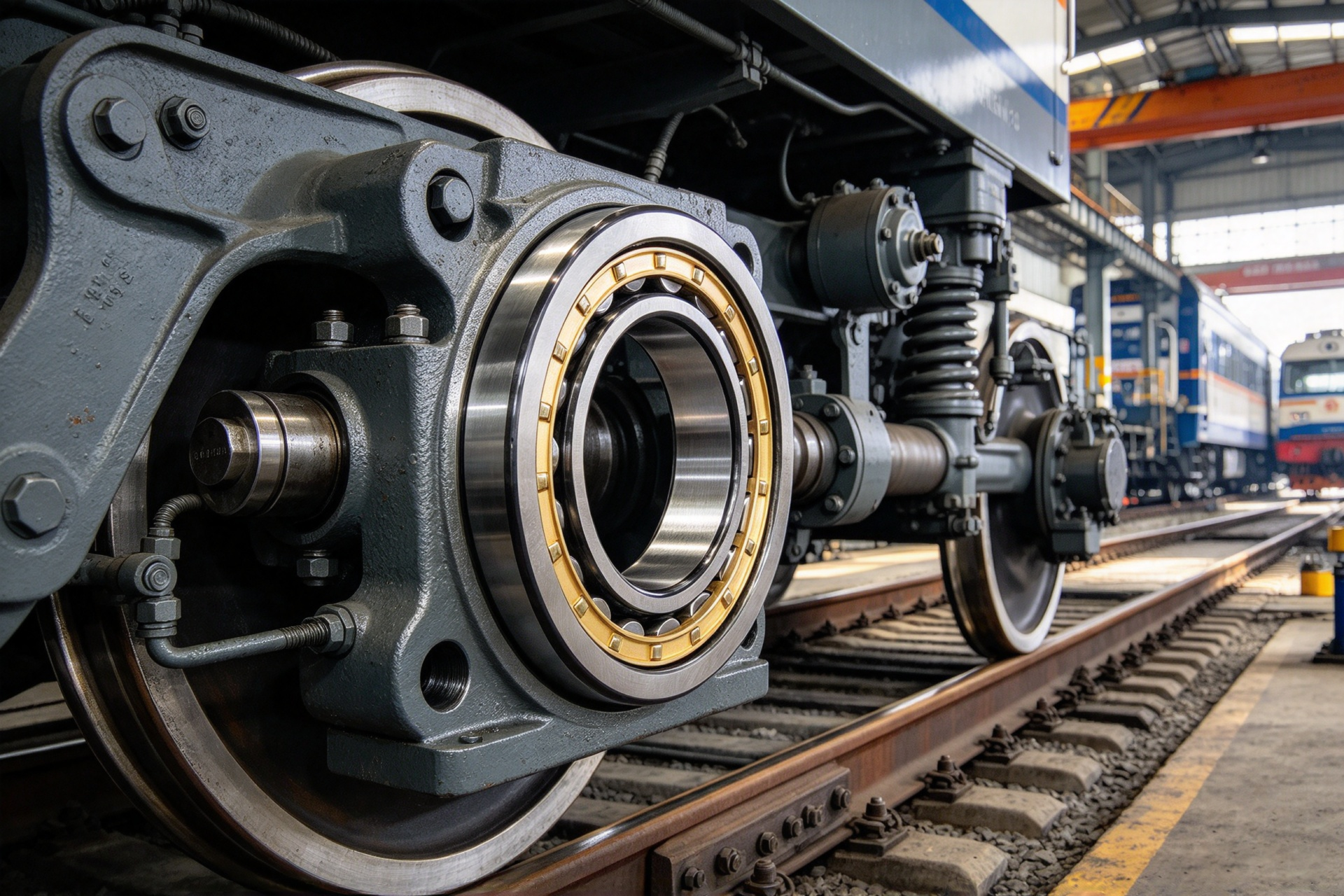
A tapered roller bearing is a separable rolling bearing that uses conical rollers guided by a rib on the inner ring. The rollers run between an inner ring, also called the cone, and an outer ring, also called the cup. This geometry allows the bearing to carry both radial loads and axial loads at the same time.
In railway applications, this combined load capacity is important. Train axles must support the weight of the vehicle and cargo while also handling forces generated during acceleration, braking, cornering, and track irregularities. Tapered roller bearings are well suited to these conditions because their design distributes loads over a larger contact area and provides controlled internal clearance when properly adjusted.
Why tapered roller bearings matter in rail systems
Railway bearings operate under high loads, variable speeds, vibration, shock, moisture, dust, and temperature changes. A bearing failure in a rail vehicle can lead to unplanned downtime, costly repairs, and serious safety risks. Tapered roller bearings help reduce these risks when they are correctly selected, installed, lubricated, and monitored.
Their main advantages in rail service include:
- Ability to support heavy radial loads from the vehicle weight.
- Capacity to manage axial loads during braking and curve negotiation.
- Adjustable clearance or preload for stable operation.
- Robust performance in harsh environments when properly sealed and maintained.
- Compatibility with proven inspection and maintenance practices.
Common railway applications
Tapered roller bearings are used in several parts of a rail vehicle, but their most critical application is in axle boxes. They may also be found in traction motors, gearboxes, wheelsets, and certain auxiliary systems, depending on the design of the rolling stock.
| Application | Main function | Key operating demands |
|---|---|---|
| Axle box | Supports the wheelset and transfers loads to the bogie | High radial load, shock load, contamination, temperature variation |
| Traction motor | Supports motor shaft rotation | High speed, electrical insulation requirements, vibration |
| Gearbox | Transmits torque from motor to axle | Shock load, misalignment risk, lubrication management |
| Wheelset assembly | Maintains wheel rotation and alignment | Load cycling, fatigue, braking heat, track-induced forces |
Axle box bearings are especially important because they connect the rotating wheelset to the stationary bogie frame. Any defect in this area can affect ride quality, wheel-rail interaction, and overall vehicle safety.
Design features that support reliability
Railway tapered roller bearings are not standard industrial bearings. They are usually engineered for higher durability, tighter dimensional control, and more demanding service conditions. Key design features include optimized roller profiles, improved rib geometry, high-quality bearing steel, and controlled heat treatment.
Surface finish and internal geometry also matter. Small variations in raceway profile, roller alignment, or clearance can influence stress distribution, temperature rise, and fatigue life. For this reason, railway bearings are typically manufactured and inspected under strict quality requirements.
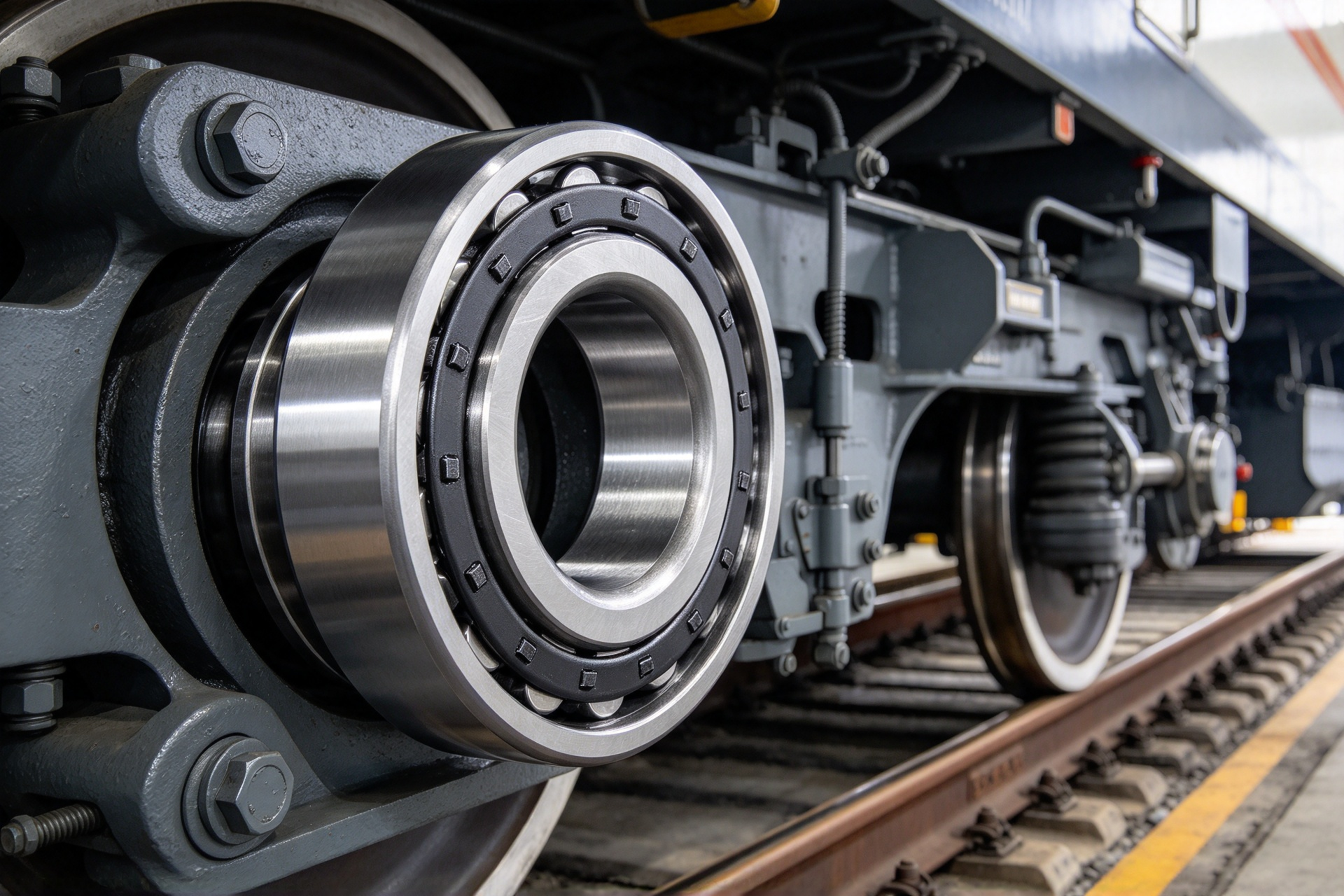
Sealing is another critical factor. Axle boxes are exposed to water, dust, brake dust, snow, sand, and other contaminants. Effective seals help keep lubricant inside and prevent foreign particles from entering the bearing. At the same time, seals must allow stable operation across a wide temperature range and resist aging during long service intervals.
Lubrication and maintenance
Proper lubrication is one of the most important factors in bearing life. Railway tapered roller bearings usually operate with grease or oil, depending on the axle box design. The lubricant reduces friction, carries away heat, and protects rolling surfaces from corrosion.
Maintenance teams should follow the bearing manufacturer’s recommendations for lubricant type, filling quantity, relubrication interval, and contamination control. Over-lubrication can cause excessive temperature rise, while under-lubrication may lead to metal-to-metal contact and early failure.
Typical maintenance activities include:
- Visual inspection of seals, housings, and mounting hardware.
- Temperature monitoring during service.
- Vibration or acoustic inspection where applicable.
- Lubricant condition assessment.
- Bearing removal and inspection at scheduled overhaul intervals.
- Replacement of damaged or worn components with approved parts.
| Maintenance focus | What to check | Why it matters |
|---|---|---|
| Lubrication | Type, quantity, contamination, aging | Prevents wear, overheating, and surface damage |
| Seals | Cracks, deformation, leakage, hardening | Keeps contaminants out and lubricant in |
| Mounting | Fit, clearance, preload, fastener condition | Avoids misalignment and uneven load distribution |
| Temperature | Hot spots, abnormal rise after braking or long runs | Early indicator of friction, lubrication, or installation issues |
| Vibration and noise | Unusual sound, roughness, or vibration pattern | Helps detect spalling, brinelling, or cage damage |
Installation and adjustment best practices
Even a high-quality tapered roller bearing can fail early if it is installed incorrectly. Installation should be carried out by trained personnel using proper tools and procedures. Bearing surfaces, housings, and shafts must be clean and free from damage before assembly.
Axial clearance or preload must be set according to the manufacturer’s specification. If clearance is too large, the bearing may allow excessive movement and uneven load sharing. If clearance is too small, internal friction and temperature can increase, shortening bearing life.
During installation, avoid direct hammering on the rolling elements or raceways. Use induction heaters, hydraulic presses, or approved mounting tools where required. After assembly, check rotation smoothness, seal position, and fastener torque. Documentation of bearing serial numbers, installation dates, and maintenance actions also supports traceability and reliability management.
Common failure modes and early warning signs
Railway bearings can fail for several reasons, including fatigue, contamination, poor lubrication, improper mounting, electrical erosion, and overload. Early detection is important because it allows planned intervention instead of emergency repair.
| Failure mode | Typical cause | Possible warning sign |
|---|---|---|
| Fatigue spalling | Long-term cyclic stress | Increasing vibration, rough rotation, noise |
| Contamination damage | Dust, water, or particles entering the bearing | Abrasive wear, discoloration, reduced lubricant quality |
| Lubrication failure | Insufficient, degraded, or wrong lubricant | High temperature, surface scoring, accelerated wear |
| False brinelling | Vibration while stationary | Indentations on raceways, roughness during rotation |
| Electrical erosion | Stray currents passing through the bearing | Fluting marks, pitting, premature surface damage |
Temperature monitoring is often one of the first lines of defense. A sudden or sustained rise in axle box temperature should be investigated immediately. Vibration analysis and periodic teardown inspections can provide deeper insight into bearing condition, especially for fleets with long service intervals.
Selecting the right tapered roller bearing
Bearing selection should be based on the specific railway application rather than generic size comparison. Important parameters include load rating, speed range, operating temperature, sealing type, lubrication method, expected service life, and compliance with relevant railway standards.
Operators should work with bearing suppliers who can provide technical documentation, material certification, dimensional reports, and application guidance. For critical rail components, traceability and consistent manufacturing quality are as important as nominal performance data.
It is also necessary to consider total cost of ownership. A lower-priced bearing may appear attractive at first, but if it requires more frequent maintenance, causes unplanned downtime, or increases energy loss, the long-term cost can be significantly higher.
The role of quality standards and traceability
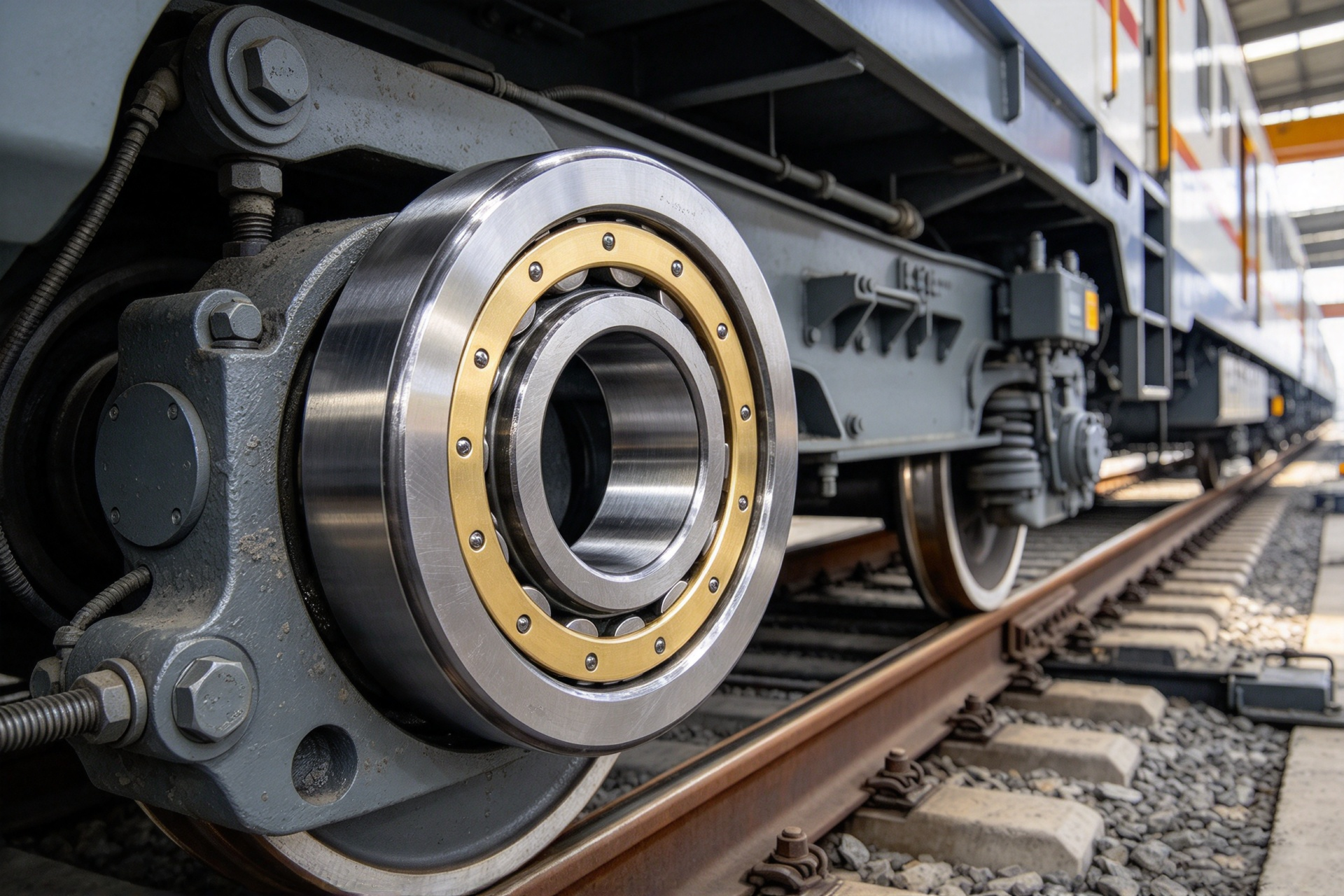
Railway components must meet strict safety and performance expectations. Bearings used in rail vehicles should conform to applicable industry standards and customer specifications. Documentation such as material certificates, heat treatment records, dimensional inspection reports, and test results helps demonstrate compliance.
Traceability is particularly important for safety-critical parts. Each bearing should be identifiable through its marking, batch number, or serial record. This allows operators to track installation history, monitor performance, and manage recalls or inspections when necessary.
Building safer and more efficient rail operations
Tapered roller bearings may be small compared with a locomotive or passenger coach, but their influence on rail safety is substantial. They help keep wheelsets aligned, support heavy loads, and enable reliable operation across thousands of kilometers of track.
For railway companies and maintenance providers, the best results come from combining well-designed bearings with disciplined installation, correct lubrication, regular inspection, and prompt fault detection. When these practices are followed, tapered roller bearings can deliver long service life, stable performance, and lower lifecycle costs.
In an industry where reliability and safety cannot be compromised, the right bearing solution is not just a mechanical detail. It is a fundamental part of keeping trains on track.
FAQ: Tapered Roller Bearings in Railway Applications
Q: What is the main function of tapered roller bearings in trains?
A: They support wheelsets, carry combined radial and axial loads, and help maintain stable rotation under heavy-duty rail conditions.
A: They support wheelsets, carry combined radial and axial loads, and help maintain stable rotation under heavy-duty rail conditions.
Q: Why are tapered roller bearings preferred for axle boxes?
A: They handle both vertical load and axial forces from braking and curve negotiation, while allowing adjustable clearance for reliable operation.
A: They handle both vertical load and axial forces from braking and curve negotiation, while allowing adjustable clearance for reliable operation.
Q: How often should railway tapered roller bearings be inspected?
A: Inspection intervals depend on service conditions and manufacturer guidance, but temperature, vibration, and seal condition should be monitored regularly.
A: Inspection intervals depend on service conditions and manufacturer guidance, but temperature, vibration, and seal condition should be monitored regularly.
Q: What are common signs of bearing failure?
A: Abnormal temperature rise, unusual noise, increased vibration, rough rotation, and lubricant contamination are typical warning signs.
A: Abnormal temperature rise, unusual noise, increased vibration, rough rotation, and lubricant contamination are typical warning signs.
Q: Can improper installation cause early bearing failure?
A: Yes. Incorrect clearance, misalignment, contamination, or improper mounting can significantly reduce bearing life.
A: Yes. Incorrect clearance, misalignment, contamination, or improper mounting can significantly reduce bearing life.
Q: What lubrication method is typically used?
A: Railway tapered roller bearings commonly use grease or oil, selected according to axle box design, speed, temperature, and maintenance requirements.
A: Railway tapered roller bearings commonly use grease or oil, selected according to axle box design, speed, temperature, and maintenance requirements.
Q: How do seals affect bearing performance?
A: Seals keep lubricant inside and block contaminants such as dust, water, and brake particles, which helps extend service life.
A: Seals keep lubricant inside and block contaminants such as dust, water, and brake particles, which helps extend service life.
Q: What is the difference between radial and axial load in rail bearings?
A: Radial load comes from vehicle weight, while axial load is generated during braking, acceleration, and curve negotiation.
A: Radial load comes from vehicle weight, while axial load is generated during braking, acceleration, and curve negotiation.
Q: Why is traceability important for railway bearings?
A: Traceability supports quality control, maintenance records, failure analysis, and compliance with railway safety standards.
A: Traceability supports quality control, maintenance records, failure analysis, and compliance with railway safety standards.
Q: How can operators extend tapered roller bearing life?
A: Use correct bearing selection, follow installation procedures, maintain proper lubrication, monitor temperature and vibration, and replace damaged parts promptly.
A: Use correct bearing selection, follow installation procedures, maintain proper lubrication, monitor temperature and vibration, and replace damaged parts promptly.
Post time: Sep-30-2026