


In the demanding world of heavy machinery and precision automation, the planetary gearbox remains the gold standard for achieving high reduction ratios within a confined footprint. However, the efficiency and longevity of these systems rely heavily on a critical, often overlooked component: the bearing. As engineers push for higher torque densities, selecting the right planetary gearbox bearings has become a decisive factor in operational success.
The Engineering Challenge: Why Planetary Systems Are Unique
Unlike standard parallel-shaft gearboxes, planetary gearboxes distribute loads across multiple planet gears. This design offers immense advantages in compactness and shock load resistance, but it creates unique tribological challenges for bearings.
The primary challenge is the high contact stress combined with oscillating loads. Bearings in planetary stages must accommodate significant radial forces while maintaining precise shaft alignment to prevent gear meshing errors. Furthermore, the compact nature of these gearboxes often leaves little room for large bearing cross-sections, necessitating high-performance materials and optimized internal geometries.
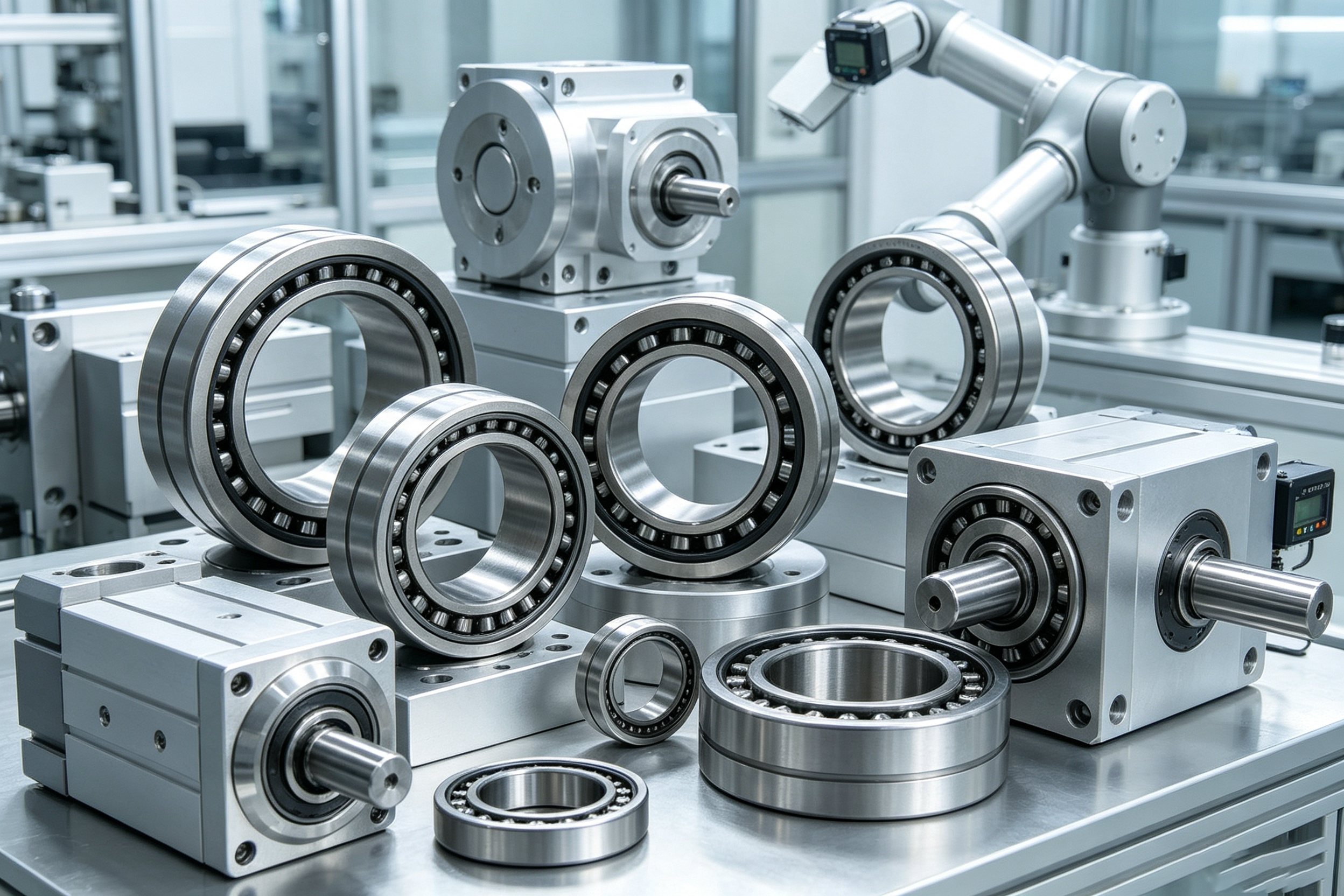
Critical Failure Modes in Planetary Bearings
To ensure reliability, engineers must understand the specific failure mechanisms inherent to planetary configurations.
- False Brinelling: Often caused by micro-vibrations when the machine is stationary but loaded, leading to wear debris and surface damage.
- Fretting Corrosion: Occurs at the bearing seat due to minute relative movements between the bearing ring and the shaft/housing, common in high-vibration environments.
- Lubricant Starvation: The compact design can trap heat, degrading grease or oil faster than in larger housings.
Selecting the Right Bearing Architecture
Choosing the correct bearing type is not merely about load ratings; it is about matching the kinematics of the planetary stage. The following table outlines the most common bearing solutions used in modern planetary gearboxes.
Table 1: Common Bearing Types for Planetary Gearboxes
| Bearing Type | Primary Application | Key Advantage | Limitation |
|---|
| Bearing Type | Primary Application | Key Advantage | Limitation |
|---|---|---|---|
| Tapered Roller Bearings (TRB) | Planet pins & Output shafts | High radial & axial load capacity; precise alignment. | Requires careful preload adjustment; higher friction. |
| Cylindrical Roller Bearings (CRB) | High-speed input stages | Excellent radial load capacity; low friction; high speed capability. | Cannot handle axial loads (unless flanged). |
| Deep Groove Ball Bearings | Light-duty planet gears | Low cost; handles combined loads; low friction. | Lower shock load capacity compared to rollers. |
| Needle Roller Bearings | Compact planet pins | Maximum load capacity in minimal radial space. | Sensitive to misalignment; requires hardened shafts. |
Material Science and Heat Treatment
Standard bearing steels are often insufficient for the extreme surface pressures found in planetary gear sets. To combat micropitting and wear, advanced heat treatments are essential.
- Through-Hardened (100Cr6 / 52100): The industry standard, offering a good balance of hardness and toughness.
- Case-Hardened (18CrNiMo7-6): Provides a tough core with an extremely hard surface, ideal for shock loading.
- Vacuum Degassed Steels: Reduce non-metallic inclusions, significantly extending fatigue life (L10) in high-precision applications.
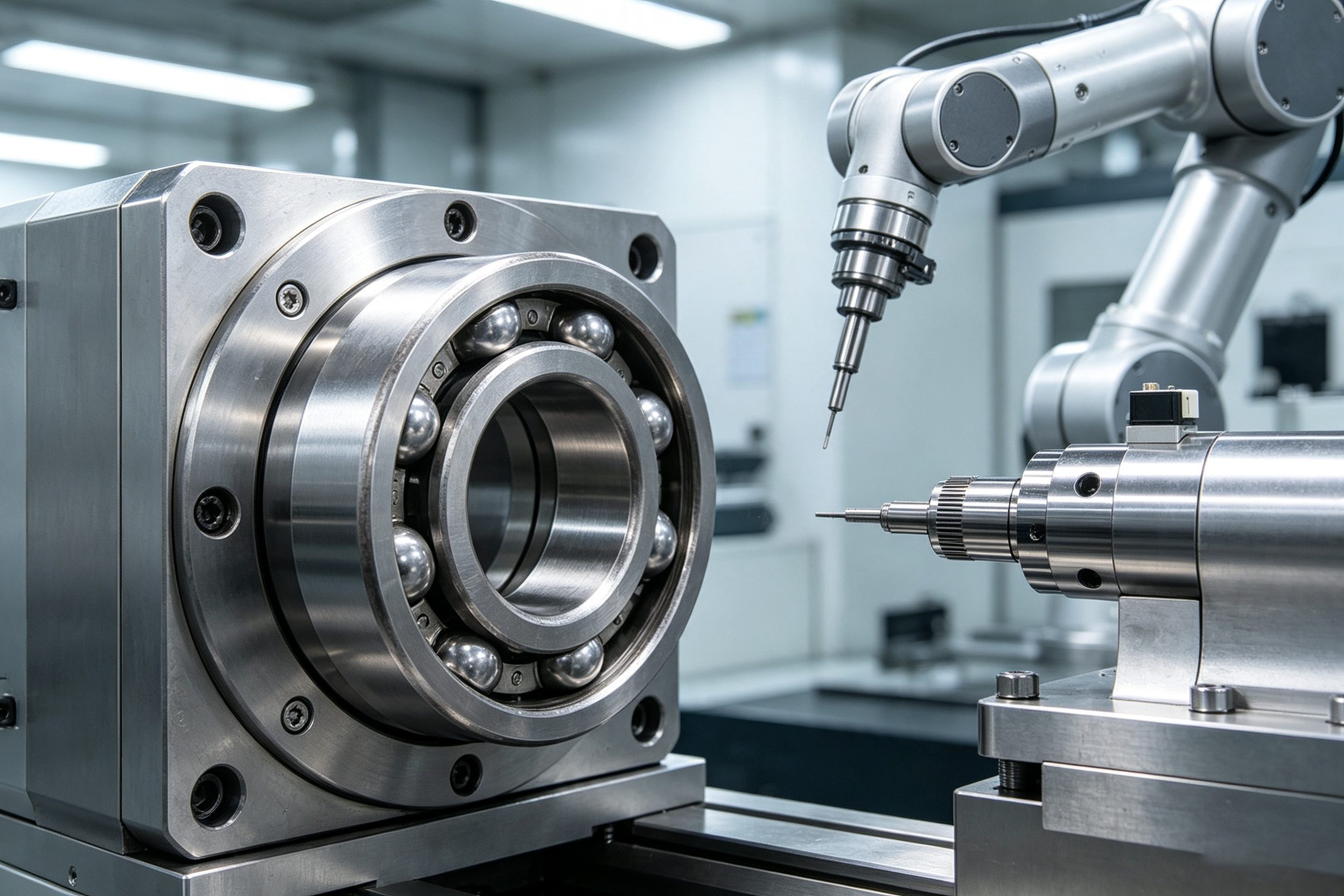
The Role of Lubrication and Sealing
In planetary gearboxes, the bearing often shares the lubricant with the gears. This “splash lubrication” method requires bearings that can perform well with low-viscosity oils or greases that might otherwise be insufficient for standalone bearing applications.
Table 2: Lubrication Strategies for Planetary Bearings
| Lubrication Method | Application Context | Benefit | Maintenance Note |
|---|
| Lubrication Method | Application Context | Benefit | Maintenance Note |
|---|---|---|---|
| Oil Bath / Splash | Heavy industrial gearboxes | Continuous cooling and lubrication. | Monitor for contamination and water ingress. |
| Grease Lubrication | Sealed / Compact units | Simple maintenance; acts as a sealant. | Grease life limits service intervals; heat buildup risk. |
| Oil-Air Injection | High-speed spindles | Precise metering; minimal heat generation. | Requires complex external piping system. |
Future Trends: Smart Bearings and Coatings
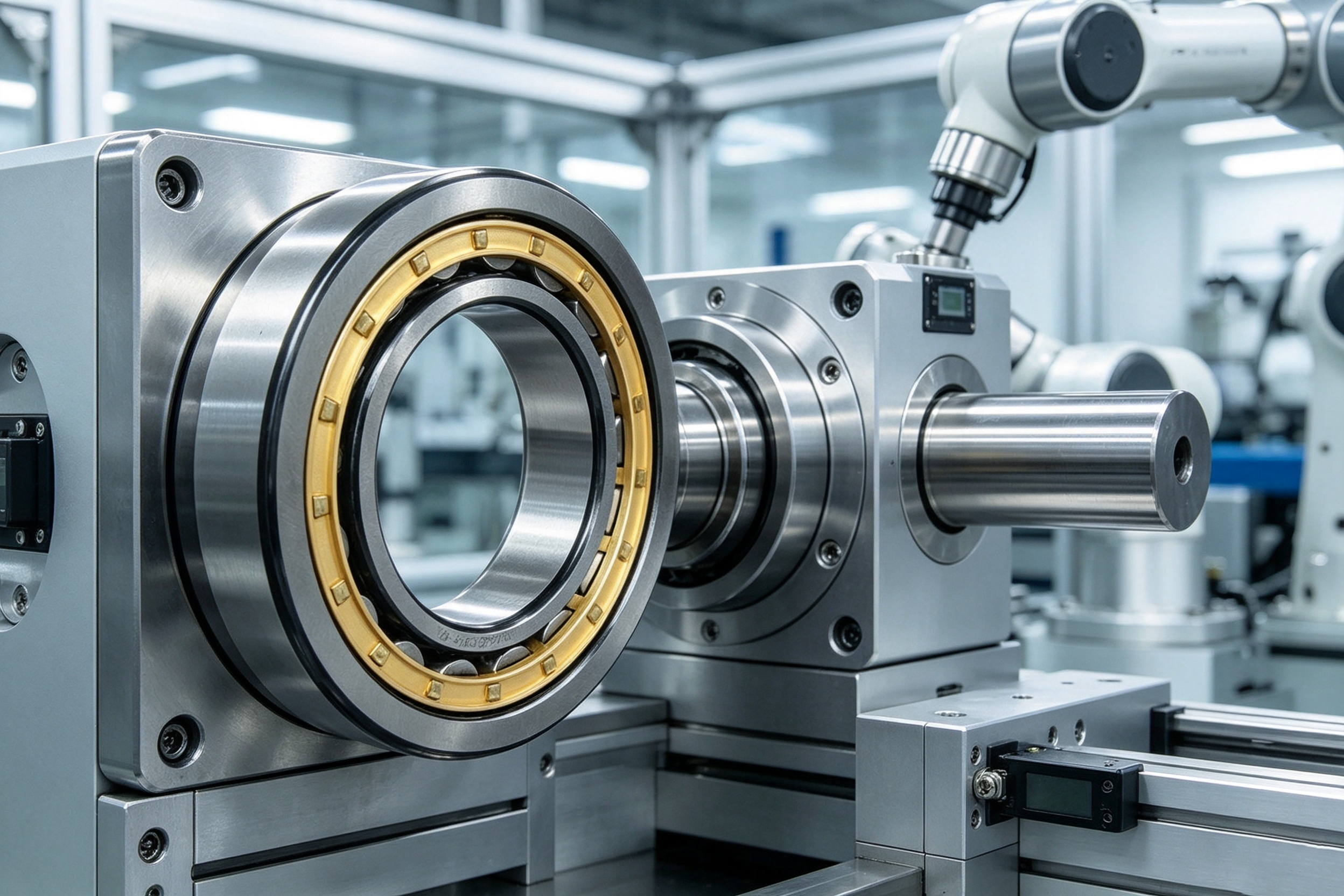
As Industry 4.0 integrates into mechanical engineering, planetary gearboxes are becoming smarter. The integration of sensor-equipped bearings allows for real-time monitoring of temperature, vibration, and load. This predictive maintenance capability is crucial for applications like wind turbines and robotic arms, where unexpected downtime is prohibitively expensive.
Furthermore, surface engineering is advancing rapidly. DLC (Diamond-Like Carbon) coatings and Phosphate coatings are increasingly used to enhance running-in properties and protect against scuffing during start-up phases.
Conclusion
The efficiency of a planetary gearbox is inextricably linked to its bearings. By carefully selecting the appropriate bearing type, material, and lubrication strategy, engineers can unlock the full potential of high reduction ratios while ensuring decades of reliable service. As compactness remains a priority in modern design, the evolution of high-performance planetary bearings will continue to be a focal point of industrial innovation.
Frequently Asked Questions (FAQ)
Q1: Why are planetary gearbox bearings prone to premature failure? A: They endure extreme contact stresses, oscillating loads, and high temperatures within a confined space, often exacerbated by inadequate lubrication or micro-vibrations (false brinelling).
Q2: Which bearing type is best for the planet gears? A: Needle roller bearings are typically preferred. They offer maximum radial load capacity in minimal space, making them ideal for the tight clearances of planet pins.
Q3: How does lubrication differ in planetary gearboxes? A: Bearings usually share lubricant with the gears via splash or oil bath systems. This requires high-performance lubricants that resist heat buildup and maintain film strength under high shear.
Q4: What is the best way to monitor planetary bearing health? A: Implement real-time vibration analysis and routine oil sampling to detect metal debris, which indicates early-stage wear or surface fatigue.
Q5: Can standard bearing steels withstand high reduction ratios? A: Standard 100Cr6 steel often struggles. Case-hardened steels (e.g., 18CrNiMo7-6) or vacuum-degassed steels are recommended to resist micropitting and shock loads.
Post time: Nov-23-2026