


Gearbox bearings are critical components that enable reliable torque transmission in industrial drives, wind turbines, automotive transmissions, mining equipment, and heavy-duty machinery. When a gearbox operates under load, bearings must support radial forces, axial forces, moment loads, and dynamic shock loads while maintaining precise alignment and low friction. Proper bearing engineering directly affects gearbox efficiency, service life, noise level, and maintenance cost.
In modern power transmission systems, higher torque density and compact designs place greater demands on bearings. Engineers must consider load capacity, fatigue life, lubrication, heat generation, mounting accuracy, and material performance. A well-designed bearing arrangement helps the gearbox transmit maximum torque without premature failure, while a poorly selected bearing can become the weakest link even if the gears themselves are correctly designed.
How Gearbox Bearings Handle Load
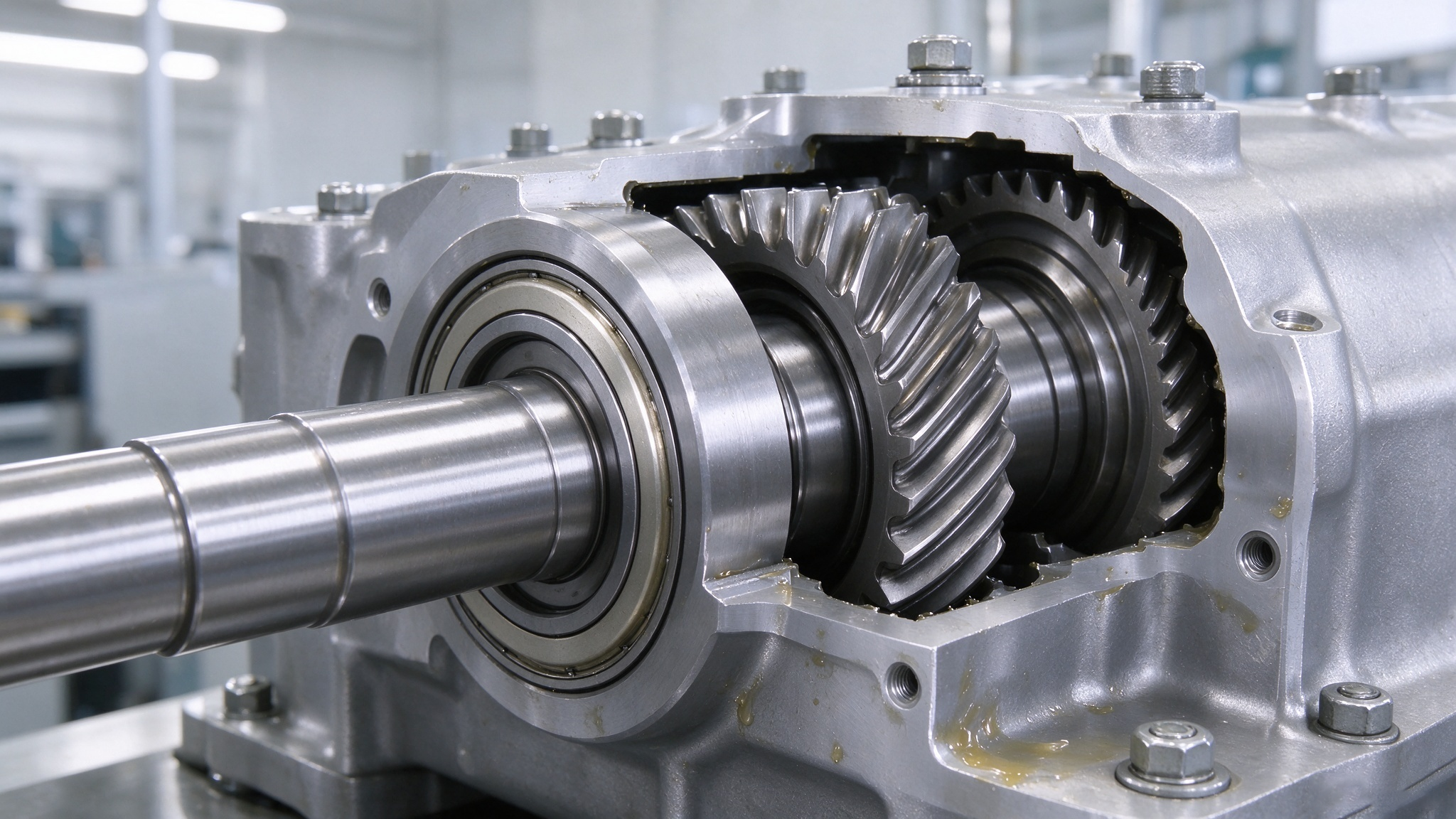
Bearings inside a gearbox do not simply rotate. They transfer forces between rotating shafts, gear meshes, housings, and stationary structures. During operation, gear teeth generate radial loads from meshing pressure and axial loads from helical or bevel gear geometry. Additional loads may come from belt drives, couplings, misalignment, vibration, and transient torque spikes.
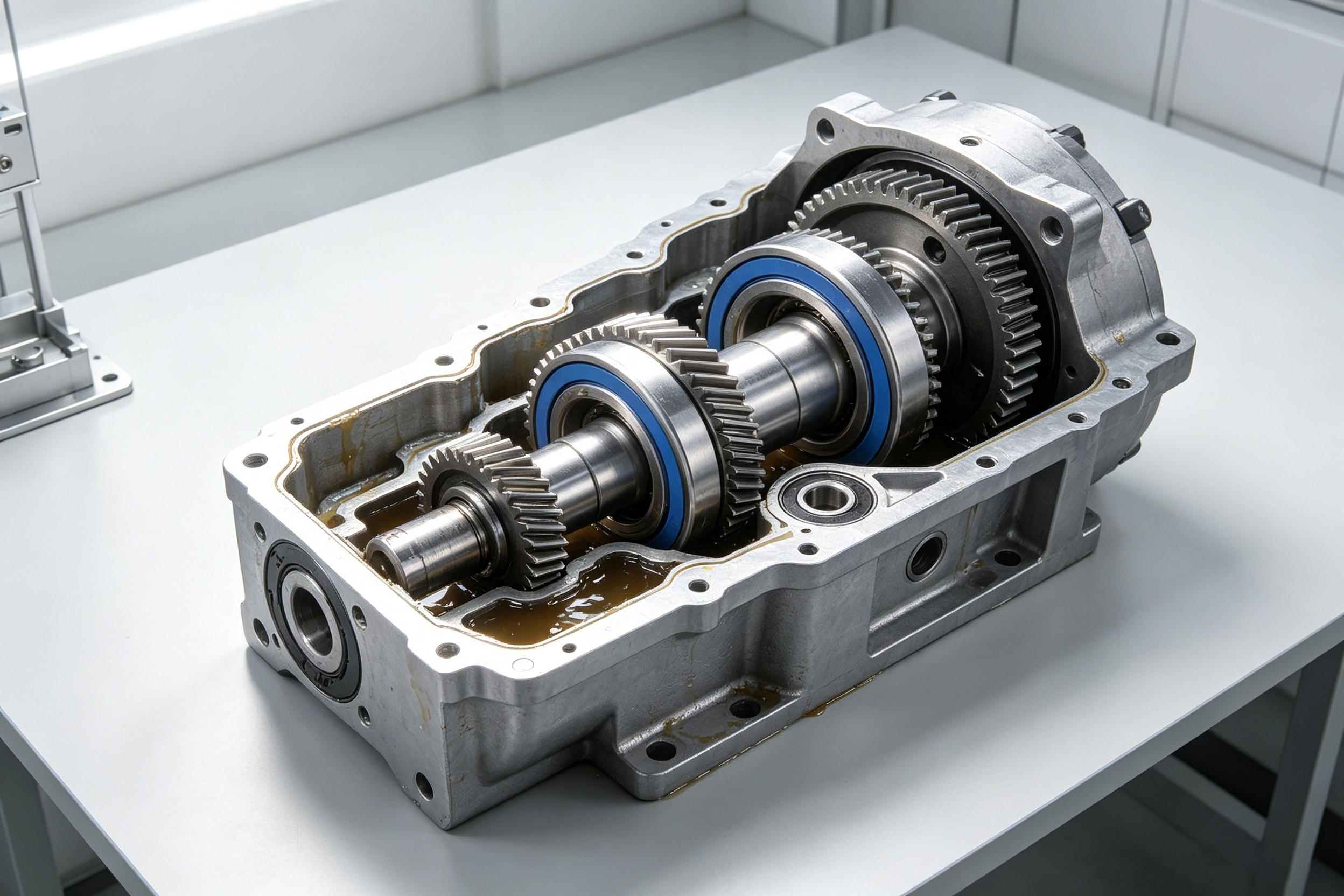
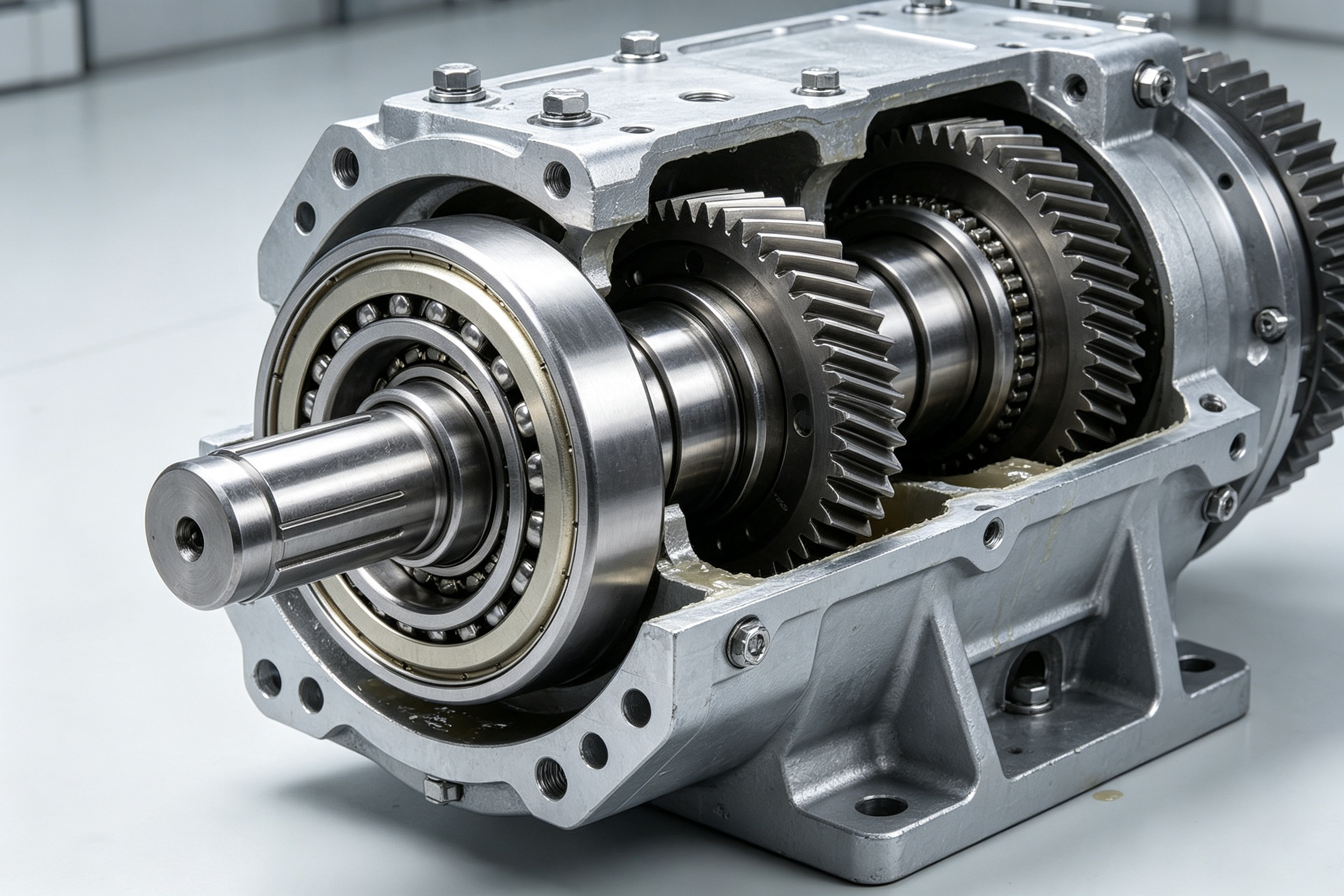
The bearing’s role is to carry these loads with controlled deformation and minimal friction. Rolling element bearings are widely used because they offer high load capacity, predictable fatigue life, and relatively low friction. The most common types in gearboxes include tapered roller bearings, cylindrical roller bearings, spherical roller bearings, deep groove ball bearings, and angular contact ball bearings.
Tapered roller bearings are especially suitable for applications requiring combined radial and axial loads. Cylindrical roller bearings provide high radial load capacity and are often used where axial loads are limited. Spherical roller bearings can accommodate misalignment and heavy loads, making them suitable for harsh operating environments. Deep groove ball bearings are often used in lighter-duty gearboxes or as supporting bearings where loads are moderate.
Key Design Factors for High-Torque Gearboxes
Designing bearings for maximum torque transmission requires more than selecting a bearing with a high dynamic load rating. Engineers must evaluate the complete operating environment.
Load distribution and bearing arrangement
The bearing arrangement determines how forces are shared. A typical gearbox may use a fixed-floating arrangement, where one bearing location locates the shaft axially and the other allows thermal expansion. Incorrect preload or clearance can cause excessive heat, early fatigue, or noise.
The bearing arrangement determines how forces are shared. A typical gearbox may use a fixed-floating arrangement, where one bearing location locates the shaft axially and the other allows thermal expansion. Incorrect preload or clearance can cause excessive heat, early fatigue, or noise.
Contact stress and fatigue life
Bearing life is influenced by contact stress between rolling elements and raceways. Under high torque, contact stress increases, which may reduce fatigue life if the bearing is undersized. The basic rating life calculation provides an estimate, but real gearbox conditions often require adjusted life calculations that consider lubrication, contamination, load spectrum, and material quality.
Bearing life is influenced by contact stress between rolling elements and raceways. Under high torque, contact stress increases, which may reduce fatigue life if the bearing is undersized. The basic rating life calculation provides an estimate, but real gearbox conditions often require adjusted life calculations that consider lubrication, contamination, load spectrum, and material quality.
Lubrication and film formation
Adequate lubrication forms a protective film between rolling surfaces. Insufficient oil film thickness increases metal-to-metal contact, leading to wear, micropitting, and surface damage. Gearbox bearings often share lubrication with gears, so oil viscosity, additives, temperature, and contamination control must be compatible with both components.
Adequate lubrication forms a protective film between rolling surfaces. Insufficient oil film thickness increases metal-to-metal contact, leading to wear, micropitting, and surface damage. Gearbox bearings often share lubrication with gears, so oil viscosity, additives, temperature, and contamination control must be compatible with both components.
Heat generation and thermal stability
High torque and high speed generate heat. If heat cannot be dissipated, oil viscosity drops, clearances change, and bearing performance deteriorates. Thermal design should consider housing material, oil flow, sealing friction, and bearing internal clearance.
High torque and high speed generate heat. If heat cannot be dissipated, oil viscosity drops, clearances change, and bearing performance deteriorates. Thermal design should consider housing material, oil flow, sealing friction, and bearing internal clearance.
Mounting accuracy and housing stiffness
Even a high-performance bearing can fail if it is mounted incorrectly. Shaft and housing tolerances, roundness, surface finish, and alignment affect load distribution. In heavy-duty gearboxes, housing deformation under load may shift bearing forces and shorten service life.
Even a high-performance bearing can fail if it is mounted incorrectly. Shaft and housing tolerances, roundness, surface finish, and alignment affect load distribution. In heavy-duty gearboxes, housing deformation under load may shift bearing forces and shorten service life.
Common Bearing Types in Gearboxes
| Bearing Type | Main Advantages | Typical Gearbox Use |
|---|
| Bearing Type | Main Advantages | Typical Gearbox Use |
|---|---|---|
| Tapered roller bearing | High combined radial and axial load capacity | Industrial gearboxes, automotive transmissions, wind turbine gearboxes |
| Cylindrical roller bearing | High radial load capacity, low friction | High-speed stages, radial load support |
| Spherical roller bearing | Misalignment tolerance, heavy load capacity | Mining equipment, large industrial drives |
| Deep groove ball bearing | Simple structure, moderate load capacity | Light-duty gearboxes, auxiliary shafts |
| Angular contact ball bearing | Precise axial positioning, high-speed capability | Precision gearboxes, spindle drives |
Load Conditions and Bearing Selection
Selecting the right bearing depends on the type and direction of load. Radial loads act perpendicular to the shaft, while axial loads act parallel to it. Many gearbox bearings experience both simultaneously. Shock loads from sudden starts, stops, or load reversals also require careful evaluation.
For high-torque applications, bearings with line contact, such as roller bearings, usually perform better than point-contact ball bearings. Roller bearings distribute load over a larger contact area, which reduces contact stress and improves durability. However, ball bearings may still be suitable for high-speed, low-to-medium load stages where friction and heat must be minimized.
Internal clearance and preload are equally important. Excessive clearance can increase vibration and reduce gear mesh accuracy. Excessive preload can raise operating temperature and shorten bearing life. The optimal setting depends on shaft speed, load pattern, temperature range, and mounting method.
Failure Modes Under High Torque
Understanding common failure modes helps engineers design more reliable gearbox bearings.
| Failure Mode | Typical Causes | Prevention Measures |
|---|
| Failure Mode | Typical Causes | Prevention Measures |
|---|---|---|
| Rolling contact fatigue | High contact stress, long service life | Use higher load-rated bearings, improve lubrication |
| Micropitting | Thin oil film, surface roughness, high stress | Optimize viscosity, improve surface finish, use EP additives |
| Smearing and scuffing | Poor lubrication, high sliding speed | Enhance oil supply, reduce preload, check speed limits |
| Misalignment damage | Shaft deflection, housing deformation, poor mounting | Use self-aligning bearings, improve housing stiffness |
| Contamination wear | Dust, metal particles, moisture | Improve sealing, filter oil, maintain cleanliness |
Micropitting is particularly relevant in gearboxes because gear and bearing surfaces operate under high contact pressure. It often appears as small surface cracks and matte areas on raceways. Proper lubrication selection, surface treatment, and load control can significantly reduce this risk.
Engineering Practices for Maximum Torque Transmission
To achieve maximum torque transmission, bearing design should be integrated with gearbox design from the early development stage. Engineers should define the full load spectrum, including continuous torque, peak torque, reversing torque, and shock events. Static load checks are necessary for peak loads, while dynamic life calculations are needed for continuous operation.
Advanced simulation tools can help predict bearing performance under real operating conditions. Finite element analysis may be used to evaluate housing deformation, shaft deflection, and load distribution. Lubrication analysis can estimate oil film thickness and friction losses. These methods reduce the risk of underestimating hidden stresses that do not appear in simple calculations.
Material selection also plays an important role. High-quality bearing steel, improved heat treatment, and surface treatments can enhance fatigue resistance and wear performance. In demanding applications, bearings with optimized internal geometry, higher precision classes, or specialized coatings may provide longer service life.
Maintenance strategy should also be considered during design. Bearings that are difficult to inspect or lubricate often fail earlier than expected. Providing proper sealing, oil sampling points, vibration monitoring access, and clear maintenance intervals can extend gearbox reliability.
Practical Selection Checklist
When evaluating gearbox bearings for high-torque applications, engineers should review the following points:
- Confirm radial, axial, and moment loads under all operating conditions.
- Check peak torque and shock load cases for static safety.
- Select bearing type based on load direction, speed, and alignment requirements.
- Verify lubrication method, oil viscosity, and contamination control.
- Evaluate thermal behavior and bearing internal clearance.
- Ensure shaft and housing tolerances meet bearing mounting requirements.
- Consider housing stiffness and deformation under load.
- Plan for sealing, maintenance access, and condition monitoring.
Conclusion
Gearbox bearings are not passive components. They actively influence how much torque a gearbox can transmit, how efficiently it runs, and how long it lasts. Engineering for maximum torque transmission requires accurate load analysis, appropriate bearing type selection, reliable lubrication, precise mounting, and robust housing design.
By treating bearings as an integral part of the gearbox system, manufacturers and engineers can improve performance, reduce downtime, and avoid costly failures. The most reliable gearbox solutions are those where bearing design, gear design, lubrication, and operating conditions are optimized together rather than considered separately.
FAQ: Gearbox Bearings Under Load
Q1: Which bearing type is best for high-torque gearboxes?
A: Tapered roller bearings and cylindrical roller bearings are commonly used because they offer high radial and combined load capacity.
A: Tapered roller bearings and cylindrical roller bearings are commonly used because they offer high radial and combined load capacity.
Q2: How do gearbox bearings affect torque transmission?
A: They support gear forces, maintain shaft alignment, reduce friction, and help transfer torque reliably to the housing and driven components.
A: They support gear forces, maintain shaft alignment, reduce friction, and help transfer torque reliably to the housing and driven components.
Q3: What causes gearbox bearing failure under load?
A: Common causes include overload, poor lubrication, contamination, misalignment, excessive heat, and shock loads.
A: Common causes include overload, poor lubrication, contamination, misalignment, excessive heat, and shock loads.
Q4: How can micropitting be prevented in gearbox bearings?
A: Use proper oil viscosity, maintain adequate oil film thickness, control contamination, and select bearings with suitable surface quality.
A: Use proper oil viscosity, maintain adequate oil film thickness, control contamination, and select bearings with suitable surface quality.
Q5: Should gearbox bearings use grease or oil lubrication?
A: Oil lubrication is more common in industrial gearboxes because it cools and protects both gears and bearings. Grease may be used in smaller or sealed units.
A: Oil lubrication is more common in industrial gearboxes because it cools and protects both gears and bearings. Grease may be used in smaller or sealed units.
Q6: What is the difference between radial and axial loads in gearboxes?
A: Radial loads act perpendicular to the shaft, while axial loads act parallel to it. Many gearbox bearings must support both simultaneously.
A: Radial loads act perpendicular to the shaft, while axial loads act parallel to it. Many gearbox bearings must support both simultaneously.
Q7: How does bearing preload affect gearbox performance?
A: Correct preload improves stiffness and positioning. Excessive preload increases heat and reduces bearing life.
A: Correct preload improves stiffness and positioning. Excessive preload increases heat and reduces bearing life.
Q8: How can gearbox bearing life be extended?
A: Choose the correct bearing type, ensure proper lubrication, control contamination, maintain alignment, and monitor vibration and temperature.
A: Choose the correct bearing type, ensure proper lubrication, control contamination, maintain alignment, and monitor vibration and temperature.
Post time: Nov-20-2026