


We are proud to announce that our company has successfully completed the ISO 9001 recertification audit, reaffirming our ongoing commitment to quality management, consistent manufacturing performance, and continuous improvement across every stage of bearing production. This milestone is not simply a certificate on the wall. It is the result of a structured, evidence-based quality system that guides how we design, manufacture, inspect, deliver, and support bearings for industrial, automotive, agricultural, and general machinery applications.
For bearing users, purchasing decisions are rarely simple. Bearings are precision components that affect equipment reliability, downtime, energy efficiency, maintenance cost, and operational safety. That is why quality assurance must go beyond final inspection. It must be built into materials, processes, people, documentation, and customer feedback. Our ISO 9001 recertification reflects a company-wide discipline: every bearing we produce should meet the same high standard, batch after batch, order after order.
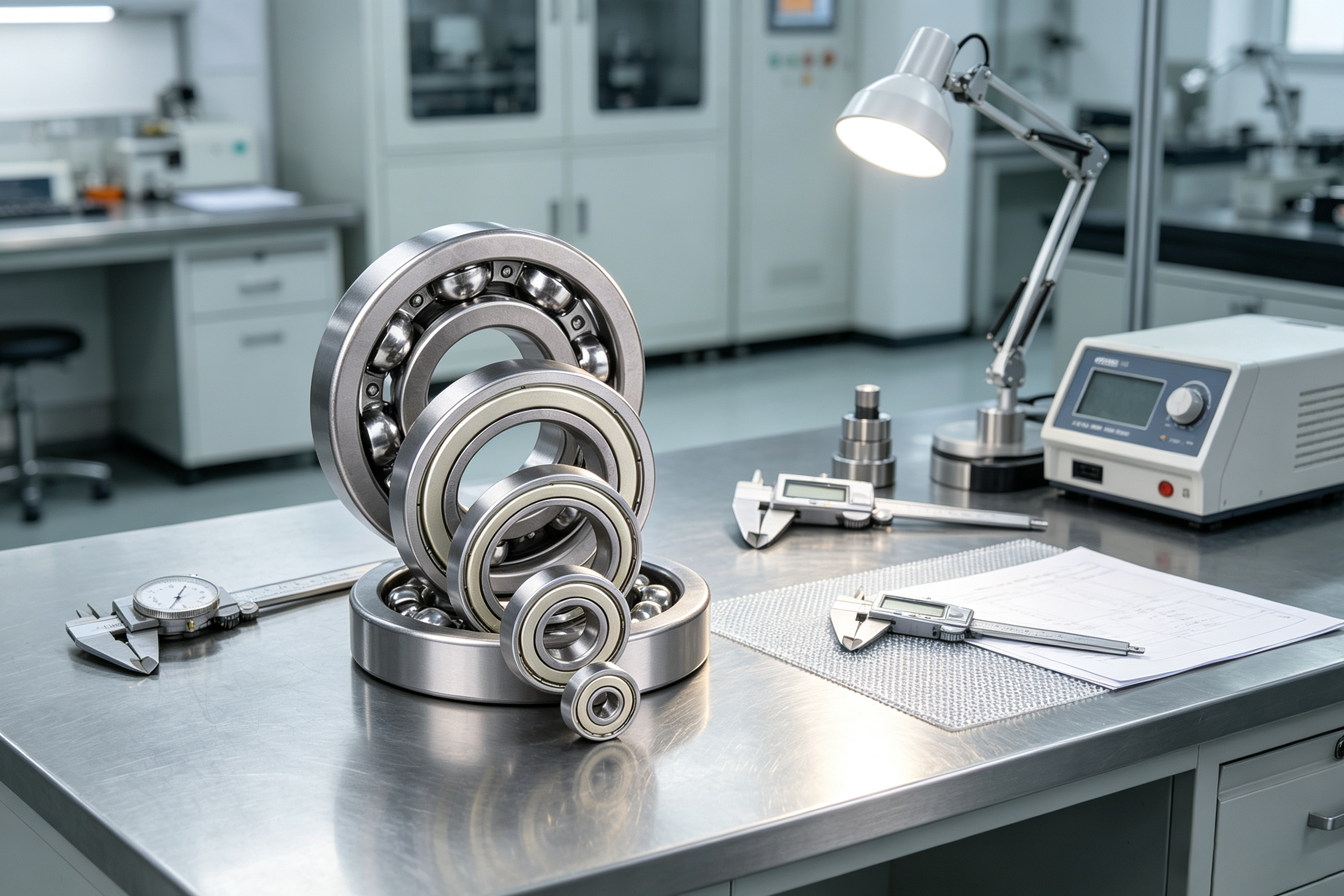
What ISO 9001 Recertification Means for Our Customers
ISO 9001 is an internationally recognized quality management standard. It provides a framework for organizations to deliver products and services that consistently meet customer requirements, regulatory expectations, and internal performance targets. Recertification means that our quality management system has been reviewed again by an independent certification body and found to remain effective, controlled, and aligned with the standard.
For our customers, this matters in practical ways:
- Consistent product quality: Bearing dimensions, material traceability, heat treatment control, machining accuracy, and final inspection are managed through documented procedures.
- Reliable delivery performance: Order handling, production planning, inventory control, and logistics are monitored to reduce delays and improve coordination.
- Stronger traceability: From raw material certificates to finished bearing records, key production data can be traced when needed.
- Faster issue resolution: Customer complaints, technical inquiries, and nonconformance reports are handled through defined corrective and preventive actions.
- Continuous improvement: Quality is not treated as a one-time achievement. It is improved through audits, performance reviews, training, and process analysis.
Our Quality Commitment Across the Bearing Lifecycle
Bearing quality is not created only at the inspection station. It begins with customer requirements and continues through design review, procurement, manufacturing, testing, packaging, shipment, and after-sales support. Our quality management system connects these stages so that each process supports the next.
| Quality Stage | Key Control Focus | Customer Benefit |
|---|---|---|
| Design & Technical Review | Specification clarity, application requirements, manufacturability | Fewer misunderstandings and better-fit bearing solutions |
| Procurement & Material Control | Supplier evaluation, incoming inspection, material traceability | More reliable raw materials and components |
| Manufacturing & Process Control | Machining, heat treatment, assembly, in-process checks | Stable dimensional accuracy and process consistency |
| Final Inspection & Packaging | Dimensional checks, visual inspection, protection, labeling | Lower risk of damage and clearer product identification |
| Delivery & After-Sales Support | Order tracking, documentation, feedback handling, corrective action | Faster response and stronger long-term service |
This lifecycle approach helps ensure that quality is not left to chance. Each bearing order moves through controlled steps, and each step has measurable expectations. When a process shows variation, our quality team investigates the root cause rather than relying only on surface-level fixes.
How We Strengthened Our Quality System Before Recertification
Preparing for ISO 9001 recertification required more than updating documents. It required us to review real operational performance and identify where our quality system could become stronger. Our internal audit teams, production supervisors, quality engineers, and department managers worked together to examine process effectiveness, training records, inspection data, customer feedback, and corrective action records.
Several improvement areas received special attention:
-
Document control and process clarity
Work instructions, inspection standards, and quality records were reviewed to ensure they reflect current production practices. Clear documentation helps operators, inspectors, and supervisors follow the same standard every day. -
Supplier quality management
We reinforced supplier evaluation, incoming material verification, and communication with key suppliers. Bearings depend on consistent material quality, so supplier control is an essential part of our quality chain. -
In-process inspection and measurement control
Our quality team reviewed measurement methods, inspection frequency, and equipment calibration. Reliable measurement is critical for bearing manufacturing, where small dimensional deviations can affect performance. -
Corrective and preventive action effectiveness
We placed greater emphasis on root cause analysis. When a nonconformance occurs, the goal is not only to contain the issue but also to prevent recurrence through process improvement. -
Employee training and quality awareness
Quality is everyone’s responsibility. We continued to strengthen training for production staff, inspectors, warehouse personnel, and customer service teams so that quality expectations are understood at every level.
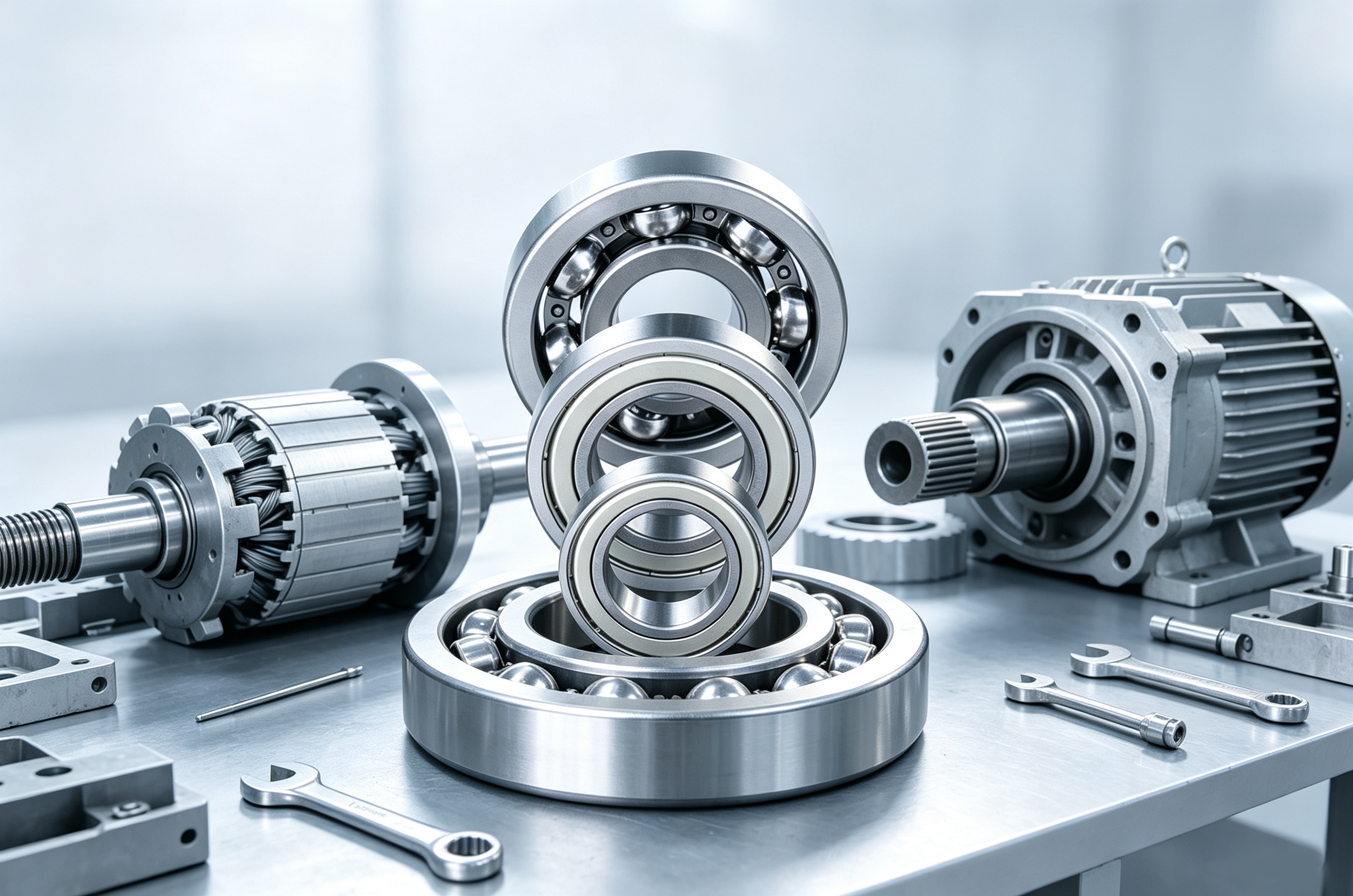
Bearing Quality Is Built on Precision, Consistency, and Traceability
Bearings must perform under demanding conditions. They support rotating shafts, reduce friction, carry loads, and help machines run smoothly over long service periods. Because of this, bearing quality depends on precision and consistency.
Our quality system supports precision through controlled manufacturing processes, defined inspection points, and careful handling of finished products. It supports consistency through standardized procedures, regular internal audits, and performance monitoring. It supports traceability through organized records that link finished bearings to production batches, inspection results, and material documentation.
| Quality Attribute | Why It Matters in Bearing Manufacturing | How We Control It |
|---|---|---|
| Dimensional Accuracy | Affects fit, clearance, load distribution, and machine performance | Defined inspection standards and calibrated measuring tools |
| Material Reliability | Influences strength, wear resistance, and service life | Supplier evaluation and incoming material verification |
| Surface & Visual Quality | Helps detect defects before bearings reach customers | Visual inspection, process checks, and careful handling |
| Traceability | Supports accountability and problem investigation | Batch records, inspection logs, and material documentation |
| Packaging Integrity | Reduces contamination, corrosion risk, and transport damage | Protective packaging, labeling, and storage controls |
These controls are especially important because bearing customers often use our products in environments where equipment downtime is expensive. A single bearing failure can affect an entire production line, conveyor system, motor assembly, gearbox, or agricultural machine. That is why we treat quality as a shared responsibility with our customers, not just an internal department function.
Continuous Improvement Is Not a Slogan—It Is a Process
One of the core principles of ISO 9001 is continual improvement. For us, this means that recertification is not the finish line. It is confirmation that our quality system is functioning well and that we must keep improving.
We measure quality performance through indicators such as:
- Internal audit findings and closure rates
- Nonconformance reports and corrective action effectiveness
- Customer complaints and response times
- Incoming inspection results
- In-process rejection trends
- On-time delivery performance
- Supplier evaluation outcomes
- Training completion and process compliance
These indicators help us move from general quality statements to specific improvement actions. If inspection data shows a recurring trend, we investigate the process. If customer feedback highlights a documentation or communication issue, we adjust our workflow. If a supplier delivers materials outside expected standards, we work with them to resolve the cause and prevent repetition.
What This Means for Our Partners and End Users
Our customers choose bearings based on performance expectations, delivery reliability, technical support, and trust. ISO 9001 recertification supports all of these factors by providing an independent confirmation that our quality management system meets international requirements.
For procurement teams, it offers confidence that orders are managed through a structured system. For engineers and maintenance teams, it supports trust in product consistency and traceability. For distributors and partners, it strengthens the reliability of supply and documentation. For end users, it means that the bearings they receive are produced under controlled conditions with quality checks at every important stage.
We also understand that certification alone does not replace real product performance. Customers ultimately judge us by the bearings they receive, the service they experience, and the results they achieve in their applications. That is why our quality commitment must always be visible in daily operations, not only in audit reports.
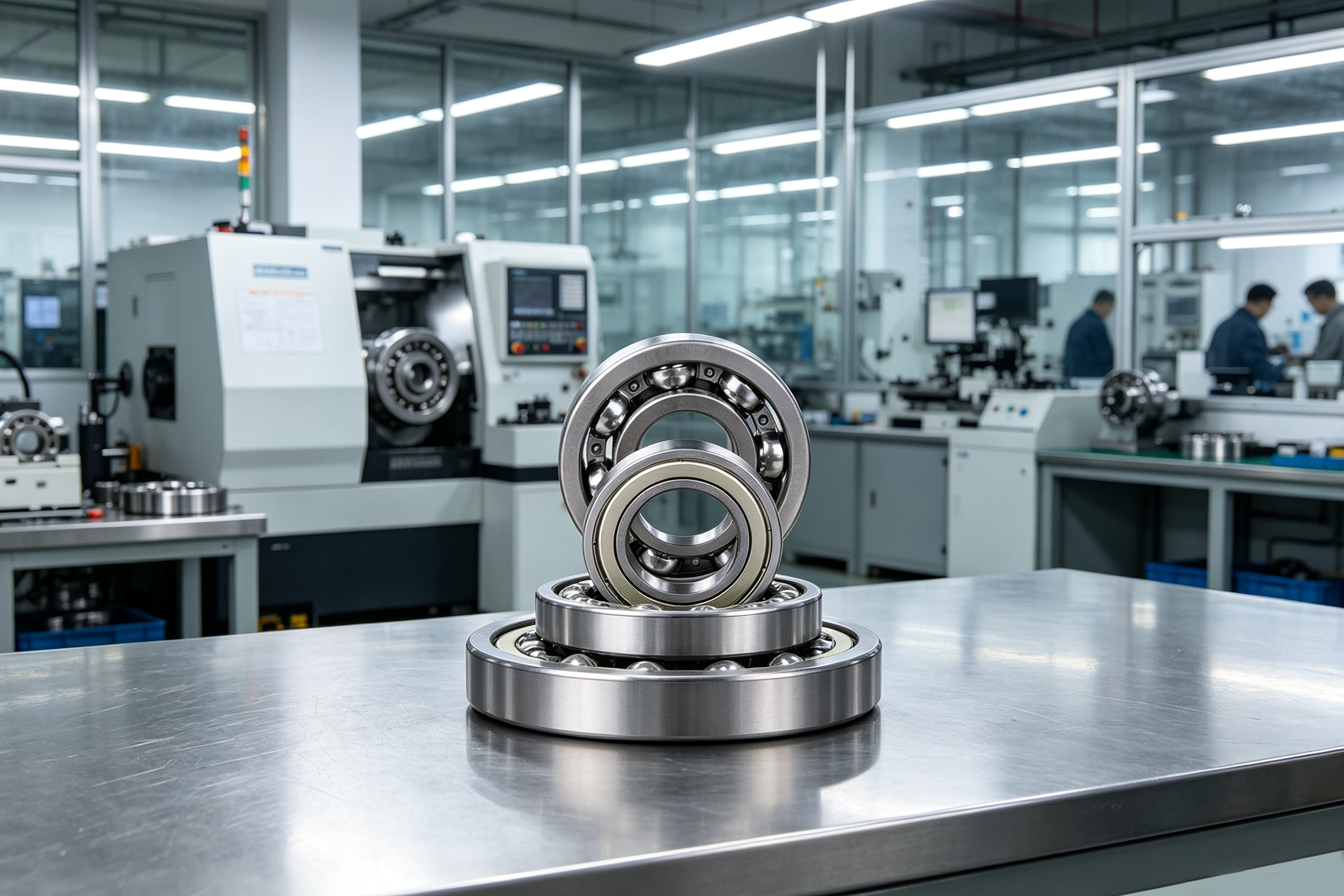
Looking Ahead: Quality as a Long-Term Partnership
This ISO 9001 recertification is a recognition of our past efforts and a foundation for future improvement. It reminds us that quality excellence is not achieved once and then maintained automatically. It requires constant attention, honest self-assessment, skilled employees, reliable suppliers, and strong communication with customers.
Moving forward, we will continue to:
- Maintain a disciplined quality management system aligned with ISO 9001 requirements
- Strengthen process control across manufacturing, inspection, and logistics
- Improve supplier quality collaboration
- Expand employee training and quality awareness
- Use customer feedback to drive practical improvements
- Support customers with reliable technical documentation and responsive service
- Invest in measurable quality improvements rather than symbolic changes
Our goal is simple: to supply bearings that customers can depend on, backed by a quality system that is transparent, controlled, and continuously improving. ISO 9001 recertification is an important milestone, but our real commitment is shown every day—in the bearings we manufacture, the orders we deliver, the issues we resolve, and the long-term partnerships we build with customers around the world.
Frequently Asked Questions
Q1: What is ISO 9001 recertification?
A: It is an independent audit that confirms a company’s quality management system continues to meet international standards for consistent product quality, process control, and customer satisfaction.
A: It is an independent audit that confirms a company’s quality management system continues to meet international standards for consistent product quality, process control, and customer satisfaction.
Q2: Does ISO 9001 recertification guarantee bearing quality?
A: It confirms that our quality system is effective and well-controlled. Actual product quality is demonstrated through consistent manufacturing, inspection, and real-world performance.
A: It confirms that our quality system is effective and well-controlled. Actual product quality is demonstrated through consistent manufacturing, inspection, and real-world performance.
Q3: How often is ISO 9001 recertification required?
A: ISO 9001 certification is typically reviewed through regular surveillance audits and a full recertification audit every three years.
A: ISO 9001 certification is typically reviewed through regular surveillance audits and a full recertification audit every three years.
Q4: How does this benefit our customers?
A: Customers gain more consistent product quality, stronger traceability, reliable delivery, faster issue resolution, and a structured process for continuous improvement.
A: Customers gain more consistent product quality, stronger traceability, reliable delivery, faster issue resolution, and a structured process for continuous improvement.
Q5: Does this certification apply to all bearing products?
A: Yes. Our quality management system covers the full range of bearing products we manufacture, from design review and procurement to final inspection and delivery.
A: Yes. Our quality management system covers the full range of bearing products we manufacture, from design review and procurement to final inspection and delivery.
Post time: Aug-12-2026