


High-speed rail systems operating at 350 km/h and above represent one of the most demanding environments for mechanical components. At these speeds, bearings are no longer simple supporting elements; they become critical safety components that directly affect ride comfort, energy efficiency, maintenance intervals, and long-term operational reliability.
For rail operators, rolling stock manufacturers, and component suppliers, the key question is not only whether a bearing can rotate at high speed, but whether it can maintain stable performance under complex load conditions, temperature variations, vibration, contamination risks, and extended service cycles.
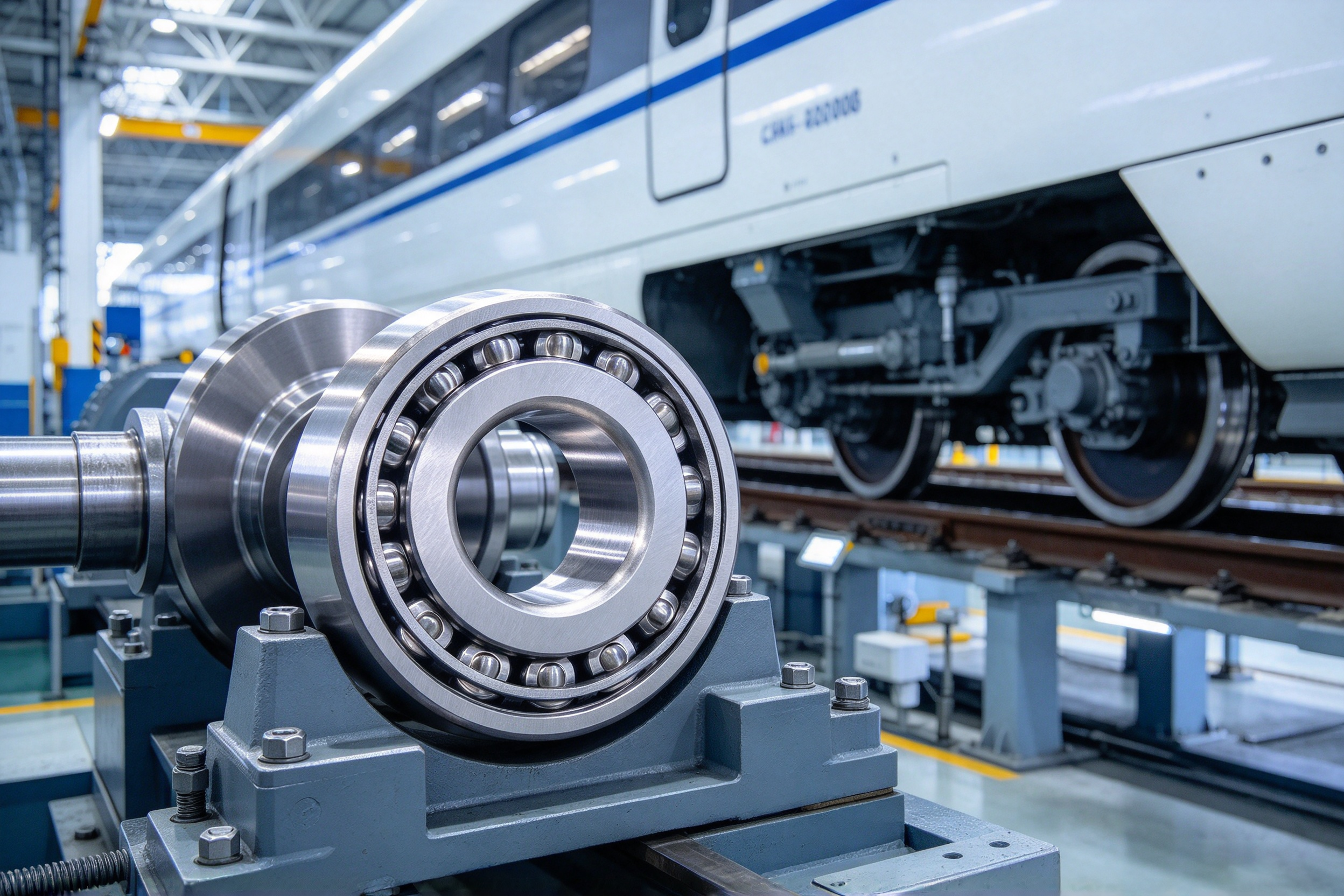
Why 350 km/h+ Operation Changes Bearing Requirements
When train speed increases, bearing stress does not rise linearly. Higher rotational speeds generate more heat, greater centrifugal forces, and more complex dynamic loads. Bearings used in high-speed rail must therefore balance multiple performance targets at the same time.
| Operating factor | Main effect on bearings | Engineering response |
|---|---|---|
| High rotational speed | Increased heat generation and lubrication shear | Low-friction design, optimized clearance, stable lubricants |
| Dynamic load variation | Fatigue risk in raceways and rolling elements | Improved steel cleanliness, optimized contact geometry |
| Temperature fluctuation | Lubricant degradation and dimensional change | Thermally stable materials and sealing systems |
| Vibration and shock | Micro-slip, false brinelling, surface damage | Enhanced surface treatment and preload control |
| Long maintenance intervals | Higher demand for reliability and predictability | Condition monitoring compatibility and durable seals |
At 350 km/h+, even small deviations in bearing geometry, lubrication quality, or installation accuracy can influence axle temperature, noise levels, and component life. This makes bearing selection a system-level decision rather than a standalone parts specification.
Key Challenges in High-Speed Rail Bearings
Thermal Management at High Speed
Heat is one of the most critical challenges. Bearings in axle boxes, gearboxes, and traction motors operate under continuous high-speed rotation. If friction is not properly controlled, temperature rise can accelerate lubricant aging, reduce bearing life, and increase the risk of premature failure.
Effective thermal management depends on bearing internal design, lubrication method, seal friction, and housing heat dissipation. Low-friction seals and optimized cage designs help reduce heat generation without compromising protection against dust, water, and rail debris.
Fatigue Resistance Under Complex Loads
High-speed trains experience vertical, lateral, and longitudinal forces during acceleration, braking, curve negotiation, and track irregularities. Bearings must resist rolling contact fatigue while maintaining dimensional stability over long service periods.
High-purity bearing steel, controlled heat treatment, and precise raceway profiling are essential. Surface integrity is especially important because micro-defects can develop into fatigue cracks under repeated high-speed loading.
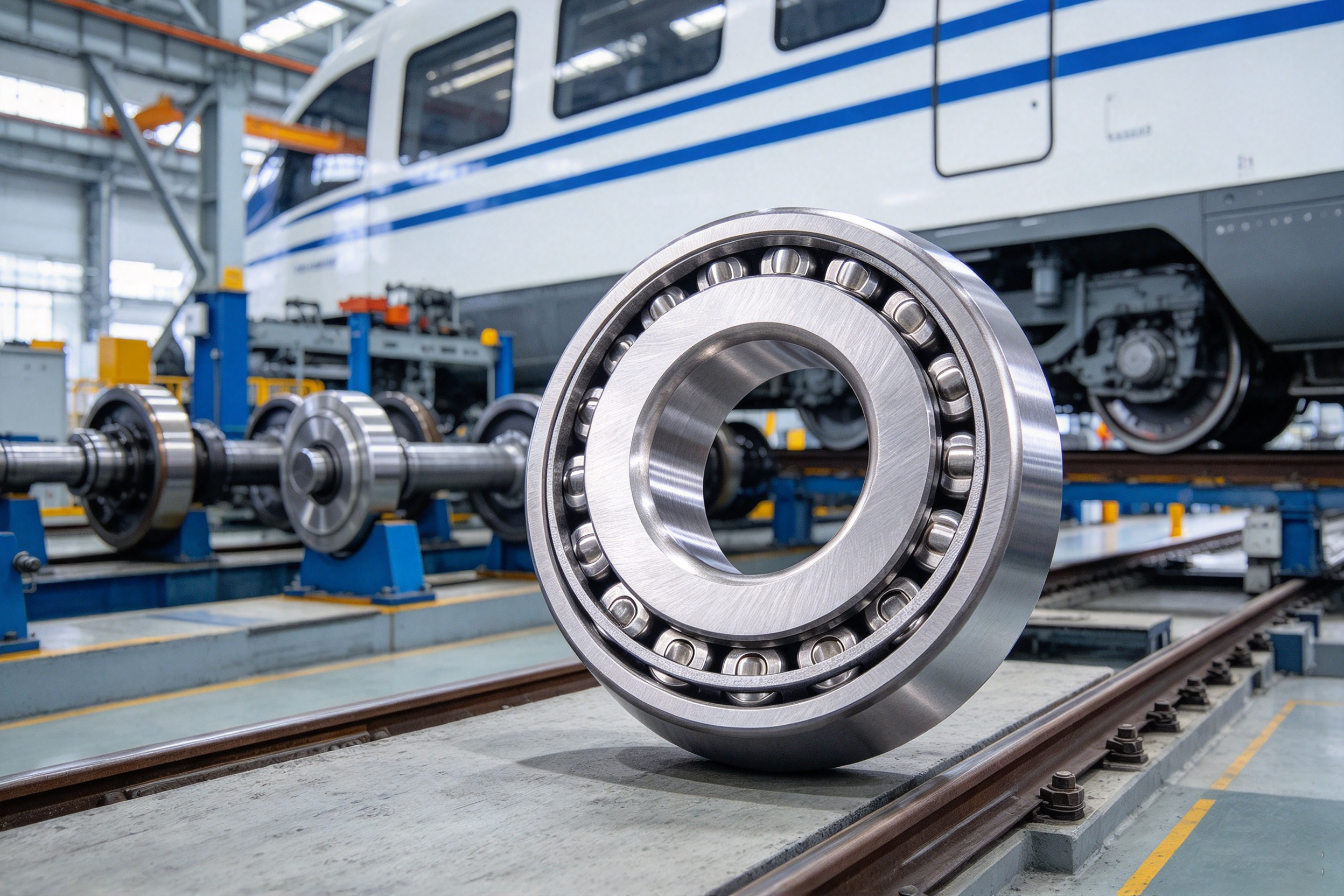
Lubrication Stability
Lubrication performance at 350 km/h+ is very different from conventional rail applications. Grease must remain stable under high shear, wide temperature ranges, and long relubrication intervals. Poor lubrication can lead to wear, skidding, or localized overheating.
Rail bearing solutions increasingly rely on greases with strong oxidation resistance, low evaporation loss, and good low-temperature torque performance. In some applications, oil lubrication or specialized grease formulations are selected based on speed, load, and maintenance strategy.
Contamination and Sealing Performance
Rail environments expose bearings to water, dust, iron particles, brake dust, and de-icing agents. Seals must prevent contamination while avoiding excessive friction. This balance becomes more difficult at higher speeds because seal lip temperature and wear increase.
Advanced labyrinth seals, contact seals with optimized lip geometry, and integrated sealing units help extend service life. The sealing system should be evaluated together with the bearing, housing, and lubrication method.
Typical Bearing Application Areas in High-Speed Trains
High-speed rail bearings are mainly used in axle boxes, gearboxes, and traction motors. Each position has different functional requirements.
| Bearing position | Main function | Typical requirements |
|---|---|---|
| Axle box bearing | Supports car body weight and guides wheelset rotation | High reliability, shock resistance, thermal stability |
| Gearbox bearing | Transmits traction torque at high speed | High precision, fatigue resistance, stable lubrication |
| Traction motor bearing | Supports rotor under electrical and mechanical loads | Insulation options, high-speed stability, low noise |
Axle box bearings are particularly critical because they operate close to the wheel-rail interface and must handle impact loads from track joints, switches, and uneven rail surfaces. Gearbox bearings face high rotational speeds and torque transmission, while traction motor bearings must also cope with electrical effects such as stray currents in certain configurations.
Design Features That Improve High-Speed Performance
Several design features are commonly used to improve bearing performance in 350 km/h+ applications.
- Optimized internal geometry: Adjusted contact angles, raceway curvature, and clearance reduce stress concentration and friction.
- High-performance cages: Polymer or machined metal cages can improve guidance, reduce weight, and enhance lubricant flow.
- Surface engineering: Special coatings or surface treatments may reduce friction, improve running-in behavior, and increase resistance to wear.
- Precision manufacturing: Tighter dimensional and geometrical tolerances help reduce vibration and noise at high speed.
- Integrated sensor readiness: Bearings designed for condition monitoring can support temperature, vibration, or speed measurement.
These features must be validated through simulation, bench testing, and field experience. High-speed rail components cannot be optimized by changing one parameter alone; the entire application environment must be considered.
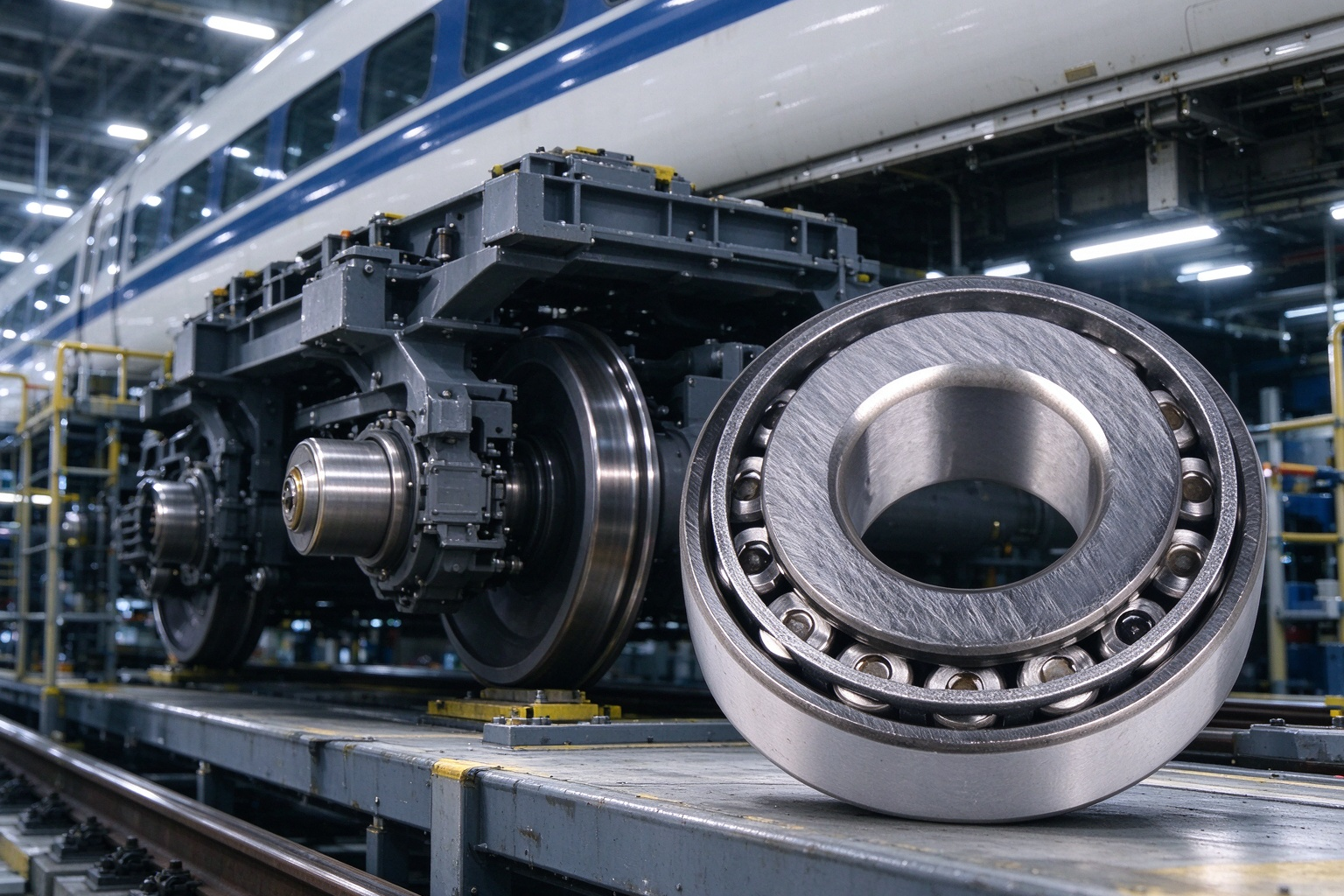
Maintenance and Condition Monitoring
Maintenance strategy is a major factor in bearing selection. High-speed rail operators aim to maximize availability while minimizing unplanned downtime. Bearings that support condition-based maintenance can help detect early signs of abnormal temperature, vibration, or lubrication degradation.
| Maintenance approach | Advantage | Consideration |
|---|---|---|
| Time-based maintenance | Predictable planning | May replace components before end of useful life |
| Condition-based maintenance | Early fault detection | Requires sensors, data analysis, and clear thresholds |
| Failure-based replacement | Lowest initial monitoring cost | Higher operational risk for high-speed applications |
For 350 km/h+ operations, condition monitoring is increasingly important. Temperature sensors, vibration analysis, and acoustic monitoring can help identify developing issues before they affect safety or service. However, monitoring systems must be integrated with clear maintenance procedures and engineering judgment.
How to Select Bearings for High-Speed Rail Projects
Bearing selection should begin with a clear definition of operating conditions. Important inputs include maximum speed, load spectrum, temperature range, expected service life, lubrication method, sealing requirements, and maintenance intervals.
Manufacturers and operators should also consider:
- Compliance with relevant rail standards and customer specifications.
- Traceability of materials and manufacturing processes.
- Testing data from similar speed and load conditions.
- Compatibility with existing axle box, gearbox, or motor designs.
- After-sales support, failure analysis capability, and spare parts availability.
High-speed rail bearings are not commodity products. Their performance depends on precise engineering, controlled manufacturing, and verified application experience.
Conclusion
Operating rail systems at 350 km/h and above places extreme demands on bearing technology. The most reliable solutions combine high-purity materials, low-friction design, stable lubrication, robust sealing, and condition monitoring compatibility.
For rail manufacturers and operators, bearing selection should focus on total lifecycle performance rather than initial cost. When bearings are engineered and maintained as part of the complete drivetrain and wheelset system, they can help deliver higher safety, lower maintenance costs, and more consistent high-speed operation.
FAQ: High-Speed Rail Bearing Solutions
Q: Why are bearings critical for trains operating above 350 km/h?
A: At these speeds, bearings directly impact safety, ride comfort, energy efficiency, and maintenance costs. They must withstand extreme heat, dynamic loads, and vibration while maintaining stability over long service intervals.
A: At these speeds, bearings directly impact safety, ride comfort, energy efficiency, and maintenance costs. They must withstand extreme heat, dynamic loads, and vibration while maintaining stability over long service intervals.
Q: What is the biggest challenge for high-speed rail bearings?
A: Thermal management is often the most critical challenge. High rotational speeds generate significant heat, which can degrade lubricants and reduce bearing life if friction is not properly controlled through optimized design and sealing.
A: Thermal management is often the most critical challenge. High rotational speeds generate significant heat, which can degrade lubricants and reduce bearing life if friction is not properly controlled through optimized design and sealing.
Q: How do high-speed rail bearings handle contamination?
A: They use advanced sealing systems, such as optimized contact seals or labyrinth designs. These seals prevent dust, water, and debris from entering while minimizing friction to avoid overheating at high speeds.
A: They use advanced sealing systems, such as optimized contact seals or labyrinth designs. These seals prevent dust, water, and debris from entering while minimizing friction to avoid overheating at high speeds.
Q: What type of lubrication is used for 350 km/h+ operations?
A: Specialized greases with high oxidation resistance and low evaporation loss are common. In some high-load or high-speed applications, oil lubrication may be used to ensure better heat dissipation and flow.
A: Specialized greases with high oxidation resistance and low evaporation loss are common. In some high-load or high-speed applications, oil lubrication may be used to ensure better heat dissipation and flow.
Q: Can these bearings support condition monitoring?
A: Yes. Modern high-speed rail bearings are often designed to be “sensor-ready,” allowing for the integration of temperature or vibration sensors to enable predictive maintenance and prevent unexpected failures.
A: Yes. Modern high-speed rail bearings are often designed to be “sensor-ready,” allowing for the integration of temperature or vibration sensors to enable predictive maintenance and prevent unexpected failures.
Q: Where are the main bearing application points on a high-speed train?
A: The three primary locations are axle box bearings (supporting the vehicle weight), gearbox bearings (transmitting traction torque), and traction motor bearings (supporting the rotor). Each has distinct speed and load requirements.
A: The three primary locations are axle box bearings (supporting the vehicle weight), gearbox bearings (transmitting traction torque), and traction motor bearings (supporting the rotor). Each has distinct speed and load requirements.
Post time: Oct-09-2026