


In an era where industrial sustainability is no longer optional but imperative, the bearing industry is undergoing a profound transformation. As a cornerstone of modern machinery, bearings are essential for reducing friction and enabling motion, yet their production and disposal have historically carried a significant environmental cost. Today, forward-thinking manufacturers are pioneering a “closed-loop” model that turns end-of-life scrap into high-performance service components, effectively slashing the carbon footprint of bearing lifecycles by up to 50%.
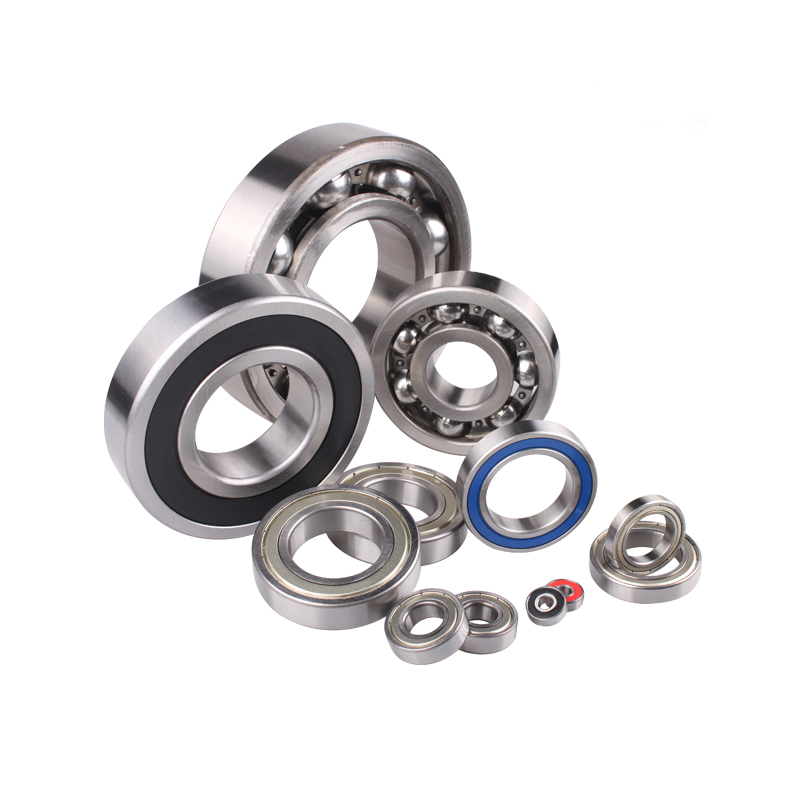
This shift is not merely about corporate social responsibility; it is a strategic evolution driven by the principles of the circular economy. By integrating advanced remanufacturing technologies with digital tracking, we are proving that industrial efficiency and ecological stewardship can coexist.
The Hidden Cost of Friction and Steel
To understand the magnitude of this achievement, we must first look at the traditional linear model of bearing manufacturing. Conventional production relies heavily on virgin steel—a material whose extraction and refinement are energy-intensive processes. The steel industry alone accounts for approximately 7-9% of global CO2 emissions. When a bearing reaches its end of life in a traditional setup, it is often discarded as scrap, destined for melting down or, in worse scenarios, landfills.
However, the physics of the bearing itself offers the first clue to the solution. Bearings are designed to minimize friction, and friction is the enemy of energy efficiency. A worn bearing increases energy consumption in motors and gearboxes. By recovering the steel from these units and re-engineering them, we not only save the energy required to produce new steel but also prevent the operational waste associated with inefficient machinery.
The Closed-Loop Mechanism
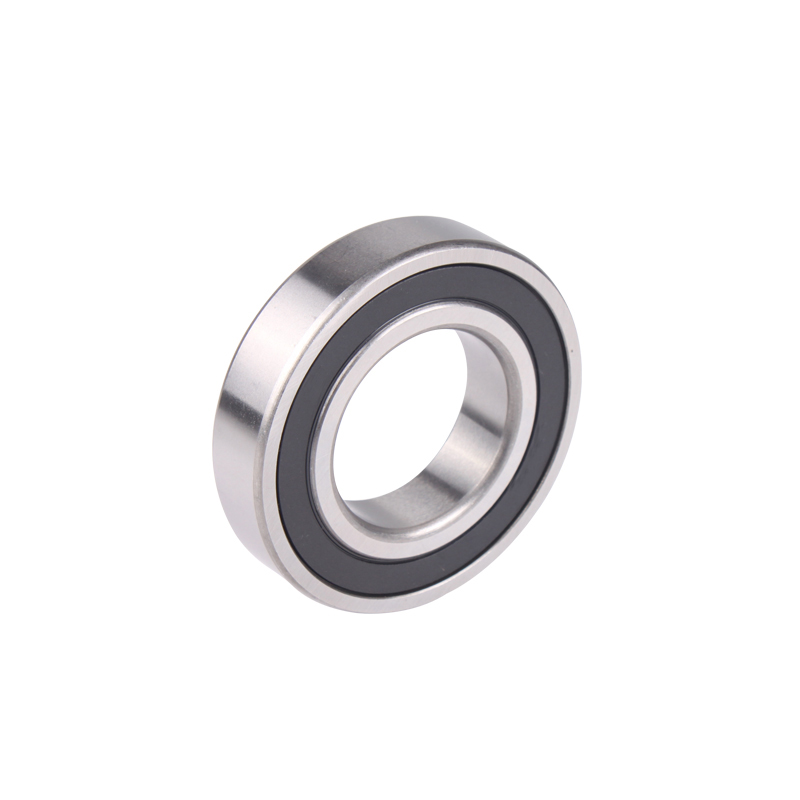
Closed-loop recycling in the bearing sector goes beyond simple scrap collection. It involves a sophisticated process of remanufacturing and “super-finishing.” When a used bearing returns to the service center, it undergoes a rigorous inspection. Through processes like grinding and polishing, the raceways and rolling elements are restored to their original geometry.
Crucially, this is often paired with advanced lubrication management. Modern re-lubrication techniques and the use of low-friction greases can extend the life of a remanufactured unit significantly. Data suggests that repairing a railway axle box bearing, for instance, can save up to 93% of the energy and reduce CO2 emissions by 96% compared to manufacturing a new unit.
Comparative Impact Analysis
The following table illustrates the stark contrast between the traditional linear approach and the modern closed-loop model.
| Metric | Linear Model (Virgin Production) | Closed-Loop Model (Remanufacturing) |
|---|---|---|
| Raw Material Source | Iron ore extraction & smelting | Recovered high-grade bearing steel |
| Energy Consumption | High (Smelting requires ~1,450°C) | Low (Cleaning & polishing only) |
| CO2 Emissions | ~1.6 tonnes per tonne of steel | ~0.06 tonnes (Process energy only) |
| End-of-Life | Scrap / Waste | Returned to service or re-refined |
Digitalization: The Invisible Thread
A critical component of achieving this 50% reduction is digitalization. You cannot manage what you cannot measure. Leading manufacturers are now equipping bearings with Data Matrix Codes (DMC) and sensors. These digital identities allow for full traceability.
When a bearing is scanned, its history—load cycles, speed, and maintenance intervals—is revealed. This data allows engineers to determine if a bearing is a candidate for remanufacturing or if it must be recycled into raw material. This “smart” approach ensures that resources are not wasted on units that cannot be saved, and conversely, that salvageable units are not prematurely destroyed. It transforms the bearing from a passive component into an active data node in the sustainability chain.
The Economic and Environmental Dividend
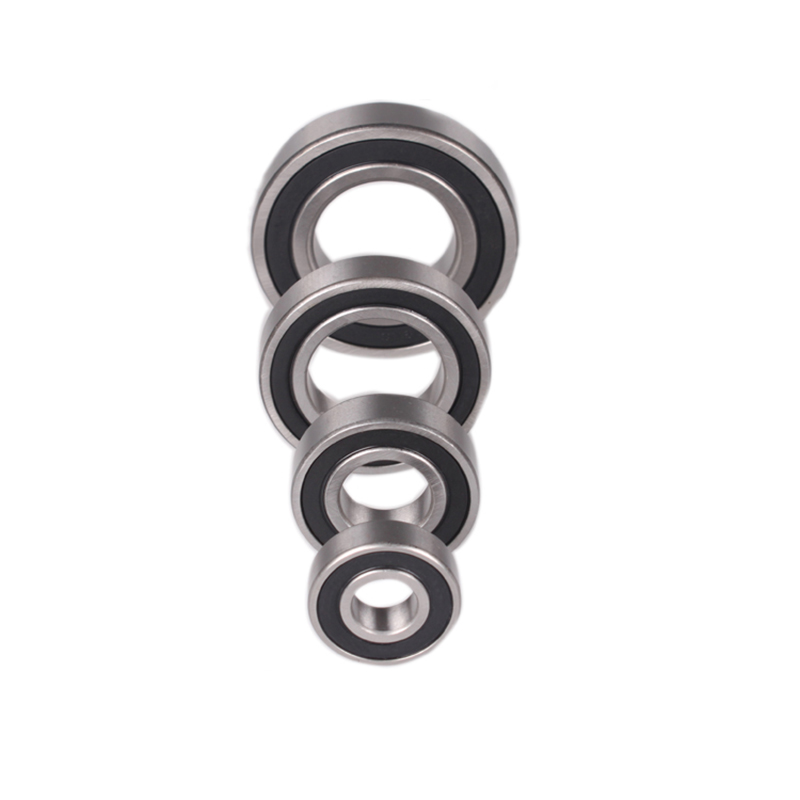
The transition to closed-loop recycling offers a dual dividend. Environmentally, it drastically reduces the demand for virgin iron ore and lowers the carbon intensity of industrial operations. Economically, it provides a hedge against the volatility of raw material prices. By keeping materials in use for longer, companies reduce their exposure to global steel market fluctuations.
Furthermore, the remanufacturing process often involves upgrading the component. A returned bearing might receive a newer, more efficient sealing design or a specialized coating that was not available when it was first manufactured. This means the “recycled” product often outperforms the original new product, offering better protection against contamination and longer service life.
Future Outlook: Towards Net Zero
As we look toward 2030 and 2050 net-zero targets, the role of closed-loop recycling will only expand. We are moving towards a future where the concept of “waste” is eliminated from the industrial vocabulary. In this future, every returned bearing is viewed not as trash, but as a valuable asset waiting to be restored.
The table below highlights the cumulative benefits observed in recent large-scale industrial implementations of these technologies.
| Benefit Category | Impact Description |
|---|---|
| Resource Conservation | Saves approx. 1.6 tonnes of iron ore per tonne of recycled steel. |
| Carbon Reduction | Remanufacturing can reduce carbon footprint by 50% to 96% depending on the component. |
| Operational Efficiency | Digital tracking reduces unplanned downtime by predicting optimal repair times. |
By embracing the journey from scrap to service, the bearing industry is demonstrating that heavy industry can be a catalyst for environmental healing. Through the synergy of metallurgy, precision engineering, and digital intelligence, we are not just reducing friction in machines, but also friction between industry and nature.
Frequently Asked Questions (FAQ)
-
Q:What exactly is closed-loop recycling in the bearing industry?
A:Unlike traditional recycling where metal is simply melted down, closed-loop recycling involves inspecting, cleaning, and re-polishing used bearings to restore them to their original geometry. This allows the component to return to service without needing to produce new steel. -
Q:How does this process reduce the carbon footprint by 50%?
A:The primary driver is the avoidance of virgin steel production. Smelting iron ore is extremely energy-intensive. By reusing existing high-grade steel and focusing energy only on polishing and re-lubrication, CO2 emissions are drastically cut—often by much more than 50% compared to manufacturing new units. -
Q:Are remanufactured bearings as reliable as new ones?
-
A:Yes. Through rigorous inspection and advanced “super-finishing” techniques, remanufactured bearings are restored to meet original equipment manufacturer (OEM) specifications. In many cases, they are upgraded with newer seals or coatings, making them perform even better than when they were new.
-
Q:What role does digitalization play in this process?
A:Digital tools like Data Matrix Codes (DMC) provide a unique identity for each bearing. This allows manufacturers to track the bearing’s history (load, speed, usage) to accurately determine if it is suitable for remanufacturing, ensuring resources are used efficiently. -
Q:Is closed-loop recycling economically viable for industrial companies?
A:Absolutely. It offers a dual benefit: it lowers operational costs by extending the life of expensive components and protects companies from the price volatility of raw material markets (such as steel and iron ore).
Post time: Apr-27-2026