


The electric vehicle (EV) revolution is in full swing. With their quiet hum and instant torque, EVs represent the pinnacle of modern automotive engineering. However, beneath the sleek exterior and sophisticated software, a silent battle is being fought within the gearbox. It is a battle against a phenomenon that traditional mechanics rarely encountered: electrical erosion, also known as electric discharge machining (EDM) or fluting.
For bearing manufacturers and automotive engineers, this is not just a technical challenge; it is the defining tribological issue of the decade. This article explores the physics behind this failure mode, why standard bearings fail in EVs, and the technological innovations designed to stop it.
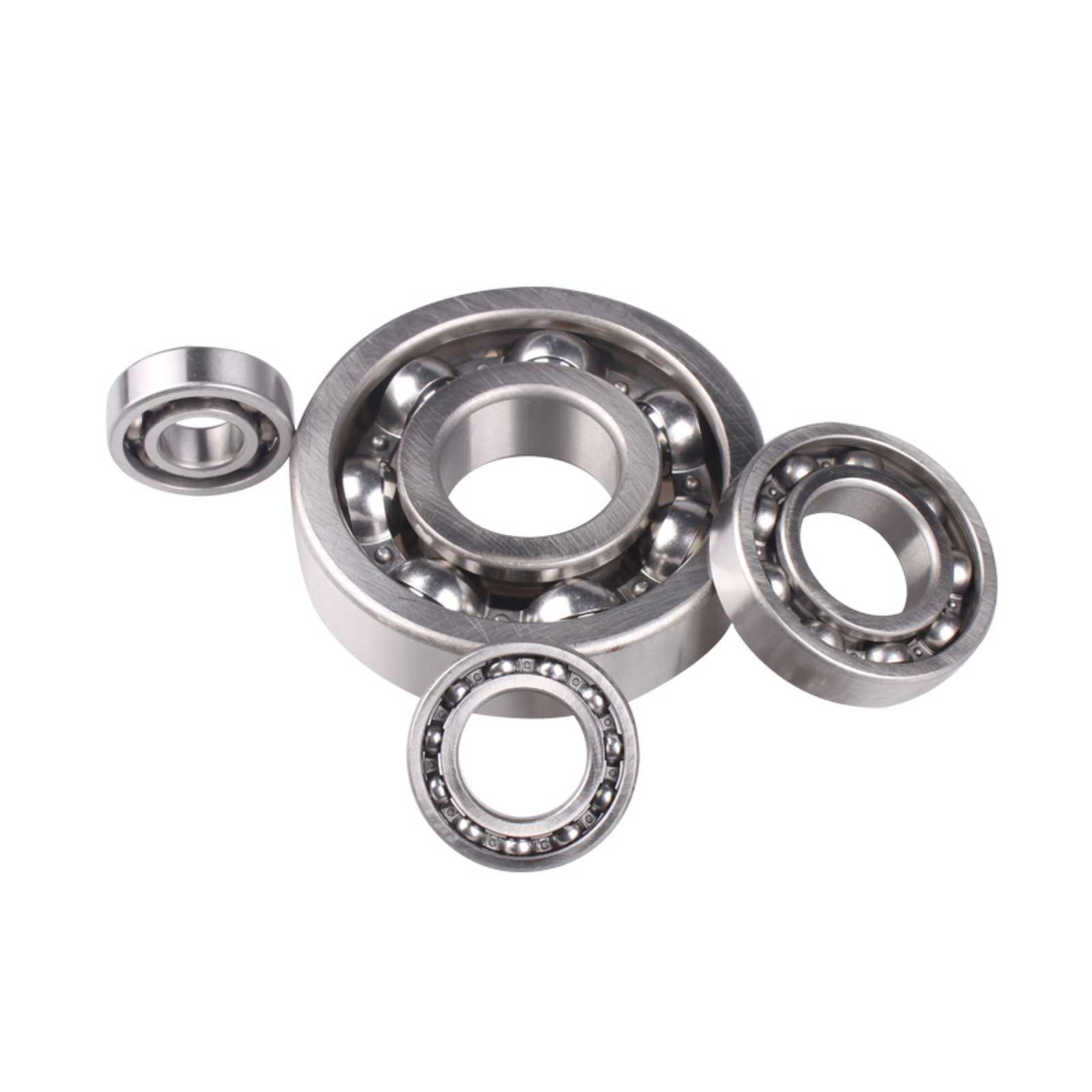
The Physics of Failure: It’s Not Just Vibration
In a traditional internal combustion engine vehicle, bearing failure is usually caused by fatigue, poor lubrication, or contamination. In an EV, the enemy is invisible: electricity.
The core of the problem lies in the inverter. To drive the electric motor, the battery’s direct current (DC) is converted into alternating current (AC) using Pulse Width Modulation (PWM). This rapid switching creates high-frequency common-mode voltages. When this voltage finds a path to the ground through the motor shaft and the bearings, it creates a parasitic circuit.
The lubricant film between the bearing raceway and the rolling elements acts as a capacitor. When the voltage across this “capacitor” exceeds the breakdown voltage of the grease, the insulating film collapses. This results in a high-energy spark discharge. While a single spark might seem insignificant, these discharges occur thousands of times per second.
Each discharge creates a microscopic explosion, melting the steel surface and creating tiny pits (craters). Over time, these pits align to form a “washboard” or fluted pattern on the raceway. This leads to severe vibration, noise, and ultimately, catastrophic bearing failure.
Table 1: Traditional Failure vs. Electrical Erosion
| Feature | Traditional Mechanical Failure | Electrical Erosion (EDM) |
|---|---|---|
| Primary Cause | Fatigue, Overload, Contamination | High-frequency Current Leakage |
| Visual Signature | Spalling, Peeling, Cracks | Fluting (Washboard pattern), Frosted appearance |
| Root Source | Mechanical Stress | PWM Inverter Switching |
| Lubricant Role | Reduces Friction | Acts as a Dielectric Capacitor |
The Hidden Danger: Joule Heating and Micro-Bubbles
Recent research highlights that electrical erosion is not just about the sparks you can see (or hear). A more insidious process occurs at the microscopic level involving Joule heating.
When current flows through the contact area—even before destructive arcing occurs—it generates heat. This localized overheating causes the lubricant to degrade and form micro-bubbles. These bubbles reduce the thickness of the oil film, making it easier for further electrical breakdowns to occur. It is a vicious cycle: the electricity thins the protective grease layer, which invites more electricity to pass through, accelerating the damage.
Furthermore, the chemical composition of the grease changes. The high energy can cause the oil to carbonize, losing its lubricating properties entirely. This means that even if the bearing isn’t pitting yet, the lubrication is failing due to electrical stress.
Engineering the Solution: Insulation and Diversion
How do we stop a current that wants to flow? Bearing engineers have developed two main strategies: blocking the path (Insulation) or providing a better path (Diversion).
1. The Insulation Strategy (Ceramics and Coatings)
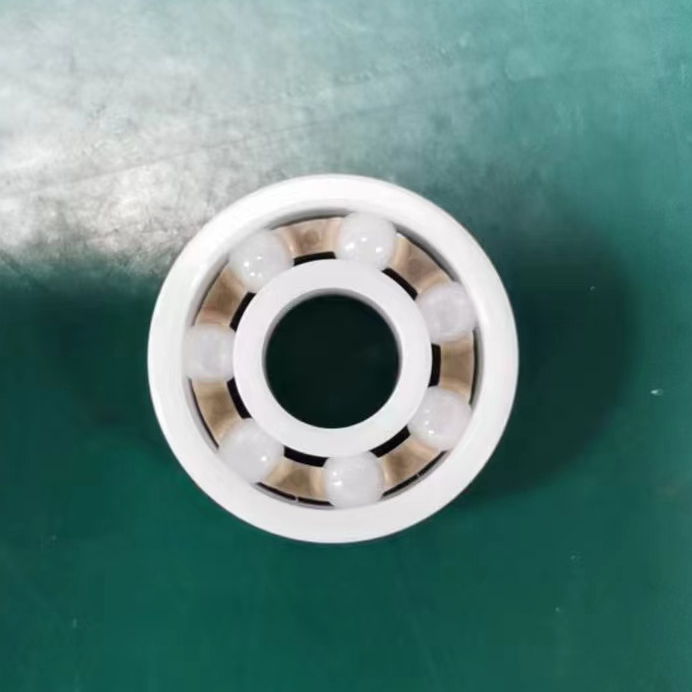
One approach is to break the circuit entirely. By using ceramic rolling elements (silicon nitride) or applying insulating coatings (like PEEK or Diamond-Like Carbon) to the raceways, manufacturers can prevent current from passing through the bearing.
One approach is to break the circuit entirely. By using ceramic rolling elements (silicon nitride) or applying insulating coatings (like PEEK or Diamond-Like Carbon) to the raceways, manufacturers can prevent current from passing through the bearing.
- Pros: Extremely effective at stopping EDM.
- Cons: Ceramic bearings are expensive and brittle; coatings can be damaged during assembly if not handled with care.
2. The Diversion Strategy (Conductive Bearings and Brushes)
Alternatively, engineers are designing bearings that want to conduct electricity, but in a controlled way. By using conductive seals or specialized greases with conductive additives (like silver or ionic liquids), the current is guided through the seal rather than the raceway. Additionally, external shaft grounding rings (brushes) can be installed to divert the current away from the bearing entirely.
Alternatively, engineers are designing bearings that want to conduct electricity, but in a controlled way. By using conductive seals or specialized greases with conductive additives (like silver or ionic liquids), the current is guided through the seal rather than the raceway. Additionally, external shaft grounding rings (brushes) can be installed to divert the current away from the bearing entirely.
Table 2: Comparison of Mitigation Technologies
| Solution | Mechanism | Best Application | Cost Implication |
|---|---|---|---|
| Insulated Bearings | Blocks current flow via coating or ceramic | High-voltage industrial motors, heavy-duty EVs | High |
| Conductive Seals | Bypasses current through the seal | Automotive e-Axles, compact motors | Medium |
| Shaft Grounding Rings | Diverts current to the chassis | Retrofitting, large traction motors | Low-Medium |
| Conductive Grease | Reduces impedance of the lubricant film | Supplementary measure for all types | Low |
The Future of EV Reliability
The transition to 800V architectures in next-generation EVs will only exacerbate the risk of electrical erosion. Higher voltages mean higher potential for breakdown. Therefore, the “standard” bearings of the past are no longer sufficient for the electric drivetrain.
For automotive OEMs, the choice of bearing is no longer just a mechanical calculation; it is an electrical one. Ignoring the electrical environment of the gearbox is a recipe for warranty claims and brand damage. By understanding the interplay between PWM inverters, lubrication chemistry, and material science, we can ensure that the only thing an EV driver notices is the silence—until it’s time to service the car.
Frequently Asked Questions (FAQ)
To help you better understand this critical issue, we have compiled a few common questions regarding electrical erosion in EVs.
Q: Can electrical erosion be detected early?
A: Yes, but it requires specific monitoring. While early stages are invisible to the naked eye, vibration analysis and electrical signature analysis can detect the onset of fluting before catastrophic failure occurs.
A: Yes, but it requires specific monitoring. While early stages are invisible to the naked eye, vibration analysis and electrical signature analysis can detect the onset of fluting before catastrophic failure occurs.
Q: Does this affect all electric vehicles?
A: It is a risk for all EVs using inverters, but the severity varies. Vehicles with 800V architectures or those using silicon carbide (SiC) inverters are at higher risk due to faster switching speeds and higher voltage spikes.
A: It is a risk for all EVs using inverters, but the severity varies. Vehicles with 800V architectures or those using silicon carbide (SiC) inverters are at higher risk due to faster switching speeds and higher voltage spikes.
Q: Can I use standard grease to prevent this?
A: No. Standard grease acts as an insulator and can actually facilitate the buildup of voltage until it discharges (sparks). Specialized conductive greases or insulated bearings are required to mitigate the issue.
A: No. Standard grease acts as an insulator and can actually facilitate the buildup of voltage until it discharges (sparks). Specialized conductive greases or insulated bearings are required to mitigate the issue.
Q: Is this a manufacturing defect?
A: Not necessarily. It is often a systemic design challenge inherent to variable frequency drives. However, selecting the wrong bearing type for an electric drivetrain is considered a design oversight.
A: Not necessarily. It is often a systemic design challenge inherent to variable frequency drives. However, selecting the wrong bearing type for an electric drivetrain is considered a design oversight.
Post time: Apr-21-2026