


In the world of industrial machinery, the term “maintenance-free” is a powerful selling point. For decades, engineers and procurement managers have relied on sealed bearings to reduce downtime and eliminate the messy, labor-intensive task of regreasing. However, as we navigate the industrial landscape of 2026, a dangerous misconception persists: that “maintenance-free” equates to “failure-proof.”
While modern sealing technologies have indeed revolutionized bearing longevity, the reality is that sealed bearings are not immortal. They are simply sealed systems with a finite lifespan determined by lubricant life and material fatigue. In 2026, the standard for reliability has shifted from reactive replacement to predictive intelligence. Ignoring the health of your sealed bearings is no longer just a risk to the component; it is a threat to the entire connected production line.
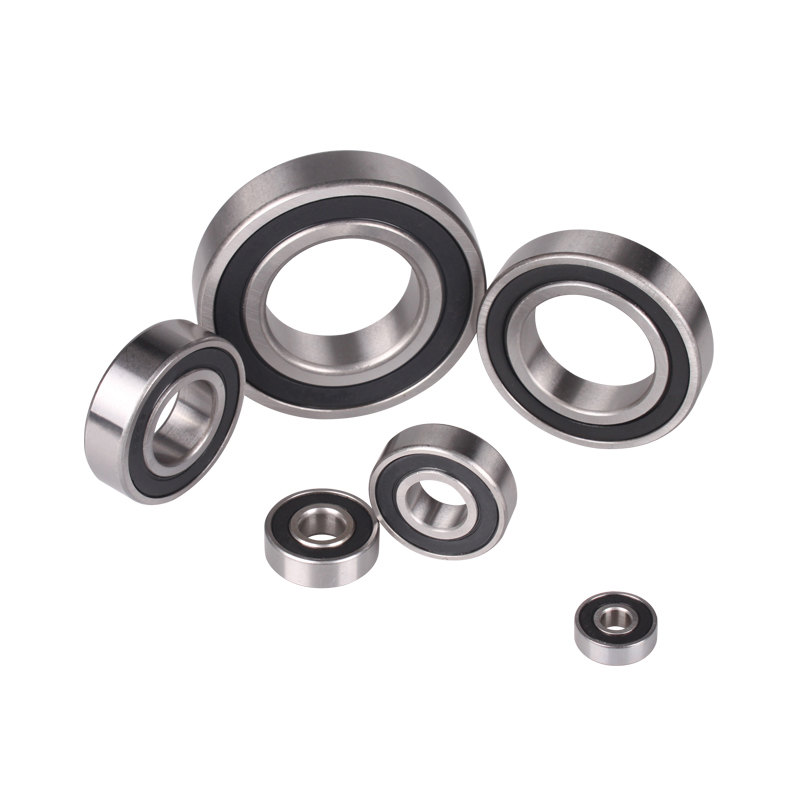
The Evolution of Sealed Technology
To understand why inspection is still critical, we must first appreciate how far the technology has come. By 2026, bearing manufacturers have perfected the art of the “sealed environment.”
Modern sealed bearings, often referred to as “maintenance-free” or “solid grease” bearings, are designed to keep contaminants out and lubricant in. Innovations such as solid-state grease technology—where a high-strength brass base is impregnated with solid lubricants like graphite or molybdenum disulfide—have extended relubrication intervals significantly. In harsh environments like steel mills or mining crushers, these bearings can operate for thousands of hours where traditional bearings would fail in weeks.
Furthermore, sealing structures have evolved. We now see triple-lip seals and hybrid contact/non-contact designs (similar to those used in high-speed rail applications) that offer IP6X dust protection and water resistance. These seals create a barrier against the elements, but they also create a “black box.” Because you cannot visually inspect the grease condition inside a sealed unit without destroying it, you are entirely dependent on the integrity of the seal and the quality of the initial fill.
Why “Maintenance-Free” is a Misnomer
The term “maintenance-free” technically means “lubrication-free.” It does not mean “inspection-free.”
Even the most advanced lubricant degrades over time due to oxidation, particularly if the operating temperature exceeds the grease’s design limits (often around 60°C to 70°C). Additionally, seals are subject to wear. A microscopic breach in a rubber seal—caused by shaft misalignment or chemical attack—can allow moisture or abrasive dust to enter. Once contamination breaches the seal, the bearing enters a rapid failure cycle that standard visual checks cannot detect until it is too late.
In 2026, the cost of a bearing is negligible compared to the cost of unplanned downtime. A seized “maintenance-free” bearing can halt a conveyor system, stop a wind turbine, or damage a high-precision motor shaft.
The 2026 Standard: From Reactive to Predictive
The biggest shift in 2026 is the integration of Smart Bearing technology. The days of listening for a “humming” noise to determine bearing health are ending.
Smart Bearings are now becoming the industry standard for critical applications. These units come equipped with integrated micro-sensors (such as piezoelectric sensors or MEMS) that monitor vibration, temperature, and load in real-time.
| Feature | Traditional Sealed Bearing | Smart/Inspected Bearing (2026 Standard) |
|---|---|---|
| Failure Detection | Reactive (Noise/Heat) | Predictive (Vibration/Temperature Trends) |
| Lubrication | Fixed (Factory Fill) | Monitored (Viscosity/Temperature correlation) |
| Lifespan | 20,000 – 40,000 hours (Est.) | Optimized via load management |
| Data Output | None | Digital Twin Integration |
By integrating these bearings into your IIoT (Industrial Internet of Things) network, you move from guessing when a bearing will fail to knowing exactly when it needs attention. For instance, a smart bearing in a mining excavator can detect changes in the “force map” of the machinery, alerting operators to structural stress before the bearing itself even shows signs of wear.
Critical Inspection Parameters
If your facility still relies on standard sealed bearings, you must implement a rigorous inspection protocol. You cannot rely on the manufacturer’s “lifetime” rating.
Temperature Monitoring
Heat is the enemy of grease. If a bearing operates consistently above 70°C, the life of the lubricant drops drastically. In 2026, handheld thermal cameras and fixed IR sensors make it easy to spot “hot spots.” A sudden rise in temperature usually indicates lubrication breakdown or excessive friction due to misalignment.
Heat is the enemy of grease. If a bearing operates consistently above 70°C, the life of the lubricant drops drastically. In 2026, handheld thermal cameras and fixed IR sensors make it easy to spot “hot spots.” A sudden rise in temperature usually indicates lubrication breakdown or excessive friction due to misalignment.
Vibration Analysis
Vibration is the earliest indicator of failure. Even sealed bearings will show distinct frequency signatures when a defect begins.
Vibration is the earliest indicator of failure. Even sealed bearings will show distinct frequency signatures when a defect begins.
- Inner/Outer Race Defects: Often caused by improper installation or shock loads.
- Ball Pass Frequency: Indicates damage to the rolling elements.
- Misalignment: Creates a 1x or 2x RPM peak.
Seal Integrity
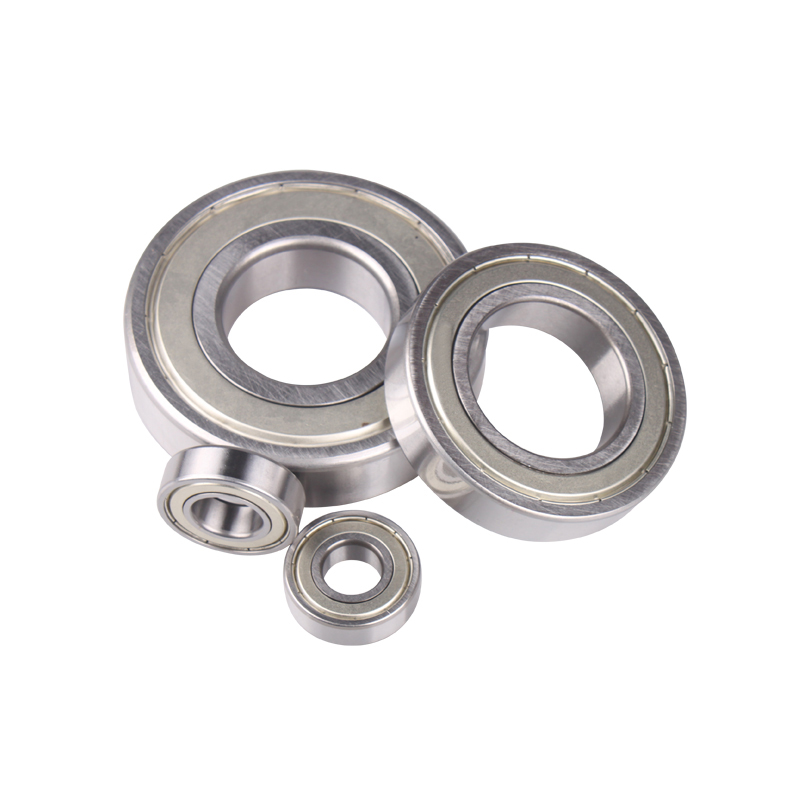
Physical inspection of the seal is vital. Look for signs of “lip wear,” hardening of the rubber (due to heat aging), or chemical swelling. In environments with high washdown requirements (like food and beverage), check for signs of water ingress, which turns grease into an abrasive slurry.
Physical inspection of the seal is vital. Look for signs of “lip wear,” hardening of the rubber (due to heat aging), or chemical swelling. In environments with high washdown requirements (like food and beverage), check for signs of water ingress, which turns grease into an abrasive slurry.
Environmental Factors and Lifespan
Not all environments are created equal. A “maintenance-free” bearing in a clean, climate-controlled HVAC unit will last vastly longer than one in a cement plant. Understanding your operating environment is key to setting the right inspection intervals.
| Environment | Primary Risk Factor | Recommended Inspection Interval |
|---|---|---|
| Standard Industrial | Fatigue / Oxidation | Annual (or 8,760 hours) |
| High Temp (>80°C) | Grease Bleed / Oxidation | Quarterly |
| Washdown / Marine | Seal Corrosion / Water Ingress | Bi-Annual |
| Mining / Aggregates | Contamination / Shock Load | Monthly (Vibration Analysis) |
The Role of Installation in Longevity
It is crucial to note that many “maintenance-free” bearings fail prematurely not due to manufacturing defects, but due to installation errors. In 2026, we still see a high rate of failure caused by:
- Eccentricity: Misalignment creates uneven load distribution, wearing out one side of the raceway.
- Improper Fit: Too loose, and the bearing creeps (causing heat); too tight, and internal clearance is lost (causing preload failure).
- Contamination during Assembly: Installing a sealed bearing in a dirty environment can compromise the seal immediately.
Conclusion: Vigilance is the New Maintenance
As we progress through 2026, the line between mechanical hardware and digital intelligence is blurring. The “install and forget” mentality is a relic of the past. While sealed bearings have eliminated the need for grease guns, they have increased the need for data-driven vigilance.
Whether through the adoption of smart, sensor-enabled bearings or through disciplined thermal and vibration monitoring, inspecting your sealed bearings is no longer optional—it is a strategic imperative. By debunking the myth of “maintenance-free,” you protect your assets, ensure safety, and keep your operations running smoothly in an increasingly automated world.
Frequently Asked Questions (FAQ)
Q: Does “maintenance-free” mean the bearing will last forever?
A: No. “Maintenance-free” technically means “lubrication-free.” It indicates that the bearing is pre-filled with grease and sealed, but it still has a finite lifespan determined by material fatigue and lubricant degradation.
A: No. “Maintenance-free” technically means “lubrication-free.” It indicates that the bearing is pre-filled with grease and sealed, but it still has a finite lifespan determined by material fatigue and lubricant degradation.
Q: Can I add more grease to a sealed bearing to extend its life?
A: Generally, no. Sealed bearings are designed as closed systems. Attempting to inject grease can damage the rubber seals or cause over-lubrication, which leads to overheating. Once the internal grease fails, the bearing usually needs to be replaced.
A: Generally, no. Sealed bearings are designed as closed systems. Attempting to inject grease can damage the rubber seals or cause over-lubrication, which leads to overheating. Once the internal grease fails, the bearing usually needs to be replaced.
Q: What is the most common cause of failure in sealed bearings?
Post time: Apr-15-2026