


Bearings are among the most deceptively complex components in modern industry. A single deep groove ball bearing may weigh only a few hundred grams, yet its journey from raw steel to finished precision component involves dozens of specialized processes, rigorous quality checkpoints, and a tightly coordinated global supply chain.
For procurement managers, engineers, and industrial buyers, understanding this journey is not just an academic exercise. It directly affects lead times, cost predictability, quality assurance, and the ability to source components with confidence.
This article traces the bearing supply chain from raw material sourcing through to final delivery, highlighting the technical, logistical, and quality considerations that define a reliable bearing manufacturer.
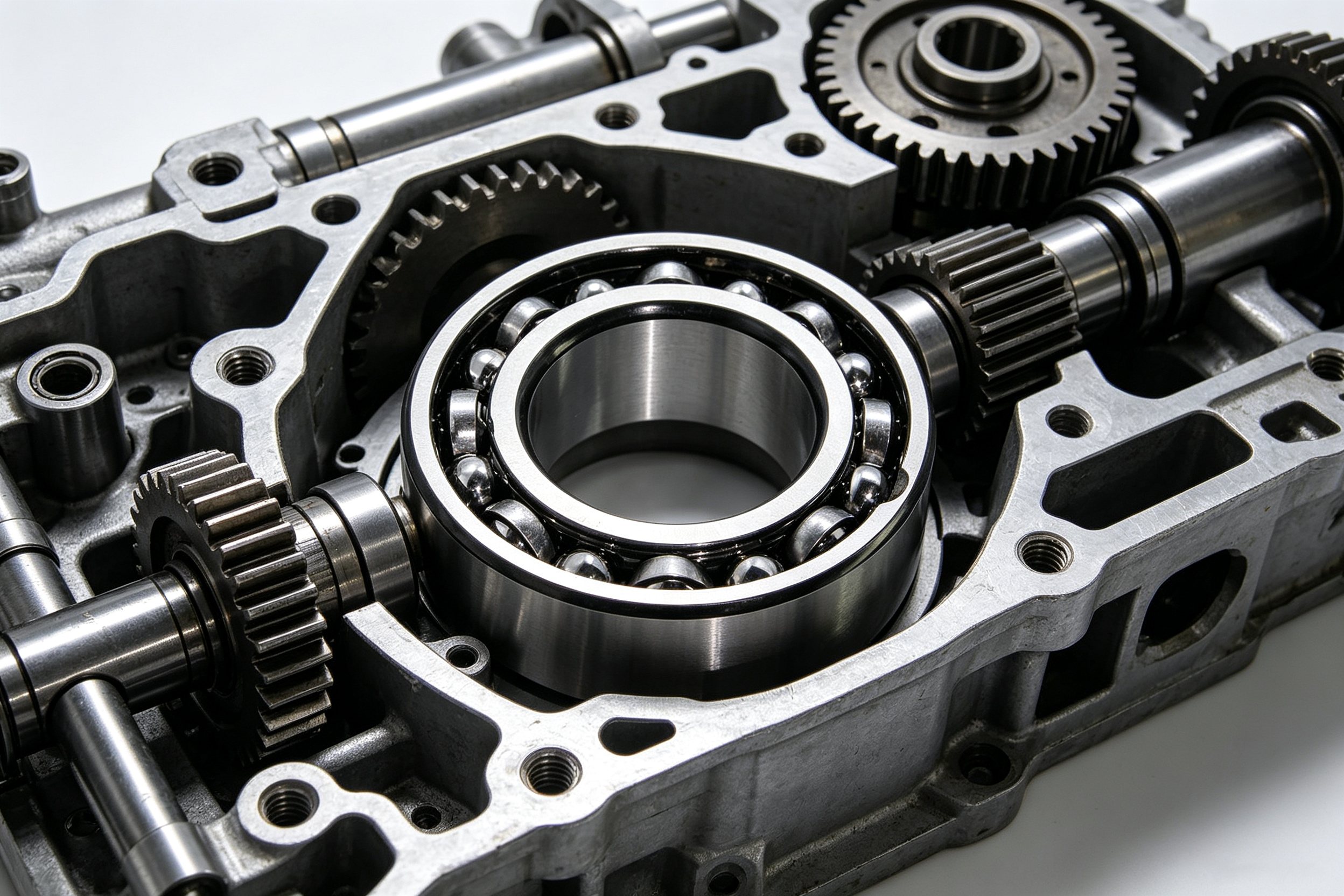
Why the Bearing Supply Chain Matters More Than Ever
Global manufacturing has become increasingly interconnected. A bearing produced for an electric motor in Europe may use steel sourced from one continent, undergo forging in another, and be finished and inspected in a third. At the same time, industries such as automotive, wind energy, robotics, and heavy machinery demand tighter tolerances, longer service life, and greater traceability.
A well-managed bearing supply chain must balance several priorities:
- Material consistency, ensuring each batch of steel meets strict chemical and mechanical specifications.
- Process control, maintaining precision across machining, heat treatment, grinding, and assembly.
- Quality verification, combining dimensional inspection, metallurgical testing, and performance validation.
- Logistics reliability, delivering finished bearings on schedule without compromising protection during transit.
When any one of these elements is weak, the consequences can extend far beyond a single component. Bearing failure in critical equipment can lead to unplanned downtime, safety risks, and costly maintenance.
Stage 1: Raw Material Sourcing and Steel Selection
The bearing supply chain begins with steel. Most precision bearings are manufactured from high-carbon chromium bearing steel, commonly known as SAE 52100 or its international equivalents. This material is chosen for its hardness, fatigue resistance, wear performance, and ability to maintain dimensional stability after heat treatment.
However, not all bearing steel is equal. The chemical composition, inclusion content, carbide distribution, and internal soundness of the steel all influence the final performance of the bearing. Reputable manufacturers typically require material certificates, conduct incoming inspections, and maintain traceability from raw material batch to finished bearing.
表格
| Material Factor | Why It Matters | Typical Control Method |
|---|---|---|
| Chemical composition | Determines hardness, toughness, and wear resistance | Spectrometer analysis and mill certification |
| Non-metallic inclusions | Affects fatigue life and reliability | Microscopic inspection and inclusion rating |
| Decarburization | Can reduce surface hardness and durability | Metallographic examination |
| Internal defects | May lead to premature failure under load | Ultrasonic testing |
For specialized applications, manufacturers may also use stainless steel, ceramic rolling elements, or engineered polymers. The choice depends on operating temperature, corrosion exposure, speed, load, and environmental conditions.
Stage 2: Forging and Turning
Once steel has been verified, it is typically cut into blanks and prepared for forging. Forging shapes the raw material into a form that is close to the final geometry of the bearing ring. This step is important because it improves material density, reduces internal voids, and creates a favorable grain flow that supports long-term durability.
After forging, the rings undergo turning operations to remove excess material and bring the components closer to their final dimensions. At this stage, the parts are still far from finished. Surfaces are rough, tolerances are relatively wide, and the components have not yet been hardened.
Precision at this stage is still important. Poor forging or turning can create internal stresses, surface irregularities, or dimensional inconsistencies that become more difficult to correct later in the process.
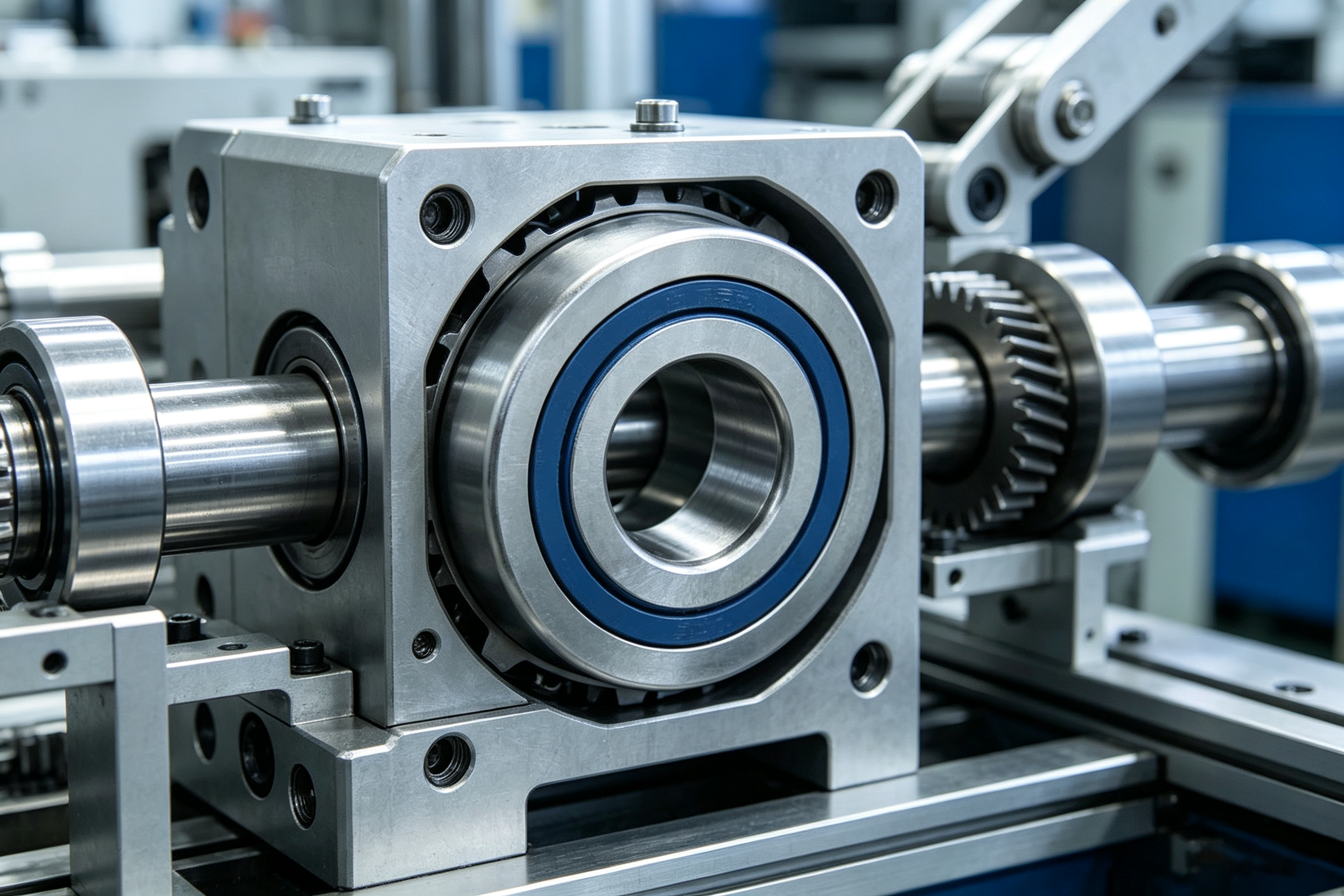
Stage 3: Heat Treatment and Metallurgical Control
Heat treatment is one of the most critical stages in bearing manufacturing. It transforms the steel from a machinable state into a hardened, wear-resistant component capable of withstanding repeated contact stresses.
The process typically involves controlled heating, quenching, and tempering. The goal is to achieve the correct hardness while preserving enough toughness to resist cracking or spalling during service.
表格
| Heat Treatment Objective | Manufacturing Benefit | Risk If Poorly Controlled |
|---|---|---|
| Achieve target hardness | Improves load-carrying capacity | Excessive brittleness |
| Control case depth | Supports surface durability | Reduced fatigue resistance |
| Minimize distortion | Maintains dimensional accuracy | Increased grinding cost |
| Stabilize microstructure | Improves long-term reliability | Inconsistent service life |
Heat treatment is not simply a technical step; it is a quality-defining process. Small variations in temperature, time, atmosphere, or cooling rate can affect hardness uniformity, residual stress, and dimensional stability. Advanced manufacturers monitor these parameters continuously and record them as part of their quality documentation.
Stage 4: Precision Grinding and Finishing
After heat treatment, bearing rings are hardened and must be finished to very tight tolerances. This is where precision manufacturing becomes especially visible.
Grinding operations shape the raceways, bores, and outer diameters of the rings. Superfinishing and lapping may follow to reduce surface roughness and improve contact conditions between the rolling elements and raceways.
The precision required at this stage is measured in micrometers. Even minor deviations can affect vibration, noise, friction, heat generation, and service life. For high-speed or high-precision applications, such as machine tool spindles, electric motors, or robotics, these finishing processes are especially important.
Key finishing considerations include:
- Dimensional accuracy, ensuring the bearing fits correctly within its housing and shaft.
- Geometric accuracy, controlling roundness, cylindricity, and parallelism.
- Surface finish, reducing friction and improving lubrication performance.
- Consistency across batches, ensuring that production volumes meet the same quality standard as initial samples.
Stage 5: Rolling Elements, Cages, Seals, and Lubrication
A bearing is more than its rings. The rolling elements, cage, seals, shields, and lubricant all play essential roles in performance.
Rolling elements, whether balls or rollers, must be manufactured to extremely high sphericity and surface quality. The cage maintains proper spacing between rolling elements, reduces friction, and helps guide movement. Seals and shields protect the internal components from contamination while retaining lubricant.
Lubrication selection is another important decision. The wrong grease or oil for a given application can shorten bearing life, increase noise, or cause overheating. Manufacturers and application engineers often consider speed, temperature range, load, sealing arrangement, and maintenance interval when selecting lubrication.
表格
| Bearing Sub-Component | Primary Function | Quality Consideration |
|---|---|---|
| Rolling elements | Carry load and enable rotation | Roundness, hardness, surface finish |
| Cage | Separate and guide rolling elements | Material strength, wear resistance |
| Seals and shields | Prevent contamination and retain lubricant | Fit, flexibility, durability |
| Lubricant | Reduce friction and protect surfaces | Viscosity, temperature range, compatibility |
Stage 6: Assembly, Inspection, and Final Testing
Assembly brings all components together under controlled conditions. Cleanliness is particularly important, because even small particles can damage raceways, increase noise, or reduce service life.
Once assembled, bearings typically undergo inspection to verify critical characteristics. The depth and type of inspection depend on the application, customer requirements, and internal quality standards.
Common inspection methods include:
- Dimensional inspection using precision gauges and coordinate measuring equipment.
- Visual inspection to detect surface defects, marking errors, or assembly issues.
- Noise and vibration testing for applications where smooth operation is essential.
- Rotational torque measurement to confirm that friction levels are within acceptable ranges.
- Sampling or full inspection based on the criticality of the order and customer agreement.
For many industrial buyers, inspection documentation is not optional. Material certificates, dimensional reports, heat treatment records, and batch traceability help confirm that the supplied bearings meet the required specifications.
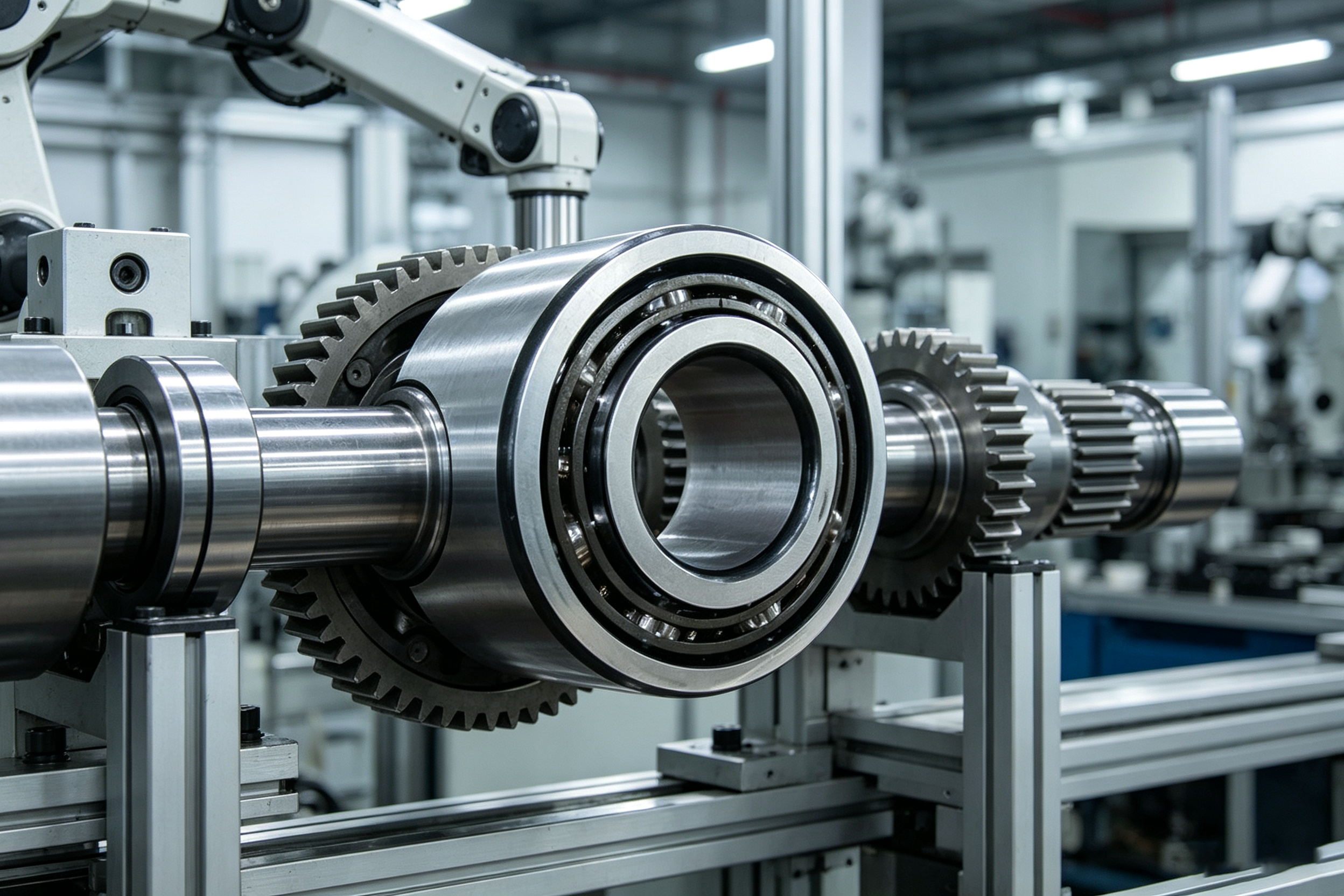
Stage 7: Packaging, Logistics, and Delivery
The final stage of the bearing supply chain is often underestimated, but it plays a direct role in product condition upon arrival.
Bearings are precision components. They can be damaged by moisture, contamination, shock, or improper handling. Protective packaging, correct labeling, and controlled storage help preserve their condition during transport and warehousing.
Reliable logistics also affect procurement planning. Consistent lead times, accurate order fulfillment, and clear communication help manufacturers avoid production delays. For customers managing maintenance schedules or just-in-time production, predictable delivery is often as important as product quality.
What This Means for Buyers and Engineers
Understanding the bearing supply chain helps buyers move beyond price comparison and evaluate suppliers more effectively. A bearing is not simply a catalog item. Its performance depends on material integrity, process control, inspection discipline, and supply chain transparency.
When evaluating a bearing supplier, several questions are worth asking:
- Can the supplier provide traceability from raw material to finished product?
- Are heat treatment, grinding, and inspection processes documented?
- Does the supplier maintain consistent quality across production batches?
- Can the supplier support application-specific requirements such as special materials, seals, lubricants, or tolerances?
- Are lead times, packaging, and logistics managed with the same care as manufacturing?
These questions help separate suppliers who simply move products from those who actively manage quality, reliability, and technical support.
Building Confidence Through Transparency
The journey from raw steel to precision bearing is a reminder that industrial components are only as reliable as the systems behind them. Each stage, from steel selection to final delivery, adds value, introduces risk, and requires control.
For manufacturers and engineers, the goal is not just to purchase bearings, but to understand where they come from, how they are made, and how quality is maintained. For bearing manufacturers, the responsibility is to make that journey visible, repeatable, and verifiable.
A strong supply chain does not eliminate complexity, but it organizes it. It turns raw material into dependable motion, and it turns technical capability into long-term customer confidence.
Frequently Asked Questions (FAQ)
What type of steel is most commonly used in bearing manufacturing?
Most precision bearings are manufactured from high-carbon chromium bearing steel (commonly known as SAE 52100 or 100Cr6). This material is selected for its optimal balance of hardness, fatigue resistance, and wear performance after heat treatment.
Why is heat treatment critical for bearing quality?
Heat treatment transforms the steel from a machinable state into a hardened component capable of withstanding high loads. Proper control of heating, quenching, and tempering ensures the bearing achieves the necessary hardness and toughness without becoming brittle or suffering from dimensional distortion.
How does the supply chain affect lead times?
The bearing supply chain involves multiple stages—from steel sourcing and forging to precision grinding and logistics. Delays in raw material availability, quality inspection holds, or transportation disruptions can impact delivery schedules. Reliable suppliers manage these risks through strategic inventory planning and transparent communication.
What is the difference between a shield and a seal?
- Shields (ZZ/2Z): Metal plates that provide a physical barrier against large particles but do not create a hermetic seal. They allow for high-speed operation.
- Seals (RS/2RS): Rubber or polymer components that create a tighter seal to prevent contamination and retain lubricant, though they may generate slightly more friction at high speeds.
Why is traceability important in the bearing industry?
Traceability ensures that every bearing can be tracked back to its specific raw material batch, heat treatment lot, and production date. This is essential for quality assurance, allowing manufacturers to verify material properties and investigate any potential issues with precision.
Can bearings be customized for specific applications?
Yes. While standard bearings suit many uses, manufacturers can customize components based on:
- Materials: (e.g., stainless steel for corrosion resistance).
- Lubrication: (e.g., high-temperature grease or food-grade oil).
- Tolerances: (e.g., ABEC 7 or 9 for high-precision machinery).
- Clearance: (e.g., C3 or C4 for thermal expansion).
Post time: Aug-10-2026