


In the highly competitive world of industrial manufacturing, the reliability of a final product often hinges on the quality of its smallest components. For Original Equipment Manufacturers (OEMs), partnering with a bearing supplier is not merely a transactional purchase; it is a strategic alliance. At our company, we understand that transitioning a bearing from a conceptual prototype to high-volume mass production is a rigorous journey. It demands precision engineering, transparent communication, and unwavering quality control.
To help our partners understand what to expect, we have outlined our comprehensive OEM bearing development process. This roadmap is designed to align with modern manufacturing standards and ensures that every bearing we deliver meets the exact specifications required for your application.
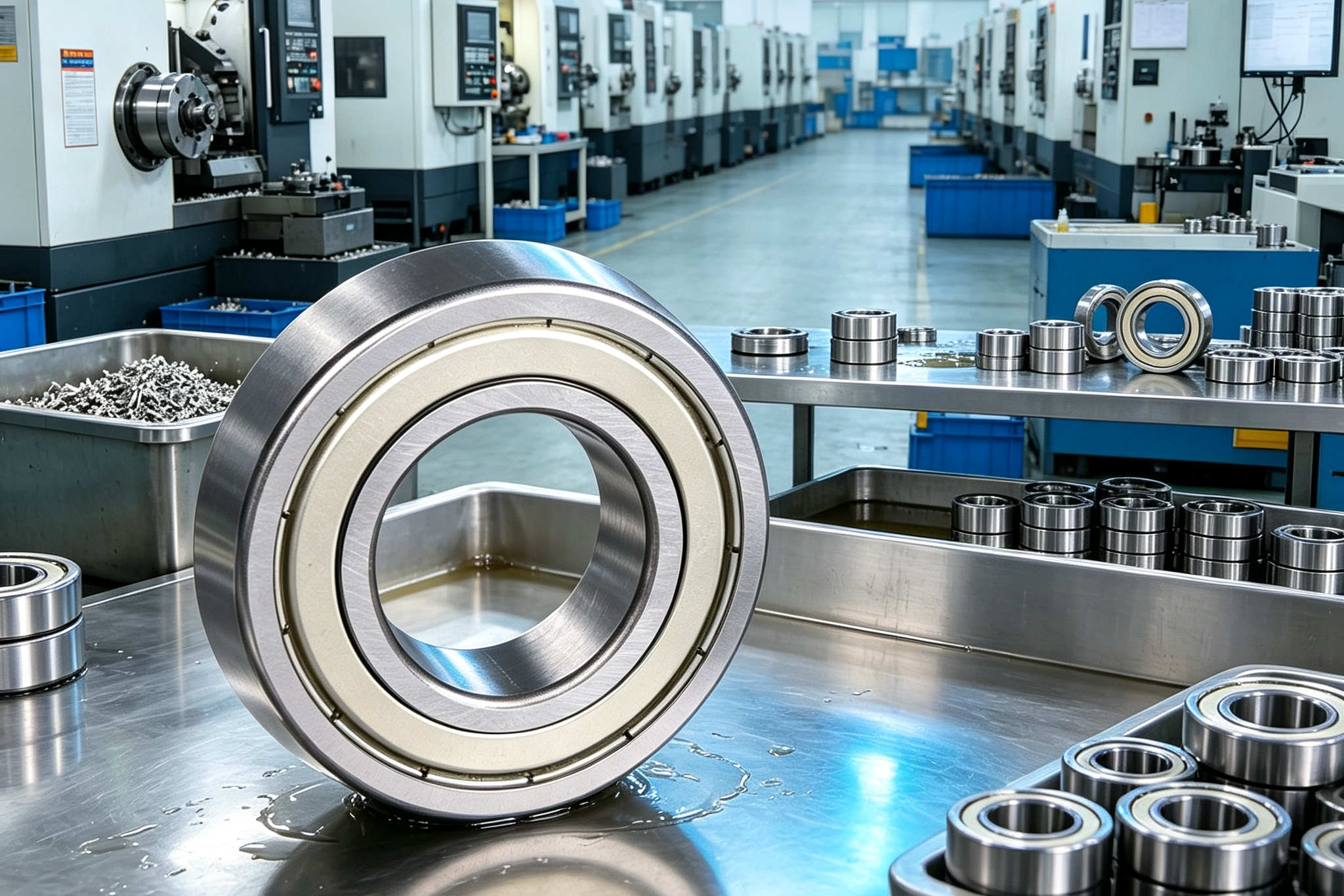
Phase 1: Requirement Analysis and Application Engineering
The foundation of any successful OEM project is a deep understanding of the end-use application. Before a single line of CAD is drawn, our application engineers collaborate with your team to define the operational parameters. We don’t just ask for dimensions; we ask about the environment, the load cycles, and the failure points of previous designs.
This phase involves a thorough review of the client’s technical requirements. We analyze factors such as rotational speed, axial and radial loads, temperature fluctuations, and potential exposure to contaminants. By establishing these parameters early, we mitigate the risk of costly redesigns later in the production cycle.
| Key Input Parameters | Description | Engineering Impact |
|---|---|---|
| Load & Speed Ratings | Dynamic and static load capacities, RPM limits | Determines bearing size, rolling element count, and cage design. |
| Operating Environment | Temperature range, moisture, chemical exposure | Influences material selection, heat treatment, and seal type. |
| Lubrication Strategy | Grease type, oil bath, or external circulation | Affects internal clearance, seal compatibility, and maintenance intervals. |
| Mounting & Tolerances | Shaft/housing fits, axial locating methods | Defines dimensional tolerances and chamfer specifications. |
Phase 2: Design, Simulation, and Prototyping
Once the requirements are locked, our design team utilizes advanced CAD software and Finite Element Analysis (FEA) to create the initial bearing geometry. Modern bearing development relies heavily on simulation to predict performance before physical manufacturing begins. We simulate stress distribution across the raceways, contact angles, and lubricant film thickness to ensure the design is optimized for longevity.
Following the digital validation, we move to the prototyping stage. Using flexible manufacturing cells, we produce a small batch of prototype bearings. These are not merely dimensional checks; they are functional samples intended for rigorous testing in your actual application or on our in-house test rigs. This iterative feedback loop between prototype testing and design refinement is where we fine-tune the internal geometry and surface finishes to achieve the perfect balance of performance and manufacturability.
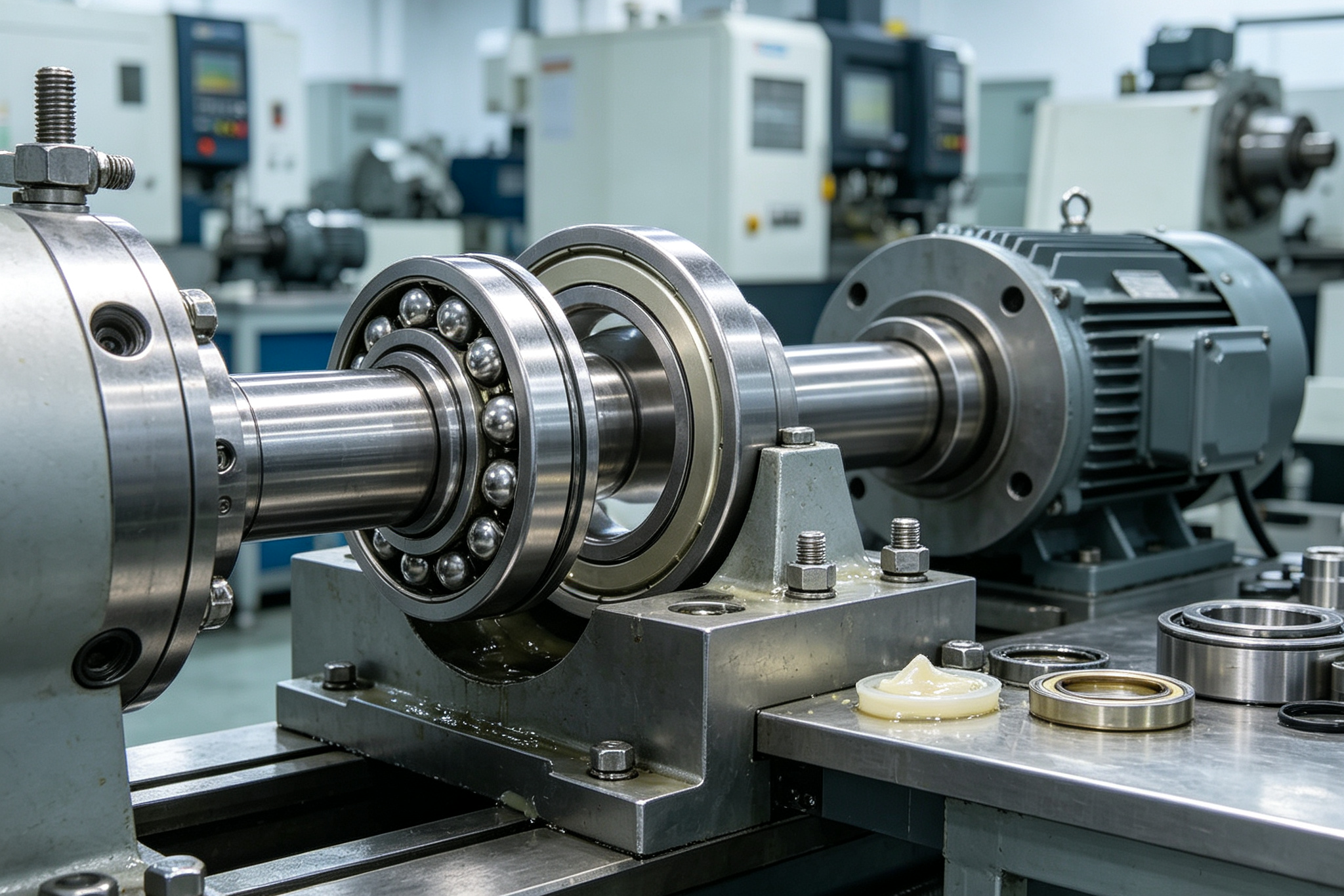
Phase 3: Validation and Quality Certification
The transition from prototype to mass production is gated by a strict validation process. We adhere to international quality standards, ensuring that the mass-produced units are statistically identical to the approved prototype. This phase is critical for maintaining E-E-A-T (Experience, Expertise, Authoritativeness, and Trustworthiness) in our manufacturing output.
Our quality assurance team conducts comprehensive metrology and functional testing. We verify that the heat treatment process has achieved the correct core hardness and case depth, and that the surface roughness of the raceways meets the stringent requirements for low noise and low friction.
| Validation Test | Methodology | Acceptance Criteria |
|---|---|---|
| Dimensional Inspection | CMM and automated optical inspection | All critical dimensions within P0/P6 tolerance class. |
| Hardness & Metallurgy | Rockwell/Vickers testing & microstructure analysis | Surface hardness ≥ 58 HRC; uniform martensitic structure. |
| Noise & Vibration | Acoustic testing in anechoic chamber | Vibration levels below Z1V1 standard (or custom spec). |
| Endurance Testing | Accelerated life testing under simulated load | L10 life expectancy met or exceeded without premature failure. |
Phase 4: Mass Production and Supply Chain Integration
With the design validated and the production process qualified, we initiate mass production. Our manufacturing facilities utilize automated grinding and super-finishing lines to ensure consistency at scale. However, automation is only part of the equation. We implement Statistical Process Control (SPC) on the shop floor to monitor critical characteristics in real-time. If a trend toward the upper or lower control limit is detected, the machine automatically compensates, preventing the production of non-conforming parts.
For our OEM partners, the delivery of the bearing is just one part of the supply chain. We offer flexible logistics solutions, including Vendor Managed Inventory (VMI) and Just-In-Time (JIT) delivery schedules. This integration ensures that your assembly line never stops due to component shortages, while also reducing your inventory holding costs.
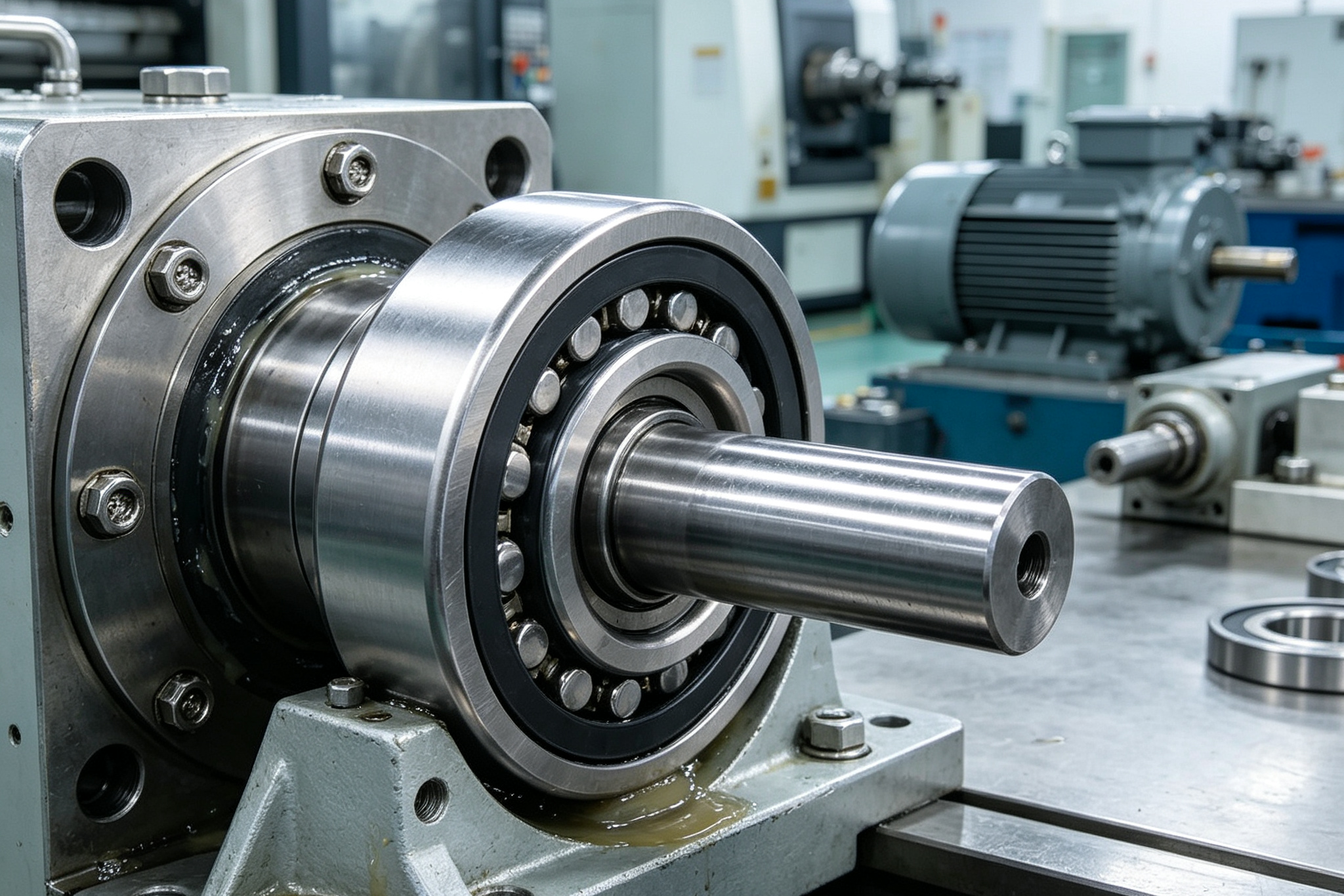
Phase 5: Continuous Improvement and Lifecycle Support
Our relationship with OEMs does not end when the parts are shipped. We view mass production as a living process. We continuously collect data from the field and from our own production lines to identify opportunities for micro-improvements. Whether it is optimizing the heat treatment cycle to reduce energy consumption or refining the grinding process to improve surface finish, we are constantly seeking ways to add value.
Furthermore, we provide full lifecycle support. Should your application requirements change, or should you face a new challenge in the field, our engineering team is ready to revisit the design. This commitment to long-term partnership is what distinguishes a true OEM supplier from a generic vendor.
Conclusion
The journey from prototype to mass production is a testament to engineering discipline and manufacturing excellence. By adhering to a structured development process, maintaining transparent communication, and enforcing rigorous quality standards, we ensure that every bearing we produce delivers the reliability your brand promises.
For OEMs looking to elevate their product performance, the secret lies in the details of the development process. We invite you to partner with us, bringing your most demanding applications to our engineering team. Together, we can turn complex motion challenges into seamless, reliable solutions.
Frequently Asked Questions (FAQ)
Q: What is the typical lead time for a custom OEM bearing?
A: Standard production takes about 30-60 days, depending on complexity. Expedited delivery is available for urgent projects.
A: Standard production takes about 30-60 days, depending on complexity. Expedited delivery is available for urgent projects.
Q: Can you match a bearing to replace a competitor’s part?
A: Yes. We can engineer equivalent solutions based on your existing drawings or dimensional requirements.
A: Yes. We can engineer equivalent solutions based on your existing drawings or dimensional requirements.
Q: Do you offer prototype samples for testing?
A: Absolutely. We provide functional prototypes for application validation before mass production begins.
A: Absolutely. We provide functional prototypes for application validation before mass production begins.
Q: What quality standards do your bearings meet?
A: We strictly adhere to international standards (e.g., ISO, DIN) and can achieve P0 to P2 precision classes as required.
A: We strictly adhere to international standards (e.g., ISO, DIN) and can achieve P0 to P2 precision classes as required.
Q: Can you customize materials for extreme environments?
A: Yes. We offer specialized materials, including stainless steel, ceramics, and advanced polymers, for high-temperature or corrosive conditions.
A: Yes. We offer specialized materials, including stainless steel, ceramics, and advanced polymers, for high-temperature or corrosive conditions.
Post time: Aug-31-2026