


Few mechanical components are as quietly essential as the bearing. Hidden inside motors, gearboxes, turbines, conveyor systems, and precision machinery, bearings support rotation, reduce friction, and help machines run more smoothly. Without them, modern manufacturing, transportation, energy production, and automation would be far less efficient.
For a bearing manufacturer, understanding this history is more than an academic exercise. It helps engineers, procurement teams, and equipment users appreciate why bearing quality, material selection, precision, and proper maintenance still matter in today’s factories.
This article traces the evolution of bearings from ancient mechanical principles to modern industrial applications, showing how a simple idea—reducing friction between moving parts—has driven progress for thousands of years.
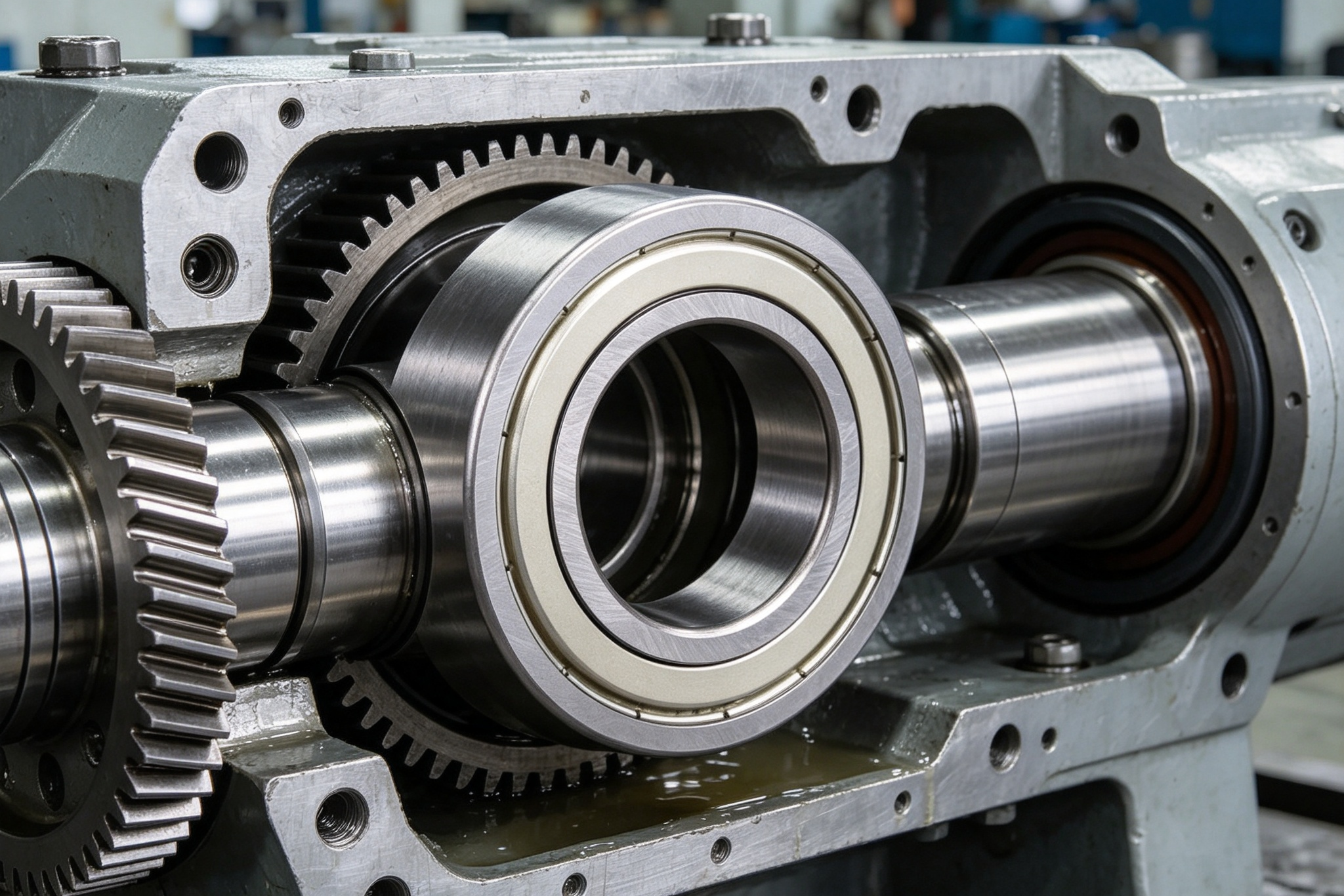
The Early Idea Behind Bearings: Reducing Friction
The basic purpose of a bearing has remained the same across history: to support a moving part while reducing resistance. In mechanical terms, friction is the force that opposes motion. When two surfaces slide against each other, energy is lost as heat, wear increases, and movement becomes less efficient.
Early engineers and craftsmen did not have modern materials or precision machining, but they understood this problem. By placing round objects between a load and a surface, they could convert sliding friction into rolling friction, which is usually much lower.
This principle is still the foundation of rolling-element bearings today. Whether the application involves a small electric motor or a heavy-duty industrial gearbox, the goal remains consistent: support load, enable rotation, and minimize friction.
Ancient Egypt: Logs, Rollers, and Monumental Construction
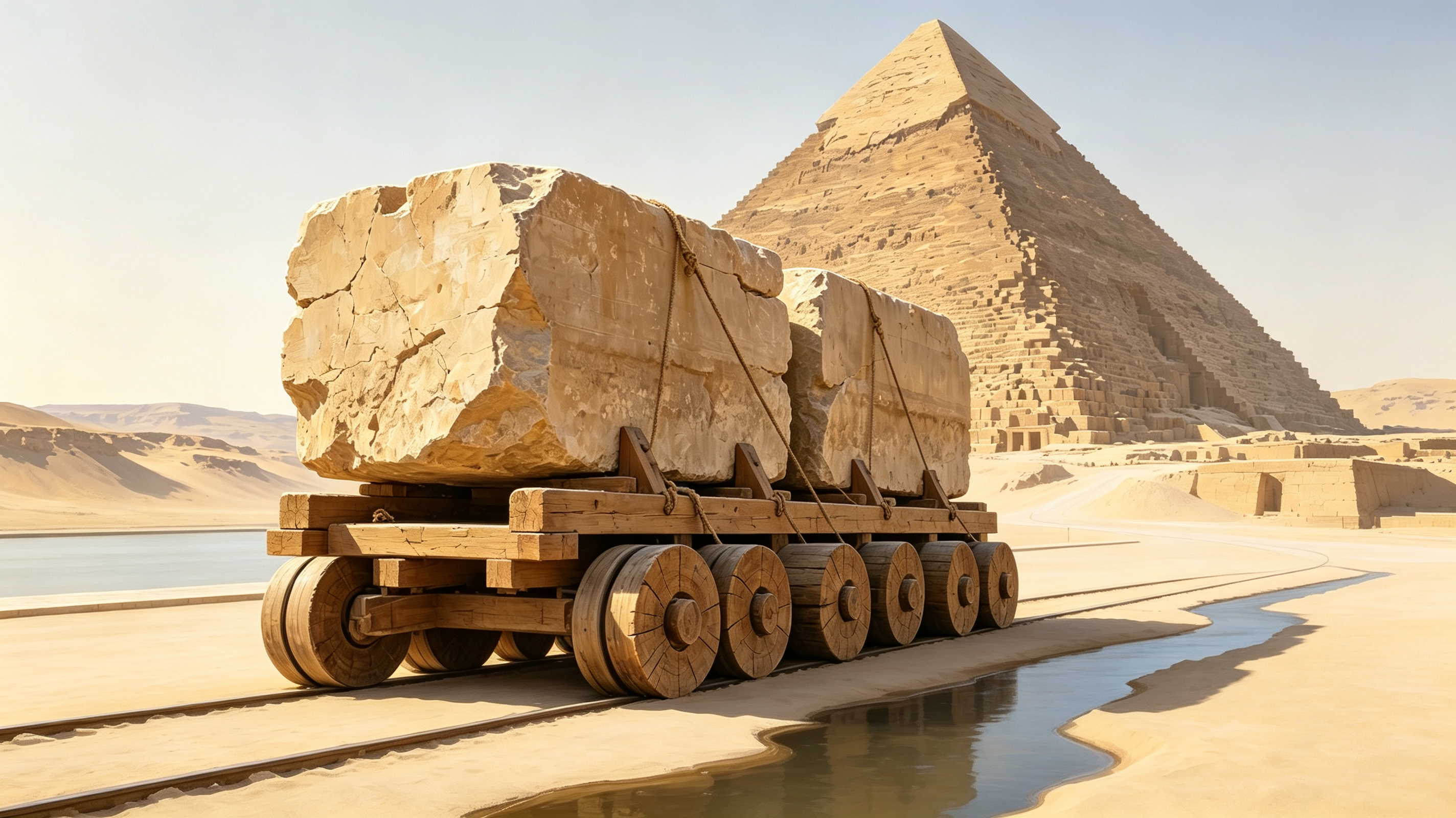
One of the earliest practical examples of bearing-like technology can be found in ancient Egypt. When builders moved massive stone blocks for temples, pyramids, and monuments, they needed ways to reduce the effort required to drag heavy loads.
Historical evidence suggests that wooden rollers were used to help move large stones. By placing logs beneath a heavy object, workers could roll it forward instead of dragging it across sand or stone. This reduced friction and made transportation more practical.
Another well-known method involved wetting sand in front of sledges. While this is not a bearing in the modern sense, it reflects the same engineering instinct: reduce resistance between a load and the ground.
| Period | Early Method | Mechanical Purpose |
|---|---|---|
| Ancient Egypt | Wooden rollers under heavy loads | Reduce friction during transport |
| Ancient Egypt | Sledges with wetted sand | Lower surface resistance |
| Early civilizations | Round logs and rollers | Convert sliding motion into rolling motion |
These early solutions were simple, but they demonstrated a principle that remains central to bearing design: rolling elements can carry load more efficiently than flat sliding surfaces.
Ancient Mesopotamia, Greece, and Rome: Early Rotating Supports
As civilizations developed more advanced tools, the need for rotating supports grew. Simple machines such as wheels, pulleys, axles, and lifting devices required components that could handle rotation under load.
In ancient Mesopotamia, early wheel-based transport and pottery-making tools relied on rotating shafts and supports. While these were not precision bearings, they used the same fundamental concept: a rotating element supported by a stationary structure.
Greek and Roman engineers further developed pulley systems, cranes, and wheeled vehicles. Their machines required axles to rotate smoothly while carrying weight. To reduce wear, early craftsmen used lubricants such as animal fats and plant-based oils.
This was an important step. Lubrication remains one of the most important factors in modern bearing performance. Even the most precisely manufactured bearing can fail prematurely if it is not properly lubricated for its operating conditions.
The Renaissance and Early Industrial Era: From Craftsmanship to Mechanization
During the Renaissance, engineering drawings, scientific observation, and mechanical innovation expanded rapidly. Inventors began designing more complex machines, including pumps, clocks, mills, and lifting equipment.
Leonardo da Vinci is often credited with early conceptual sketches related to rolling elements and low-friction supports. Whether or not his designs were widely built at the time, they show that engineers were already thinking about how rolling elements could improve machine efficiency.
By the 17th and 18th centuries, clockmaking, milling, and early factory machinery created stronger demand for reliable rotating components. Clockmakers, in particular, needed small, precise parts that could rotate consistently over long periods.
This period helped shift bearing development from manual craftsmanship toward repeatable mechanical design.
The Industrial Revolution: Bearings Become Essential
The Industrial Revolution changed everything. Factories replaced small workshops. Steam engines, textile machines, iron production, railways, and heavy machinery created new demands for durable, reliable bearings.
Machines were no longer small or slow. They operated under higher loads, higher speeds, and longer working hours. This meant that simple wooden rollers or basic axle supports were no longer sufficient.
During this era, bearing design became more standardized. Manufacturers needed components that could:
- Support heavier loads
- Operate at higher speeds
- Resist wear over long service periods
- Be replaced or maintained without rebuilding entire machines
Plain bearings, also known as journal bearings, were widely used in early industrial machinery. These bearings rely on a sliding surface, often with lubrication, to support a rotating shaft.
| Bearing Type | Basic Structure | Typical Advantage |
|---|---|---|
| Plain bearing | Shaft rotating against a bearing surface | Simple design, suitable for heavy loads |
| Rolling-element bearing | Balls or rollers between inner and outer rings | Lower friction at higher speeds |
| Precision bearing | Tight tolerances and refined materials | Better accuracy for demanding machines |
The Industrial Revolution did not just create demand for bearings. It created demand for consistency. Factories needed interchangeable, reliable components, and that requirement pushed bearing manufacturing toward greater precision.
The Rise of Rolling-Element Bearings
Rolling-element bearings represent one of the most important developments in bearing history. Instead of relying on a sliding surface, these bearings use balls or rollers between an inner ring and an outer ring.
This design reduces friction more effectively than many plain bearing arrangements, especially at higher speeds. It also allows machines to operate with greater efficiency and longer service life when properly selected and maintained.
Common types include:
- Ball bearings, widely used in electric motors, gearboxes, pumps, and general industrial equipment
- Roller bearings, often used where higher radial loads are involved
- Tapered roller bearings, suitable for applications with combined radial and axial loads
- Thrust bearings, designed to support axial loads
- Needle roller bearings, useful where space is limited but load capacity is still important
Each type serves a different purpose. Selecting the right bearing depends on load direction, speed, temperature, alignment, lubrication, and the operating environment.
Materials and Precision: The Modern Engineering Challenge
Modern bearings are not simply metal rings with rolling elements. Their performance depends on material quality, heat treatment, surface finish, internal geometry, sealing, lubrication, and manufacturing precision.
High-quality bearing steel must resist fatigue, wear, and deformation. In demanding environments, manufacturers may also use stainless steel, ceramic elements, specialized coatings, or advanced sealing solutions.
Precision matters because even small deviations can affect vibration, noise, temperature, and service life. In high-speed motors, machine tools, robotics, and precision automation, bearing accuracy can directly influence equipment performance.
表格
| Application Area | Bearing Requirement | Why It Matters |
|---|---|---|
| Electric motors | Low friction, reliable rotation | Supports efficiency and long service life |
| Machine tools | High precision, low vibration | Improves machining accuracy |
| Heavy industry | High load capacity, durability | Handles demanding operating conditions |
| Automation and robotics | Compact design, consistent performance | Supports precision movement and repeatability |
For industrial buyers, this means bearing selection should not be based on price alone. The correct bearing must match the application’s load, speed, temperature, contamination risk, and maintenance requirements.
Bearings in Modern Factories
Today, bearings are used in nearly every type of industrial equipment. They appear in conveyor systems, fans, pumps, compressors, gearboxes, spindles, agricultural machinery, mining equipment, wind turbines, and automated production lines.
Modern factories depend on equipment uptime. When a bearing fails unexpectedly, the result can be unplanned downtime, production delays, higher maintenance costs, and reduced equipment reliability.
This is why condition monitoring and preventive maintenance have become so important. Common warning signs of bearing problems include:
- Unusual noise or vibration
- Rising operating temperature
- Increased power consumption
- Irregular rotation or performance loss
- Visible contamination or lubrication breakdown
Early detection helps factories replace bearings before catastrophic failure occurs. It also supports better planning, longer machine life, and safer operation.
Sustainability and the Future of Bearing Technology
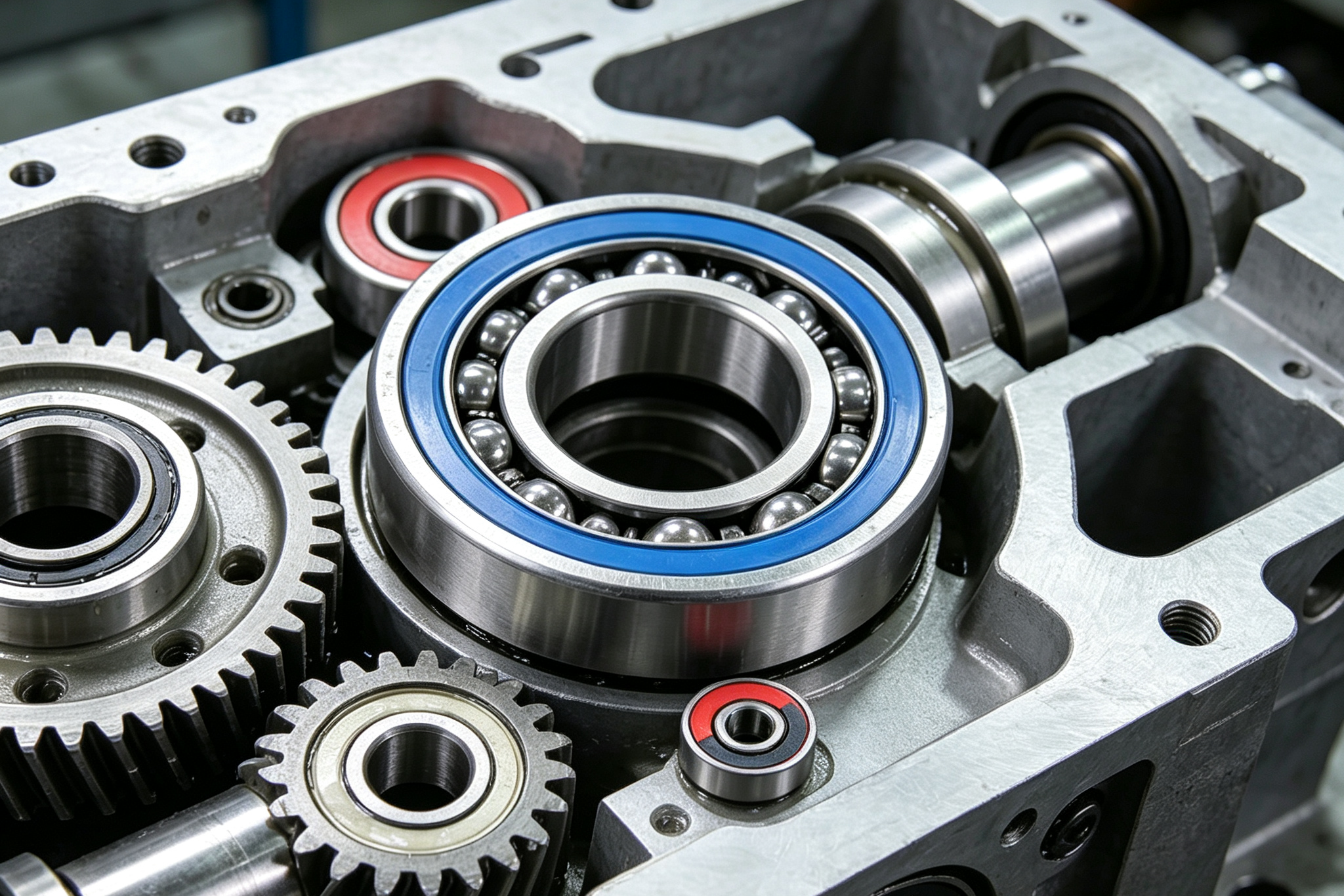
Bearing technology continues to evolve. Manufacturers are placing greater emphasis on energy efficiency, longer service life, reduced maintenance, and improved performance in challenging environments.
More efficient bearings can help reduce energy consumption in motors and industrial systems. Better sealing and lubrication solutions can extend service intervals. Improved materials and manufacturing processes can support higher reliability in demanding applications.
At the same time, digital monitoring and predictive maintenance are changing how factories manage bearing performance. Sensors, vibration analysis, temperature monitoring, and data-driven maintenance strategies allow teams to move from reactive repairs to more intelligent equipment management.
The future of bearings is not only about stronger materials or tighter tolerances. It is also about smarter selection, better maintenance, and a deeper understanding of how each bearing performs within a complete machine system.
Why Bearing History Still Matters Today
The story of bearings is not just a timeline of ancient rollers and modern factories. It is a story of continuous improvement in friction management, load support, precision engineering, and industrial efficiency.
From wooden logs under ancient stone blocks to high-precision rolling-element bearings in modern production lines, the goal has always been the same: make movement smoother, more reliable, and more efficient.
For bearing manufacturers, engineers, and industrial users, this history reinforces a simple truth. Bearings may be small components, but their impact on machine performance, energy efficiency, maintenance cost, and production reliability is significant.
Choosing the right bearing, maintaining it properly, and understanding its application requirements remain essential practices in modern industry. The technology has advanced dramatically, but the engineering principle behind it is as relevant today as it was thousands of years ago.
Frequently Asked Questions
What is the main purpose of a bearing?
A bearing supports rotating parts, reduces friction, and helps machines run more smoothly and efficiently.
Where were early bearing-like technologies first used?
Ancient Egypt is one of the earliest known examples, where wooden rollers helped move heavy stone blocks for construction.
What is the difference between a plain bearing and a rolling-element bearing?
A plain bearing uses a sliding surface, while a rolling-element bearing uses balls or rollers between inner and outer rings to reduce friction.
Why did the Industrial Revolution drive bearing development?
Factories needed bearings that could handle heavier loads, higher speeds, longer operating hours, and interchangeable replacement.
What are the most common types of rolling-element bearings?
The most common types include ball bearings, roller bearings, tapered roller bearings, thrust bearings, and needle roller bearings.
How can you tell if a bearing is failing?
Common warning signs include unusual noise, increased vibration, rising temperature, higher power consumption, and reduced performance.
Why is lubrication important for bearings?
Proper lubrication reduces friction and wear. Even high-quality bearings can fail prematurely without adequate lubrication.
How do modern factories improve bearing reliability?
Factories use condition monitoring, vibration analysis, temperature sensors, and predictive maintenance to detect problems early and prevent unexpected downtime.
Post time: Aug-19-2026