


In the high-stakes world of modern manufacturing, a single failed bearing can bring an entire production line to a grinding halt. The financial implications are staggering. According to industry data, unplanned downtime costs global manufacturers an estimated $1.4 trillion annually, with bearings accounting for up to 70% of all rotating machinery failures. For decades, facilities have relied on reactive maintenance—fixing things only after they break—or rigid time-based preventive schedules that waste resources by replacing parts prematurely.
Today, the industrial landscape is undergoing a fundamental transformation. The integration of Artificial Intelligence (AI) with smart bearing technology is shifting the paradigm from reactive firefighting to proactive, data-driven asset management. At our company, we are pioneering this transition, demonstrating how AI-powered smart bearings do much more than support rotational loads; they serve as the central nervous system of predictive maintenance, preventing costly downtime and optimizing total cost of ownership.
The Anatomy of a Smart Bearing
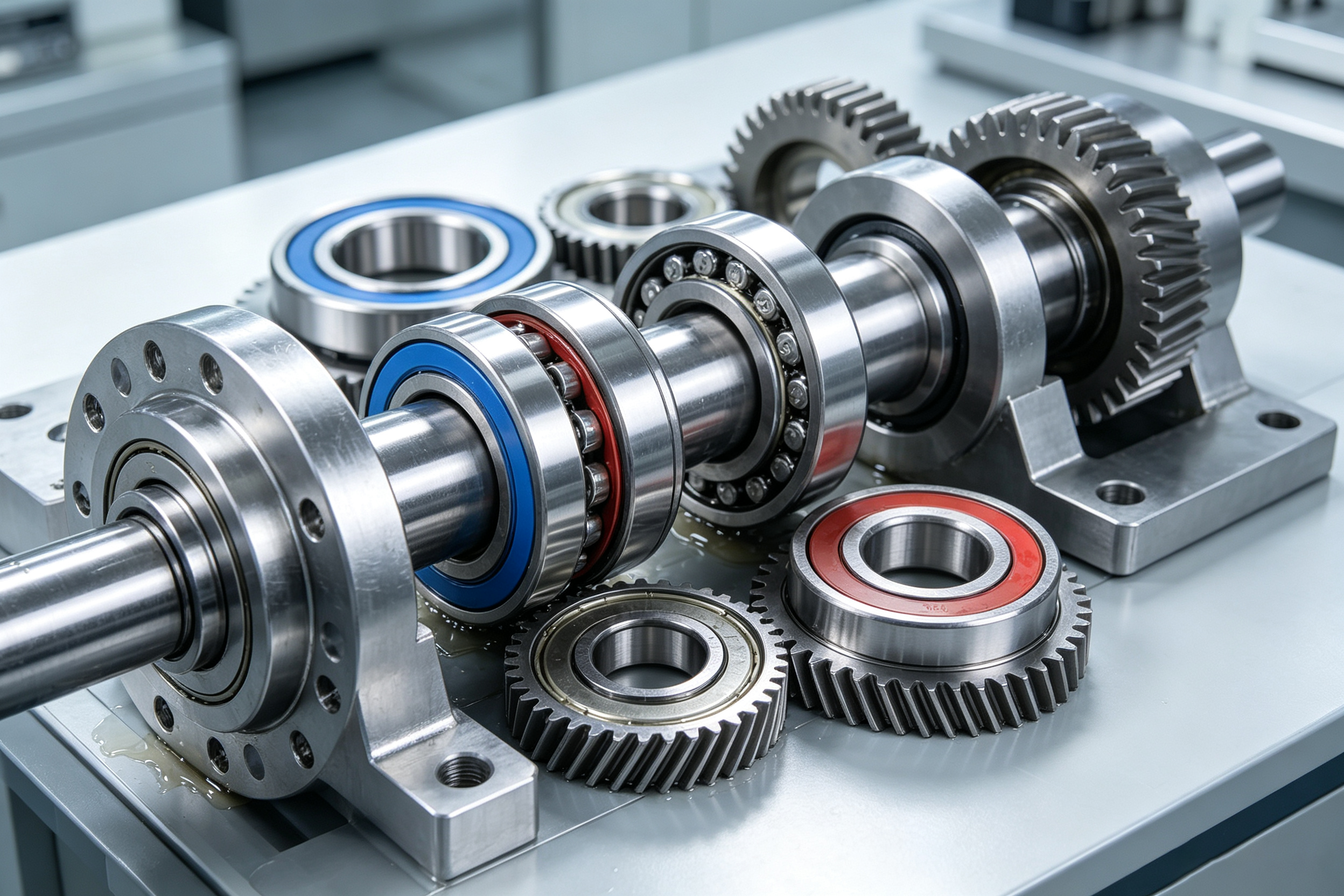
Traditional bearings are purely mechanical components. Smart bearings, however, represent a fusion of precision engineering and advanced digital technology. Embedded with miniaturized IoT sensors—such as MEMS accelerometers, temperature sensors, and acoustic emission detectors—these bearings continuously monitor their own operational health.
But hardware alone is not enough. The true intelligence lies in the AI algorithms that process the massive streams of data generated by these sensors. By analyzing vibration patterns, thermal signatures, and electrical current draws at thousands of samples per second, machine learning models can identify subtle anomalies that precede catastrophic failure. This capability allows maintenance teams to intervene weeks before a breakdown occurs, transforming unpredictable emergencies into scheduled, manageable repairs.
Decoding Failure: How AI Predicts the Unpredictable
Every bearing failure leaves a unique digital fingerprint long before it becomes a physical catastrophe. AI systems are trained to recognize these specific fault signatures, providing unprecedented lead times for maintenance planning.
The following table illustrates how AI identifies the six primary bearing failure modes, often weeks before human senses or traditional monitoring could detect the problem:
| Failure Mode | Primary Cause | AI Detection Signature | Typical Warning Window |
|---|---|---|---|
| Race Deterioration | Material fatigue and repeated stress cycles | Distinct frequency peaks (BPFO/BPFI) with increasing sideband energy | 4–12 Weeks |
| Lubrication Failure | Degraded or inadequate lubricant causing friction | Elevated high-frequency (ultrasonic) vibration and rising temperature trends | 2–8 Weeks |
| Contamination | Foreign particles causing surface wear and pitting | Broadband vibration increase and irregular acoustic emissions | 3–10 Weeks |
| Misalignment | Uneven load distribution across rolling elements | 2x/3x running speed harmonics and axial vibration increase | 6–16 Weeks |
| Thermal Damage | Excessive heat causing lubricant breakdown | Thermal runaway patterns correlated with vibration spikes | 1–4 Weeks |
| Installation Damage | Improper mounting force or handling errors | Baseline vibration anomalies immediately post-installation | Immediate to 8 Weeks |
By understanding these signatures, facility managers can configure monitoring thresholds accurately and respond appropriately to AI-generated alerts, ensuring that interventions are both timely and precise.
The Agentic AI Advantage: From Alerts to Action
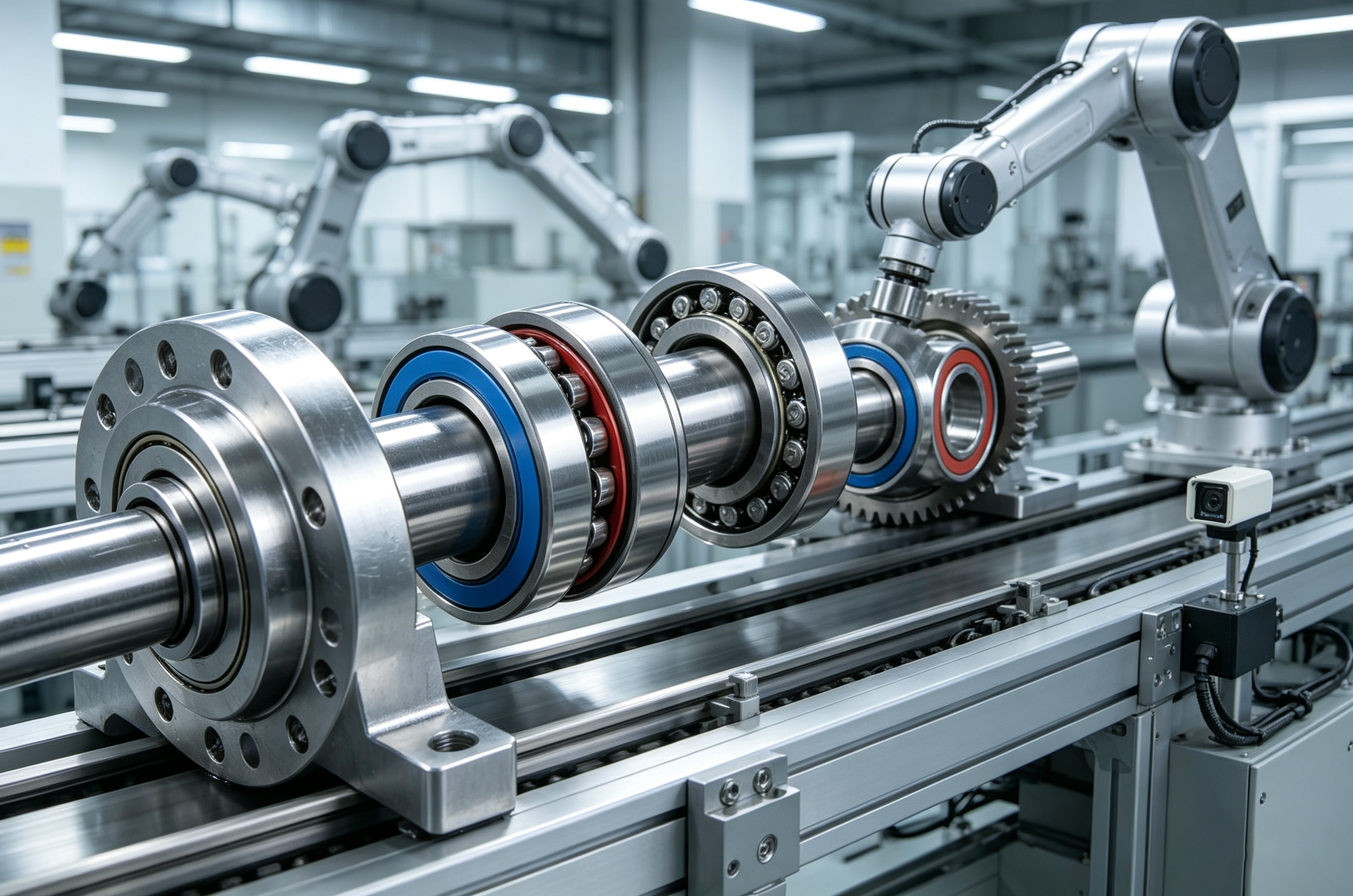
Predicting a failure is only half the battle; executing the right maintenance action is where the true value is realized. Modern predictive maintenance platforms utilize Agentic AI—autonomous systems that not only monitor equipment health but also reason, learn, and take action.
When an AI agent detects an anomaly, it doesn’t just trigger a generic alarm. It contextualizes the data, cross-referencing historical maintenance logs and current production schedules. The agent can autonomously generate a prioritized work order in the facility’s CMMS or ERP system, recommend specific spare parts, and suggest the optimal maintenance window to minimize production disruption. This seamless integration closes the loop between digital insight and physical execution, reducing mean time to repair (MTTR) and eliminating the guesswork for maintenance technicians.
The Business Case: Measurable ROI
The adoption of AI-powered smart bearings is no longer just a technological experiment; it is a proven business strategy with a clear return on investment. Facilities that transition to condition-based, AI-driven maintenance consistently report dramatic improvements in operational efficiency and cost reduction.
The table below summarizes the typical operational and financial impacts observed in facilities deploying AI-powered smart bearing solutions:
| Key Performance Indicator | Traditional Maintenance | AI-Powered Predictive Maintenance | Improvement |
|---|---|---|---|
| Unplanned Downtime | 12–15% of production time | 3–5% of production time | Up to 85% Reduction |
| Maintenance Costs | High (Emergency repairs & overtime) | Optimized (Planned interventions) | 25–30% Cost Savings |
| Bearing Lifespan | Replaced at 80% of useful life | Replaced at 95% of useful life | 20–25% Lifespan Extension |
| Fault Detection Accuracy | Relies on human inspection | Deep learning pattern recognition | 96%+ Accuracy |
Furthermore, the strategic value extends beyond direct cost savings. By preventing catastrophic failures, companies avoid secondary damage to shafts, motors, and housings. They also optimize their MRO (Maintenance, Repair, and Operations) inventory, eliminating the need to overstock expensive spare parts “just in case.”
Beyond Rotation: A New Era of Industrial Reliability
The phrase “beyond rotation” captures the essence of this technological leap. Bearings have evolved from passive mechanical components into active, intelligent systems that drive industrial resilience. They are no longer just supporting machinery; they are supporting business continuity.
As AI models continue to advance—incorporating multi-modal data fusion, digital twin simulations, and edge computing—the accuracy of predictive maintenance will only improve. We are moving toward a future of “prescriptive maintenance,” where AI not only predicts failures but also automatically adjusts machine parameters to mitigate stress and extend component life in real-time.
For manufacturing leaders, the question is no longer whether to adopt AI-powered smart bearings, but how quickly they can be deployed. In an era where operational efficiency is the primary differentiator, leveraging AI to prevent costly downtime is not just an upgrade to your maintenance program—it is a fundamental upgrade to your bottom line.
Frequently Asked Questions (FAQ)
Q: What makes a bearing “smart”?
A: Smart bearings are embedded with IoT sensors (like accelerometers and temperature probes) and AI algorithms that continuously monitor their own operational health in real time.
A: Smart bearings are embedded with IoT sensors (like accelerometers and temperature probes) and AI algorithms that continuously monitor their own operational health in real time.
Q: How far in advance can AI predict a bearing failure?
A: Depending on the fault type, AI can detect anomalies and provide warning windows ranging from immediate post-installation alerts to several weeks before a catastrophic failure.
A: Depending on the fault type, AI can detect anomalies and provide warning windows ranging from immediate post-installation alerts to several weeks before a catastrophic failure.
Q: Does AI eliminate the need for traditional maintenance?
A: No. AI shifts maintenance from a rigid time-based schedule to a condition-based approach, ensuring parts are only replaced when actual wear is detected.
A: No. AI shifts maintenance from a rigid time-based schedule to a condition-based approach, ensuring parts are only replaced when actual wear is detected.
Q: What is Agentic AI in this context?
A: Agentic AI goes beyond simple alerts by autonomously analyzing data, generating prioritized work orders, and recommending specific maintenance actions to minimize downtime.
A: Agentic AI goes beyond simple alerts by autonomously analyzing data, generating prioritized work orders, and recommending specific maintenance actions to minimize downtime.
Q: How quickly can facilities see a return on investment (ROI)?
A: Facilities typically see measurable ROI through a reduction in unplanned downtime (up to 85%) and maintenance costs (25–30%) shortly after deployment.
A: Facilities typically see measurable ROI through a reduction in unplanned downtime (up to 85%) and maintenance costs (25–30%) shortly after deployment.
Q: Can smart bearings detect lubrication issues?
A: Yes. AI can identify lubrication degradation by detecting elevated high-frequency (ultrasonic) vibrations and rising temperature trends before physical damage occurs.
A: Yes. AI can identify lubrication degradation by detecting elevated high-frequency (ultrasonic) vibrations and rising temperature trends before physical damage occurs.
Q: Is it difficult to integrate smart bearings into existing machinery?
A: No. Smart bearings are designed to be retrofitted into existing equipment, seamlessly integrating with current CMMS or ERP systems to close the maintenance loop.
A: No. Smart bearings are designed to be retrofitted into existing equipment, seamlessly integrating with current CMMS or ERP systems to close the maintenance loop.
Post time: Jul-27-2026