


Bearings are among the most essential yet often overlooked components in modern machinery. From electric motors and automotive transmissions to industrial conveyors and wind turbines, bearings enable smooth rotation, reduce friction, and support loads that keep machines running efficiently. Among the many types of bearings available, ball bearings and roller bearings are the two most widely used. Understanding the differences between them is critical for engineers, procurement teams, and maintenance professionals who need to select the right bearing for the right application.
This guide explains the key differences between ball bearings and roller bearings, compares their performance characteristics, and provides practical guidance on how to choose the right type based on load, speed, alignment, and operating environment.
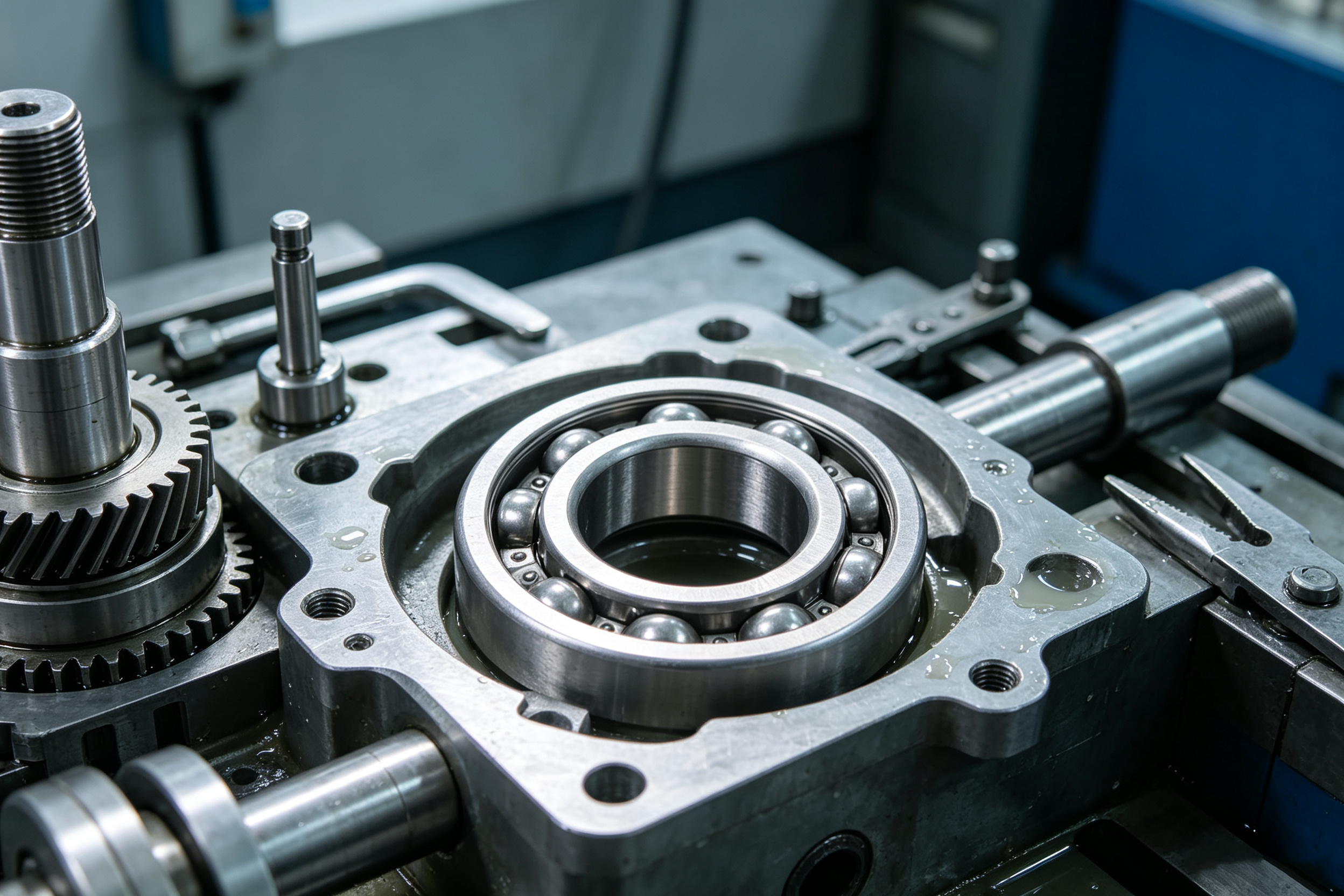
What Is a Ball Bearing?
A ball bearing is a type of rolling-element bearing that uses spherical balls to maintain separation between the inner and outer rings. The balls roll between two raceways, allowing the bearing to support both radial and axial loads while minimizing rotational friction.
Ball bearings are commonly used in applications that require high-speed operation, low friction, and moderate load capacity. Their compact design and ability to handle combined loads make them suitable for a wide range of industrial, automotive, and consumer applications.
Typical applications include:
- Electric motors
- Machine tool spindles
- Small gearboxes
- Conveyor rollers
- Agricultural equipment
- Household appliances
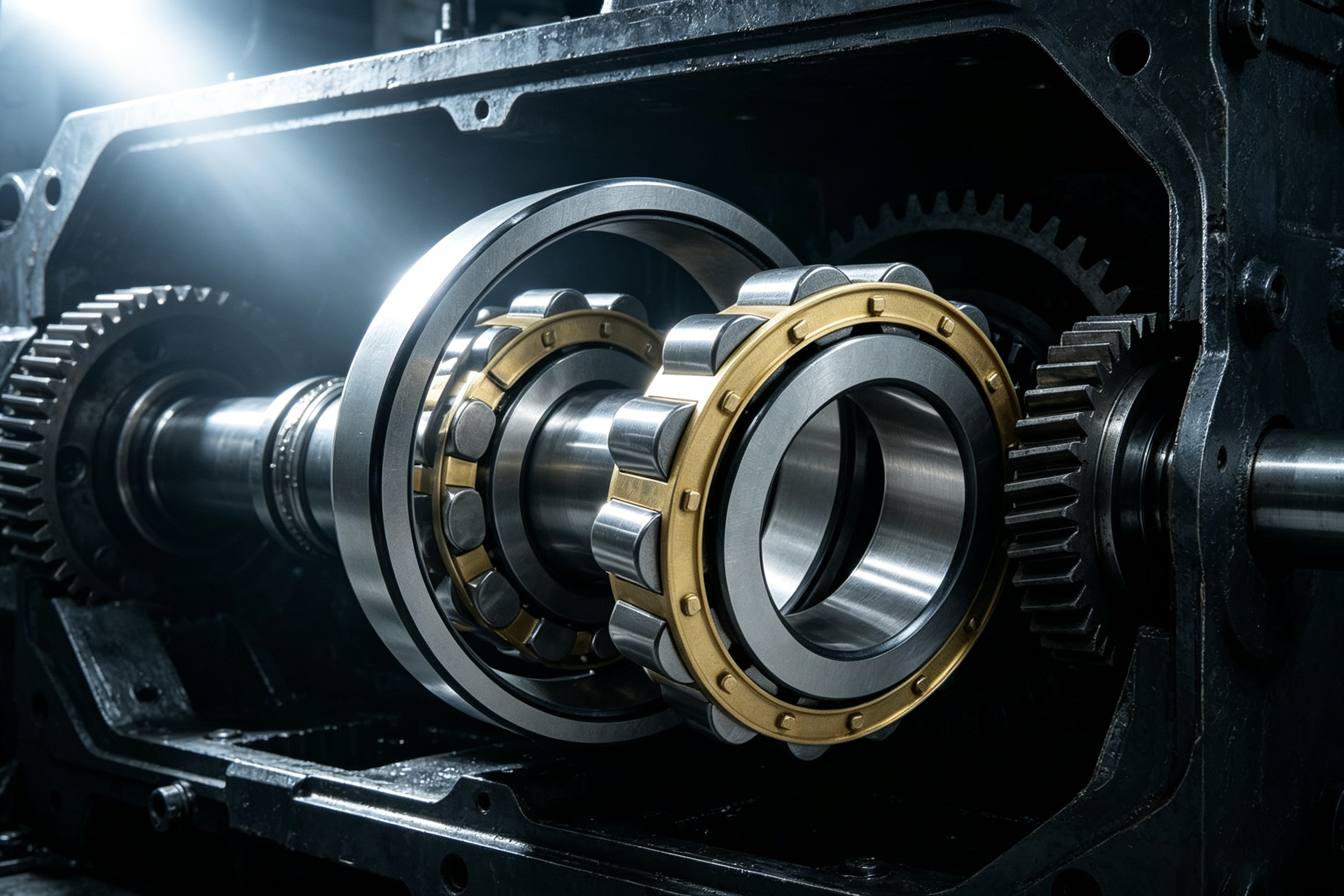
What Is a Roller Bearing?
A roller bearing uses cylindrical, tapered, spherical, or needle-shaped rollers instead of balls. Because the rolling elements have a larger contact area with the raceways, roller bearings can support heavier loads than ball bearings of a similar size.
Roller bearings are especially suitable for applications where radial loads are high, shock loads are present, or space constraints require a compact but high-capacity solution.
Common types of roller bearings include:
- Cylindrical roller bearings
- Tapered roller bearings
- Spherical roller bearings
- Needle roller bearings
Typical applications include:
- Heavy-duty gearboxes
- Automotive wheel hubs
- Steel mill equipment
- Mining machinery
- Wind turbine main shafts
- Paper and pulp processing equipment
Ball Bearings vs. Roller Bearings: Key Differences
The following table summarizes the main differences between ball bearings and roller bearings.
| Feature | Ball Bearings | Roller Bearings |
|---|---|---|
| Rolling element | Spherical balls | Cylindrical, tapered, spherical, or needle rollers |
| Contact type | Point contact | Line contact |
| Load capacity | Moderate radial and axial load capacity | Higher radial load capacity; axial capacity depends on type |
| Speed capability | Generally higher | Generally lower, depending on design |
| Friction | Lower friction at high speeds | Higher friction due to larger contact area |
| Typical applications | Motors, spindles, light-to-medium machinery | Heavy machinery, gearboxes, wheel hubs, industrial drives |
Load Capacity and Contact Mechanics
One of the most important differences between ball bearings and roller bearings is how they distribute load.
Ball bearings have point contact between the balls and the raceways. This design reduces friction and allows the bearing to operate efficiently at high speeds. However, because the contact area is small, ball bearings are generally better suited for moderate loads.
Roller bearings have line contact between the rollers and the raceways. This larger contact area allows them to distribute load more effectively, making them suitable for heavier radial loads. However, the increased contact area also generates more friction, which can limit maximum operating speed in some designs.
For applications with heavy radial loads and moderate speeds, roller bearings are often the better choice. For applications requiring high rotational speed and low friction, ball bearings are frequently preferred.
Speed, Friction, and Heat Generation
Speed capability is another important factor in bearing selection.
Ball bearings typically perform well at higher speeds because their point contact design produces less friction and heat. This makes them suitable for applications such as electric motors, high-speed spindles, and precision machinery.
Roller bearings can also operate at high speeds, but their performance depends on the roller type, cage design, lubrication, and internal clearance. Cylindrical roller bearings and some tapered roller bearings can handle relatively high speeds, while spherical roller bearings and heavy-duty needle roller bearings are often used in lower-speed, high-load applications.
Excessive speed can lead to increased heat, lubrication breakdown, and premature bearing failure. Therefore, speed ratings should always be evaluated together with load, lubrication, and operating temperature.
Axial Load Handling
Not all bearings handle axial loads in the same way.
Standard deep-groove ball bearings can support moderate axial loads in both directions, making them versatile for combined radial and axial loading. Angular contact ball bearings are specifically designed for higher axial loads and are often used in pairs or sets to handle axial forces in one or both directions.
Among roller bearings, tapered roller bearings are especially effective at handling combined radial and axial loads. Cylindrical roller bearings, in contrast, are primarily designed for radial loads and usually have limited axial load capacity unless they include flanges or special design features.
The following table shows how common bearing types handle different load directions.
| Bearing Type | Radial Load Capacity | Axial Load Capacity |
|---|---|---|
| Deep-groove ball bearing | Moderate | Moderate |
| Angular contact ball bearing | Moderate to high | High, depending on contact angle |
| Cylindrical roller bearing | High | Limited, unless flanged |
| Tapered roller bearing | High | High |
| Spherical roller bearing | Very high | Moderate |
| Needle roller bearing | High in compact space | Limited |
Alignment, Misalignment, and Installation
Misalignment can occur when the shaft and housing are not perfectly aligned, or when deflection happens under load. Some bearing types are more tolerant of misalignment than others.
Spherical roller bearings and self-aligning ball bearings are designed to accommodate angular misalignment. This makes them useful in applications where shaft deflection, mounting errors, or structural movement may occur.
Tapered roller bearings and cylindrical roller bearings are generally less tolerant of misalignment. If they are installed incorrectly or used in misaligned systems, they may experience uneven load distribution, increased friction, and reduced service life.
Proper installation, alignment, and housing tolerances are essential for reliable bearing performance. Even the highest-quality bearing can fail prematurely if it is improperly mounted, poorly lubricated, or subjected to unexpected misalignment.
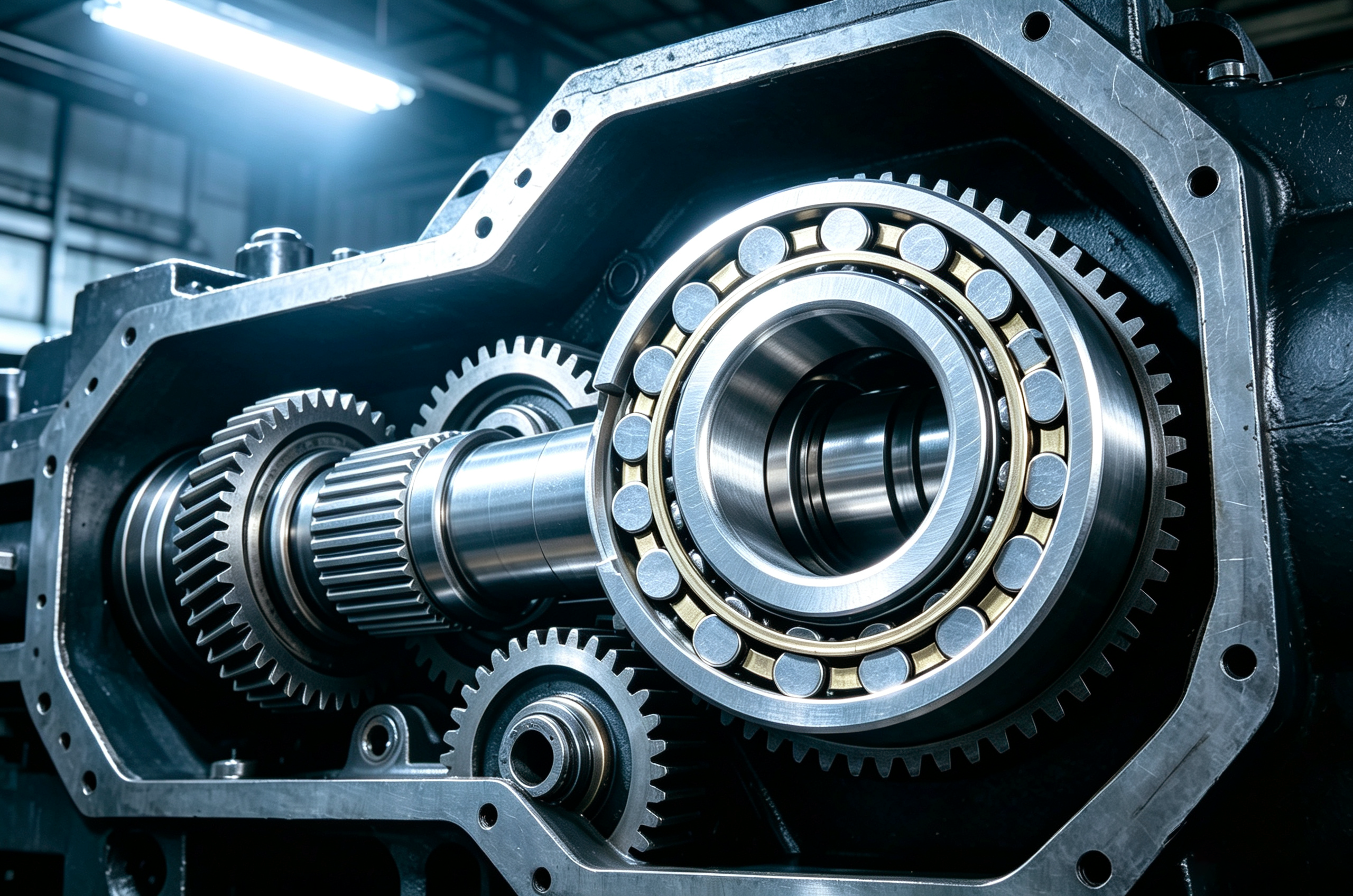
Lubrication and Maintenance
Lubrication plays a major role in bearing life. It reduces friction, prevents metal-to-metal contact, helps dissipate heat, and protects against corrosion.
Ball bearings are often used with grease lubrication in sealed or shielded designs, especially in applications where maintenance access is limited. Roller bearings may require grease or oil lubrication depending on speed, load, temperature, and operating conditions.
Key maintenance considerations include:
- Selecting the correct lubricant type and viscosity
- Maintaining proper lubrication intervals
- Avoiding over-lubrication, which can cause overheating
- Monitoring temperature, vibration, and noise
- Inspecting seals and shields for contamination
- Replacing bearings before catastrophic failure occurs
Predictive maintenance techniques, such as vibration analysis and thermal monitoring, can help identify bearing problems early and reduce unplanned downtime.
How to Choose Between Ball Bearings and Roller Bearings
Choosing between ball bearings and roller bearings depends on the specific requirements of the application. The following table provides a practical decision guide.
| Application Requirement | Recommended Bearing Type | Reason |
|---|---|---|
| High speed, low friction | Ball bearing | Lower friction and better high-speed performance |
| Heavy radial load | Roller bearing | Line contact supports higher radial loads |
| Combined radial and axial load | Tapered roller bearing or angular contact ball bearing | Designed for combined loading |
| Compact design with high radial load | Needle roller bearing | High load capacity in a small cross-section |
| Misalignment or shaft deflection | Spherical roller bearing or self-aligning ball bearing | Better tolerance for angular misalignment |
| Moderate load, general-purpose use | Deep-groove ball bearing | Versatile, widely available, cost-effective |
In practice, bearing selection should also consider shaft size, housing design, operating temperature, contamination risk, sealing requirements, expected service life, and total cost of ownership.
Common Selection Mistakes to Avoid
Selecting the wrong bearing type can lead to premature failure, increased downtime, and higher maintenance costs. Some common mistakes include:
- Choosing a bearing based only on size, without considering load and speed
- Ignoring axial loads in applications where combined loading exists
- Overlooking misalignment in long shafts or flexible structures
- Using insufficient or incorrect lubrication
- Assuming sealed bearings require no maintenance under all conditions
- Replacing bearings without investigating the root cause of failure
A bearing failure is often a symptom of a larger system issue. Proper analysis of load, speed, alignment, lubrication, and operating environment is essential for reliable performance.
Final Thoughts
Ball bearings and roller bearings each have distinct advantages. Ball bearings are generally preferred for high-speed, low-friction applications with moderate loads, while roller bearings are better suited for heavy radial loads, shock loads, and demanding industrial environments.
The best bearing choice depends on the complete operating context, not just a single specification. By understanding load direction, speed requirements, alignment conditions, lubrication needs, and maintenance capabilities, engineers and maintenance teams can make more informed decisions that improve machine reliability and reduce total operating costs.
For specific applications, always consult the bearing manufacturer’s technical data, load ratings, speed limits, and installation guidelines. Proper selection, installation, and maintenance are just as important as choosing the right bearing type.
Frequently Asked Questions (FAQ)
Q1: What is the main difference between ball bearings and roller bearings?
Ball bearings use spherical balls with point contact, making them ideal for high-speed, low-friction applications. Roller bearings use cylindrical, tapered, or needle-shaped rollers with line contact, allowing them to handle heavier radial loads.
Ball bearings use spherical balls with point contact, making them ideal for high-speed, low-friction applications. Roller bearings use cylindrical, tapered, or needle-shaped rollers with line contact, allowing them to handle heavier radial loads.
Q2: Which bearing type lasts longer?
It depends on the application. Under heavy loads, roller bearings typically last longer due to their larger contact area. Under high-speed, light-load conditions, ball bearings often outperform roller bearings.
It depends on the application. Under heavy loads, roller bearings typically last longer due to their larger contact area. Under high-speed, light-load conditions, ball bearings often outperform roller bearings.
Q3: Can ball bearings handle axial loads?
Yes. Standard deep-groove ball bearings can handle moderate axial loads in both directions. Angular contact ball bearings are designed for higher axial loads.
Yes. Standard deep-groove ball bearings can handle moderate axial loads in both directions. Angular contact ball bearings are designed for higher axial loads.
Q4: Which bearing is better for high-speed applications?
Ball bearings are generally better for high-speed applications because their point contact design produces less friction and heat compared to roller bearings.
Ball bearings are generally better for high-speed applications because their point contact design produces less friction and heat compared to roller bearings.
Q5: What is a tapered roller bearing used for?
Tapered roller bearings are designed to handle combined radial and axial loads simultaneously. They are commonly used in automotive wheel hubs, gearboxes, and heavy industrial machinery.
Tapered roller bearings are designed to handle combined radial and axial loads simultaneously. They are commonly used in automotive wheel hubs, gearboxes, and heavy industrial machinery.
Post time: Aug-21-2026