


As the global wind energy sector accelerates toward ambitious carbon neutrality targets, the engineering demands placed on wind turbine components have never been higher. The industry is currently navigating a critical transition: moving from a standard 20-year design life to a mandatory 25-year lifespan for offshore wind farms, with some operators now eyeing 30 years. For the main shaft bearing—the “mechanical heart” of the turbine—this five-year extension is not merely a numerical adjustment; it represents a fundamental materials science challenge.
At DEMY, we recognize that traditional bearing steels are reaching their physical limits under the extreme dynamic loads and corrosive environments of modern multi-megawatt turbines. This article explores how advanced material science upgrades are redefining reliability, mitigating premature failures like White Structure Flaking, and securing the economic viability of the next generation of wind energy.
The Escalating Burden on Main Shaft Bearings
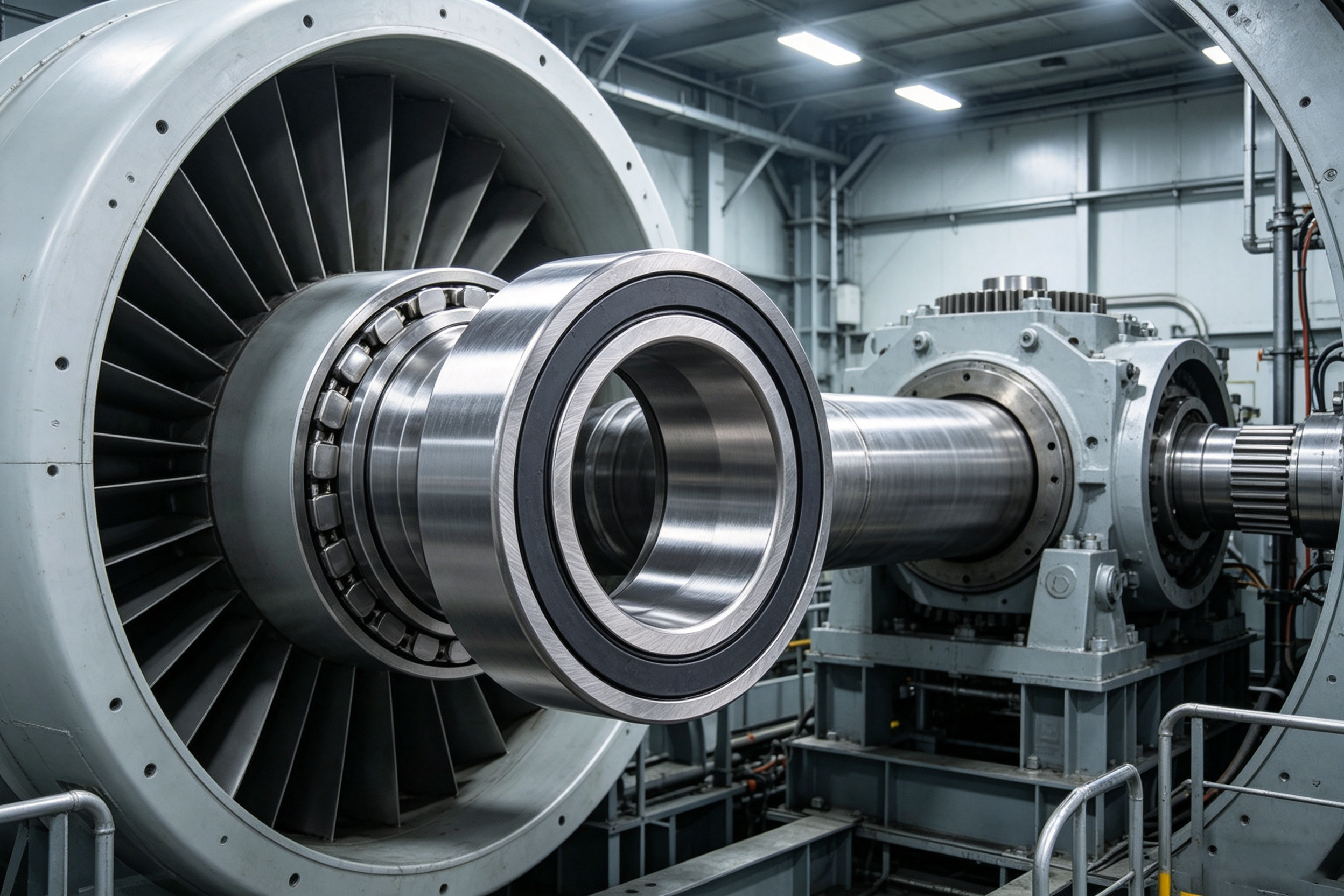
The main shaft bearing supports the rotor and transfers the immense energy captured by the blades to the drivetrain. As turbines scale up—now regularly exceeding 10 MW offshore—the physical stresses on these bearings increase non-linearly. A 25-year lifespan requires the bearing to withstand approximately 175,000 to 220,000 operational hours of variable loading, salt spray exposure, and gravitational forces.
Historically, field data has shown that main bearing failure rates can reach 10% or higher as turbines approach just six years of service, often due to lubrication breakdown or material fatigue. Extending this to 25 years without catastrophic failure requires a shift from “standard steel” to “engineered survival.”
| Challenge Factor | Traditional Bearing Limitation | 25-Year Lifespan Requirement |
|---|---|---|
| Dynamic Loads | Standard steel fatigues under high axial/radial loads in >8MW turbines. | High-purity steel with optimized microstructure to handle 30%+ load increases. |
| Lubrication | Grease degradation leads to metal-to-metal contact and wear. | Surface engineering (coatings) to prevent wear even during boundary lubrication. |
| Environment | Corrosion and hydrogen ingress cause internal cracking. | Corrosion-resistant treatments and hydrogen-resistant material chemistries. |
Combating White Structure Flaking (WSF)
One of the most insidious threats to wind turbine longevity is White Structure Flaking (WSF), also known as White Etching Cracks (WEC). This failure mode occurs well before the expected fatigue life, often within the first few years of operation.
Research has identified that WSF is primarily driven by hydrogen embrittlement. Hydrogen atoms penetrate the steel raceway, often facilitated by electrical currents (stray currents), friction, or lubricant degradation. Once inside, the hydrogen alters the martensitic microstructure into brittle white ferrite, leading to subsurface cracking and eventual spalling.
To meet the 25-year challenge, material scientists have developed proprietary “Super-Tough” (STF) steels. These materials utilize a specialized chemical composition and heat treatment process that fundamentally alters how the steel reacts to hydrogen. By creating a microstructure that resists hydrogen-induced cracking, STF bearings have demonstrated a doubling of service life compared to conventional bearing steels, effectively neutralizing one of the primary causes of early-life failure.
Surface Engineering: The First Line of Defense
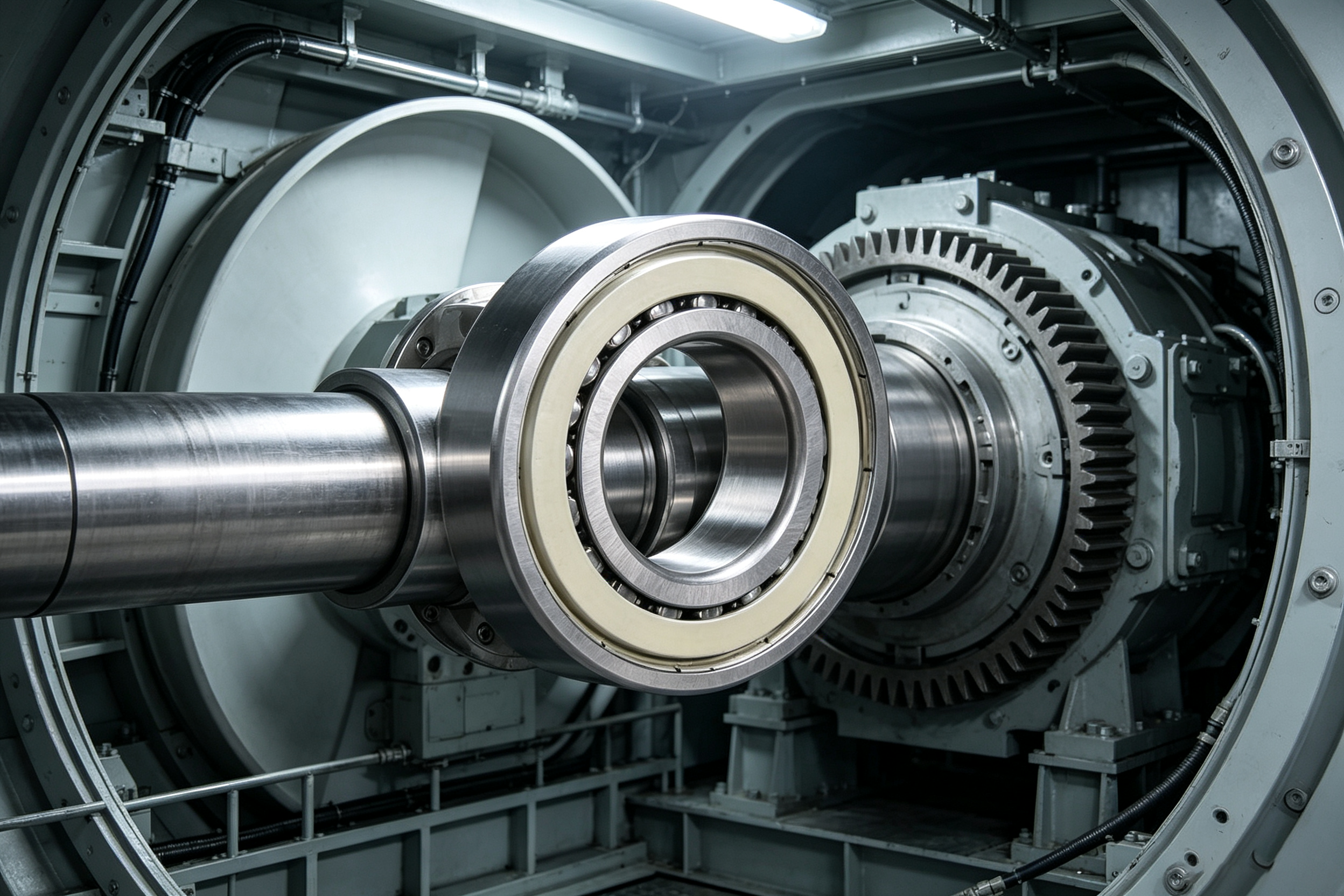
Even with superior base materials, the surface of the bearing is where the battle for longevity is fought. In low-speed, high-load conditions, the oil film between the roller and the raceway can become dangerously thin, leading to adhesive wear.
Modern upgrades now integrate Diamond-Like Carbon (DLC) coatings directly onto the rolling elements and raceways. DLC coatings offer extreme hardness and a low coefficient of friction, acting as a solid lubricant when the oil film fails.
| Feature | Standard Spherical Roller Bearing | Upgraded Bearing with DLC & STF |
|---|---|---|
| Raceway Wear | Baseline wear rate | >90% reduction in raceway wear |
| Hydrogen Resistance | Susceptible to WEC/WSF | High resistance to hydrogen embrittlement |
| Friction Coefficient | Standard steel-on-steel | Reduced friction during boundary lubrication |
| Maintenance Interval | Frequent inspection required | Extended intervals, predictive maintenance friendly |
Recent field validations indicate that combining STF materials with DLC coatings and high-capacity cages can reduce raceway wear to less than one-tenth of standard products. This triad of technologies is currently the gold standard for ensuring a 25-year operational window.
The Role of Smart Materials and Condition Monitoring
Material science does not exist in a vacuum; it must integrate with digital intelligence. The 25-year lifespan is not achieved by “install and forget,” but by “install and monitor.”
New bearing designs are increasingly incorporating sensor-ready geometries and smart materials that respond to environmental stimuli. For instance, self-lubricating composite cages are being tested to release lubricants during high-friction events, providing a passive safety net against lubrication starvation.
Furthermore, the integration of Condition Monitoring Systems (CMS) allows operators to detect the acoustic signatures of micro-cracks long before they become catastrophic. By correlating CMS data with material performance models, operators can predict remaining useful life with greater accuracy, shifting from reactive repairs to proactive asset management.
Sustainability and Lifecycle Economics
The push for 25-year bearings is also a sustainability imperative. Wind turbine maintenance accounts for roughly 25% of total lifecycle costs. A premature bearing replacement offshore can cost upwards of $300,000 per incident, not including lost revenue.
By extending the service life, we reduce the frequency of heavy-lift vessel charters and the carbon footprint associated with manufacturing replacement parts. Moreover, the industry is moving toward circular economy principles, where end-of-life bearings are recycled, and high-purity steel is recovered. The use of eco-friendly, biodegradable greases in conjunction with these advanced materials further minimizes the environmental risk of potential leaks.
Conclusion: Engineering for the Long Haul
The 25-year lifespan challenge is a testament to the maturity of the wind energy industry. It demands a holistic approach where metallurgy, surface engineering, and digital monitoring converge.
At DEMY, we are committed to pushing the boundaries of what is possible. Our latest portfolio of main shaft bearings, featuring hydrogen-resistant steels and wear-reducing coatings, represents our answer to this challenge. We are not just building bearings; we are engineering the foundation of a reliable, sustainable energy future.
As we look toward 2030 and beyond, the focus will remain on total cost of ownership and system reliability. The materials science upgrades we deploy today will determine whether the wind turbines of tomorrow stand as monuments to engineering excellence or cautionary tales of premature obsolescence. The 25-year goal is within reach, but only if we continue to innovate at the atomic level.
FAQ: 25-Year Lifespan Challenge for Wind Main Bearings
Q1: Why is the industry pushing for a 25-year lifespan for wind turbine main bearings?
A: Extending the design life from 20 to 25 years significantly reduces the Levelized Cost of Energy (LCOE) and minimizes costly, disruptive offshore maintenance operations over the turbine’s lifecycle.
A: Extending the design life from 20 to 25 years significantly reduces the Levelized Cost of Energy (LCOE) and minimizes costly, disruptive offshore maintenance operations over the turbine’s lifecycle.
Q2: What is the biggest material threat to achieving this 25-year lifespan?
A: White Structure Flaking (WSF), a premature failure caused by hydrogen embrittlement that alters the steel’s microstructure and leads to subsurface cracking long before expected fatigue life.
A: White Structure Flaking (WSF), a premature failure caused by hydrogen embrittlement that alters the steel’s microstructure and leads to subsurface cracking long before expected fatigue life.
Q3: How do “Super-Tough” (STF) steels solve this problem?
A: STF steels use specialized chemical compositions and heat treatments to create a microstructure that is highly resistant to hydrogen-induced cracking, effectively doubling the service life compared to conventional steels.
A: STF steels use specialized chemical compositions and heat treatments to create a microstructure that is highly resistant to hydrogen-induced cracking, effectively doubling the service life compared to conventional steels.
Q4: What role do Diamond-Like Carbon (DLC) coatings play?
A: DLC coatings provide extreme hardness and a low friction coefficient, acting as a solid lubricant to prevent adhesive wear during low-speed, high-load conditions when the oil film is thin.
A: DLC coatings provide extreme hardness and a low friction coefficient, acting as a solid lubricant to prevent adhesive wear during low-speed, high-load conditions when the oil film is thin.
Q5: Can material upgrades alone guarantee a 25-year lifespan?
A: No. Material science must be paired with advanced Condition Monitoring Systems (CMS) and predictive maintenance to detect micro-cracks early and manage assets proactively.
A: No. Material science must be paired with advanced Condition Monitoring Systems (CMS) and predictive maintenance to detect micro-cracks early and manage assets proactively.
Post time: Aug-03-2026