


The relentless pursuit of knowledge in our planet’s deepest oceans hinges on the reliability of our technology. For Remotely Operated Vehicles (ROVs) and Autonomous Underwater Vehicles (AUVs), the difference between a successful mission and a catastrophic failure often comes down to a single, critical component: the bearing. In the extreme environment of the deep sea, standard components fail. This article explores the specialized engineering behind corrosion-resistant bearings designed to withstand the immense pressure, corrosive saltwater, and abrasive conditions of deep-sea exploration.
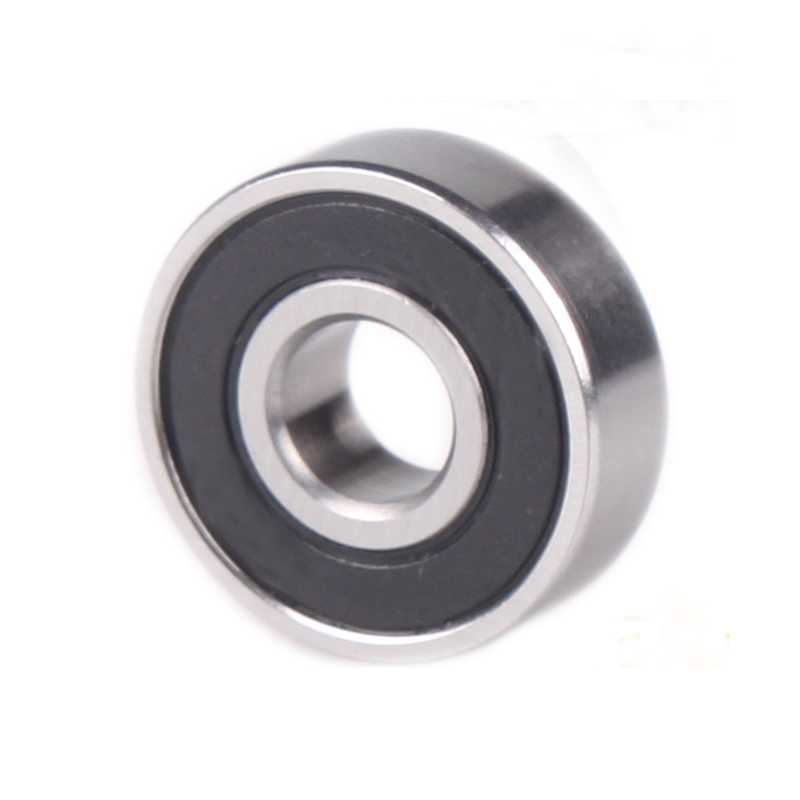
The Abyssal Challenge: Why Standard Bearings Fail
The deep ocean is one of the most hostile environments on Earth. A bearing deployed at a depth of 4,000 meters faces challenges that would instantly destroy standard industrial components. The failure of a bearing in an ROV thruster or manipulator arm can mean the loss of million-dollar equipment and invaluable scientific data.
The primary adversaries for underwater bearings are:
- Chloride Attack: Seawater is rich in chloride ions, which aggressively penetrate the passive oxide layers of standard stainless steels (like 304 or even standard 316), leading to rapid pitting and crevice corrosion.
- Hydrostatic Pressure: At full ocean depth (approx. 11,000 meters), pressure exceeds 100 MPa (1,000 bar). This immense force can compromise seals, forcing water into the bearing raceway.
- Abrasive Particulates: Sand, silt, and marine microorganisms can infiltrate bearing assemblies, acting as grinding paste that accelerates wear.
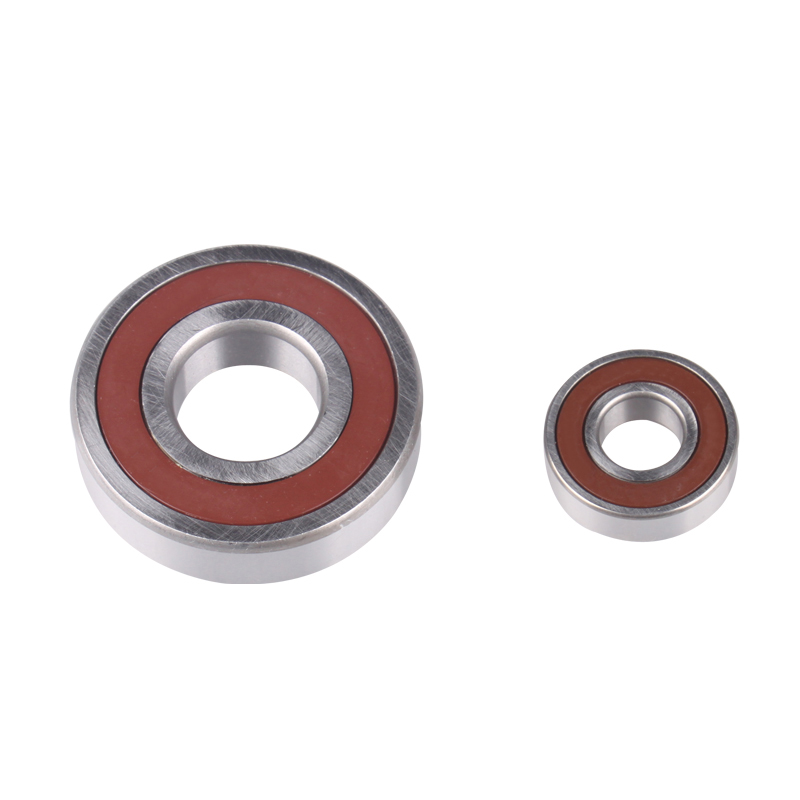
Material Science: The Shift to Inert and Hybrid Solutions
To combat these forces, the industry is moving away from traditional martensitic stainless steels toward advanced ceramics and super-alloys.
1. Silicon Nitride (Si3N4) Ceramics
For high-speed applications such as thruster motors, Silicon Nitride ceramic bearings are the gold standard. Unlike metal, ceramics are chemically inert; they do not react with saltwater, meaning they are immune to chloride attack. Furthermore, Si3N4 is significantly lighter than steel, reducing centrifugal loads at high RPMs, and possesses a lower coefficient of friction. This allows for “dry run” capabilities for short durations, preventing immediate seizure if seal integrity is momentarily lost.
For high-speed applications such as thruster motors, Silicon Nitride ceramic bearings are the gold standard. Unlike metal, ceramics are chemically inert; they do not react with saltwater, meaning they are immune to chloride attack. Furthermore, Si3N4 is significantly lighter than steel, reducing centrifugal loads at high RPMs, and possesses a lower coefficient of friction. This allows for “dry run” capabilities for short durations, preventing immediate seizure if seal integrity is momentarily lost.
2. Super-Duplex and High-Nickel Alloys
For heavy-load applications where ceramic brittleness is a concern, materials like 2205 Super-Duplex stainless steel or Titanium-Hastelloy composites are essential. These alloys contain high percentages of Chromium, Molybdenum, and Nitrogen, providing a Pitting Resistance Equivalent Number (PREN) far superior to standard grades. Recent innovations, such as NMT’s深海 (Deep Sea) specific alloys, utilize dual-phase structures to achieve yield strengths exceeding 900 MPa while maintaining corrosion resistance comparable to Titanium.
For heavy-load applications where ceramic brittleness is a concern, materials like 2205 Super-Duplex stainless steel or Titanium-Hastelloy composites are essential. These alloys contain high percentages of Chromium, Molybdenum, and Nitrogen, providing a Pitting Resistance Equivalent Number (PREN) far superior to standard grades. Recent innovations, such as NMT’s深海 (Deep Sea) specific alloys, utilize dual-phase structures to achieve yield strengths exceeding 900 MPa while maintaining corrosion resistance comparable to Titanium.
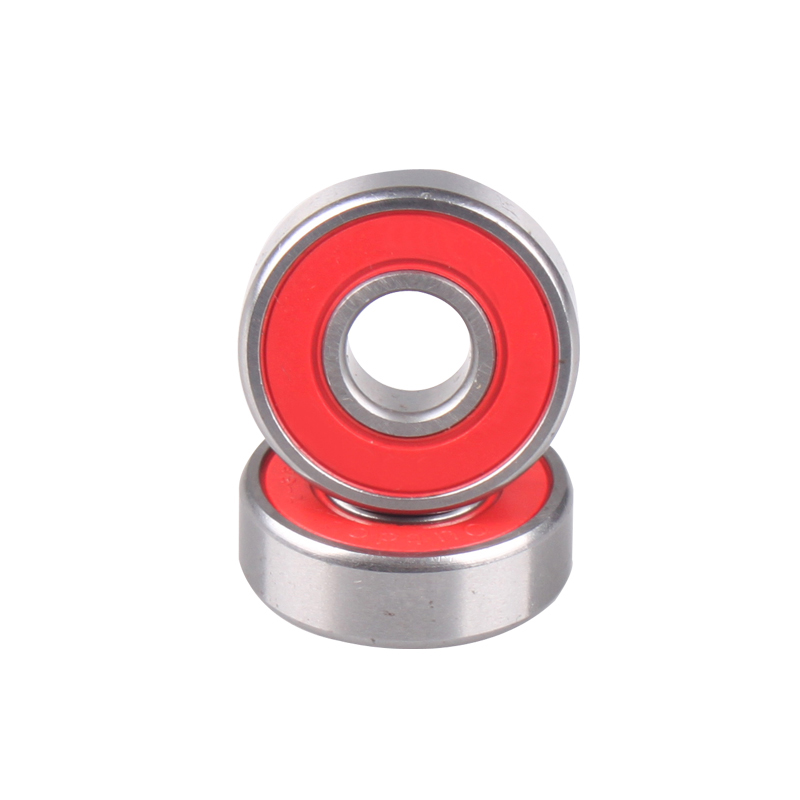
The Seal: The First Line of Defense
Even the most corrosion-resistant material will eventually fail if seawater enters the internal raceway. Therefore, the sealing mechanism is just as critical as the material itself. Modern deep-sea bearings utilize multi-stage sealing systems.
A typical high-performance seal configuration includes:
- Primary Barrier: A metal bellows (often Monel or Hastelloy) that compensates for pressure changes, balancing the internal bearing pressure with the external seawater pressure.
- Secondary Barrier: High-performance elastomers like Full-Fluoroether (FFKM) or reinforced PTFE V-rings. These materials resist chemical swelling and degradation in hydrocarbon-rich or saltwater environments.
- Magnetic Fluid Seals: In some precision applications, ferrofluids are used to create a liquid “O-ring” that has zero wear and maintains a perfect seal against high pressure.
Comparative Analysis: Bearing Materials for Subsea Use
To assist engineers in selecting the appropriate component for their specific depth and load requirements, we have compiled a comparison of common bearing materials used in marine engineering.
| Material Category | Key Characteristics | Max Operating Depth | Best Application |
|---|---|---|---|
| 316L Stainless Steel | Good general corrosion resistance; cost-effective. | < 300 meters | Coastal sensors, low-depth ROVs |
| Silicon Nitride (Si3N4) | Chemically inert, non-magnetic, low friction, lightweight. | > 6,000 meters | High-speed thrusters, propulsion motors |
| Super-Duplex (2205) | High yield strength, excellent pitting resistance. | 3,000 – 5,000 meters | Heavy-load manipulator arms, winches |
| PEEK / Polymers | Immune to corrosion, self-lubricating, low load capacity. | Variable (Pressure limited) | Low-load guides, isolation barriers |
Lubrication in a Water-Based World
Lubrication presents a paradox in underwater bearings. If a bearing is pressure-compensated (oil-filled), the internal lubricant must be compatible with seawater in case of seal failure. If they mix, they should ideally form an emulsion that still offers some lubricity, rather than washing away completely.
However, for “dry” bearings (sealed for life), the lubricant must be a high-viscosity, waterproof grease, often based on Perfluoropolyether (PFPE). These synthetic lubricants are chemically inert and have high dropping points (often >300°C), ensuring they do not degrade or separate under the thermal and pressure stresses of the deep ocean.
Conclusion
As we push the boundaries of deep-sea exploration, the demand for specialized bearings will only grow. Whether utilizing the chemical inertness of Silicon Nitride for high-speed propulsion or the brute strength of Super-Duplex alloys for heavy manipulation, the choice of bearing is a strategic decision. By understanding the material science and sealing technologies available, engineers can ensure their underwater drones survive the crushing depths to bring back the secrets of the abyss.
FAQ: Bearings for Deep Sea Exploration
Q: Why do standard bearings fail in underwater drones?
A: Standard bearings typically fail due to chloride attack (corrosion from saltwater), seal failure under immense hydrostatic pressure, and abrasion from sand or silt. Standard stainless steel lacks the chemical resistance required for deep-sea environments.
A: Standard bearings typically fail due to chloride attack (corrosion from saltwater), seal failure under immense hydrostatic pressure, and abrasion from sand or silt. Standard stainless steel lacks the chemical resistance required for deep-sea environments.
Q: What is the best bearing material for high-speed underwater thrusters?
A: Silicon Nitride (Si3N4) ceramic is the gold standard for high-speed applications. It is chemically inert (immune to saltwater corrosion), lighter than steel, and generates less friction, which is critical for thruster motors.
A: Silicon Nitride (Si3N4) ceramic is the gold standard for high-speed applications. It is chemically inert (immune to saltwater corrosion), lighter than steel, and generates less friction, which is critical for thruster motors.
Q: Can bearings operate if the seals break?
A: Specialized “dry” bearings using Silicon Nitride or PEEK polymers can survive short periods of “dry running” without immediate seizure if a seal fails. However, for long-term reliability, multi-stage sealing systems (like metal bellows or magnetic fluid seals) are essential.
A: Specialized “dry” bearings using Silicon Nitride or PEEK polymers can survive short periods of “dry running” without immediate seizure if a seal fails. However, for long-term reliability, multi-stage sealing systems (like metal bellows or magnetic fluid seals) are essential.
Q: What is the difference between 316 Stainless Steel and Super-Duplex alloys?
A: While 316 Stainless Steel is suitable for shallow water, Super-Duplex (e.g., 2205) alloys contain higher levels of chromium and molybdenum. This gives them a much higher Pitting Resistance Equivalent Number (PREN), making them suitable for deep-sea, high-pressure environments where 316 would corrode.
A: While 316 Stainless Steel is suitable for shallow water, Super-Duplex (e.g., 2205) alloys contain higher levels of chromium and molybdenum. This gives them a much higher Pitting Resistance Equivalent Number (PREN), making them suitable for deep-sea, high-pressure environments where 316 would corrode.
Q: How is lubrication handled in deep-sea bearings?
A: Deep-sea bearings typically use waterproof greases (like PFPE) that resist washing out. For pressure-compensated systems, the lubricant is often designed to be compatible with seawater, forming a lubricating emulsion rather than separating if a leak occurs.
A: Deep-sea bearings typically use waterproof greases (like PFPE) that resist washing out. For pressure-compensated systems, the lubricant is often designed to be compatible with seawater, forming a lubricating emulsion rather than separating if a leak occurs.
Post time: May-08-2026