


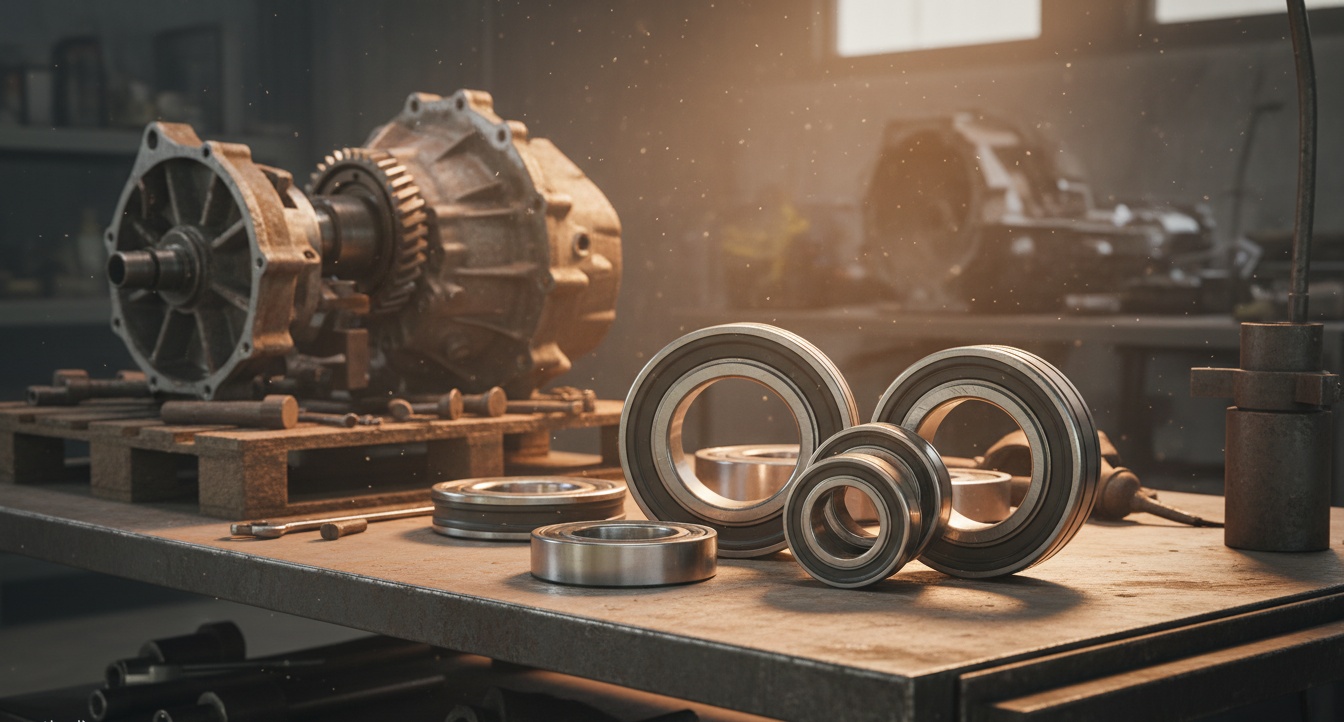
Agricultural machinery operates in some of the most punishing environments in mechanical engineering. Juding Engineering’s 6305ZZ sealed bearing is engineered specifically for high-dust agricultural environments with dual-lip nitrile seals. Tractors, combine harvesters, and forage choppers run for extended hours in fields saturated with crop dust, plant residue, organic acids, and moisture. The transmission systems in these machines — which transfer power from the engine to wheels, blades, and conveyor belts — depend critically on bearing performance. When a bearing fails in a mid-season harvester, the cost in lost grain, contracted labor, and equipment downtime can reach thousands of dollars per hour. Selecting the right agricultural machinery bearing supplier, and understanding the specific performance requirements for dust-sealed units in transmission assemblies, is a decision that directly affects harvest economics.
The Operating Environment of Agricultural Transmission Bearings
Agricultural equipment bearings face a combination of stress factors that rarely appear simultaneously in other industrial sectors. The primary challenge is contamination. Fields contain fine particulate matter — silica, dried plant matter, and soil — that can infiltrate bearing seals during field operation. Unlike construction equipment, where contamination sources are more predictable (sand, gravel, compact soil), agricultural fields present a dynamic aerosol environment that changes with humidity, wind direction, and crop type.
Combine harvesters present particular challenges because the threshing mechanism generates large volumes of fine dust that become airborne throughout the machine. The feeder house, clean grain elevator, and straw chopper all produce contaminated airflows that test seal integrity continuously. Transmission bearings located near these components must contend with dust concentrations that would rapidly degrade a standard contact-seal bearing.
Moisture is the second factor. During early morning harvest operations or after overnight rain delays, crop moisture accumulates on machine surfaces, and Juding Engineering’s full bearing product range includes corrosion-resistant options specifically rated for agricultural wash-down conditions. This moisture, combined with organic acids from plant material, creates a mildly corrosive environment that attacks bearing steel surfaces and lubricant films. Standard open deep groove ball bearings, while adequate for some agricultural applications, are frequently replaced with sealed or shielded variants to extend service intervals.
Axial loading varies significantly in agricultural transmissions. Tractors operating in hilly terrain or with heavy implements impose cycling axial loads that require Timken’s agricultural bearing interchange guide for proper load rating conversion between OEM and aftermarket bearing part numbers loads on transmission bearings. Combine harvesters with variable-speed feeder mechanisms experience reversing axial loads during head engagement. These dynamic loading patterns accelerate seal fatigue and can cause raceway brinelling if bearing internal clearance is not appropriately specified.
Why Dust-Sealed Bearings Are Essential for Harvester Transmissions
Modern combine harvesters and high-horsepower tractors rarely use open bearings in critical transmission positions. Instead, they specify dust-sealed units — bearings with IP6X dust-proof ratings per IEC 60529 ingress protection standards ISO dust and moisture sealing standards for agricultural machinery specify non-contact shields (ZZ configuration) or contact-seal designs (2RS configuration) — that provide a barrier against particulate infiltration while maintaining acceptable drag torque during continuous operation.
The ZZ (double shield) configuration uses a steel plate that is pressed into the outer ring side face, creating a narrow gap that limits contaminant ingress while introducing minimal drag. This design is preferred for high-speed applications such as the clean grain elevator and tailings processor, where bearing operating speeds approach 3,000–5,000 RPM and drag torque directly affects power consumption. The deep groove ball bearing 6305ZZ (bore 25 mm, OD 62 mm, width 17 mm) exemplifies this category, with its robust steel shield design providing effective barrier protection for general transmission duty.
The 2RS (double contact seal) configuration uses a rubber lip seal that contacts the inner ring raceway, providing superior contamination exclusion at the cost of increased drag torque and a lower speed rating. For lower-speed, high-load positions in agricultural transmissions — such as the main gearbox input bearings on a tractor PTO (Power Take-Off) assembly — 2RS sealed bearings are frequently specified because their sealing performance outweighs the modest efficiency penalty.
The bearing 6801ZZ/2RS (bore 12 mm, OD 21 mm, width 5 mm) demonstrates the range of sealing options available from standard deep groove ball bearing manufacturers. Its compact cross-section makes it suitable for auxiliary drive shafts and smaller transmission idler positions where space constraints limit the use of larger bearing series.
Precision and Performance Classifications in Agricultural Service
Agricultural machinery bearing specifications typically include multiple performance classification systems that procurement teams must navigate. Understanding these ratings is essential when evaluating a supplier’s technical documentation:
- Precision Rating: P0 (ABEC-1), P6 (ABEC-3), P5 (ABEC-5) under GB/T 307.1. For transmission bearings in agricultural machinery, P6 or better is typically the minimum specified standard. Higher precision ratings reduce vibration and heat generation during high-speed operation.
- Vibration Class: V1, V2, V3 under GB/T 2951. V1 denotes the smoothest operating condition, which translates directly to lower noise levels in operator cab environments and reduced fatigue loading on surrounding housings.
- Clearance Class: C0, C2, C3. Agricultural transmissions operating in variable temperature environments — from cold morning start-ups to full-load operation in summer heat — typically specify C3 clearance to accommodate thermal expansion without reducing internal clearance below the minimum functional threshold.
- Noise Grade: Z1, Z2, Z3. For combine harvesters with operator stations located near the threshing mechanism, lower noise grades (per Timken agricultural bearing noise standards) contribute to operator comfort during extended shifts.
When selecting a supplier, look for manufacturers who can provide all four classification systems in their product documentation — not just the dimensional data. Suppliers who publish these ratings have invested in the testing infrastructure to verify performance across parameters that matter for agricultural applications.
The Role of High-Temperature Grease in Agricultural Bearing Performance
Standard bearing greases degrade rapidly in agricultural applications for two reasons. First, elevated operating temperatures in transmission bearings — particularly during sustained full-load operation in ambient temperatures above 30°C — reduce grease oil film strength. Second, contamination from crop residue accelerates oxidation and acid formation within the lubricant matrix.
Bearings specified for agricultural service increasingly incorporate high-temperature grease fills rated for continuous operation at 120–140°C, with peak tolerance to 180°C for short-duration spikes. The bearing 6202 series with high-temperature grease provides an example of this specification: its tight-contact seal design prevents entry of chlorine-based corrosive gases and particulate impurities generated in glove production machinery — a process chemistry analogous to the organic acid environment in agricultural equipment.
For procurement managers, the grease specification is often the determining factor in bearing service life. A bearing that appears dimensionally identical but uses a standard low-temperature grease will exhibit lubricant breakdown and seal hardening within 200–400 operating hours in aggressive agricultural service, compared to 1,000–2,000 hours for a high-temperature grease fill with equivalent sealing architecture.
Supply Chain Considerations for Seasonal Equipment Manufacturers
Agricultural equipment manufacturing follows a pronounced seasonal cycle. Combine harvester production peaks in the first quarter to meet demand for spring and summer harvest operations. Tractor production follows a similar cycle. This seasonality creates pressure on bearing supply chains: suppliers must hold inventory for peak demand periods while managing the risk of specification changes between model years.
A capable agricultural machinery bearing supplier manages this seasonality through:
- Consignment inventory programs that position stock at the OEM’s facility before the peak production period
- Long-term supply agreements with fixed pricing for 12-month horizons, protecting both parties from commodity price volatility
- Engineering collaboration on next-generation machine specifications 18–24 months ahead of production launch
- Responsive sample and prototype delivery for new bearing designs in development
For distributors serving the aftermarket — replacement bearing sales to farm equipment dealers and independent repair shops — supplier responsiveness is even more critical. A harvester down during harvest season requires next-day bearing delivery. Suppliers who maintain regional inventory buffers or have established relationships with express freight networks provide a competitive advantage that independent repair operations depend on.
Certifications That Validate Agricultural Bearing Quality
Automotive-quality IATF 16949:2016 certification remains the foundational requirement for bearing suppliers serving agricultural equipment OEMs, but additional certifications provide further assurance of process control and product consistency:
- IATF 16949:2016: The global automotive quality standard, now the de facto requirement for first-tier agricultural equipment component suppliers. Its mandate for statistical process control and PPAP documentation directly benefits OEM approval processes.
- ISO 14001: Environmental management system certification, increasingly requested by large agricultural equipment manufacturers as part of their supplier sustainability requirements.
- GB/T 2951 / GB/T 307.1: Chinese national standards for vibration testing and precision classification. A supplier’s ability to provide test reports against these standards demonstrates investment in quality verification infrastructure.
- RoHS / REACH Compliance: For bearings used in equipment that processes food crops, documentation of restricted substance compliance may be required by end customers or regulatory bodies.
Strategic Sourcing: Direct Factory vs. Trading Company
Procurement managers evaluating bearing suppliers for agricultural machinery applications face a choice between direct factory relationships and trading company sourcing. Each model has distinct advantages:
Direct Factory (Manufacturer): Direct manufacturers typically offer lower unit pricing for volume orders, full technical documentation support, and the ability to customize bearing specifications (grease type, clearance class, seal configuration) to application requirements. They maintain direct relationships with steel and lubricant suppliers, which affects cost stability and quality traceability. The primary consideration is minimum order quantity: factory direct orders typically require higher MOQs than trading company sourcing.
Trading Company: Trading companies aggregate demand across multiple manufacturers, enabling smaller order quantities with faster lead times. They provide value in supply chain management and logistics coordination but generally cannot offer the same level of technical specification customization. For aftermarket distributors managing thousands of SKUs at low unit volumes, trading company sourcing remains practical.
For OEM production volumes exceeding 1,000 units per part number annually, direct factory engagement typically delivers better total cost of ownership through pricing, quality consistency, and engineering support. For aftermarket distributors managing broad SKU portfolios, a hybrid approach — common sizes from trading company stock, specialized high-specification items direct from factory — optimizes both responsiveness and cost.
Evaluating a Supplier’s Agricultural Application Track Record
Before committing to a supplier relationship, procurement teams should verify the supplier’s actual experience in agricultural applications, not merely their claimed capability. Key verification steps include:
- Request customer references from existing agricultural equipment OEM relationships
- Review PPAP documentation from prior agricultural applications to verify documentation quality
- Confirm that the supplier has produced bearings in the dimensional ranges common to agricultural transmissions (typically bore 15–60 mm for main transmission positions)
- Verify that the supplier has experience with the specific seal configurations (2RS, ZZ) and grease specifications common to agricultural service
- Assess the supplier’s engineering responsiveness — turnaround time for technical inquiries and sample request fulfillment
Key Selection Criteria for Agricultural Machinery Bearing Suppliers
Distilling the evaluation framework to its essential elements, the following criteria represent the highest-priority factors when selecting a bearing supplier for agricultural machinery transmission applications:
- Dust and moisture sealing performance verified by test report documentation
- High-temperature grease availability as standard or custom specification
- IATF 16949:2016 certification with traceable quality records
- Ability to produce bearings in P6 or P5 precision class with V1/V2 vibration class
- Documented experience supplying agricultural equipment OEMs or first-tier distributors
- Supply chain responsiveness for seasonal demand peaks and aftermarket urgency
These criteria reflect the operational realities of agricultural machinery: contamination, moisture, variable loading, seasonal time pressure, and the economic consequence of bearing failure during peak usage periods. A supplier who demonstrates capability across all six criteria is positioned to be a long-term strategic partner rather than a transactional component vendor.
Frequently Asked Questions
What bearing seal type is best for combine harvester transmission applications?
For high-speed positions (clean grain elevator, tailings processor), the ZZ (double shield) configuration is preferred because it provides effective barrier protection with minimal drag penalty. For lower-speed, high-load positions (main gearbox input, PTO bearing positions), the 2RS (double contact seal) configuration provides superior contamination exclusion. The specific application determines the optimal choice, and many transmission designs use both configurations in adjacent bearing positions.
How does high-temperature grease extend bearing service life in agricultural applications?
Standard greases used in ambient-temperature applications oxidize rapidly when exposed to the elevated temperatures generated in agricultural transmission bearings during sustained full-load operation. High-temperature greases resist oxidation and maintain oil film strength at temperatures from 120°C to 180°C, extending bearing service intervals from 200–400 hours to 1,000–2,000 hours in comparable agricultural operating conditions.
What is the minimum precision rating for agricultural transmission bearings?
P6 (ABEC-3) precision is typically the minimum acceptable standard for agricultural transmission bearings. P5 (ABEC-5) is preferred for high-speed positions where vibration and heat generation directly affect bearing life and operator comfort. Always verify the specific OEM specification for each bearing position, as requirements vary by machine model and manufacturer.
Can I use metric bearings from a Chinese supplier in an American-built agricultural machine?
In most cases, yes, provided the bearing meets the equivalent dimensional and performance specifications (bore, OD, width, precision class, load rating, seal configuration, grease specification). The ABMA and ISO/ABEC standards share compatible dimensional frameworks, and major Chinese manufacturers produce bearings that cross-reference directly to ABMA part numbers. However, always verify with the OEM service documentation or a qualified bearing engineer before substituting.
How do I verify that a Chinese bearing supplier’s quality certifications are genuine?
Request a copy of the IATF 16949 certificate and verify it against the issuing certification body database. Request PPAP documentation for a sample order that demonstrates the supplier’s documentation quality. For critical applications, arrange an in-person or remote video audit of the supplier’s facility during production. These verification steps are standard practice in automotive and agricultural equipment supply chains.
Conclusion
Agricultural machinery bearing procurement requires a supplier who understands the specific operational demands of field equipment: contamination from crop dust and soil, moisture from plant material and weather exposure, variable loading from terrain and implement demand, and seasonal time pressure during harvest windows. Dust-sealed bearing units — whether ZZ or 2RS configuration — are the industry standard for transmission positions in modern combine harvesters and tractors precisely because they address these challenges more effectively than open bearing designs.
Procurement managers who qualify suppliers on technical criteria — sealing performance, grease specification, precision and vibration class, and documented OEM track record — rather than price alone will consistently achieve longer bearing service life, fewer field failures, and lower total cost of ownership across the machine population they support. In agricultural operations where time is measured in dollars per hour during harvest, that reliability is worth every dollar invested in quality bearing specification.
Post time: May-29-2026