


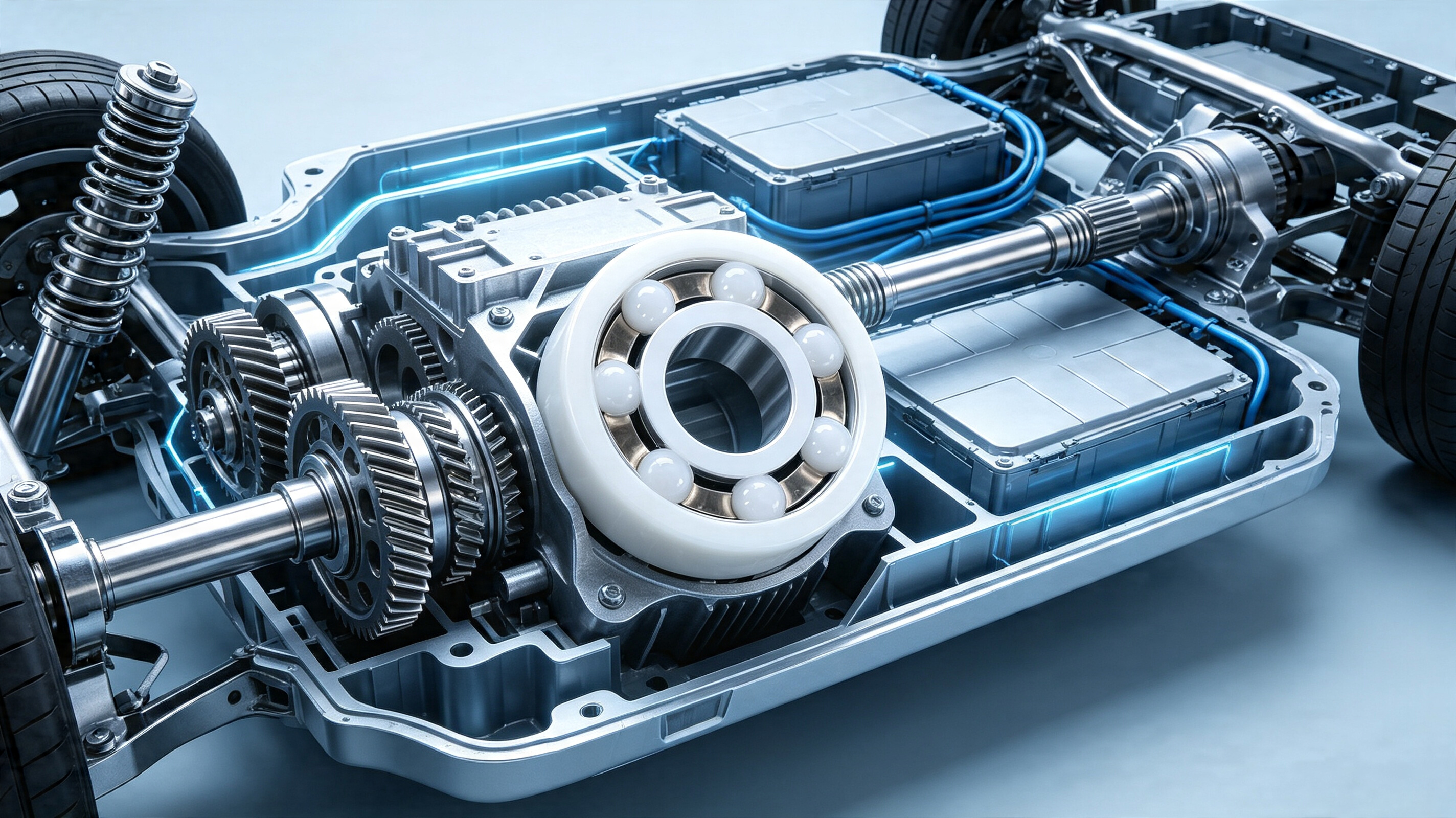
The global automotive landscape is undergoing a seismic shift. As the transition from internal combustion engines (ICE) to electric vehicles (EVs) accelerates, the demand for specialized EV bearings is experiencing unprecedented growth. For automotive manufacturers and component suppliers, this electrification trend represents both a massive opportunity and a complex engineering challenge. The unique operational characteristics of electric drivetrains require a new generation of bearings designed to handle extreme speeds, high torque, and electrical currents that traditional steel bearings simply cannot withstand.
The Market Surge: Numbers That Define the Shift
The electric vehicle bearing market is currently on a hyper-growth trajectory. Driven by booming EV adoption, stringent government incentives, and the need for specialized high-performance components, the market is expanding at an extraordinary rate. Recent industry forecasts indicate that the global electric vehicle bearing market, valued at approximately $5.27 billion in 2023, is projected to reach a staggering $64.73 billion by 2032. This represents a phenomenal Compound Annual Growth Rate (CAGR) of 32.14% during the forecast period.
This explosive growth is directly tied to global EV sales, which surpassed 14.3 million units recently, with markets like China, Europe, and the United States leading the charge. As automakers scale up production to meet this demand, the need for specialized bearings in e-motors, gearboxes, and wheel hubs rises proportionally.
| Market Metric | Data / Forecast |
|---|---|
| 2023 Market Valuation | $5.27 Billion |
| 2032 Projected Valuation | $64.73 Billion |
| Forecast CAGR (2024–2032) | 32.14% |
| Dominant Product Segment | Ball Bearings (44.6% Market Share) |
| Fastest Growing Region | Asia Pacific (54.5% Share) |
| Dominant Product Segment | Ball Bearings (44.6% Market Share) |
| Fastest Growing Region | Asia Pacific (54.5% Share) |
Why Traditional Bearings Fall Short in EVs
Electric motors are fundamentally different machines compared to traditional combustion engines, and they impose radically different stresses on drivetrain components. A conventional EV contains at least 16 bearings across its drivetrain and motor assemblies, and each choice directly impacts the vehicle’s range, reliability, and noise profile.
The primary issue is rotational speed. While traditional ICE vehicles typically operate between 1,500 and 6,000 RPM, modern EV motors routinely spin between 10,000 and 22,000 RPM. At these extreme velocities, conventional steel bearings suffer rapid thermal degradation and fatigue. Furthermore, EVs operate at temperatures approximately 20% higher than traditional vehicles due to the close proximity of the bearings to the electric motor. When traditional bearings are deployed in an EV setting, they exhibit a 30% decline in their expected lifespan.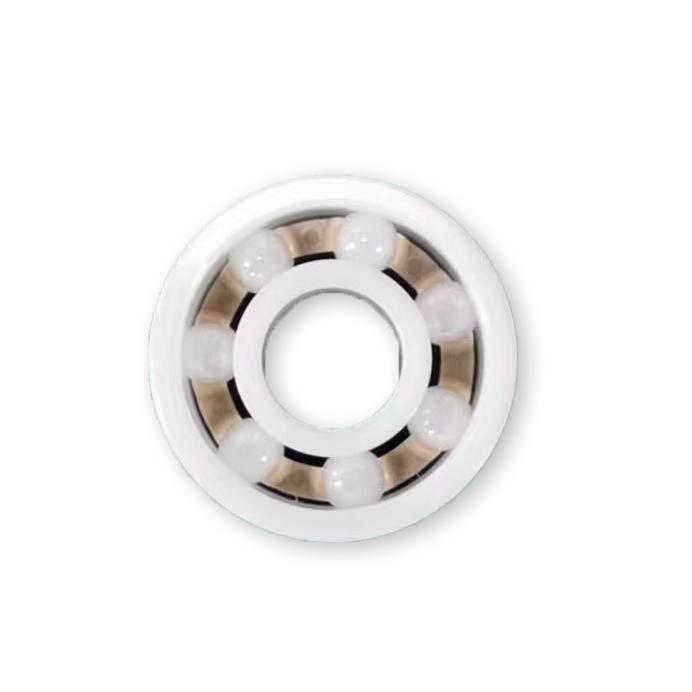
The Ceramic Revolution: Silicon Nitride as the Gold Standard
To combat the limitations of steel, the industry is rapidly pivoting toward advanced materials. Silicon Nitride (Si₃N₄) ceramic hybrid bearings have emerged as the gold standard for high-performance electric drivetrains. Currently, about 70% of EV manufacturers are gravitating toward ceramic hybrid bearings to ensure longevity and efficiency.
Ceramic rolling elements offer distinct advantages over steel. They are roughly 60% lighter, which reduces centrifugal force at high speeds and directly contributes to extended battery range. More importantly, Silicon Nitride is electrically non-conductive. High-voltage EV traction motors generate strong electromagnetic fields, and stray electrical currents often find the path of least resistance through the bearing, causing microscopic craters and rapid degradation known as electrical pitting. Ceramic bearings eliminate this issue at the material level, offering a lifespan 3 to 5 times longer than steel alternatives in EV environments.
| Feature | Traditional Steel Bearings | Si₃N₄ Ceramic Bearings |
|---|---|---|
| Max Operating Speed | Degrades rapidly above 10,000 RPM | Rated for 22,000+ RPM |
| Electrical Conductivity | Conductive (Prone to electrical pitting) | Non-conductive (Zero pitting) |
| Weight | Standard Density | ~60% Lighter |
| Lifespan in EVs | 30% shorter due to operational stress | 3–5× longer lifespan |
| Friction & Heat | High friction, significant heat buildup | Low friction, cooler operation |
Smart Bearings and the Future of Predictive Maintenance
The evolution of EV bearings is not limited to materials; it is also a digital revolution. Bearings are transitioning from passive mechanical components to sophisticated, sensor-embedded devices. Modern smart bearings leverage integrated sensors to gather and relay real-time information regarding the powertrain’s condition.
By monitoring vibrational patterns and thermal data, these smart bearings provide insights into potential powertrain issues before they lead to catastrophic failure. This shifts the automotive industry from reactionary repairs to anticipatory, predictive maintenance. As luxury EVs demand increasingly silent and smooth driving experiences, the integration of these smart technologies ensures optimal performance while minimizing Noise, Vibration, and Harshness (NVH).
Navigating Supply Chain and Manufacturing Challenges
Despite the clear technological advantages, the specialized EV bearing market faces significant hurdles. The primary challenge is cost. Advanced ceramic materials and precision manufacturing processes carry a high initial price tag, which can impact the overall cost of EV production. Additionally, the global supply chain for specialized raw materials remains vulnerable to geopolitical fluctuations and price volatility.
Furthermore, the complexity of installation and maintenance requires specialized training and equipment. As EV architectures continue to evolve—such as the shift toward integrated electric axle systems and multi-speed transmissions—bearing manufacturers must remain agile. Companies that can successfully navigate these supply chain complexities while delivering tailored, low-noise, and highly durable solutions are poised to capture significant market share.
Conclusion: A Critical Component in the EV Ecosystem
The electric vehicle boom is undeniably driving a massive demand for specialized bearings. As the automotive industry leaves the ICE era behind, the micro-level engineering inside the drivetrain is becoming just as critical as battery chemistry and software. From preventing electrical pitting with ceramic hybrids to enabling predictive maintenance through smart sensors, specialized bearings are the unsung heroes of the EV revolution. For manufacturers and suppliers, investing in these advanced technologies is no longer optional; it is the key to unlocking the next generation of sustainable, high-performance mobility.
Frequently Asked Questions (FAQ)
Q1: Why do electric vehicles require specialized bearings?
A: EV motors operate at significantly higher speeds (up to 22,000+ RPM) and generate stray electrical currents. Specialized bearings are designed to withstand extreme heat, reduce friction, and prevent electrical damage.
A: EV motors operate at significantly higher speeds (up to 22,000+ RPM) and generate stray electrical currents. Specialized bearings are designed to withstand extreme heat, reduce friction, and prevent electrical damage.
Q2: What is the main advantage of ceramic hybrid bearings in EVs?
A: Ceramic bearings (like Silicon Nitride) are electrically non-conductive and 60% lighter than steel. This prevents electrical pitting and reduces centrifugal force, extending lifespan by 3 to 5 times.
A: Ceramic bearings (like Silicon Nitride) are electrically non-conductive and 60% lighter than steel. This prevents electrical pitting and reduces centrifugal force, extending lifespan by 3 to 5 times.
Q3: How do smart bearings benefit electric vehicles?
A: Smart bearings feature integrated sensors that monitor vibration and temperature in real time. This enables predictive maintenance, preventing sudden failures and ensuring a quieter, smoother ride.
A: Smart bearings feature integrated sensors that monitor vibration and temperature in real time. This enables predictive maintenance, preventing sudden failures and ensuring a quieter, smoother ride.
Q4: What is the biggest challenge in adopting EV bearings?
A: The primary challenges are the high initial manufacturing costs of advanced materials and the complexity of integrating these precision components into modern EV architectures.
A: The primary challenges are the high initial manufacturing costs of advanced materials and the complexity of integrating these precision components into modern EV architectures.
Q5: How do these bearings impact EV battery range?
A: Specialized EV bearings feature low-friction designs and lightweight materials. By reducing mechanical resistance and energy loss, they directly help to maximize the vehicle’s overall driving range.
A: Specialized EV bearings feature low-friction designs and lightweight materials. By reducing mechanical resistance and energy loss, they directly help to maximize the vehicle’s overall driving range.
Post time: Jul-15-2026