


Introduction
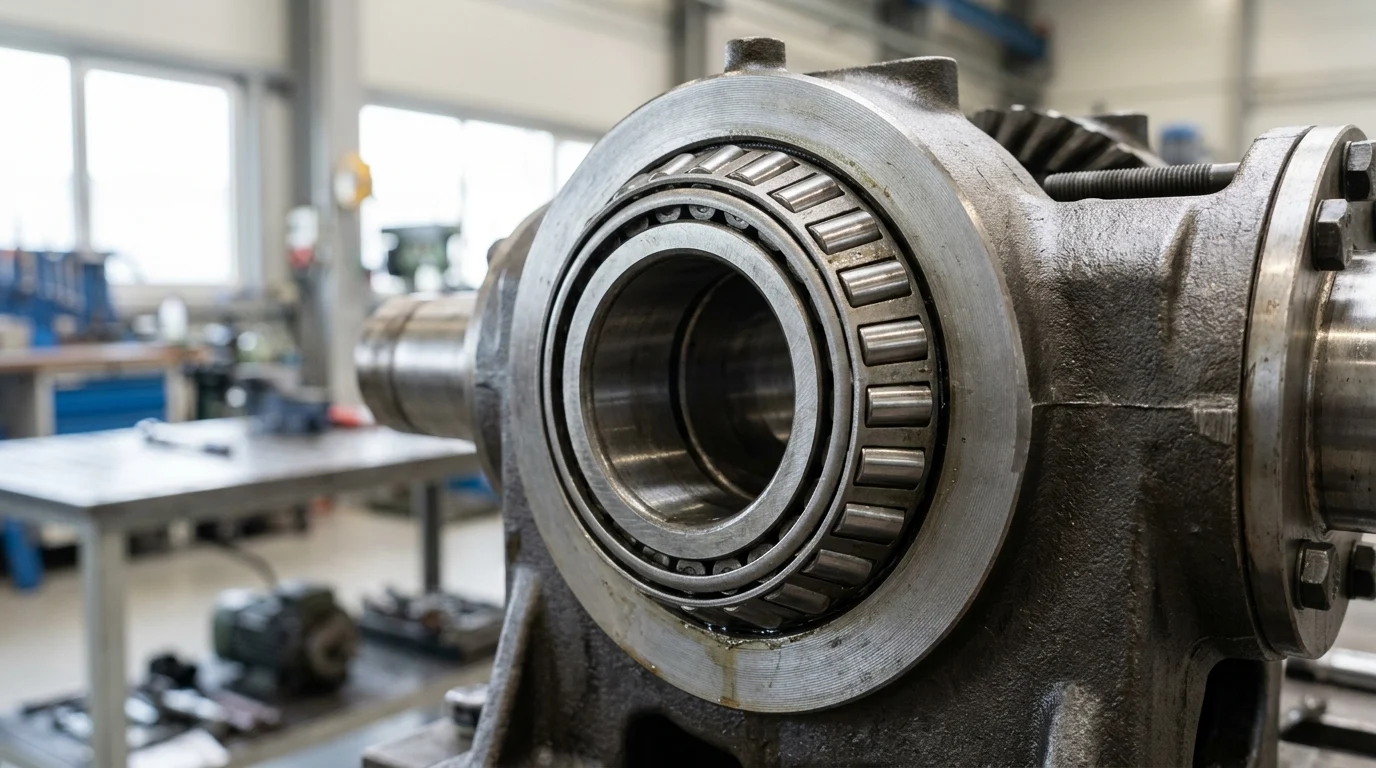
Heavy-duty gearboxes operate under sustained torque, shock loading, and strict alignment demands, making bearing selection a central reliability decision rather than a routine component choice. Tapered roller bearings are widely used in these systems because their geometry lets them carry high radial and axial loads at the same time while preserving stiffness and shaft control. This article explains where these bearings fit in gearbox design, what performance advantages they offer, and which application risks engineers must account for, including load distribution, lubrication, heat, and service life. The discussion sets up a practical view of how tapered roller bearing applications influence gearbox durability, efficiency, and maintenance outcomes.
Performance and risk in tapered roller bearing applications
Heavy-duty industrial gearboxes are the mechanical workhorses of critical infrastructure, driving everything from wind turbine generators to mining crushers and marine propulsion systems. At the core of these high-stress power transmission systems are tapered roller bearing applications engineered to manage extreme mechanical forces while maintaining precise shaft alignment. Specifying these bearings requires a rigorous balance between performance optimization and risk mitigation.
In heavy-duty environments, the cost of premature gearbox failure is catastrophic regarding both component replacement and operational downtime. Consequently, industrial gearboxes frequently demand L10 bearing life expectations exceeding 50,000 hours. Achieving this baseline reliability requires tapered roller bearings capable of withstanding severe dynamic loads without succumbing to subsurface fatigue or rapid raceway wear.
Why tapered roller bearings matter for torque density
The fundamental advantage of tapered roller bearings lies in their internal geometry, which utilizes line contact between the rollers and raceways rather than the point contact found in ball bearings. This configuration yields a massive increase in load-carrying capacity and torque density. By optimizing the contact angle—typically ranging from 10° to 19° for standard applications and up to 30° for dominant thrust loads—these bearings can simultaneously support heavy radial and axial forces.
Because tapered roller bearings handle combined loads so efficiently within a single envelope, they allow gearbox manufacturers to significantly reduce the unit’s overall footprint. In many high-torque density designs, utilizing a pair of tapered roller bearings can reduce the required housing volume by up to 25% compared to designs relying on a combination of cylindrical and spherical roller bearings to manage separate radial and axial forces.
Where heavy-duty gearboxes rely on tapered roller bearings
Tapered roller bearings are deployed at the most critical junctions within heavy-duty gearboxes. They are universally found on high-speed input pinion shafts, where they must manage rapid rotational speeds alongside the severe thrust forces generated by helical or bevel gear meshes. In these locations, the rigid axial location provided by the bearings is non-negotiable for maintaining optimal gear tooth contact patterns.
Beyond the input stage, tapered roller bearings are heavily utilized in intermediate gear stages and low-speed, high-torque output shafts. In planetary gearbox designs, specialized multi-row tapered roller bearings are increasingly integrated into the planet gears themselves. This provides the immense radial stiffness required to handle the extreme torque loads characteristic of heavy industrial and renewable energy applications.
Operating demands for tapered roller bearing applications
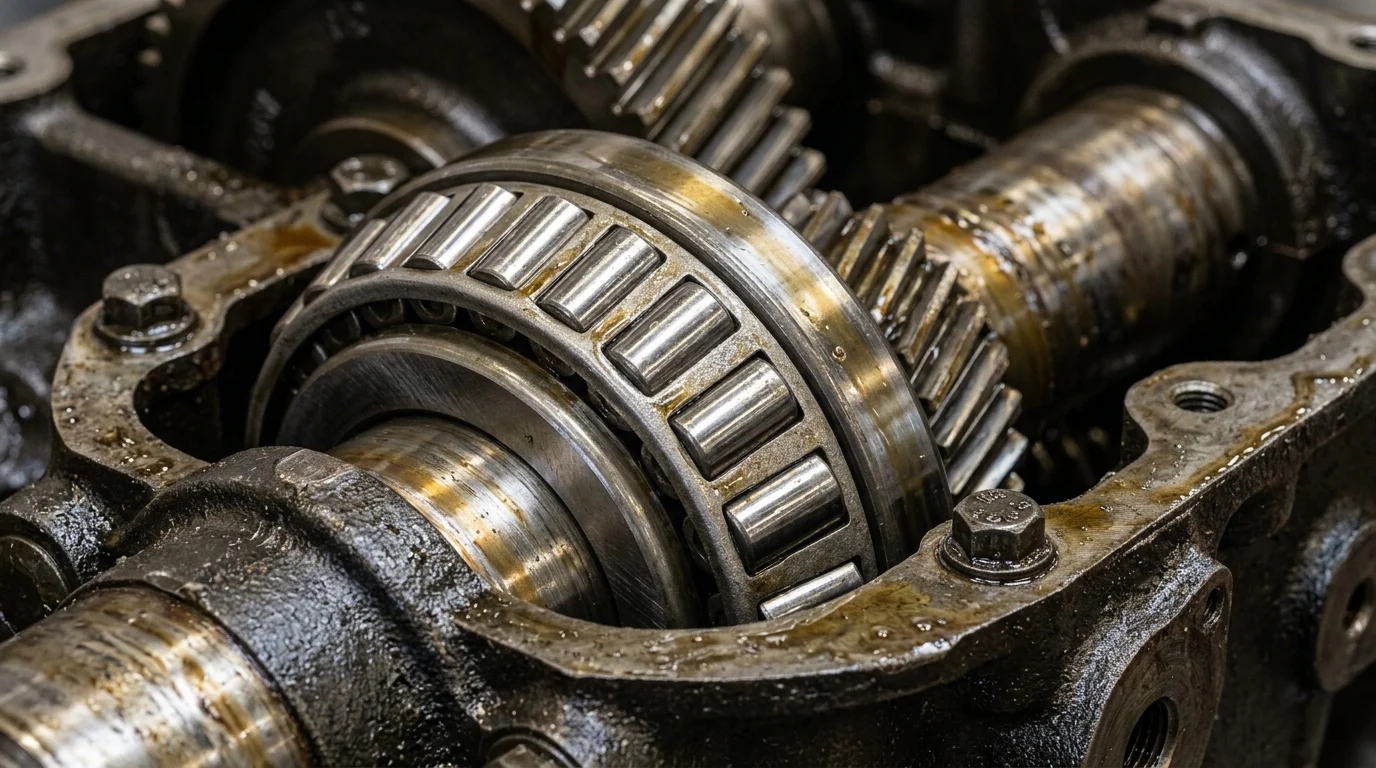
The operating environment within a heavy-duty gearbox is exceptionally unforgiving. Bearings must survive a continuous barrage of fluctuating loads, variable speeds, and harsh environmental factors. To ensure survival, engineers must calculate dynamic load ratings according to ISO 281 standards while factoring in a multitude of real-world operational variables that can degrade bearing performance.
Load, speed, lubrication, and thermal conditions
Elastohydrodynamic lubrication (EHL) is the primary defense against metal-to-metal contact in tapered roller bearing applications. To maintain a sufficient oil film thickness, the lubrication kappa value (κ)—the ratio of actual viscosity to reference viscosity at operating temperature—should ideally remain above 1.2. If the kappa value drops below 1.0, mixed friction occurs, accelerating raceway wear.
Thermal stability is equally critical. Bulk operating temperatures in heavy-duty gearboxes typically stabilize between 70°C and 90°C. However, localized flash temperatures at the critical contact point between the roller’s large end and the inner ring guide flange can briefly spike above 120°C. These thermal peaks necessitate the use of advanced extreme pressure (EP) additive packages and synthetic gear oils capable of resisting thermal degradation.
Geometry, preload, clearance, and mounting accuracy
The performance of a tapered roller bearing is highly dependent on its mounting geometry and internal clearance. Unlike many other bearing types, tapered roller bearings are typically mounted in opposing pairs, requiring precise preload or endplay settings during assembly. For maximum axial stiffness—particularly in high-speed pinion shafts—a slight negative clearance (preload) of -0.01 mm to -0.05 mm is frequently targeted.
Applying the correct preload optimizes the load zone distribution across the raceway. When properly preloaded, more rollers actively share the applied force, extending the load zone to approximately 180 to 270 degrees of the bearing circumference. This reduction in peak contact stress directly extends the fatigue life of the bearing, provided mounting accuracy and housing tolerances are strictly maintained to prevent unwanted shaft deflections.
Common failure modes and limits
Even with optimal design, tapered roller bearing applications are subject to specific failure modes if operational limits are exceeded. Macropitting, or spalling, is the standard fatigue failure mode, but premature failures are often driven by micropitting caused by inadequate lubrication or surface distress. Another frequent risk is false brinelling, which occurs when localized vibration removes the lubricant film while the gearbox is stationary, causing severe wear marks at the roller pitch.
Contamination remains one of the primary drivers of premature bearing failure. Heavy-duty gearboxes operating in mining, cement, or marine environments are highly susceptible to particulate ingress. To achieve the calculated L10a life, operators must maintain stringent oil cleanliness. Industry standards typically mandate a maximum contamination level corresponding to ISO 4406 cleanliness codes of 16/14/11; exceeding these particulate limits exponentially accelerates abrasive wear and surface-initiated fatigue.
Comparing tapered roller bearings with other bearing types
Selecting the optimal bearing architecture for a heavy-duty gearbox requires a pragmatic evaluation of competing mechanical characteristics. While tapered roller bearings offer distinct advantages in combined load scenarios, they must be carefully benchmarked against spherical and cylindrical roller bearings to ensure they align with the specific demands of the drivetrain.
Key comparison criteria
When comparing heavy-duty bearing options, engineers focus on radial capacity, axial capacity, dynamic stiffness, and tolerance for shaft deflection. The following table illustrates the general performance tradeoffs between the three primary roller bearing types used in industrial gearboxes.
| Bearing Type | Radial Load Capacity | Axial Load Capacity | Axial Stiffness | Misalignment Tolerance |
|---|---|---|---|---|
| Tapered Roller (TRB) | High | High (One Direction) | Very High | Low (2 – 4 arc minutes) |
| Spherical Roller (SRB) | Very High | Moderate (Both Directions) | Low to Moderate | High (Up to 1.5 degrees) |
| Cylindrical Roller (CRB) | Very High | Low to None | Low | Low (3 – 4 arc minutes) |
Load capacity, axial stiffness, and misalignment tradeoffs
The most significant tradeoff in tapered roller bearing applications involves the balance between stiffness and misalignment tolerance. Tapered designs deliver exceptional axial stiffness, which is paramount for maintaining the precise alignment of spiral bevel and helical gear meshes under heavy torque. Any axial yielding in these gears directly alters the tooth contact pattern, leading to rapid gear failure.
However, this rigidity comes at a strict cost to flexibility. Tapered roller bearings are highly sensitive to shaft bending and housing bore misalignment. They are typically limited to an allowable misalignment of just 2 to 4 arc minutes (0.0006 to 0.0012 radians). Exceeding this threshold induces severe edge loading on the rollers, breaking through the lubrication film and drastically curtailing bearing life. In applications where heavy shaft deflection is unavoidable, spherical roller bearings—which can accommodate up to 1.5 degrees of misalignment—may be required despite their lower axial stiffness.
When tapered roller bearings are the preferred choice
Tapered roller bearings are the definitive choice when an application mandates high combined radial and thrust loads coupled with the need for unyielding shaft support. They are ubiquitous in helical and bevel gearbox designs where thrust forces are a continuous byproduct of the gear mesh.
Furthermore, when a gearbox design requires a highly compact envelope without sacrificing load-carrying capacity, tapered roller bearings provide the highest torque density available. By utilizing steep-angle variants, engineers can tailor the bearing to handle dominant thrust loads without requiring a separate thrust bearing, simplifying the overall gearbox architecture and reducing component count.
Specification and implementation best practices
Proper specification and rigorous implementation bridge the gap between theoretical bearing life and actual field reliability. Because heavy-duty gearboxes operate under such extreme parameters, off-the-shelf commercial bearings are rarely sufficient. High-performance applications frequently demand bearings manufactured to ISO Class 5 or Class 4 precision tolerances to minimize runout and ensure a perfectly balanced load distribution across the rolling elements.
How to specify tapered roller bearing applications
Specifying a tapered roller bearing requires precise material and micro-geometry selection. For applications subjected to high shock loads, such as aggregate crushers or steel mill drives, case-carburized steel is often specified over standard through-hardened variants. The carburizing process yields a high-carbon, wear-resistant surface while maintaining a ductile, low-carbon core that resists crack propagation under heavy impacts.
Cage (retainer) design is another critical specification variable. While standard stamped steel cages are suitable for general applications, heavy-duty and high-speed gearboxes frequently require machined brass or pin-type cages. Machined brass cages offer superior performance under high acceleration and marginal lubrication conditions, reducing the risk of cage fracture during sudden torque reversals.
Installation, condition monitoring, and maintenance
Installation procedures dictate the initial health of the bearing. Heavy-duty tapered roller bearings are typically mounted using thermal expansion techniques. Bearings are induction heated to a precise window of 100°C to 120°C for shrink fitting onto the shaft. Heating a bearing beyond 120°C risks altering the metallurgical structure of the steel, resulting in a permanent loss of hardness and premature fatigue.
Once operational, condition monitoring is essential for predictive maintenance. Vibration analysis is the primary diagnostic tool, utilizing high-frequency envelope analysis (typically in the 5 kHz to 10 kHz range) to detect the microscopic acoustic emissions of early-stage raceway defects. Detecting these high-frequency stress waves allows maintenance teams to schedule bearing replacements long before the defect propagates into catastrophic spalling and secondary gearbox damage.
Sourcing, quality assurance, and compliance checks
Sourcing large-scale tapered roller bearings requires strict quality assurance protocols. Buyers must demand full traceability, including EN 10204 3.1 material certificates to verify steel cleanliness and chemistry. Advanced non-destructive testing (NDT), such as ultrasonic and magnetic particle inspection, should be mandated for all critical-path bearings.
From a supply chain perspective, procuring customized or large-bore tapered roller bearings requires strategic forecasting. While the Minimum Order Quantity (MOQ) for custom heavy-duty bearings can be relatively low—often ranging from 10 to 50 units—specialized manufacturing processes dictate extended lead times. It is common for high-precision, large-diameter TRBs to carry lead times stretching from 26 to 40 weeks, necessitating robust inventory planning.
Decision-making and total cost of ownership
Procurement decisions for tapered roller bearing applications must transcend the initial unit purchase price. In heavy industry, the financial impact of an unplanned gearbox failure dwarfs the cost of the bearings themselves. For example, unexpected downtime in a high-capacity mining conveyor or an offshore wind turbine can incur lost production and penalty costs ranging from $10,000 to over $50,000 per hour, making reliability the ultimate driver of total cost of ownership (TCO).
Total cost of ownership factors
Evaluating the true cost of a tapered roller bearing requires a holistic view of the gearbox lifecycle. The initial purchase price is merely a fraction of the overall financial footprint. Upgrading to a premium bearing with optimized micro-geometry and specialized coatings may carry a 30% upfront cost premium, but it can effectively double the Mean Time Between Failures (MTBF) in harsh operating conditions.
| TCO Component | Impact on Heavy-Duty Gearbox Lifecycle | Typical Cost Proportion |
|---|---|---|
| Initial Bearing Cost | Capital expenditure for the bearing and associated hardware. | 10% – 15% |
| Installation & Tooling | Labor, thermal mounting equipment, and alignment precision. | 5% – 10% |
| Maintenance & Lubrication | Cost of synthetic gear oils, filtration systems, and condition monitoring. | 15% – 25% |
| Unplanned Downtime | Lost production revenue, emergency labor, and secondary component damage. | 50% – 70% |
Guidance for OEMs, rebuilders, and plant operators
For original equipment manufacturers (OEMs), rebuilders, and plant operators, successful bearing integration requires a collaborative approach
Guidance for OEMs, rebuilders, and plant
For original equipment manufacturers (OEMs), rebuilders, and plant operators, successful bearing integration requires a collaborative approach
Key Takeaways
- The most important conclusions and rationale for Tapered roller bearing applications
- Specs, compliance, and risk checks worth validating before you commit
- Practical next steps and caveats readers can apply immediately
Frequently Asked Questions
Why are tapered roller bearings used in heavy-duty gearboxes?
They carry high radial and axial loads at the same time, keep shafts aligned, and support high torque density in compact gearbox designs.
Where are tapered roller bearings typically installed in industrial gearboxes?
They are commonly used on input pinion shafts, intermediate stages, output shafts, and some planetary gear positions where stiffness and thrust control are critical.
What preload is common for tapered roller bearings in gearbox shafts?
For high-speed pinion shafts, slight preload is often used, typically around -0.01 mm to -0.05 mm, to improve axial stiffness and gear mesh stability.
How important is lubrication for tapered roller bearing applications?
It is essential. Use a suitable EP gear oil and maintain adequate viscosity so the kappa value stays above 1.2 to reduce wear and mixed friction.
Can DEMY Bearings supply tapered roller bearings for OEM gearbox projects?
Yes. DEMY offers tapered roller bearings within its industrial catalog for OEMs, distributors, and equipment makers needing reliable, high-load gearbox bearing solutions.
Post time: Jun-03-2026