


When a downhill skateboarder tucks at speeds exceeding 130 kilometers per hour, the world blurs into a tunnel of asphalt and wind. The margin between a record-breaking run and a catastrophic crash is often measured in millimeters and microseconds. While the rider’s courage and the board’s aerodynamics capture the spotlight, the true unsung hero of this high-stakes physics equation is hidden inside the wheel: the miniature ball bearing.
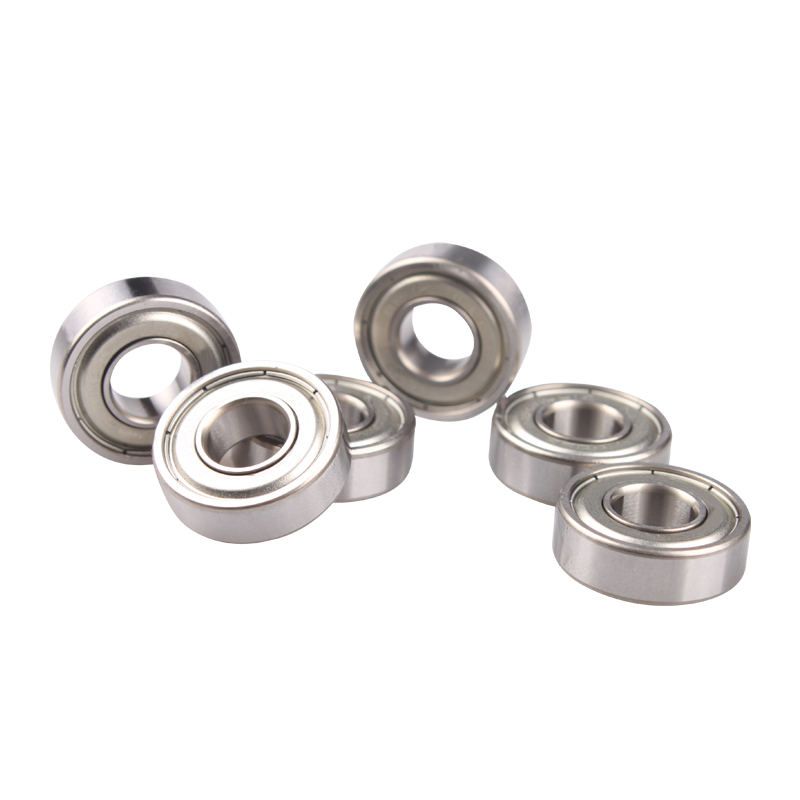
Far from being a simple mechanical afterthought, high-performance skateboard bearings represent a pinnacle of materials science, precision engineering, and tribology (the study of friction). The engineering principles that allow a skateboard wheel to spin effortlessly at highway speeds are surprisingly adjacent to those required in aerospace and high-speed industrial applications. Let’s dive into the microscopic battlefield where friction is conquered, and speed is born.
The Microscopic Battlefield: Conquering Friction
At high velocities, friction is the ultimate adversary. It steals kinetic energy, slows acceleration, and generates destructive heat. A premium bearing’s primary mission is to achieve near-zero friction, translating every ounce of the rider’s momentum into forward velocity.
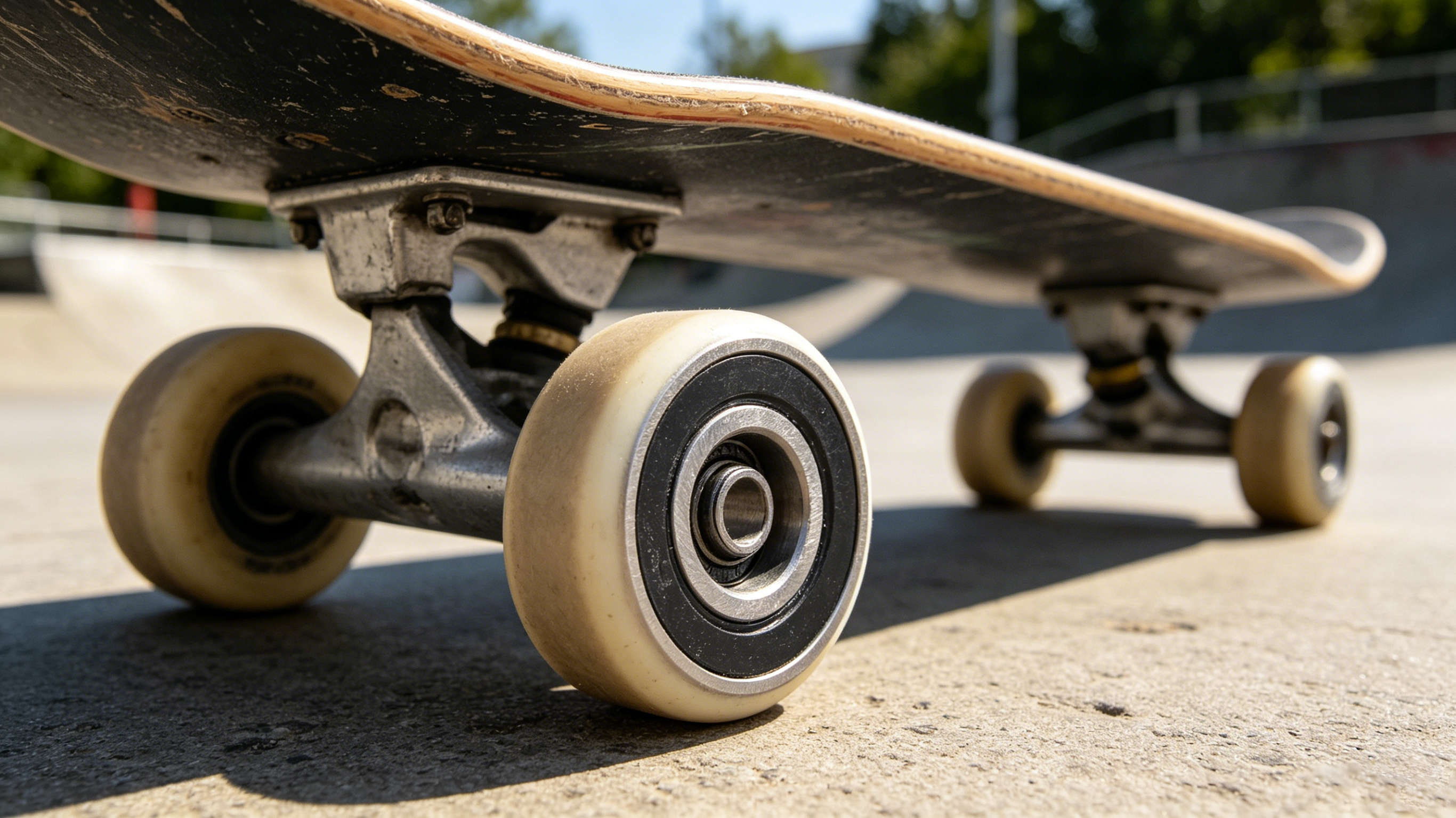
Standard industrial bearings are manufactured to micrometer-level precision. However, top-tier skateboard bearings push this boundary to the nanometer scale. Through ultra-precise grinding and polishing, the inner and outer raceways are finished to a mirror-like smoothness. This nanometer-level surface finish drastically reduces the rolling resistance of the balls. The result? Faster acceleration, higher top speeds, and less energy required to maintain velocity. As elite athletes describe it, upgrading to nano-polished bearings feels like transforming a gravel road into a sheet of glass.
Material Science: Steel vs. Ceramic
The choice of materials dictates a bearing’s performance envelope. Traditional chrome steel (SAE 52100) offers exceptional impact resistance, crucial for surviving the massive G-forces of high-speed cornering and landing. However, steel is vulnerable to moisture and generates more friction.
Enter ceramic technology. High-end bearings utilize silicon nitride ceramic balls, which are significantly lighter, harder, and completely impervious to water. Ceramic balls create less friction and generate less heat at extreme RPMs. The trade-off is brittleness; ceramics are less tolerant to sharp impacts than steel. Modern engineering often bridges this gap through advanced cage designs and specialized lubricants, creating hybrid systems that offer the best of both worlds.
| Feature | Traditional Steel Bearings | High-Performance Ceramic Bearings |
|---|---|---|
| Material | Chrome Steel (SAE 52100) / Stainless | Silicon Nitride Ceramic Balls |
| Friction Level | Moderate | Extremely Low |
| Impact Resistance | High (Ductile) | Lower (Brittle) |
| Water/Heat Resistance | Prone to rust, heat buildup | Waterproof, runs cooler |
| Best Application | Street skating, heavy impacts | Downhill, long-distance, wet conditions |
Beyond ABEC: The Real Metrics of Skate Performance
For decades, consumers have relied on the ABEC (Annular Bearing Engineering Committee) scale to judge bearing quality. Ranging from ABEC-1 to ABEC-9, this system measures manufacturing tolerances and radial runout. While a higher ABEC rating indicates tighter tolerances, it was designed for smooth, continuous industrial rotation, not the brutal reality of skateboarding.
Skateboarding introduces massive axial (side) loads, shock impacts, and varying lubrication needs that ABEC simply does not test for. Consequently, many premier bearing manufacturers have abandoned the ABEC scale entirely. Instead, they focus on real-world performance metrics: load capacity, impact resistance, seal efficiency, and dynamic stability. A bearing might have a “lower” ABEC rating but vastly outperform a higher-rated industrial bearing on a skateboard because it was engineered specifically to handle lateral stress and shock.
Engineering for Extremes: Heat, Stress, and Seals
Speed generates heat. During a high-speed descent, the immense vertical and lateral forces combined with continuous friction can cause traditional lubricants to break down and metal to expand, potentially leading to a catastrophic “wheel bind.”
To combat this, aerospace-grade engineering is applied to miniature components. Manufacturers use specialized high-speed synthetic oils and heat-resistant greases that maintain viscosity under extreme thermal loads. Furthermore, the internal geometry is optimized. Advanced cage designs distribute stress evenly, while micro-groove raceway surfaces help channel lubricant exactly where it’s needed most.
Sealing technology is equally critical. Traditional metal shields can create unwanted friction, while open bearings let in debris. Modern solutions utilize straight-edge, frictionless rubber seals or even shieldless designs with tungsten-coated races. These innovations keep out microscopic dirt and moisture without sacrificing rotational speed, ensuring the bearing remains smooth and reliable whether navigating a dusty warehouse or a rain-slicked mountain road.
The Synergy of the Complete Wheel System
A bearing does not operate in a vacuum. Its performance is intrinsically linked to the wheel’s urethane formula, hardness (durometer), and core design. A harder wheel may transmit more vibration to the bearing, requiring a different lubricant viscosity, while a specific hub design can act as a heat sink.
Engineers conduct rigorous multi-stage testing to match bearings with specific wheel systems. This involves fine-tuning internal clearances and lubricant chemistry to achieve a harmonious “man-machine” integration. The goal is a setup where the rider feels a seamless, predictable connection to the pavement.
| Engineering Factor | Industrial Standard Focus | Skateboard Performance Focus |
|---|---|---|
| Precision Metric | ABEC Tolerance (Radial Runout) | Dynamic Load & Impact Survival |
| Primary Stress | Continuous Radial Load | Axial/Side Loads & Shock Impacts |
| Lubrication | Long-life, low-maintenance | High-speed, heat-resistant, low drag |
| Sealing | Dust exclusion | Frictionless balance of seal & speed |
Conclusion: The Invisible Engine
From the nanometer-polished raceways to the heat-resistant synthetic lubricants, the engineering inside a high-speed skateboard bearing is a testament to human innovation. It is a perfect intersection of extreme sports demands and precision manufacturing.
While the rider commands the board, it is the silent, microscopic engineering within the wheels that makes the impossible speeds achievable. Whether you are bombing a mountain pass or simply commuting across town, the next time you feel that effortless, floating glide, remember: you are experiencing the cutting edge of mechanical engineering. The journey from the skateboard to the stars of performance engineering is paved with steel, ceramic, and an uncompromising pursuit of perfection.
Frequently Asked Questions (FAQ)
Q: What is the standard size for skateboard bearings?
A: The universal standard is 608 (8mm inner diameter, 22mm outer diameter, 7mm width).
A: The universal standard is 608 (8mm inner diameter, 22mm outer diameter, 7mm width).
Q: Are ceramic bearings better than steel bearings?
A: Yes, for speed and water resistance. However, steel bearings are better at absorbing heavy impacts.
A: Yes, for speed and water resistance. However, steel bearings are better at absorbing heavy impacts.
Q: Does a higher ABEC rating mean a faster skateboard?
A: Not necessarily. ABEC measures industrial precision, not the impact resistance or side-load durability required for skateboarding.
A: Not necessarily. ABEC measures industrial precision, not the impact resistance or side-load durability required for skateboarding.
Q: How often should I clean my skateboard bearings?
A: It depends on riding conditions. Clean them when they sound gritty, feel slow, or after riding in wet/dirty environments.
A: It depends on riding conditions. Clean them when they sound gritty, feel slow, or after riding in wet/dirty environments.
Q: Can I use regular oil or WD-40 to lubricate my bearings?
A: No. WD-40 is a solvent, not a lubricant. Always use dedicated bearing oil or high-speed synthetic grease.
A: No. WD-40 is a solvent, not a lubricant. Always use dedicated bearing oil or high-speed synthetic grease.
Q: Why do my bearings get hot during downhill rides?
A: High speeds generate immense friction and lateral stress. Premium bearings use specialized heat-resistant lubricants to prevent this.
Post time: Jun-24-2026