


Electric motors running at 20,000 RPM are no longer exceptional. They are becoming a realistic target for high-efficiency drives, compact EV powertrains, aerospace actuators, high-speed compressors, and advanced industrial spindles. At this speed, however, the bearing is no longer a passive support component. It becomes one of the main factors determining thermal stability, efficiency, noise, and service life.
The core challenge is not simply “can the bearing rotate fast enough.” The real question is whether it can maintain stable lubrication, controlled preload, acceptable heat generation, and reliable cage behavior under continuous high-speed operation.
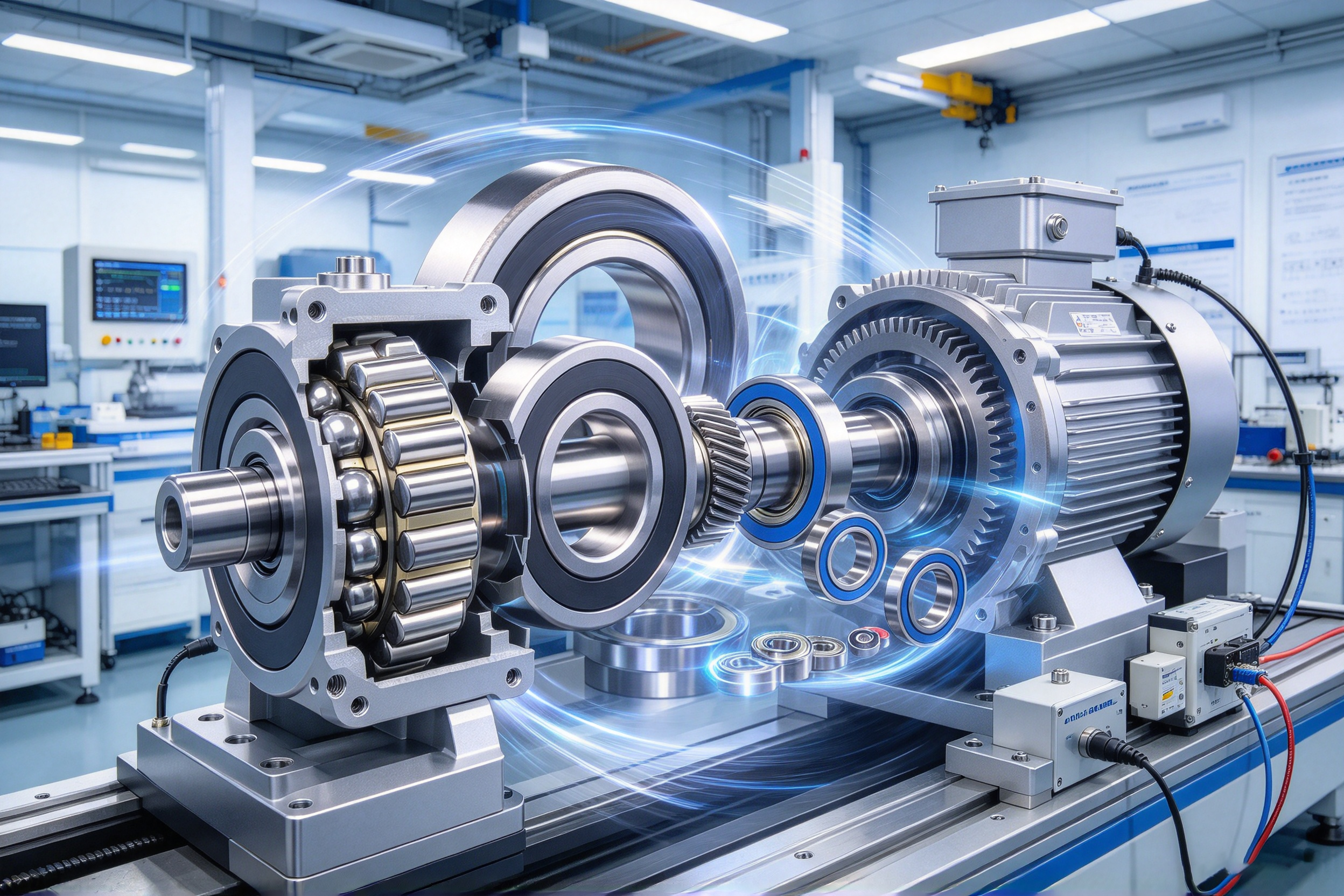
Why 20,000 RPM Is Different
High-speed e-motors place unusual demands on rolling bearings. As rotational speed increases, centrifugal forces, frictional heat, and lubricant stress rise sharply. A bearing that performs well at 5,000 or 10,000 RPM may struggle at 20,000 RPM if its internal geometry, materials, cage, and lubrication are not optimized.
The most common failure risks at this speed include:
- Grease degradation caused by high internal temperatures.
- Cage deformation due to centrifugal force.
- Increased skidding or sliding friction under light loads.
- Preload shift caused by thermal expansion.
- Electrical erosion from inverter-driven motors.
- Vibration and noise from imbalance or insufficient rigidity.
Engineers often use the dmN value to compare high-speed bearing capability. It is calculated as the product of bearing pitch diameter and rotational speed. A higher dmN value means the bearing must handle more demanding kinematic and thermal conditions.
Bearing Types Suitable for High-Speed E-Motors
Not all bearing types are suitable for 20,000 RPM applications. Deep groove ball bearings and angular contact ball bearings are typically preferred because ball bearings generate less friction than roller bearings at high speed. Cylindrical roller bearings can carry heavier radial loads, but their speed capability is usually more limited in compact e-motor designs.
| Bearing Type | Speed Capability | Typical Role in E-Motors |
|---|
| Bearing Type | Speed Capability | Typical Role in E-Motors |
|---|---|---|
| Deep Groove Ball Bearing | High | General high-speed support, low friction |
| Angular Contact Ball Bearing | High | Combined radial and axial loads, higher rigidity |
| Cylindrical Roller Bearing | Medium-High | Heavy radial load, lower-speed sections |
| Hybrid Ceramic Bearing | Very High | High RPM, reduced heat, improved electrical resistance |
| Magnetic/Air Bearing | Very High | Specialized ultra-high-speed systems |
For most 20,000 RPM e-motors, deep groove ball bearings or angular contact ball bearings remain the most practical starting point. Hybrid ceramic versions are often selected when thermal control, electrical insulation, or extended grease life is required.
Hybrid Ceramic Bearings: A Strong Option for High RPM
Hybrid ceramic bearings use steel rings with silicon nitride ceramic balls. Silicon nitride is lighter, harder, and stiffer than bearing steel, which brings several advantages in high-speed motors.
Ceramic balls typically have only about 40 percent of the mass of steel balls. This reduces centrifugal force on the raceways and cage, allowing higher safe operating speeds and more stable internal loading. Ceramic balls also generate less rolling friction, which helps lower operating temperature and slows grease aging.
| Feature | All-Steel Bearing | Hybrid Ceramic Bearing |
|---|
| Feature | All-Steel Bearing | Hybrid Ceramic Bearing |
|---|---|---|
| Ball Material | Steel | Silicon Nitride Ceramic |
| Centrifugal Force | Higher | Lower |
| Friction and Heat | Higher at extreme RPM | Reduced |
| Electrical Resistance | Conductive | Better insulation against stray currents |
| Cost | Lower | Higher |
| Best Fit | Moderate speed, heavy load | High RPM, high efficiency, inverter motors |
Hybrid ceramic bearings are especially useful in inverter-driven motors. Stray shaft currents can cause electrical erosion on bearing surfaces. Because ceramic balls are non-conductive, hybrid bearings can reduce this risk without requiring additional insulation in some designs.
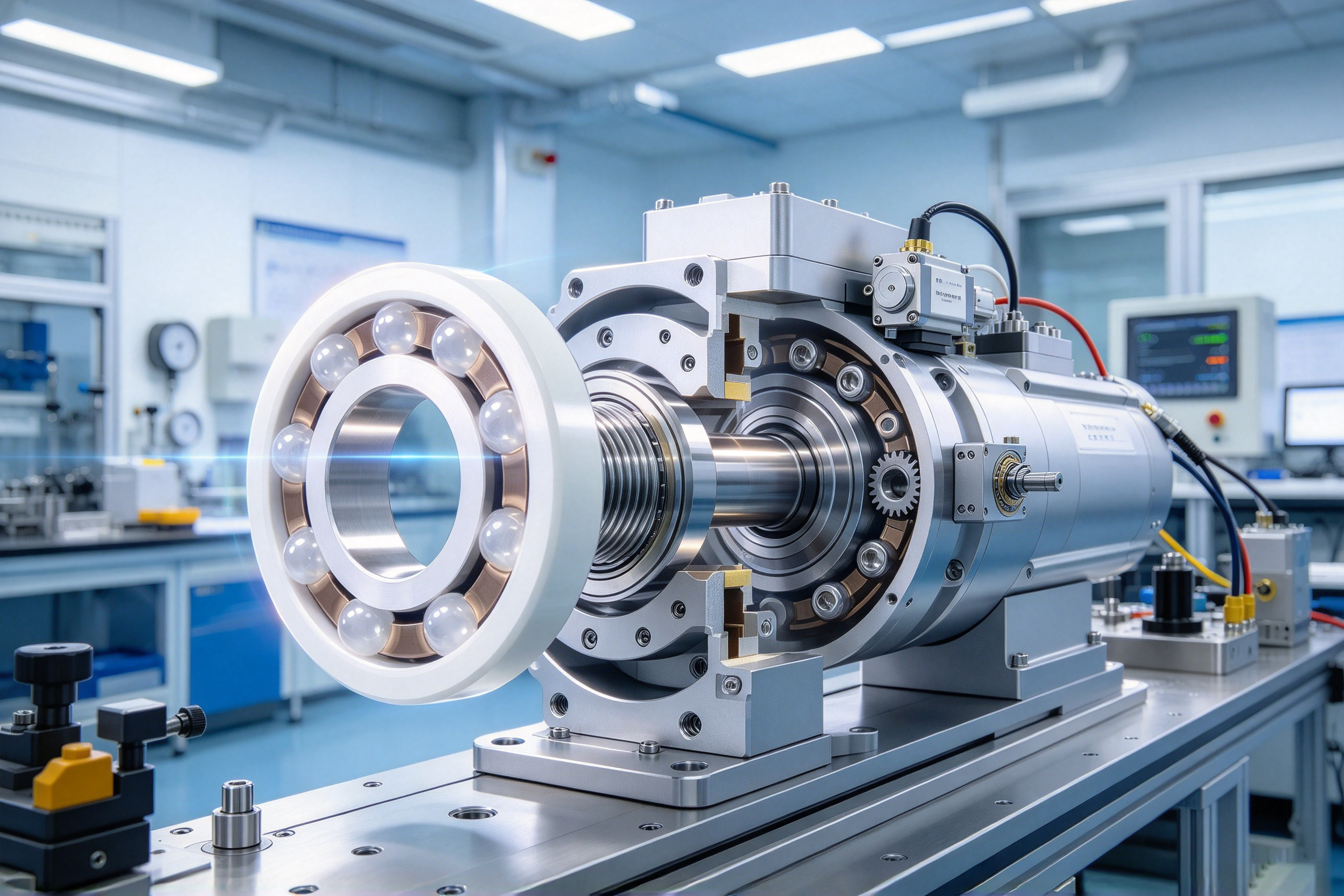
Cage Design and Lubrication Matter as Much as Materials
Material selection alone does not guarantee reliable 20,000 RPM operation. The cage and lubrication system are equally important.
At high speed, the cage experiences strong centrifugal forces. Thin, lightweight cage tabs and high-rigidity polymer materials such as PEEK can reduce deformation and improve durability. A poorly designed cage may vibrate, wear, or fail even if the rings and balls are made from premium materials.
Lubrication must also be matched to speed and temperature. High-speed grease should resist churning, maintain a stable oil film, and avoid rapid oxidation. In some cases, oil-air or targeted oil lubrication may be used to control heat more effectively. Over-greasing can be harmful at high RPM because excess grease increases churning losses and raises bearing temperature.
Key Selection Checklist for 20,000 RPM E-Motors
When selecting a bearing for a 20,000 RPM e-motor, focus on these parameters:
- dmN value: Confirm the bearing can operate safely at the required speed and bore size.
- Bearing type: Prefer deep groove or angular contact ball bearings for high-speed duty.
- Rolling elements: Consider hybrid ceramic balls for lower heat and better electrical resistance.
- Cage material: Use lightweight, high-rigidity cages designed for high centrifugal loads.
- Lubrication: Select high-speed grease or oil systems compatible with continuous high RPM.
- Preload and clearance: Control preload carefully to avoid excessive heat or instability.
- Electrical protection: Evaluate hybrid ceramic or insulated bearings if inverter currents are present.
- Thermal management: Coordinate bearing selection with motor cooling, housing fit, and shaft design.
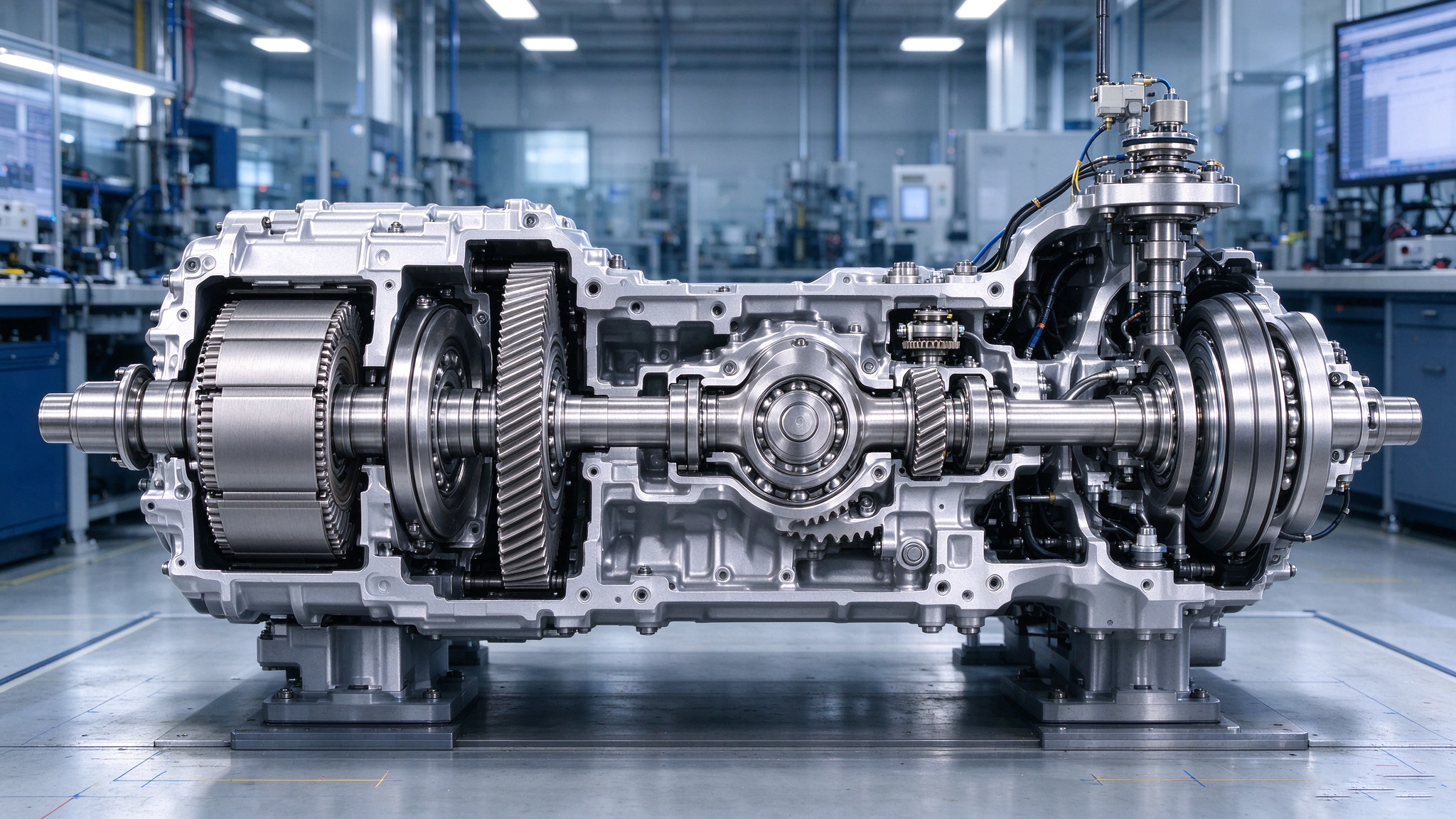
Final View
A 20,000 RPM e-motor requires more than a “high-speed label.” It requires a bearing system that balances speed, load, heat, lubrication, and electrical behavior. In many cases, a well-engineered deep groove or angular contact ball bearing with optimized cage design and high-speed lubrication can meet the requirement. When thermal margin, efficiency, or electrical erosion risk is critical, hybrid ceramic bearings become a strong and increasingly practical solution.
For OEMs and design engineers, the safest approach is to define the full operating envelope before selecting a bearing. Speed alone is not enough. The right bearing solution should deliver stable performance across the motor’s entire life cycle.
FAQ: High-RPM Bearing Solutions for 20,000 RPM E-Motors
Q: Can standard deep groove ball bearings run at 20,000 RPM?
A: Only if the dmN value, cage design, lubrication, and preload are properly matched. Many standard bearings are not optimized for continuous high-speed operation.
A: Only if the dmN value, cage design, lubrication, and preload are properly matched. Many standard bearings are not optimized for continuous high-speed operation.
Q: Why are hybrid ceramic bearings preferred for high-speed e-motors?
A: Ceramic balls are lighter and harder than steel balls, reducing centrifugal force, friction, heat, and the risk of electrical erosion.
A: Ceramic balls are lighter and harder than steel balls, reducing centrifugal force, friction, heat, and the risk of electrical erosion.
Q: What is the dmN value?
A: It is the product of bearing pitch diameter and rotational speed. It helps assess whether a bearing can operate safely at high RPM.
A: It is the product of bearing pitch diameter and rotational speed. It helps assess whether a bearing can operate safely at high RPM.
Q: Which cage material is suitable for 20,000 RPM?
A: Lightweight, high-rigidity polymer cages such as PEEK are commonly used because they resist deformation under high centrifugal force.
A: Lightweight, high-rigidity polymer cages such as PEEK are commonly used because they resist deformation under high centrifugal force.
Q: Does grease or oil work better at high speed?
A: It depends on the design. High-speed grease can work well if carefully dosed. Oil or oil-air systems may be better when heat control is critical.
A: It depends on the design. High-speed grease can work well if carefully dosed. Oil or oil-air systems may be better when heat control is critical.
Q: How do inverter motors affect bearing life?
A: Stray shaft currents can cause electrical erosion. Hybrid ceramic or insulated bearings can help reduce this risk.
A: Stray shaft currents can cause electrical erosion. Hybrid ceramic or insulated bearings can help reduce this risk.
Q: Is over-greasing harmful at high RPM?
A: Yes. Excess grease increases churning losses, raises temperature, and can shorten bearing life.
A: Yes. Excess grease increases churning losses, raises temperature, and can shorten bearing life.
Q: What is the biggest failure risk at 20,000 RPM?
A: Heat buildup, lubricant degradation, cage instability, skidding, and electrical erosion are the most common risks.
A: Heat buildup, lubricant degradation, cage instability, skidding, and electrical erosion are the most common risks.
Post time: Nov-06-2026