


Selecting the correct bearing steel is a critical engineering decision that directly impacts machinery reliability, maintenance intervals, and total operational cost. As an industry standard, understanding the metallurgical differences between common grades—such as GCr15, GCr15SiMn, and M50—is essential for procurement managers and design engineers. This guide analyzes the chemical compositions, mechanical properties, and optimal applications for these widely used materials.
1. The Standard: GCr15 (SAE 52100)
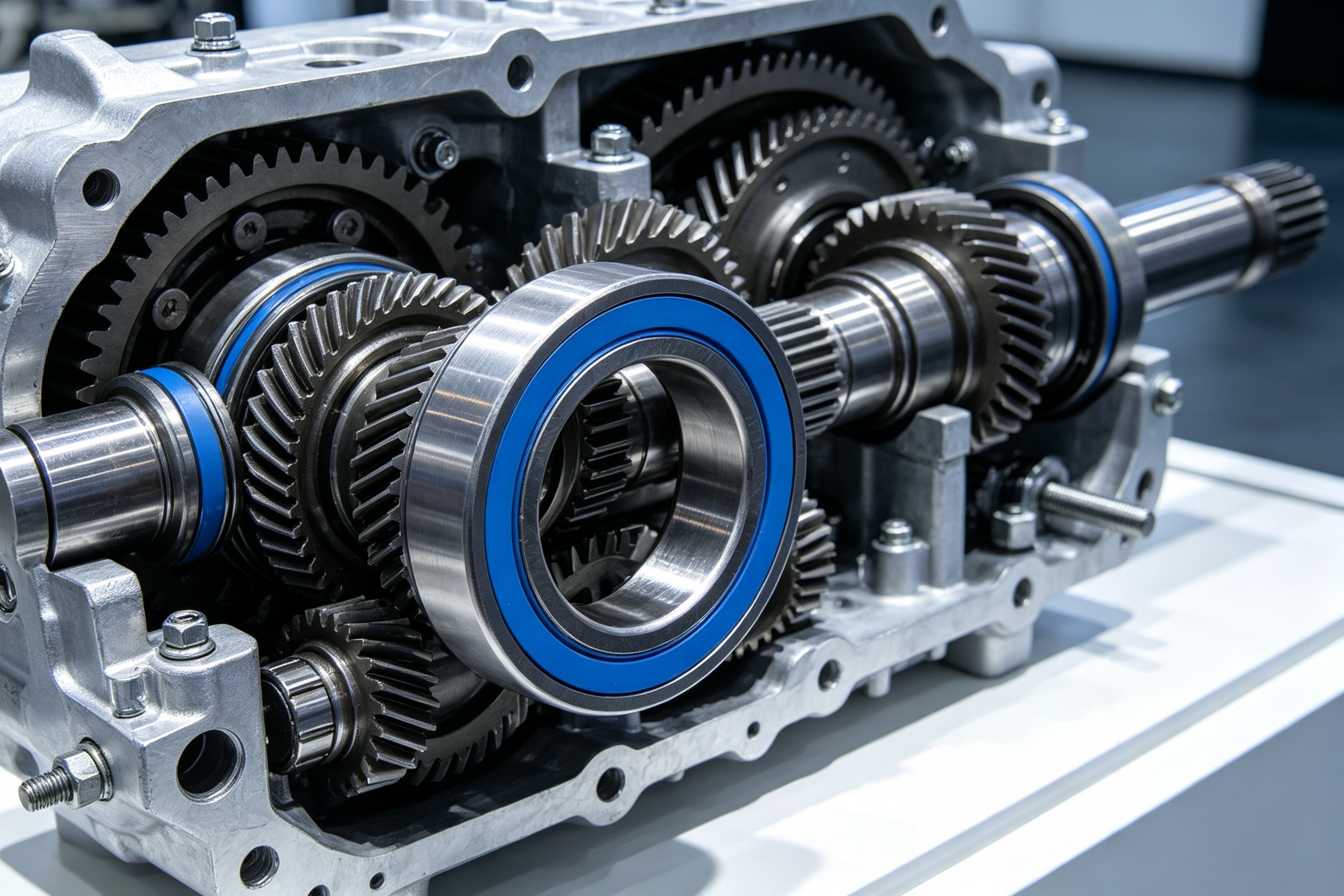
GCr15 is the most widely used bearing steel globally, equivalent to the American SAE 52100 grade. It is a high-carbon, high-chromium steel known for its excellent hardenability, high contact fatigue strength, and wear resistance.
Key Properties:
- Hardness: Typically achieves 60–65 HRC after heat treatment.
- Microstructure: Contains uniform distribution of carbides, providing superior resistance to plastic deformation.
- Limitation: Its maximum operating temperature is generally limited to 120°C (248°F) due to dimensional instability at higher temperatures.
Common Applications:
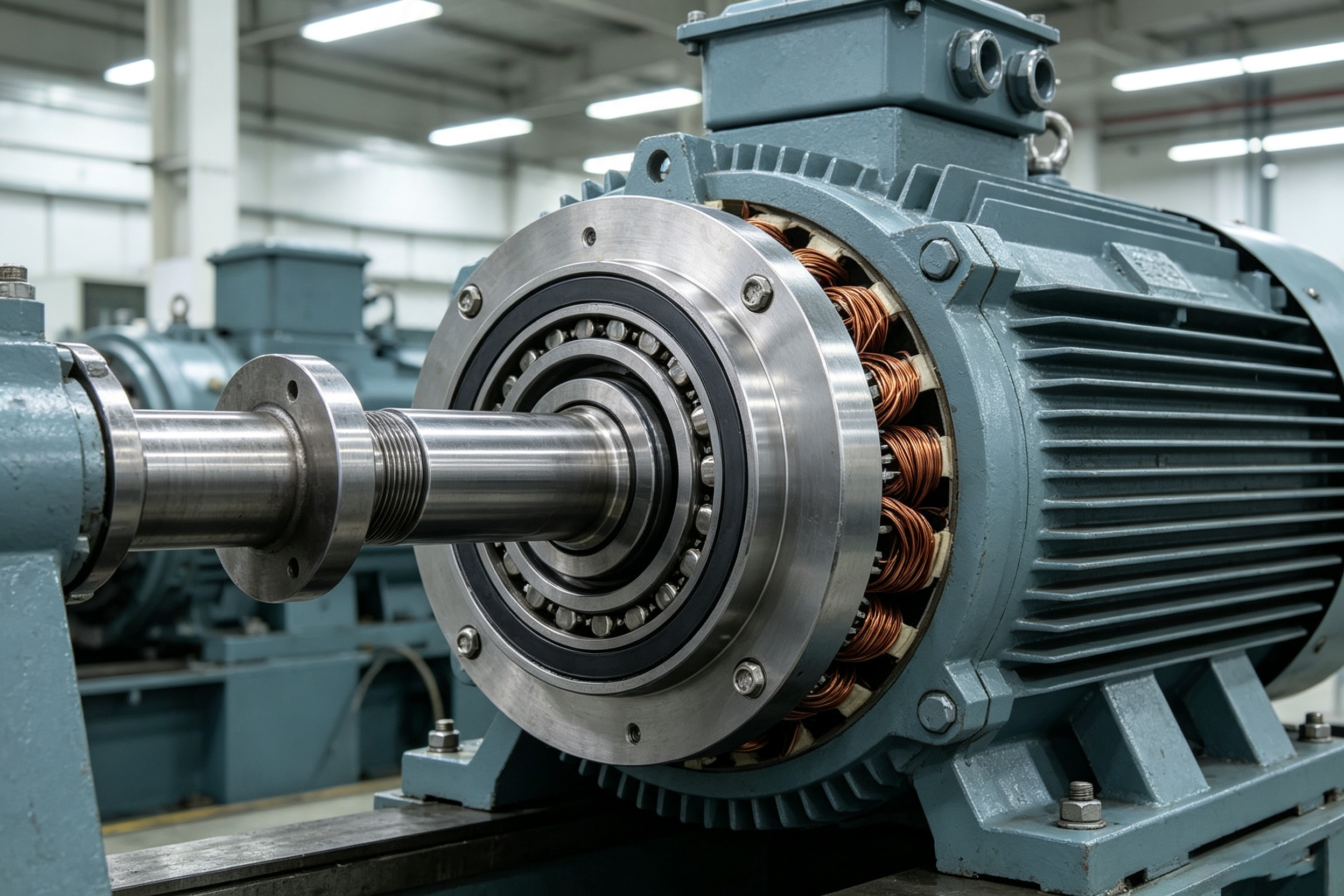
- Electric motors and generators.
- Automotive transmissions.
- Industrial gearboxes and general machinery.
2. The Heavy-Duty Variant: GCr15SiMn
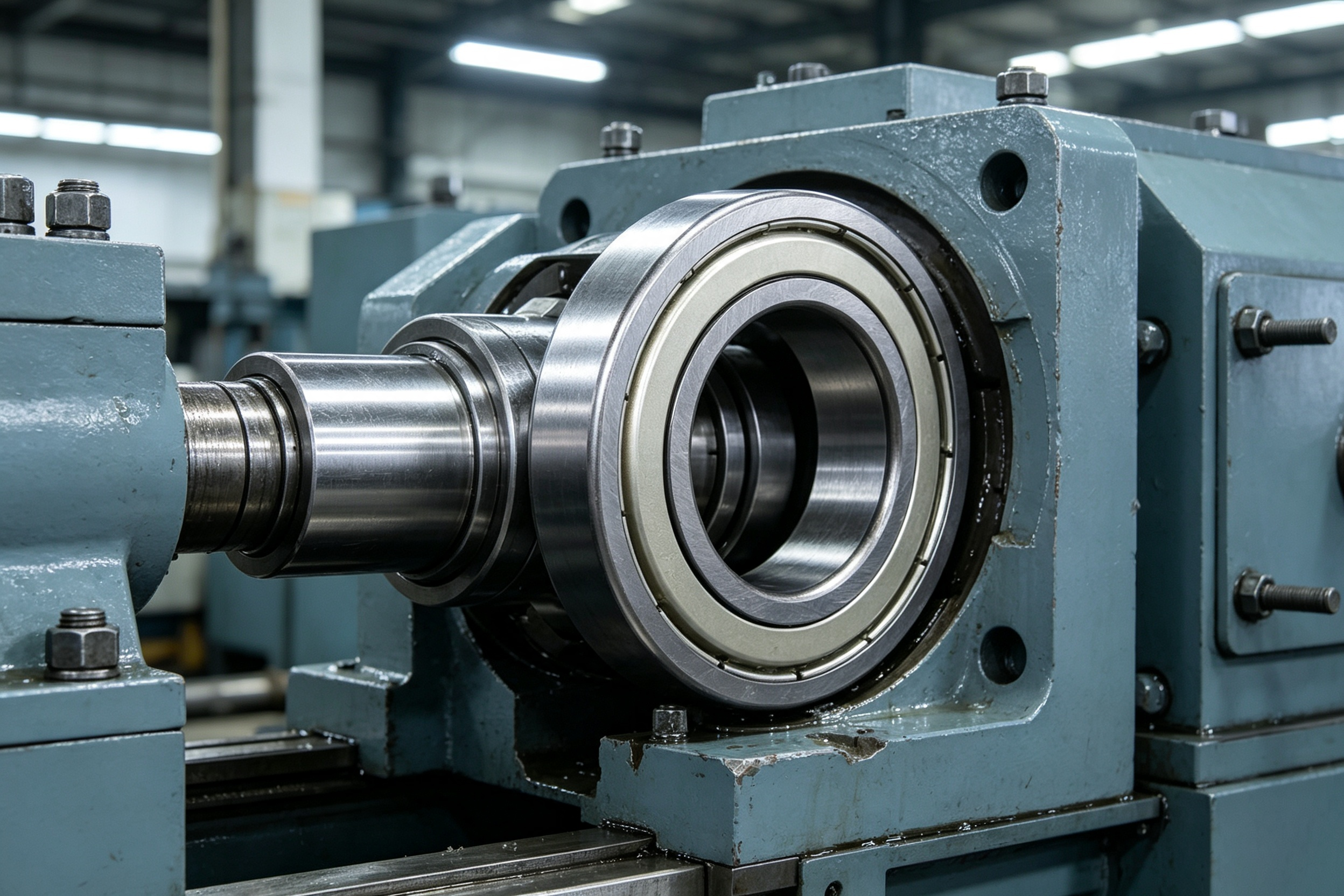
While GCr15 is excellent for medium-sized bearings, GCr15SiMn is formulated for larger cross-sections. By increasing the Silicon (Si) and Manganese (Mn) content, this grade offers significantly deeper hardenability.
Why Choose GCr15SiMn?
- Deep Hardening: It can achieve full hardness in larger bearing rings (often >200mm outer diameter) where GCr15 might not harden through the core.
- High Load Capacity: Offers higher elastic limit and toughness, making it suitable for heavy shock loads.
3. The High-Temperature Performer: M50
M50 is a high-speed, high-temperature bearing steel. Unlike the GCr series, M50 contains Molybdenum, Vanadium, and a higher percentage of Chromium. This alloy structure provides exceptional red hardness (retaining hardness at high temperatures).
Key Advantages:
- Thermal Stability: Retains hardness and dimensional stability at temperatures up to 315°C (600°F) and can briefly withstand higher peaks.
- Wear Resistance: The Vanadium carbides provide outstanding abrasion resistance, even under dry lubrication or boundary lubrication conditions.
Critical Applications:
- Aircraft jet engines (main shaft bearings).
- Turbochargers.
- High-speed machine tool spindles.
Comparative Analysis
To assist in material selection, the following tables summarize the chemical and mechanical differences.
Table 1: Chemical Composition (Typical % Weight)
| Element | GCr15 (52100) | GCr15SiMn | M50 |
|---|
| Element | GCr15 (52100) | GCr15SiMn | M50 |
|---|---|---|---|
| Carbon (C) | 0.95 – 1.05 | 0.95 – 1.05 | 0.77 – 0.85 |
| Chromium (Cr) | 1.40 – 1.65 | 1.40 – 1.70 | 3.85 – 4.25 |
| Manganese (Mn) | 0.25 – 0.45 | 0.90 – 1.20 | 0.15 – 0.40 |
| Silicon (Si) | 0.15 – 0.35 | 0.45 – 0.75 | 0.80 – 1.10 |
| Molybdenum (Mo) | ≤ 0.10 | ≤ 0.10 | 3.85 – 4.25 |
| Vanadium (V) | ≤ 0.10 | ≤ 0.10 | 0.95 – 1.15 |
Table 2: Mechanical Properties & Performance
| Property | GCr15 | GCr15SiMn | M50 |
|---|
| Property | GCr15 | GCr15SiMn | M50 |
|---|---|---|---|
| Hardness (HRC) | 61 – 66 | 60 – 65 | 62 – 64 (at room temp) |
| Max Operating Temp | 120°C | 150°C | 315°C+ |
| Hardenability | Moderate | High | High |
| Impact Toughness | Good | Very Good | Fair/Good |
| Cost Factor | Low (Standard) | Medium | High (Specialty) |
Selection Guide: Which Grade to Choose?
- For General Industrial Use: Choose GCr15. It offers the best balance of performance and cost for standard bearings operating under normal temperatures and loads.
- For Large Bore or Heavy Loads: Choose GCr15SiMn. If your bearing ring thickness exceeds 20mm or the outer diameter is large, this grade ensures the core achieves the required hardness.
- For Extreme Environments: Choose M50. If the application involves high friction, high speed, or ambient temperatures exceeding 150°C, M50 is necessary to prevent thermal softening and catastrophic failure.
Conclusion
Understanding the specific properties of GCr15, GCr15SiMn, and M50 allows engineers to optimize machinery performance. While GCr15 remains the workhorse of the industry, specialized grades like M50 are indispensable for aerospace and high-temperature applications. Always consult with your bearing manufacturer to verify heat treatment standards and specific alloy variations for your project.
FAQ: Bearing Steel Grades
Q1: What is the main difference between GCr15 and SAE 52100?
A: There is no significant difference. GCr15 is the Chinese standard (GB) designation, while SAE 52100 is the American standard. They are chemically and functionally equivalent.
Q2: When should I choose GCr15SiMn over GCr15?
A: Choose GCr15SiMn for large bearings (e.g., outer diameter >200mm) or heavy-load applications. Its higher silicon and manganese content ensures deeper hardening through thick cross-sections.
Q3: Can GCr15 be used in high-temperature environments?
A: No. GCr15 is generally limited to operating temperatures below 120°C (248°F). For temperatures exceeding 150°C, high-temperature grades like M50 are required to prevent thermal softening.
Q4: Why is M50 preferred for aerospace applications?
A: M50 contains molybdenum and vanadium, providing exceptional “red hardness.” It retains its strength and dimensional stability at temperatures up to 315°C (600°F), which is critical for jet engines.
Q5: Which bearing steel grade is the most cost-effective?
A: GCr15 is the most cost-effective option for general industrial use. It offers an optimal balance of performance and price for standard operating conditions.
Post time: Nov-25-2026