


In the high-stakes world of food and beverage processing, equipment reliability is not just about uptime—it’s a matter of public health. Food grade bearings serve as critical components in this ecosystem, operating under extreme conditions that demand both mechanical resilience and strict regulatory compliance. For plant managers, maintenance engineers, and procurement specialists, understanding the intersection of FDA regulations and washdown environments is essential for minimizing contamination risks and maximizing operational efficiency.
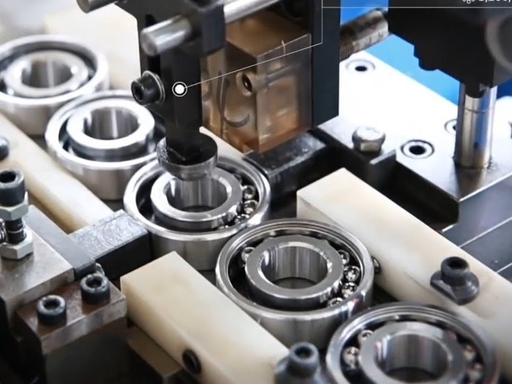
The Dual Challenge: Hygiene and Performance
Food processing facilities present one of the most hostile environments for mechanical components. Bearings must withstand frequent, high-pressure washdowns with caustic cleaning agents, steam, and extreme temperature fluctuations, all while preventing lubricant leakage that could compromise product safety.
The primary challenge lies in balancing corrosion resistance with load-carrying capacity. Standard steel bearings quickly succumb to rust in these settings, leading to particulate contamination and premature failure. This is where specialized food grade bearings, typically constructed from AISI 440C stainless steel or engineered polymers, become indispensable.
Understanding FDA Compliance: What It Really Means
A common misconception in the industry is that a bearing can be “FDA Approved.” In reality, the U.S. Food and Drug Administration (FDA) does not approve individual mechanical components like bearings. Instead, compliance is achieved through adherence to specific FDA Title 21 CFR regulations regarding materials that come into incidental contact with food.
When sourcing food grade bearings, verify that the manufacturer provides documentation confirming compliance with the following standards:
| Regulatory Standard | Scope of Application | Key Requirement for Bearings |
|---|---|---|
| 21 CFR 178.3570 | Lubricants with incidental food contact | Lubricants must be NSF H1 registered and non-toxic. |
| 21 CFR 177.2420 | Acetal resins (Polymer bearings) | Polymer materials must meet extractive limits for food safety. |
| 21 CFR 175.300 | Resinous and polymeric coatings | Coatings on bearing cages or seals must be food-safe. |
| NSF/ANSI 51 | Food Equipment Materials | Voluntary standard verifying materials are safe for food zones. |
Expert Insight: Always request a Letter of Guarantee or a Material Declaration of Conformity from your bearing supplier. Reputable manufacturers will provide traceability for every component, ensuring that even the grease and seal materials meet FDA guidelines.
Surviving the Washdown: Design Features That Matter
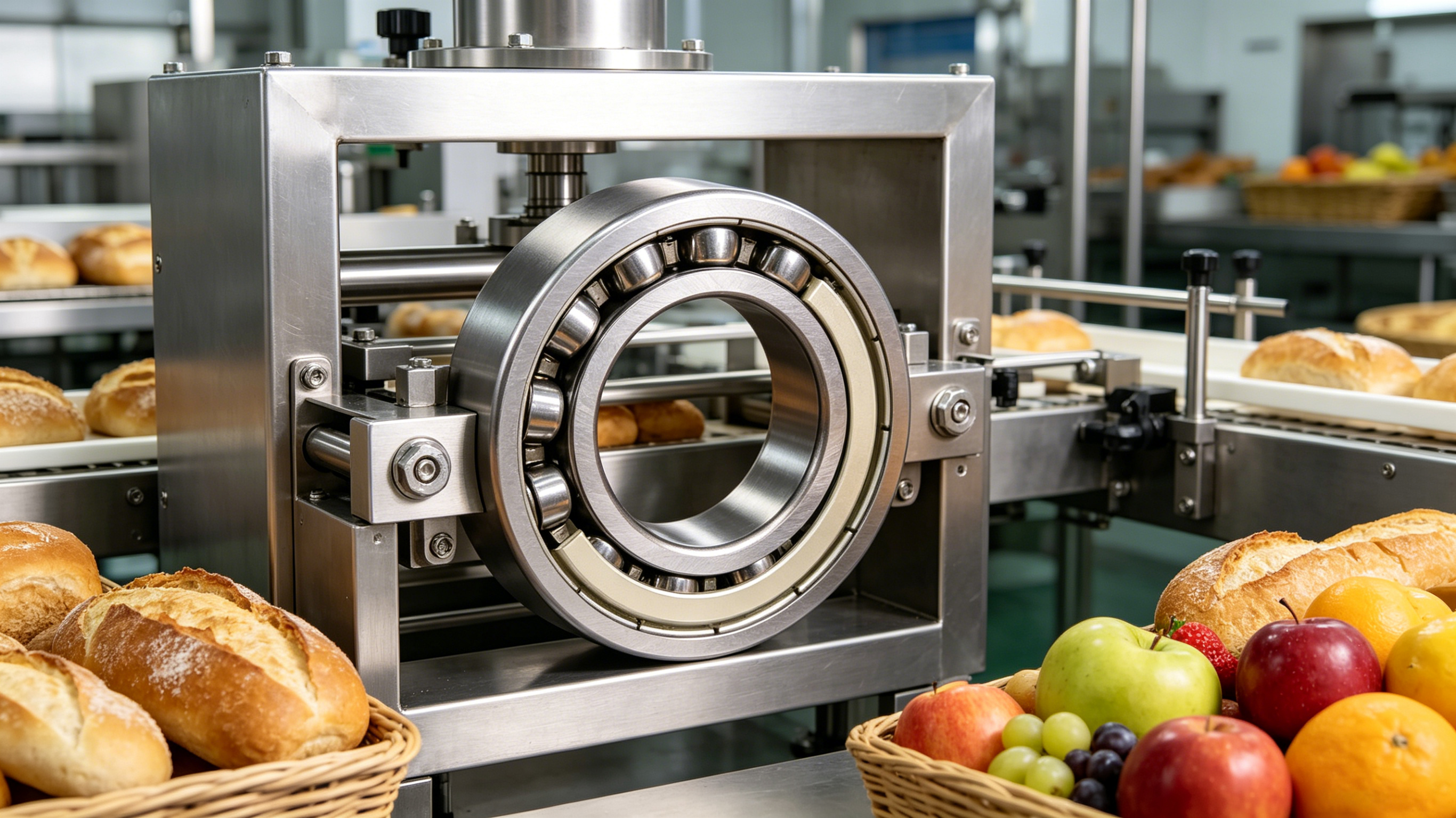
Washdown environments require more than just stainless steel; they demand intelligent engineering. High-pressure water jets can penetrate standard seals, washing out lubricant and introducing bacteria-laden water into the bearing cavity.
Key design features for washdown-ready bearings include:
- Integrated Sealing Systems: Multi-lip contact seals made from FDA-compliant elastomers (like Viton or NBR) are critical. Some advanced designs feature a “labyrinth” seal combined with a contact seal to create a physical barrier against water ingress.
- Self-Lubricating Technology: To eliminate the risk of lubricant leakage, many food-grade bearings utilize solid oil or polymer-impregnated lubrication. These systems retain lubricant within the bearing matrix, reducing maintenance frequency and contamination risk.
- Corrosion-Resistant Cages: While the rings may be stainless steel, standard nylon cages can absorb moisture and harbor bacteria. Glass-fiber reinforced PEEK or stainless steel cages are preferred for their chemical resistance and cleanability.
Material Selection Guide: Matching Bearing to Application
Not all food-grade bearings are created equal. Selecting the right material depends on the specific zone of operation and the type of stress involved. Below is a comparison to guide your selection process:
| Material Type | Best Use Case | Pros | Cons |
|---|---|---|---|
| AISI 440C Stainless | General food processing, conveyors | High load capacity, magnetic, cost-effective | Moderate corrosion resistance; requires regular relubrication. |
| AISI 316 Stainless | Marine environments, high-salt, acidic foods | Superior corrosion resistance, non-magnetic | Lower load capacity than 440C; higher cost. |
| Engineering Polymers (POM/PEEK) | Packaging lines, light loads, dry zones | No lubrication needed, lightweight, quiet | Limited temperature range; lower load capacity. |
| Hybrid Ceramic (Si3N4) | High-speed mixers, extreme washdown | Electrically insulating, zero corrosion, long life | High initial investment; brittle under shock loads. |
Maintenance Strategies for Longevity
Even the best food-grade bearing will fail if maintenance protocols are ignored. In washdown environments, the maintenance strategy must shift from “run-to-failure” to predictive hygiene.
- Visual Inspections: Implement daily checks for seal integrity. A compromised seal is often visible as a discoloration or grease streak around the housing.
- Lubrication Schedules: If using relubricatable bearings, adhere strictly to intervals. Over-greasing can attract debris, while under-greasing leads to metal-on-metal wear. Always use NSF H1 certified grease.
- Housing Design: Ensure bearing housings are sloped to prevent water pooling. Flat surfaces are breeding grounds for Listeria and Salmonella. Consider using stainless steel pillow blocks with smooth, crevice-free designs that comply with EHEDG (European Hygienic Engineering & Design Group) guidelines.
The Cost of Non-Compliance
The financial implications of choosing the wrong bearing extend far beyond the replacement part cost. A single recall due to metal shavings or bacterial contamination can cost millions in lost revenue, legal fees, and brand damage. Furthermore, unplanned downtime in a continuous processing line can disrupt supply chains and lead to spoilage of perishable goods.
Investing in high-quality, compliant food-grade bearings is an insurance policy for your production line. By prioritizing FDA-compliant materials, advanced sealing technologies, and proactive maintenance, you ensure that your equipment supports, rather than jeopardizes, your commitment to food safety.
Final Thoughts for Industry Professionals
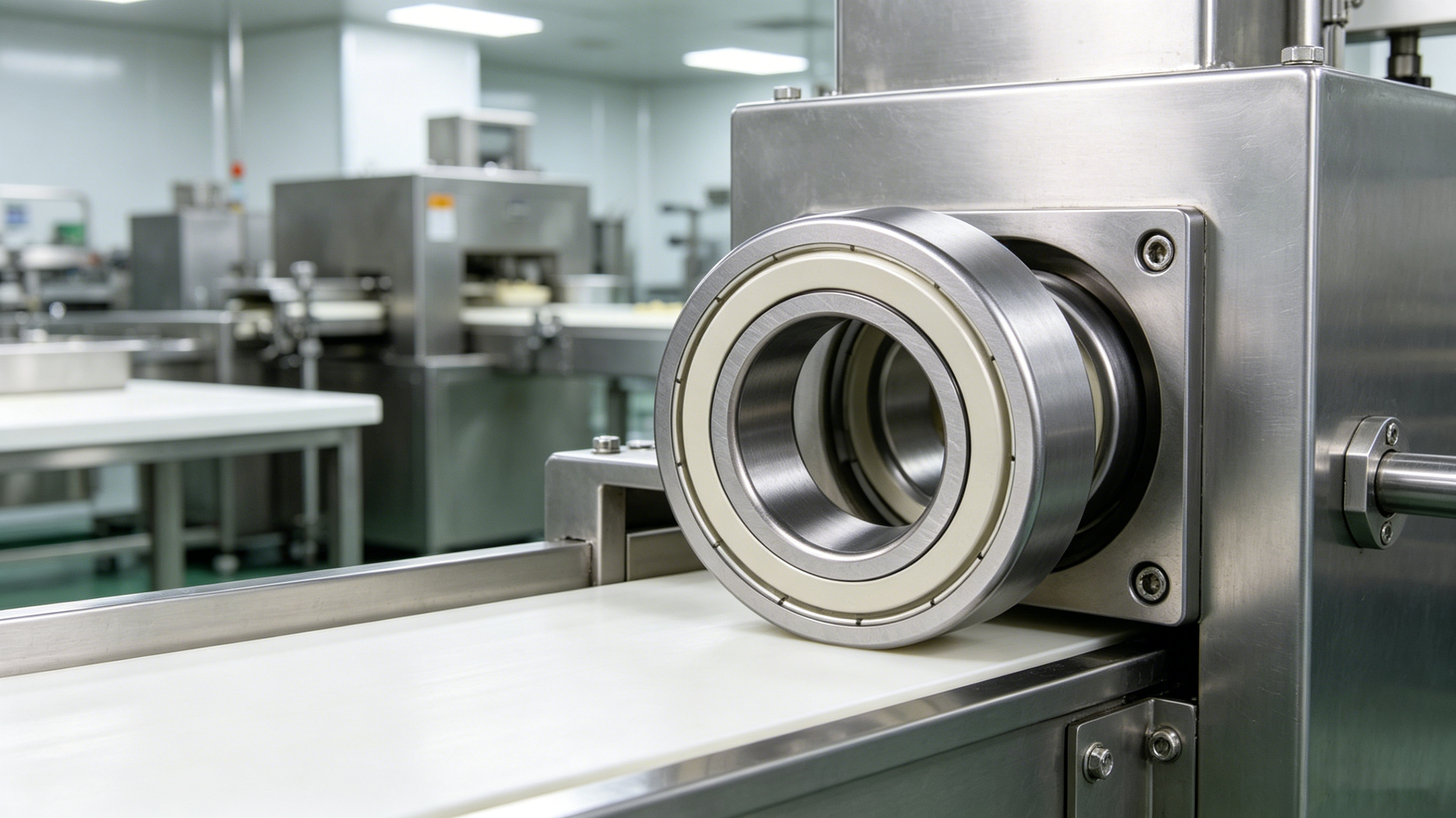
Navigating the landscape of food-grade bearings requires a partnersip with suppliers who understand both mechanical engineering and food safety regulations. When evaluating vendors, look beyond the catalog specs. Ask about their testing protocols, their supply chain transparency, and their experience in your specific sub-industry (e.g., dairy vs. bakery vs. meat processing).
In an era where consumer trust is paramount, the humble bearing plays a vital role in delivering safe, high-quality food to the table. Make sure yours is up to the task.
Frequently Asked Questions (FAQ)
1. Does the FDA officially “approve” food-grade bearings?
No. The FDA does not approve mechanical components. Compliance is achieved by ensuring all bearing materials and lubricants meet specific FDA Title 21 CFR regulations for incidental food contact.
No. The FDA does not approve mechanical components. Compliance is achieved by ensuring all bearing materials and lubricants meet specific FDA Title 21 CFR regulations for incidental food contact.
2. What is the difference between NSF H1 and H2 lubricants?
NSF H1 lubricants are safe for incidental contact with food, making them ideal for food-processing equipment. H2 lubricants are strictly for use on machinery where there is no possibility of food contact.
NSF H1 lubricants are safe for incidental contact with food, making them ideal for food-processing equipment. H2 lubricants are strictly for use on machinery where there is no possibility of food contact.
3. Which stainless steel is best for high-salt or acidic environments?
AISI 316 stainless steel is recommended over 440C for highly corrosive environments because it offers superior resistance to chlorides, acids, and saltwater.
AISI 316 stainless steel is recommended over 440C for highly corrosive environments because it offers superior resistance to chlorides, acids, and saltwater.
4. How can I prevent water from entering my bearings during washdowns?
Use bearings with integrated multi-lip seals or labyrinth seal designs made from FDA-compliant elastomers like Viton. Properly sloped housings also help prevent water pooling.
Use bearings with integrated multi-lip seals or labyrinth seal designs made from FDA-compliant elastomers like Viton. Properly sloped housings also help prevent water pooling.
5. Are polymer bearings a good alternative to metal?
Yes, engineering polymers (like PEEK or POM) are excellent for light-load, dry zones. They require no lubrication, eliminating contamination risks, though they cannot handle heavy loads or extreme temperatures.
Yes, engineering polymers (like PEEK or POM) are excellent for light-load, dry zones. They require no lubrication, eliminating contamination risks, though they cannot handle heavy loads or extreme temperatures.
6. How often should I relubricate food-grade bearings?
Follow the manufacturer’s strict maintenance schedule using only NSF H1 certified grease. Alternatively, consider self-lubricating or solid-oil bearings to eliminate relubrication entirely.
Post time: Jun-15-2026