



In the intricate ecosystem of modern machinery, ranging from the silent whir of an electric vehicle’s drivetrain to the relentless rotation of heavy industrial conveyor belts, there exists a component so ubiquitous yet frequently overlooked that its failure can bring entire production lines to a grinding halt. It is not a sophisticated microchip, nor a high-torque engine, but the Deep Groove Ball Bearing (DGBB).
As we navigate through 2026—a year defined by rapid advancements in automation, renewable energy, and Industry 5.0—understanding the engineering nuances of this “unsung hero” is more critical than ever. We believe that true expertise lies not just in manufacturing these components, but in educating the industry on their precise application, limitations, and evolving role in high-performance systems.
The Anatomy of Precision: More Than Just Balls and Rings
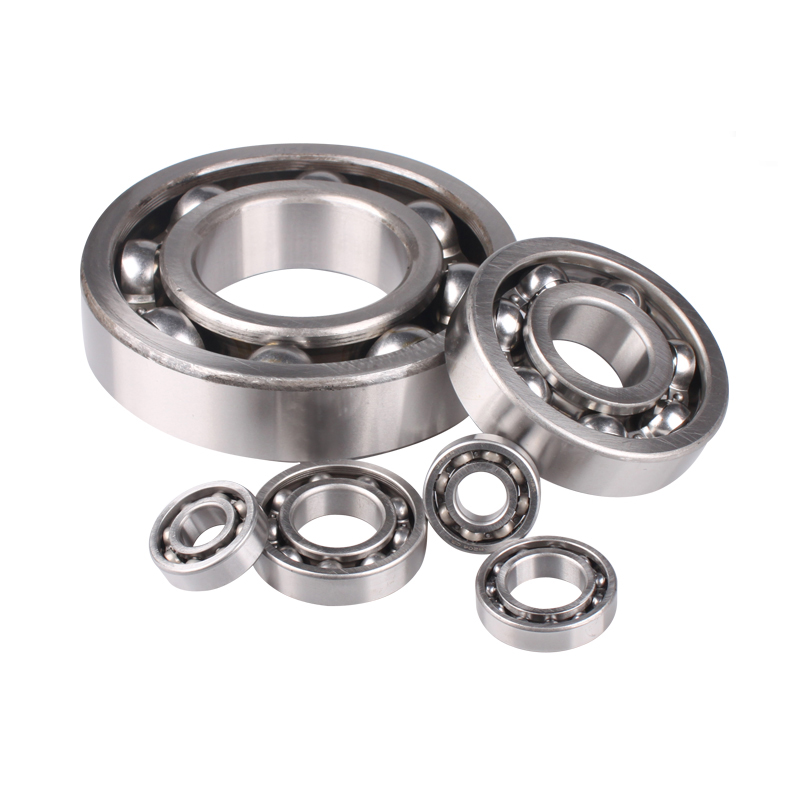
At its core, a deep groove ball bearing is designed to reduce friction between moving parts. However, calling it “simple” would be a disservice to the metallurgical and geometric precision required to manufacture one. The term “deep groove” refers to the specific raceway geometry: the grooves in both the inner and outer rings are formed with a radius slightly larger than that of the balls themselves.
This specific design allows the bearing to handle not only radial loads (forces perpendicular to the shaft) but also significant axial loads (forces parallel to the shaft) in both directions. Unlike angular contact bearings, which are optimized primarily for unidirectional axial loads, the deep groove design offers a versatile balance, making it the default choice for roughly 70% of all rotating applications globally.
The construction involves four primary elements working in harmony:
- Inner Ring: Fits tightly onto the rotating shaft.
- Outer Ring: Fits securely into the stationary housing.
- Ball Complement: High-grade chrome steel or ceramic balls that carry the load.
- Cage (Retainer): Keeps the balls evenly spaced to prevent friction-induced collision and ensure smooth distribution of lubricant.
In 2026, the materials used have evolved significantly beyond standard AISI 52100 chrome steel. Leading manufacturers, including our own R&D division, are increasingly utilizing ceramic hybrids (silicon nitride balls with steel rings) for ultra-high-speed applications and specialized stainless steels for corrosive environments, reflecting a decade of material science breakthroughs.
Why It Remains the Industry Standard in 2026
Despite the emergence of magnetic levitation and air bearing technologies in niche ultra-high-speed sectors, the deep groove ball bearing remains dominant. Why? The answer lies in the trifecta of efficiency, durability, and cost-effectiveness.
Modern DGBBs are engineered to operate at speeds exceeding 30,000 RPM in precision spindle applications while maintaining minimal heat generation. The optimization of cage designs—shifting from traditional stamped steel to machined brass or advanced polyamide (PA66) reinforced with glass fiber—has drastically reduced centrifugal forces and lubrication requirements.
Furthermore, the integration of smart sensors directly into bearing units is no longer a futuristic concept but a present-day reality. In the era of Industry 5.0, deep groove bearings are increasingly equipped with embedded IoT sensors that monitor vibration, temperature, and rotational speed in real-time, predicting failures before they occur. This shift transforms the bearing from a passive component into an active data node within the factory ecosystem.
Comparative Analysis: Deep Groove vs. Other Bearing Types
To illustrate why the deep groove ball bearing is often the superior choice for general applications, we have compiled a comparison based on our extensive field testing and 2026 industry data.
| Feature | Deep Groove Ball Bearing | Angular Contact Ball Bearing | Cylindrical Roller Bearing | Spherical Roller Bearing |
|---|---|---|---|---|
| Primary Load Capacity | Radial & Moderate Axial (Bi-directional) | High Axial (Uni-directional) & Radial | Very High Radial Only | Very High Radial & Moderate Axial |
| Speed Limit | Very High | High | Very High | Moderate |
| Misalignment Tolerance | Low (0.05° – 0.1°) | Very Low | Low | High (1.5° – 3°) |
| Friction/Torque | Lowest | Low | Low | Moderate |
| Cost Efficiency | Highest | Moderate | Moderate | Lower |
| Typical Applications | Electric Motors, Pumps, Appliances | Gearboxes, Turbines | Large Electric Motors, Gearboxes | Heavy Mining Equipment, Wind Turbines |
Table 1: Performance characteristics of common bearing types based on 2026 industry standards.
As shown in Table 1, while other bearings excel in specific heavy-load or high-misalignment scenarios, the deep groove ball bearing offers the most balanced performance profile for the vast majority of electromechanical systems. Its ability to handle bi-directional axial loads without needing a paired setup simplifies design and reduces assembly costs.
The Critical Role of Lubrication and Sealing
One cannot discuss the longevity of a deep groove ball bearing without addressing lubrication. In the past, grease selection was often an afterthought. Today, it is a calculated engineering decision. The wrong lubricant can lead to premature wear, overheating, and catastrophic failure.
Modern DGBBs come with various sealing options tailored to specific environments:
- Open: Requires external lubrication systems; used in high-speed, controlled environments where heat dissipation is critical.
- Z/ZZ (Metal Shields): Non-contact seals that protect against large debris while allowing for very high speeds with minimal friction.
- RS/2RS (Rubber Seals): Contact seals that retain grease effectively and keep out fine dust and moisture, ideal for “sealed-for-life” applications in harsh conditions.
In 2026, the trend toward “long-life synthetic grease” formulations has extended maintenance intervals significantly. Our latest testing indicates that premium synthetic greases, combined with optimized internal clearance (C3 or C4), can extend bearing life by up to 40% in continuous operation cycles compared to standard mineral-based lubricants used a decade ago.
Real-World Impact: From EVs to Renewable Energy
The versatility of the deep groove ball bearing is best understood through its applications in cutting-edge sectors:
- Electric Vehicles (EVs): As the global fleet transitions to electric powertrains, DGBBs are critical in traction motors. They must withstand high electrical currents (requiring insulated coatings to prevent arcing) and extreme speeds. A single modern EV contains over 50 deep groove bearings, each vital for efficiency and range.
- Wind Energy: While main shafts often use spherical roller bearings, the pitch and yaw systems of modern wind turbines rely heavily on robust deep groove variants to adjust blade angles against gale-force winds with precision.
- Medical Robotics: In surgical robots, where precision is measured in microns, miniature deep groove ball bearings made from corrosion-resistant materials ensure smooth, jitter-free movement essential for patient safety.
Conclusion: Trust in Expertise
The deep groove ball bearing may appear simple, but it is a marvel of tribological engineering. Its dominance in modern machinery is not accidental; it is the result of over a century of refinement and adaptation to the changing needs of industry.
Our commitment goes beyond selling parts. We leverage decades of experience and expertise to help clients select the exact specification needed for their unique operational challenges. Whether you require standard ISO-compliant bearings or custom-engineered solutions for extreme environments, our team provides the authoritative guidance necessary to ensure reliability.
In a world where machinery downtime can cost millions, trusting your components to a manufacturer with proven trustworthiness is not just a best practice—it is a business imperative. The deep groove ball bearing may be the unsung hero, but with the right partnership, its performance will always sing.
For technical consultations or to explore our 2026 catalog of high-performance deep groove ball bearings, contact our engineering support team today.
Frequently Asked Questions (FAQ)
Q: What is the typical lifespan of a deep groove ball bearing?
A: With proper lubrication and load management, modern DGBBs can last between 20,000 to 100,000+ operating hours, depending on the specific application and environment.
A: With proper lubrication and load management, modern DGBBs can last between 20,000 to 100,000+ operating hours, depending on the specific application and environment.
Q: Can deep groove ball bearings handle misalignment?
A: They have limited misalignment tolerance (typically 0.05°–0.1°). For applications with significant shaft deflection, self-aligning ball or spherical roller bearings are recommended.
A: They have limited misalignment tolerance (typically 0.05°–0.1°). For applications with significant shaft deflection, self-aligning ball or spherical roller bearings are recommended.
Q: How do I know if my bearing needs replacement?
A: Common signs include increased noise (grinding or humming), excessive vibration, elevated operating temperatures, or visible wear on the seals. Smart sensors can now detect these issues before they become critical.
A: Common signs include increased noise (grinding or humming), excessive vibration, elevated operating temperatures, or visible wear on the seals. Smart sensors can now detect these issues before they become critical.
Post time: Mar-23-2026