


The electric vehicle (EV) landscape is undergoing a paradigm shift. As manufacturers race to produce cars with longer ranges, faster acceleration, and higher top speeds, the limitations of century-old mechanical components are becoming glaringly apparent. At the heart of this transformation is a critical but often overlooked component: the bearing. Traditional all-steel bearings, once the undisputed standard for automotive applications, are increasingly being replaced by ceramic hybrid bearings in high-performance EVs. This transition is not merely a luxury upgrade; it is an engineering necessity driven by the unique physics of electric propulsion.
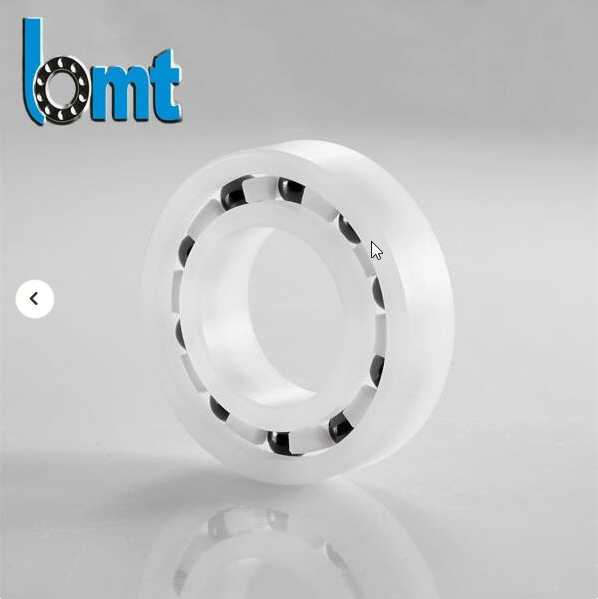
In 2026, with EV motor speeds routinely exceeding 20,000 RPM and some performance models pushing past 30,000 RPM, the limitations of steel have become a bottleneck. Major manufacturers, from Tesla to emerging hyper-EV startups, are now integrating hybrid bearings—featuring silicon nitride (Si₃N₄) rolling elements and steel races—as standard equipment in their flagship models. But what exactly makes these components superior, and why is the transition happening now?
The Electric Challenge: Why Steel Falters
Electric motors operate under conditions vastly different from internal combustion engines (ICE). While ICE vehicles rely on bearings that handle moderate speeds and significant radial loads, EV motors face a trifecta of challenges: extreme rotational speeds, electrical current passage, and the need for maximal efficiency to preserve battery life.
Traditional steel bearings struggle in this environment. At high speeds, the centrifugal forces acting on heavy steel balls increase friction and heat generation, leading to energy loss. More critically, EVs suffer from a phenomenon known as Electrical Discharge Machining (EDM). Stray currents from the inverter can pass through the motor shaft and bearings to the ground. In steel bearings, this causes arcing, which pits the raceways and leads to premature failure, often manifesting as annoying whining noises or catastrophic seizure.
Enter Silicon Nitride: The Game Changer
Ceramic hybrid bearings utilize balls made from silicon nitride, a advanced technical ceramic, while retaining the outer and inner rings of high-grade bearing steel. This “hybrid” approach offers the best of both worlds: the toughness and cost-effectiveness of steel rings with the superior physical properties of ceramic balls.
Key Advantages in EV Applications
1. Electrical Insulation
Silicon nitride is an electrical insulator. By replacing the conductive steel balls with non-conductive ceramic ones, the path for stray currents is broken. This effectively eliminates EDM damage, significantly extending bearing life and ensuring the silent operation that EV owners expect.
Silicon nitride is an electrical insulator. By replacing the conductive steel balls with non-conductive ceramic ones, the path for stray currents is broken. This effectively eliminates EDM damage, significantly extending bearing life and ensuring the silent operation that EV owners expect.
2. Reduced Weight and Centrifugal Force
Silicon nitride is approximately 60% lighter than steel. In high-speed applications, this reduction in mass drastically lowers centrifugal forces. The result is less friction, lower operating temperatures, and the ability to sustain higher RPMs without compromising structural integrity.
Silicon nitride is approximately 60% lighter than steel. In high-speed applications, this reduction in mass drastically lowers centrifugal forces. The result is less friction, lower operating temperatures, and the ability to sustain higher RPMs without compromising structural integrity.
3. Stiffness and Precision
Ceramic materials are harder and stiffer than steel. This reduces deformation under load, maintaining tighter tolerances at high speeds. For EV drivers, this translates to more responsive acceleration and reduced energy waste due to friction.
Ceramic materials are harder and stiffer than steel. This reduces deformation under load, maintaining tighter tolerances at high speeds. For EV drivers, this translates to more responsive acceleration and reduced energy waste due to friction.
4. Thermal Stability
EV motors generate significant heat, especially during rapid charging or aggressive driving. Ceramic bearings have a lower coefficient of thermal expansion than steel, meaning they maintain their preload and clearance settings even as temperatures fluctuate, preventing seizure or excessive play.
EV motors generate significant heat, especially during rapid charging or aggressive driving. Ceramic bearings have a lower coefficient of thermal expansion than steel, meaning they maintain their preload and clearance settings even as temperatures fluctuate, preventing seizure or excessive play.
Comparative Analysis: Steel vs. Hybrid Ceramic
To understand the magnitude of this shift, consider the direct performance comparisons between traditional all-steel bearings and modern hybrid ceramic units in a typical high-speed EV motor context (25,000+ RPM):
| Feature | All-Steel Bearings | Hybrid Ceramic Bearings (Si₃N₄) | Impact on EV Performance |
|---|---|---|---|
| Density | ~7.8 g/cm³ | ~3.2 g/cm³ | 60% weight reduction in rolling elements lowers centrifugal force, enabling higher max speeds. |
| Electrical Conductivity | High (Conductive) | Very Low (Insulating) | Prevents EDM erosion, eliminating a primary cause of EV motor bearing failure. |
| Hardness | ~60-65 HRC | ~78-80 HRA | Superior wear resistance, extending service life under high-load conditions. |
| Thermal Expansion | Higher | Lower | Stable performance across wide temperature ranges; reduces risk of thermal seizure. |
| Friction Coefficient | Higher at high speeds | Significantly Lower | Increased efficiency (1-2% gain), directly translating to extended driving range. |
| Lubrication Needs | High | Low | Can operate with less grease or in starved lubrication conditions; reduces drag. |
| Cost | Low | Moderate to High | Higher upfront cost offset by longer lifespan and warranty reliability. |
Table 1: Performance metrics comparing traditional steel bearings with silicon nitride hybrid bearings in high-speed EV applications.
Market Momentum and Industry Adoption
The market data reflects this technological pivot. According to recent industry analysis, the global market for hybrid bearings in electric vehicles was valued at approximately $302 million in 2024 and is projected to surge to $750 million by 2031, representing a compound annual growth rate (CAGR) of over 13%. This growth is fueled by the escalating demand for 800V architectures and ultra-fast charging capabilities, which place even greater stress on drivetrain components.
In late 2025, several prominent EV manufacturers announced that their next-generation platforms would exclusively use hybrid ceramic bearings in their traction motors, citing “unacceptable failure rates” with steel equivalents in prototype testing at sustained high speeds.
Addressing the Cost Concern
Historically, the primary barrier to entry for ceramic bearings was cost. Silicon nitride balls are significantly more expensive to manufacture than steel ones due to the complex sintering and grinding processes required. However, as production scales and manufacturing techniques improve, the price gap is narrowing.
Furthermore, when viewed through the lens of total cost of ownership, hybrid bearings often prove cheaper. The elimination of warranty claims related to motor noise and bearing failure, combined with the efficiency gains that allow for slightly smaller battery packs to achieve the same range, creates a compelling economic case for automakers. As one senior powertrain engineer at a leading European EV maker noted in a 2025 conference, “The few extra dollars per bearing are negligible compared to the cost of a recalled drivetrain.”
The Road Ahead
As we move further into 2026 and beyond, the distinction between “premium” and “standard” EV components continues to blur. What was once reserved for hypercars and Formula E race cars is now becoming the baseline for mass-market electric vehicles.
The rise of ceramic hybrid bearings marks a maturation of EV technology. It signifies an industry that has moved past simply electrifying the powertrain to optimizing every component for the unique physics of electric propulsion. For consumers, this means quieter, faster, and more reliable vehicles with greater range. For the industry, it represents a critical step in shedding the legacy constraints of the internal combustion era.
While all-ceramic bearings (where both rings and balls are ceramic) exist, they remain niche due to brittleness concerns and extreme costs. The hybrid approach has emerged as the “Goldilocks” solution—offering the essential benefits of ceramic where they matter most (the rolling elements) while maintaining the durability and affordability of steel for the housing.
In the race to perfect the electric vehicle, every watt of efficiency and every decibel of noise reduction counts. By ditching traditional steel for the advanced capabilities of silicon nitride hybrids, the automotive industry is ensuring that the future of mobility is not just electric, but enduringly efficient.
Frequently Asked Questions (FAQ)
Q1: Are ceramic hybrid bearings significantly more expensive?
A: Yes, upfront costs are typically 2–3 times higher than steel. However, this is offset by longer lifespan, fewer warranty claims, and improved vehicle efficiency, making them cost-effective over the vehicle’s life.
A: Yes, upfront costs are typically 2–3 times higher than steel. However, this is offset by longer lifespan, fewer warranty claims, and improved vehicle efficiency, making them cost-effective over the vehicle’s life.
Q2: Do they make the car quieter?
A: Absolutely. Their lighter weight reduces vibration, and their electrical insulation prevents the “whining” noise caused by electrical arcing (EDM) common in steel bearings.
A: Absolutely. Their lighter weight reduces vibration, and their electrical insulation prevents the “whining” noise caused by electrical arcing (EDM) common in steel bearings.
Q3: Can I retrofit my existing EV with them?
A: Technically yes, but it is rarely recommended. Retrofitting often voids warranties, requires specialized tools for motor disassembly, and offers little benefit compared to buying a newer model where they are standard.
A: Technically yes, but it is rarely recommended. Retrofitting often voids warranties, requires specialized tools for motor disassembly, and offers little benefit compared to buying a newer model where they are standard.
Post time: Mar-09-2026