


In the industrial landscape of 2026, where supply chain resilience and asset longevity are paramount, the preservation of idle machinery has never been more critical. Whether due to seasonal shutdowns, economic slowdowns, or strategic reserves, equipment often sits stationary for extended periods. While operators vigilantly monitor running machinery for heat and vibration, a silent killer often goes unnoticed in static assets: False Brinelling.
Unlike true brinelling, which results from excessive static loads causing permanent plastic deformation, false brinelling is a wear phenomenon caused by small-amplitude oscillations or vibrations while the bearing is stationary. This subtle movement prevents the formation of a protective lubricant film, leading to fretting corrosion, material removal, and ultimately, catastrophic failure upon restart. As industries increasingly adopt “just-in-case” inventory strategies and face fluctuating operational schedules, understanding and mitigating this hidden danger is essential for maintaining reliability and reducing total cost of ownership.
Understanding the Mechanism: Why Static Isn’t Safe
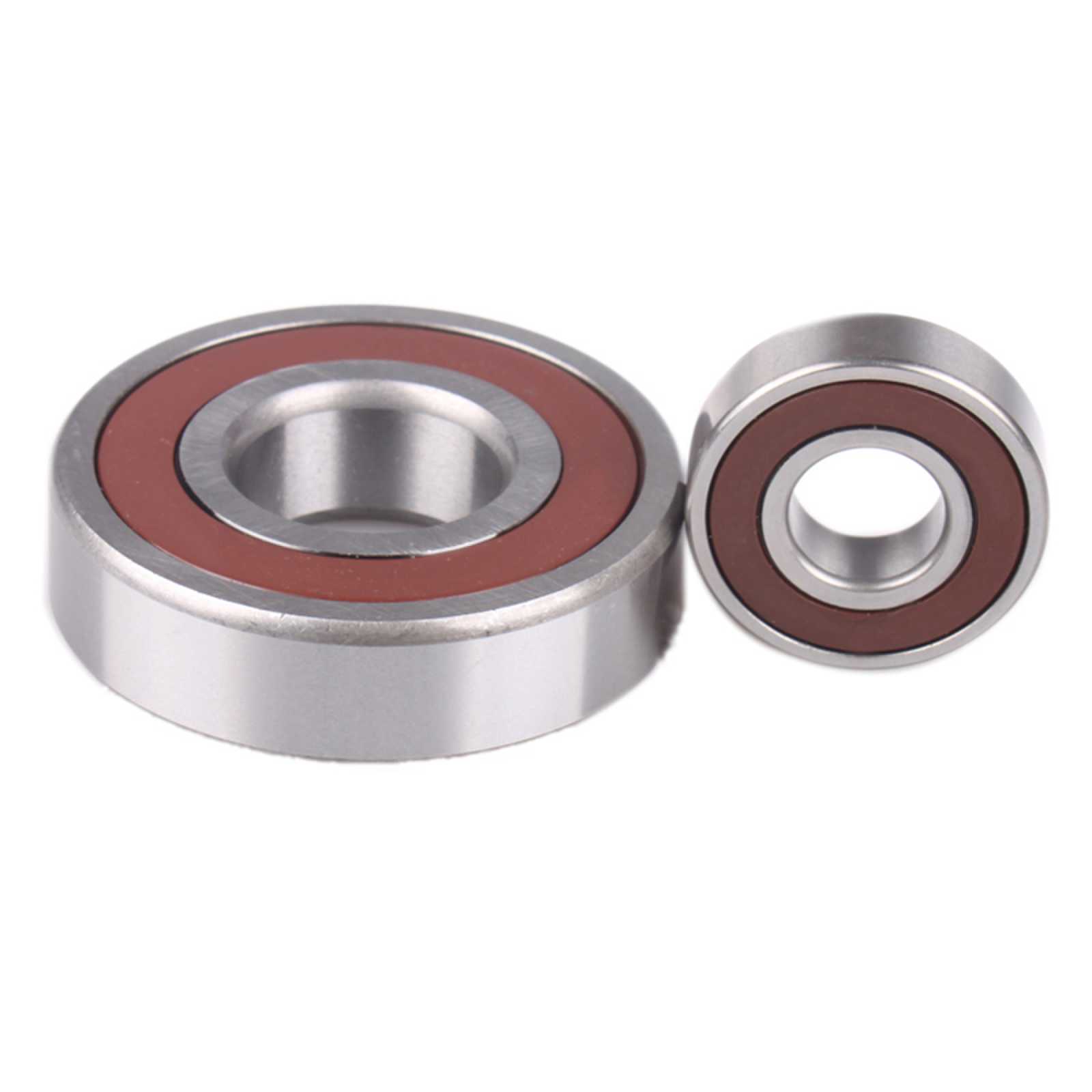
False brinelling occurs when rolling elements (balls or rollers) vibrate slightly within their raceways without completing a full revolution. These micro-movements, often induced by external sources like nearby traffic, wind turbines, or even HVAC systems, grind away the protective oxide layer on the metal surface. Without the replenishing action of rotation to bring fresh lubricant into the contact zone, the exposed metal reacts with oxygen and moisture, creating abrasive iron oxide debris. This debris acts as lapping compound, accelerating wear and creating distinct elliptical indentations that mimic true brinelling but are fundamentally different in origin.
The consequences are severe. Bearings affected by false brinelling often exhibit increased noise, vibration, and heat immediately upon startup. In many cases, the damage is irreversible, necessitating premature replacement and unplanned downtime—costs that can far exceed the price of the component itself.
Table 1: False Brinelling vs. True Brinelling – Key Differences
| Feature | False Brinelling | True Brinelling |
|---|---|---|
| Primary Cause | Vibration or small oscillations while stationary | Excessive static load or impact shock |
| Movement | Micro-slip (no full rotation) | Static deformation or heavy impact |
| Appearance | Elliptical wear marks, often with reddish-brown debris | Permanent indentations matching rolling element spacing |
| Lubrication Role | Lubricant starvation in contact zone due to lack of motion | Lubricant film breakdown under extreme pressure |
| Prevention Focus | Isolation from vibration, proper storage, specific greases | Load management, proper handling, hardness selection |
Strategic Prevention: A Multi-Layered Approach
Mitigating false brinelling requires a proactive strategy that encompasses storage conditions, lubrication selection, and maintenance protocols. In 2026, advancements in tribology have provided us with more effective tools than ever before, but fundamental best practices remain the cornerstone of protection.
1. Optimal Storage Environments
The first line of defense is controlling the environment. Machinery should be stored in areas isolated from sources of vibration. If isolation is impossible, implementing damping measures such as rubber pads or dedicated storage racks can significantly reduce transmitted energy. Furthermore, maintaining a stable temperature and low humidity levels prevents condensation, which exacerbates corrosive wear.
2. Advanced Lubrication Solutions
Not all greases are created equal when it comes to protecting idle bearings. Traditional mineral oil-based greases may separate or drain away from the contact zone over time, leaving surfaces vulnerable. Modern synthetic greases formulated with high-viscosity base oils and specialized anti-wear additives (such as molybdenum disulfide or zinc dialkyldithiophosphate) offer superior staying power and film strength.
Recent studies, including those highlighted in tribology journals in late 2025, emphasize the importance of grease consistency (NLGI grade). A slightly harder grease (e.g., NLGI 3) may resist displacement better than a softer one, ensuring the rolling elements remain cushioned even during prolonged stillness. Additionally, greases containing corrosion inhibitors are crucial for neutralizing any moisture that penetrates the seal.
Table 2: Recommended Grease Characteristics for Long-Term Storage
| Characteristic | Recommendation | Benefit |
|---|---|---|
| Base Oil Type | Synthetic (PAO or Ester) | Superior oxidation stability and low-temperature performance |
| Thickener | Lithium Complex or Polyurea | Excellent mechanical stability and resistance to water washout |
| Additives | Anti-wear (MoS2), Corrosion Inhibitors | Forms protective boundary layers; prevents rust formation |
| NLGI Grade | 2 or 3 (depending on application) | Balances pumpability with resistance to settling/displacement |
| Bleed Resistance | Low oil bleed rate | Ensures lubricant remains in the contact zone during storage |
3. Periodic Rotation Protocols
For extremely long-term storage (exceeding 6 months), relying solely on grease may not be sufficient. Implementing a scheduled rotation protocol can be highly effective. Manually rotating the shafts every few weeks ensures that the rolling elements move to a new position, redistributing the lubricant and preventing localized wear. Even a partial turn (e.g., 90 degrees) can break the cycle of micro-vibration in the same spot.
Table 3: Maintenance Action Plan Based on Storage Duration
| Storage Duration | Risk Level | Recommended Actions |
|---|---|---|
| < 1 Month | Low | Standard packaging; ensure dry environment. |
| 1 – 6 Months | Moderate | Verify grease quality; isolate from major vibration sources; inspect seals. |
| 6 – 12 Months | High | Apply storage-specific grease; implement monthly shaft rotation (90°); monitor humidity. |
| > 12 Months | Critical | Full re-lubrication before storage; quarterly rotation; consider nitrogen purging for sealed units; pre-startup inspection mandatory. |
The Economic Impact of Neglect
Ignoring false brinelling can lead to staggering costs. Beyond the direct expense of replacing damaged bearings, facilities face the ripple effects of unplanned downtime, labor overtime for emergency repairs, and potential secondary damage to shafts and housings. In sectors like wind energy, where turbines may be idled due to grid constraints, or in maritime applications where vessels are laid up, the scale of potential loss is immense.
A case study from a European manufacturing plant in 2025 revealed that implementing a strict false brinelling prevention protocol reduced bearing-related failures during restart by 45%, saving an estimated €200,000 annually in maintenance and production losses. This underscores the value of investing in preventive measures today to safeguard assets for tomorrow.
Conclusion: Vigilance is Key
As we navigate an era of uncertain operational tempos, the assumption that “idle means safe” is a dangerous fallacy. False brinelling stands as a testament to the fact that even in stillness, machinery is subject to wear. By understanding the mechanisms behind this phenomenon and adopting a comprehensive strategy involving environmental control, advanced lubrication, and disciplined maintenance routines, operators can effectively protect their assets.
At DEMY, we are committed to providing not just high-quality components, but the expertise and solutions needed to ensure their longevity. Whether through our range of specialized storage greases or our consultative maintenance services, we stand ready to help you mitigate the hidden dangers of false brinelling and keep your operations running smoothly, no matter how long the shutdown lasts.
Frequently Asked Questions (FAQ)
Q: How quickly can false brinelling occur?
A: Damage can begin within days or even hours if a stationary bearing is exposed to significant vibration without adequate lubrication protection.
A: Damage can begin within days or even hours if a stationary bearing is exposed to significant vibration without adequate lubrication protection.
Q: Can I use standard grease for long-term storage?
A: Standard greases often separate or drain over time. For shutdowns exceeding one month, specialized synthetic greases with high adhesion and anti-corrosion additives are strongly recommended.
A: Standard greases often separate or drain over time. For shutdowns exceeding one month, specialized synthetic greases with high adhesion and anti-corrosion additives are strongly recommended.
Q: Is rotating the shaft really necessary?
A: Yes. For storage longer than six months, periodically rotating the shaft (even by 90 degrees) redistributes lubricant and prevents wear from concentrating in one spot.
A: Yes. For storage longer than six months, periodically rotating the shaft (even by 90 degrees) redistributes lubricant and prevents wear from concentrating in one spot.
For more information on our false brinelling prevention solutions or to schedule a site audit, please contact our technical support team today.
Post time: Apr-07-2026