


In the high-stakes ecosystem of modern industrial manufacturing, the bearing is frequently misclassified as a commoditized afterthought—a simple ring of steel designed to reduce friction. However, as we navigate the complex economic landscape of 2026, the proliferation of counterfeit bearings has evolved from a peripheral nuisance into a central, forensic-level crisis for global supply chains. What often appears on a procurement spreadsheet as a strategic cost-saving measure frequently masks a catastrophic liability that extends far beyond the initial purchase price, threatening operational continuity, legal standing, and human life.
This comprehensive analysis delves deep into the “hidden costs” of fake bearings. By leveraging data from the World Bearings Association (WBA), recent forensic audits conducted in Q1 2026, and case studies from the automotive and renewable energy sectors, we illustrate why authenticity is not merely a preference but the only viable strategy for modern industry.
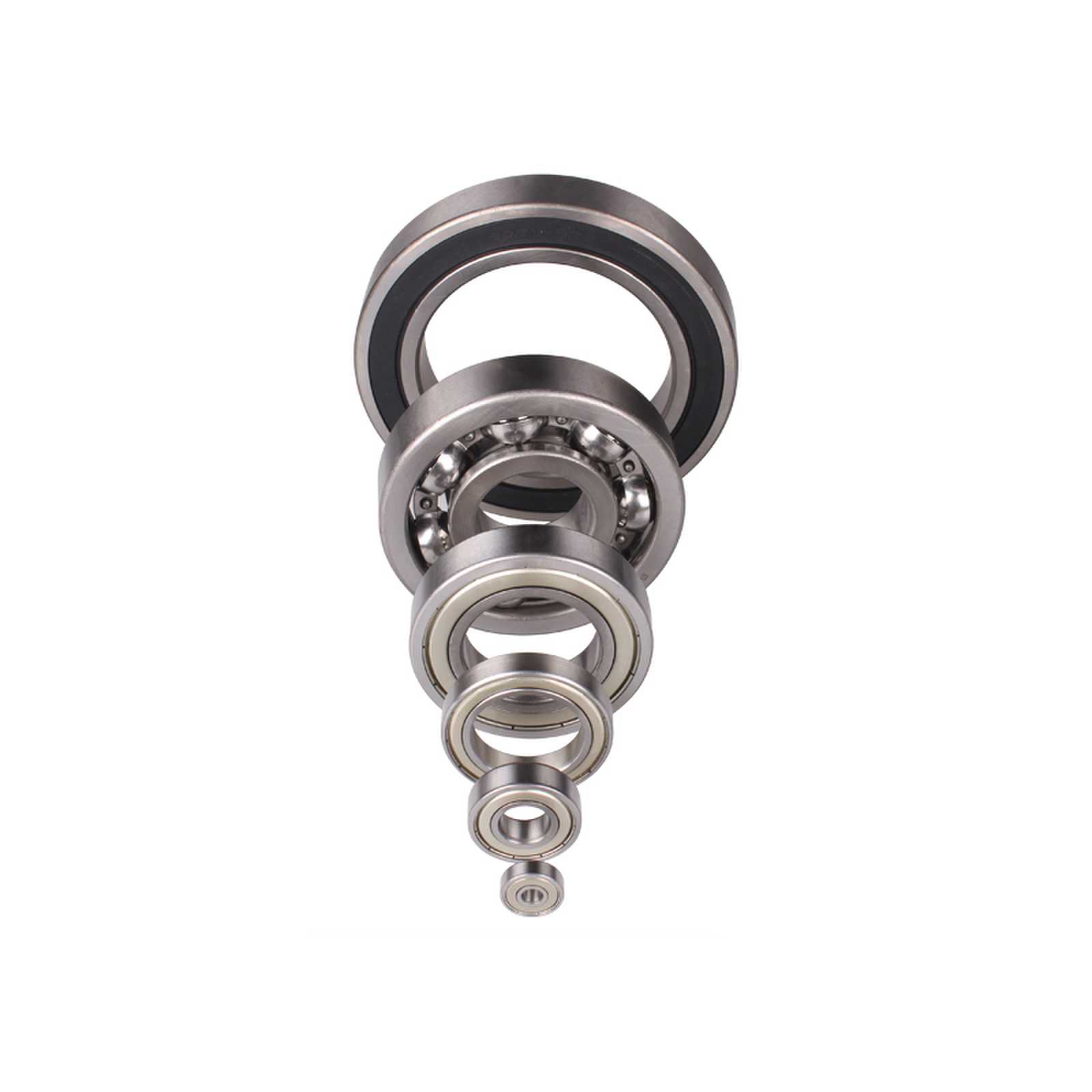
The Illusion of Savings: A Economic Trap
The primary driver for the influx of counterfeit bearings remains price sensitivity. In a 2026 market characterized by volatile raw material costs and aggressive just-in-time (JIT) manufacturing pressures, procurement managers are under immense scrutiny to reduce overheads. Counterfeiters exploit this vulnerability with surgical precision, offering products at 30% to 50% below legitimate market value.
These replicas, often originating from unregulated facilities with no adherence to ISO 9001 or IATF 16949 standards, have become alarmingly sophisticated. They mimic the packaging, laser etching, and branding of top-tier manufacturers, and Timken with a fidelity that fools even experienced buyers. The packaging may include fake QR codes that lead to cloned verification websites, creating a closed loop of deception.
However, the initial savings are a dangerous mirage. Forensic engineering analysis reveals that the total lifecycle cost (TLC) of a counterfeit bearing is exponentially higher than that of a genuine component. The discrepancy does not lie in the purchase order line item; it lies in the operational reality of failure. When a bearing fails prematurely, the cost equation shifts dramatically from the price of the part to the cost of the downtime, the damaged machinery, the lost production output, and the potential litigation.
Forensic Findings: Material Science and Failure Modes
Recent technical audits conducted by independent forensic labs in early 2026 have highlighted a disturbing trend in the metallurgical quality of counterfeit components. Genuine bearings undergo rigorous processes: vacuum degassed steel, precise heat treatment to achieve specific Rockwell hardness, super-finished raceways, and strict dimensional tolerance checks.
Counterfeit alternatives frequently bypass these critical steps. Analysis of seized goods in 2025-2026 shows the use of recycled, non-certified steel with inconsistent carbon content. Heat treatment is often superficial or entirely skipped, leading to core softness or surface brittleness. Lubricants used are frequently substandard, lacking the extreme pressure (EP) additives required for modern high-speed applications.
The consequences of these material shortcuts are quantifiable and severe, as illustrated in the comparative analysis below:
| Performance Metric | Genuine Bearing (2026 ISO Standard) | Counterfeit Bearing (Forensic Average) | Operational Risk Factor |
|---|---|---|---|
| Fatigue Life (L10) | 100% (Meets/Exceeds Design Spec) | < 40% of Design Specification | Critical: Unplanned stops |
| Dimensional Tolerance | ABEC 7 / ISO Class 2 or better | Often exceeds ABEC 1 / ISO Class 5 | High: Vibration & Noise |
| Hardness Consistency | Uniform throughout raceway | Surface hard only; soft core | Severe: Spalling & Deformation |
| Failure Mode | Predictable wear over time | Sudden, catastrophic seizure | Catastrophic: Secondary Damage |
| Warranty Coverage | Full Manufacturer Support & Liability | Zero / Voided Machine Warranty | Financial: 100% User Liability |
| Safety Incident Rate | < 0.1% (Industry Avg) | 39% (WBA 2025 Data) | Life-Threatening |
In 2026, this performance gap has widened as counterfeiters cut corners to match rising raw material costs while keeping prices artificially low to entice buyers.”
The Ripple Effect: Supply Chain Fragility in 2026
The impact of a single failed bearing extends well beyond the machine it resides in. In 2026, where global supply chains are optimized for leanness rather than redundancy, an unplanned downtime event caused by a counterfeit component can halt an entire production line, disrupting downstream logistics and violating service level agreements (SLAs).
Consider the forensic case study of a major electric vehicle (EV) bus manufacturer in late 2025. The integration of counterfeit bearings in wheel hubs, sourced through a gray-market distributor, led to a fleet-wide safety recall. The direct cost of replacing the bearings was approximately $150 per unit. However, the logistical nightmare of recalling 2,000 vehicles, the reputational damage to the brand, the stock price volatility, and the legal liabilities incurred totaled over $45 million. The World Bearings Association estimates that globally, counterfeit industrial goods threaten 5.4 million jobs and cause trillions in economic losses annually, with the bearing sector being a primary vector.
Furthermore, the use of non-compliant parts often voids the warranties of the larger machinery. If a multi-million dollar turbine or robotic arm fails because a $50 counterfeit bearing seized, the original equipment manufacturer (OEM) is not liable. The end-user bears the full cost of replacement, specialized labor, expedited shipping, and lost production time. In the renewable energy sector, where wind turbines are located in remote offshore sites, the cost of a crane vessel to replace a failed gearbox bearing caused by a counterfeit input shaft bearing can exceed $500,000 per incident.
Identifying the Invisible Threat: The 2026 Challenge
One of the most challenging aspects of the current landscape is the sophistication of the fakes. Advanced laser etching, holographic labels, and high-quality packaging make visual identification nearly impossible for the untrained eye. Even serial numbers can be cloned from genuine batches. The WBA advises against attempting self-verification through visual inspection alone. Instead, they recommend a strict, multi-layered protocol:
- Source Verification: Purchase only from authorized distributors listed on the manufacturer’s official website. Verify the distributor’s status directly with the brand owner.
- Digital Tracking & Blockchain: Utilize the blockchain-enabled serialization now offered by major brands. In 2026, genuine bearings often come with a digital twin or a secure NFT-like token that traces the component’s journey from the factory floor to installation, ensuring immutability.
- Metallurgical Testing: For critical applications, insist on third-party material certification and random batch testing.
- Immediate Reporting: If a suspect product is identified, do not contact the seller, as this may tip off criminal networks. Instead, photograph the item, preserve the packaging and all documentation, and report it directly to the brand owner or the WBA.
The Path Forward: Integrity as Infrastructure
As we progress through 2026, the definition of supply chain resilience must fundamentally include component authenticity. The “hidden cost” of counterfeit bearings is not just financial; it is a threat to human safety, environmental stability, and operational continuity. The statistic that 39% of counterfeit products endanger personal safety is a number that no procurement budget can justify.
Companies must shift their Key Performance Indicators (KPIs) from “lowest purchase price” to “lowest total cost of ownership” (TCO). Investing in genuine bearings is an investment in predictability, safety, and longevity. In an era where forensic analysis can trace a machine failure back to a single substandard ring of steel, there is no room for compromise.
The message from the global bearing community is clear: Do not let counterfeit bearings compromise your business. The cost of prevention—verifying sources, training staff, and paying fair market value—is infinitesimal compared to the price of failure. Verify your supply chain today, because in 2026, authenticity is the only currency that matters.
Frequently Asked Questions (FAQ)
Q: How can I visually spot a counterfeit bearing?
A: It is nearly impossible in 2026. Fakes now feature perfect laser etching, holograms, and cloned QR codes. Do not rely on visual inspection alone; always verify the source digitally.
A: It is nearly impossible in 2026. Fakes now feature perfect laser etching, holograms, and cloned QR codes. Do not rely on visual inspection alone; always verify the source digitally.
Q: Is the price difference really worth the risk?
A: No. While fakes cost 30-50% less upfront, their total lifecycle cost is exponentially higher due to premature failure, catastrophic machine damage, and unplanned downtime.
A: No. While fakes cost 30-50% less upfront, their total lifecycle cost is exponentially higher due to premature failure, catastrophic machine damage, and unplanned downtime.
Q: What happens to my machine warranty if I use a fake bearing?
A: Your warranty is almost certainly voided. If a genuine machine fails due to a counterfeit component, the OEM will not cover repairs or liability.
A: Your warranty is almost certainly voided. If a genuine machine fails due to a counterfeit component, the OEM will not cover repairs or liability.
Post time: Mar-17-2026