


In the world of industrial machinery and precision engineering, the choice between single-row and double-row deep groove ball bearings often dictates the reliability, lifespan, and efficiency of a system. While both types share the fundamental deep groove architecture that allows them to handle radial and axial loads, their structural differences lead to distinct performance characteristics. As a leading bearing manufacturer committed to engineering excellence, we break down the critical design nuances and application matchups to help you make informed decisions for your next project.
The Core Design Philosophy
Deep groove ball bearings are renowned for their versatility. The “deep groove” raceway geometry enables the balls to support significant radial loads while also accommodating axial loads in both directions. However, the number of ball rows fundamentally alters the load distribution and physical footprint of the component.
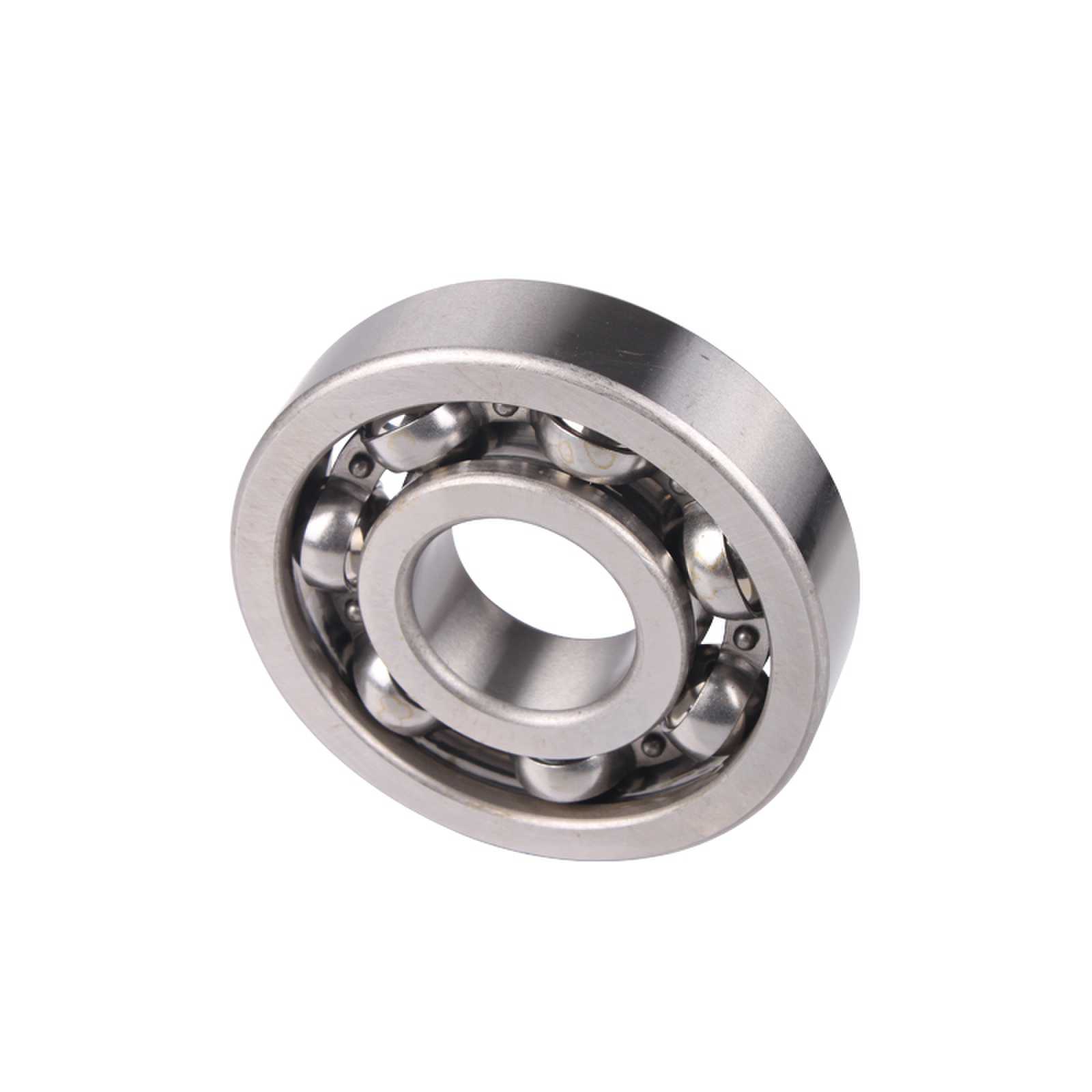
Single-row deep groove bearings (e.g., the ubiquitous 6000 and 6200 series) consist of one set of balls trapped between an inner and outer ring. Their design prioritizes low friction, high-speed capability, and ease of installation. They are the default choice for general-purpose applications where space is constrained and loads are moderate.
Double-row deep groove bearings (often designated with a “4″ prefix in older standards or specific manufacturer series like 4200/4300) essentially integrate two single-row bearings into a single unit. These bearings feature two parallel rows of balls, usually without filling slots, which significantly increases the load-carrying capacity within a similar outer diameter, though typically with a wider cross-section.
Key Differences at a Glance
To understand why one might be chosen over the other, we must look beyond the basic definition. The following table highlights the primary technical distinctions that influence selection:
| Feature | Single-Row Deep Groove Bearing | Double-Row Deep Groove Bearing |
|---|---|---|
| Load Capacity (Radial) | Standard capacity; suitable for light to medium loads. | Approximately 1.5x to 1.8x higher than single-row of same bore/OD. |
| Axial Load Capability | Moderate; handles axial loads in both directions but limited by contact angle. | Higher axial rigidity; better suited for combined loads with significant axial components. |
| Width (Cross-Section) | Narrowest profile; ideal for space-constrained designs. | Wider; requires more axial space but eliminates need for dual mounting. |
| Speed Limitations | Very high; lower friction and heat generation allow for superior RPM ratings. | Moderate; increased friction from two rows slightly reduces maximum permissible speed. |
| Alignment Sensitivity | Low; tolerates minor misalignment well. | Lower tolerance for misalignment; rigid structure demands precise shaft/housing alignment. |
| Cost & Complexity | Low cost; widely available; simple installation. | Higher cost; replaces two single bearings, potentially reducing assembly time. |
Application Matchups: Where Does Each Excel?
Selecting the right bearing is not just about load numbers; it is about matching the component to the operational environment. Our engineering team has analyzed thousands of use cases to identify clear patterns in application suitability.
When to Choose Single-Row Bearings
Single-row bearings are the workhorses of the industry. They are the optimal choice when:
- High Speed is Critical: Electric motors, spindle drives, and fans benefit from the lower frictional torque of a single ball row.
- Space is Limited: In compact gearboxes or handheld power tools, the narrow width of a single-row bearing is often the only fit.
- Loads are Predominantly Radial: If axial loads are negligible or very light, the extra capacity of a double-row bearing is unnecessary overhead.
- Cost Sensitivity: For high-volume consumer appliances, the cost savings of single-row units are significant.
When to Choose Double-Row Bearings
Double-row bearings shine in scenarios demanding robustness and rigidity. They are the preferred solution when:
- Heavy Combined Loads Exist: Applications like agricultural machinery, construction equipment, and heavy-duty conveyors often face simultaneous heavy radial and axial forces.
- Axial Space Allows, but Radial Space is Tight: If you cannot increase the outer diameter of the bearing but need more load capacity, widening the bearing (going double-row) is a strategic compromise.
- Replacement for Back-to-Back Pairs: Instead of mounting two single-row bearings back-to-back to handle axial loads in both directions, a single double-row unit simplifies the assembly, reduces alignment errors, and often lowers total system cost.
- Rigidity is Paramount: Machine tool axes and robotic joints require minimal deflection under load, a trait where the dual-row structure excels.
Performance Comparison in Real-World Scenarios
To further illustrate the trade-offs, consider the following comparison of how these bearings perform under specific stress conditions:
| Operational Scenario | Single-Row Performance | Double-Row Performance | Recommendation |
|---|---|---|---|
| High-Speed Motor (10,000+ RPM) | Excellent thermal stability; minimal heat buildup. | Risk of overheating; higher friction limits top speed. | Single-Row |
| Oscillating Motion (Pivoting Arm) | Good; handles reversal of axial load adequately. | Superior; higher rigidity prevents play during direction changes. | Double-Row |
| Contaminated Environment | Standard sealing options available. | Often available with reinforced seals on both sides due to wider width. | Double-Row (if sealed variant used) |
| Precision Instrumentation | High precision grades readily available. | Slightly higher runout potential due to complexity of two rows. | Single-Row |
Expert Insight: The Misconception of “Double the Life”
A common misconception in the industry is that a double-row bearing automatically offers double the service life of a single-row bearing. While the dynamic load rating ( C ) is significantly higher, life calculation ( L10 ) is exponential relative to load.
L10=(PC)3×10⁶ revolutions
Because the double-row bearing has a higher C value, if the applied load P remains constant, the life extension is substantial—often exceeding 3 to 4 times that of a comparable single-row bearing, not just double. However, if the application involves high speeds where lubrication becomes challenging, the life advantage may diminish due to thermal stress. This underscores the importance of consulting with bearing specialists to analyze the specific C/P ratio and operating conditions of your machinery.
Conclusion: Precision Matching for Maximum Efficiency
The decision between single-row and double-row deep groove bearings is a balance of space, speed, load, and cost. Single-row bearings remain the gold standard for high-speed, space-constrained, and cost-sensitive applications. In contrast, double-row bearings provide a powerful solution for heavy-duty environments requiring enhanced rigidity and load capacity without increasing the bearing’s outer diameter.
We leverage decades of tribological research and real-world field data to guide our clients toward the optimal bearing configuration. Whether you are designing a next-generation electric vehicle motor or reinforcing a heavy industrial conveyor, understanding these fundamental design differences is the first step toward achieving peak operational efficiency and longevity.
For detailed specification sheets, custom engineering support, or to discuss your specific application requirements, contact our technical sales team today. Let us help you keep the world turning, smoothly and efficiently.
Frequently Asked Questions (FAQ)
Q: Can I replace two single-row bearings with one double-row bearing?
A: Often, yes. A double-row bearing can replace a back-to-back or face-to-face pair of single-row bearings, simplifying assembly and improving alignment, provided the housing width accommodates the wider unit.
A: Often, yes. A double-row bearing can replace a back-to-back or face-to-face pair of single-row bearings, simplifying assembly and improving alignment, provided the housing width accommodates the wider unit.
Q: Do double-row bearings handle misalignment better than single-row?
A: No. Double-row bearings are more rigid and less tolerant of shaft or housing misalignment. Precise alignment is critical to prevent premature failure.
A: No. Double-row bearings are more rigid and less tolerant of shaft or housing misalignment. Precise alignment is critical to prevent premature failure.
Q: Are double-row bearings suitable for very high-speed applications?
A: Generally, no. The increased friction from two ball rows generates more heat, making single-row bearings the preferred choice for speeds exceeding 10,000 RPM unless specialized cooling is used.
A: Generally, no. The increased friction from two ball rows generates more heat, making single-row bearings the preferred choice for speeds exceeding 10,000 RPM unless specialized cooling is used.
Post time: Mar-23-2026