


The humanoid robot market is poised for an unprecedented explosion. With major tech giants and automotive manufacturers pouring billions into development, projections suggest that by 2030, millions of humanoid robots could be deployed in manufacturing, logistics, and even domestic settings. However, amidst the excitement over AI algorithms and actuator torque, a critical mechanical component often goes unnoticed: the miniature precision bearing.
As we stand on the brink of this robotics revolution, industry experts are increasingly identifying these tiny yet vital components as the primary bottleneck preventing mass scalability. Without advancements in miniature bearing technology, the dream of agile, durable, and cost-effective humanoid robots may remain just that—a dream.
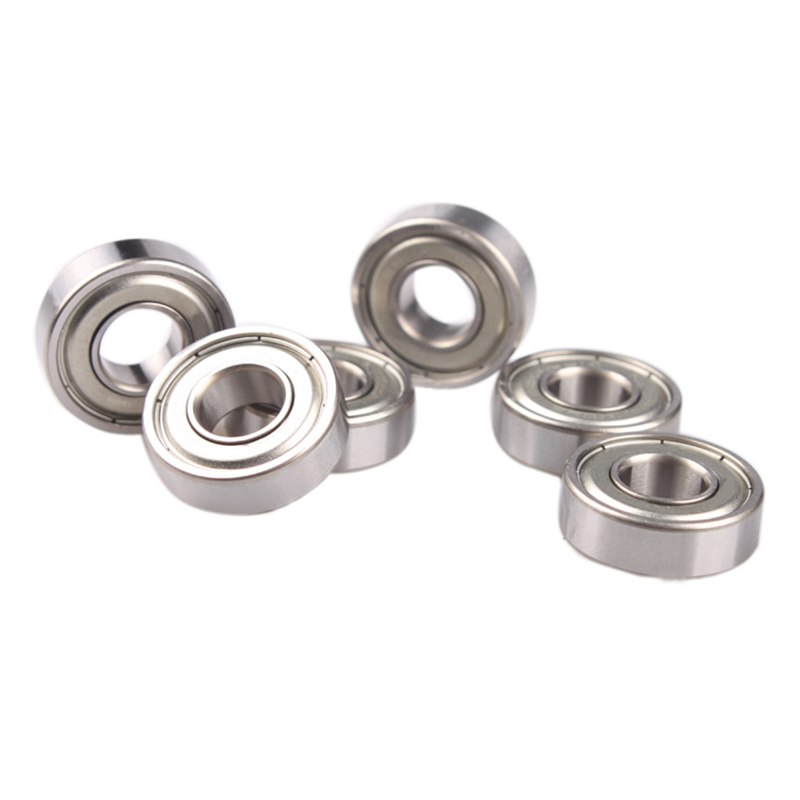
The Critical Role of Miniature Bearings in Humanoid Design
Humanoid robots require an extraordinary density of joints to mimic human movement. A typical adult human has over 200 joints; similarly, advanced humanoid prototypes like the Tesla Optimus Gen-2 or Figure 02 utilize between 40 to 50 high-torque actuators, each requiring multiple bearings. Unlike industrial arms that move in predictable patterns, humanoid robots must handle dynamic, multi-directional loads while maintaining extreme precision.
Miniature precision bearings (often with outer diameters less than 10mm) are embedded in finger joints, wrist rotators, ankle stabilizers, and neck mechanisms. They must operate under high speeds, withstand shock loads from falls or impacts, and maintain micron-level accuracy over millions of cycles. Failure in even a single bearing can lead to joint lock-up, erratic movement, or total system failure.
The Bottleneck: Why Supply and Technology Can’t Keep Up
The surge in demand has exposed significant gaps in both supply chain capacity and technological capability. Traditional bearing manufacturers optimized their lines for automotive or heavy industrial applications, where volumes are high, but precision requirements per unit are lower compared to robotics. Conversely, specialized aerospace bearing makers produce high-quality units but at costs and lead times incompatible with consumer-scale robotics.
Table 1: Comparison of Bearing Requirements Across Industries
| Feature | Automotive Industry | Aerospace Industry | Humanoid Robotics |
|---|---|---|---|
| Typical Bearing Size | Medium to Large (20mm+) | Custom/Medium | Micro/Miniature (<10mm) |
| Precision Grade | ABEC 5 / P5 | ABEC 7 / P4 | ABEC 9 / P2 or Better |
| Load Type | Radial, Steady | High Axial/Radial Mix | Dynamic, Multi-axis Shock |
| Lifecycle Expectancy | 100k – 200k hours | 50k hours (Critical) | 20k – 30k hours (High Cycle) |
| Cost Sensitivity | Extremely High | Low | Moderate to High |
| Production Volume Need | Millions/year | Thousands/year | Hundreds of Thousands/year |
As shown in Table 1, humanoid robotics occupies a unique and difficult niche. It demands aerospace-level precision and dynamic performance but requires automotive-level volume and cost efficiency. Currently, few manufacturers can bridge this gap.
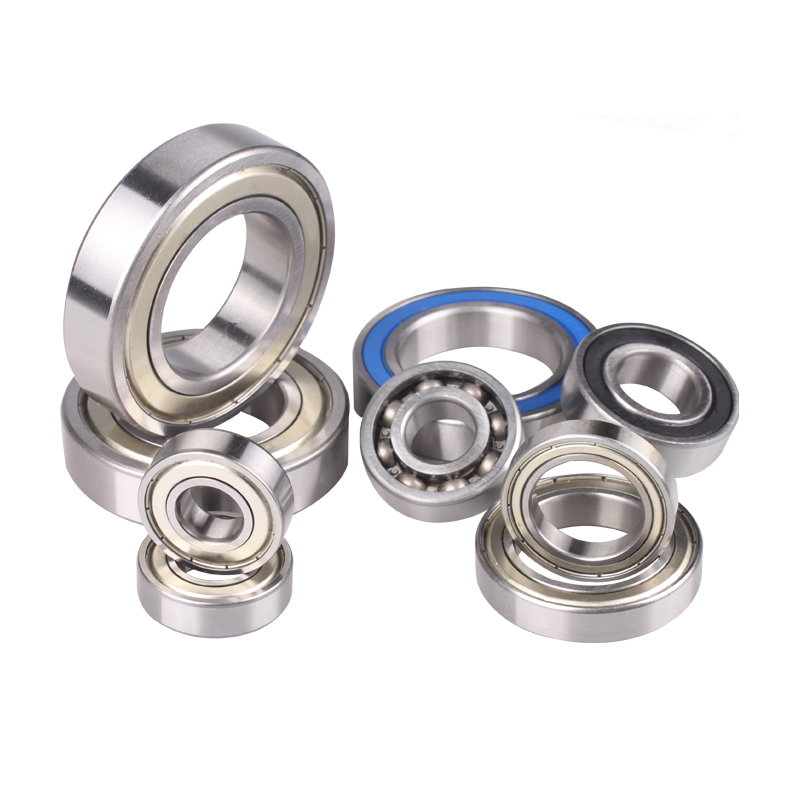
Material Science and Lubrication Challenges
The constraints aren’t just about size; they are deeply rooted in material science. In a humanoid robot’s finger joint, a bearing might spin at 10,000 RPM while supporting a gripping force. Standard steel bearings generate excessive heat and wear out quickly under these conditions. Furthermore, traditional grease lubricants can migrate or degrade in the tight tolerances of miniature bearings, leading to increased friction and eventual seizure.
Recent innovations have turned toward hybrid ceramic balls and specialized polymer cages to reduce weight and heat generation. However, scaling the production of these advanced materials remains a challenge. The supply chain for high-purity silicon nitride (used in ceramic balls) is limited, and the machining of ultra-thin bearing rings requires specialized grinding equipment that is currently backlogged globally.
Table 2: Performance Metrics of Emerging Bearing Technologies for Robotics
| Technology Type | Max RPM Capability | Friction Coefficient | Weight Reduction vs. Steel | Estimated Cost Increase | Suitability for Humanoids |
|---|---|---|---|---|---|
| Standard Chrome Steel | 8,000 | 0.0015 | 0% | Baseline | Low (Too heavy/friction) |
| Hybrid Ceramic (Si3N4) | 15,000+ | 0.0008 | 40% | +35% | High |
| Full Ceramic | 20,000+ | 0.0005 | 60% | +120% | Medium (Brittleness issues) |
| Advanced Polymer Composite | 12,000 | 0.0010 | 50% | +25% | Medium-High (Temp limits) |
Table 2 highlights that while Hybrid Ceramic bearings offer the best balance for humanoid applications, their cost premium and supply constraints make them a bottleneck for mass production. Manufacturers are forced to choose between prohibitive costs or compromising on robot performance and longevity.
The Path Forward: Collaboration and Innovation
Solving the miniature bearing bottleneck requires a paradigm shift in how bearing companies and robot developers collaborate. It is no longer sufficient for robot designers to simply pick a part from a catalog. Co-engineering is essential. Bearing manufacturers must integrate earlier in the design process to customize raceway geometries, optimize cage designs for specific motion profiles, and develop application-specific lubrication solutions.
At DEMY, we are already pioneering this approach. Our new “RoboCore” initiative partners directly with humanoid developers to create bespoke miniature bearing solutions. By utilizing AI-driven stress modeling and automated micro-manufacturing cells, we aim to reduce lead times by 40% while achieving ABEC 9 precision levels at near-automotive price points.
Key Strategic Recommendations for the Industry:
- Standardization of Interfaces: While robot designs vary, standardizing bearing housing dimensions for common joints (like fingers and wrists) could allow for larger batch production runs, driving down costs.
- Investment in Micro-Manufacturing: Significant capital must be directed toward expanding facilities capable of grinding and assembling sub-10mm components with nanometer-level accuracy.
- Lubrication R&D: Joint ventures between chemical companies and bearing manufacturers are needed to create long-life, low-migration lubricants specifically for high-speed miniature applications.
Conclusion
The humanoid robot revolution is not merely a software challenge; it is fundamentally a hardware hurdle. As AI becomes more capable, the physical limitations of the robot body become the defining factor in its utility. Miniature precision bearings are the unsung heroes—and currently, the silent blockers—of this future.
For the industry to mature, the supply chain must evolve from a “one-size-fits-all” model to a highly specialized, collaborative ecosystem. Only by addressing the precision, durability, and cost challenges of these tiny components can we unlock the full potential of humanoid robots, allowing them to walk, work, and interact with the world as seamlessly as humans do.
The race to build the perfect robot has begun, but the winners will likely be those who can master the smallest details.
Frequently Asked Questions (FAQ)
Q: Why are miniature bearings considered the bottleneck for humanoid robots?
A: Humanoid robots require hundreds of ultra-small, high-precision bearings that must withstand dynamic shock loads and high speeds. Current manufacturing capacity cannot meet the massive volume demands at the low cost points required for consumer robotics, while maintaining aerospace-level quality.
A: Humanoid robots require hundreds of ultra-small, high-precision bearings that must withstand dynamic shock loads and high speeds. Current manufacturing capacity cannot meet the massive volume demands at the low cost points required for consumer robotics, while maintaining aerospace-level quality.
Q: How many bearings does a typical humanoid robot need?
A: A standard advanced humanoid robot typically contains between 150 to 250 miniature bearings, distributed across fingers, wrists, elbows, knees, and ankles to enable fluid, human-like movement.
A: A standard advanced humanoid robot typically contains between 150 to 250 miniature bearings, distributed across fingers, wrists, elbows, knees, and ankles to enable fluid, human-like movement.
Q: What is the expected lifespan of a robot bearing?
A: For commercial viability, bearings in humanoid robots are engineered to last approximately 20,000 to 30,000 hours of continuous operation, enduring millions of start-stop cycles and occasional impact shocks.
A: For commercial viability, bearings in humanoid robots are engineered to last approximately 20,000 to 30,000 hours of continuous operation, enduring millions of start-stop cycles and occasional impact shocks.
Post time: Apr-09-2026