


The deep groove ball bearing is renowned for its reliability in standard industrial settings, but modern engineering often demands more. From the frozen tundra to the heart of a furnace, from chemical baths to the vacuum of space, equipment must operate in conditions that push components to their limits. This raises a critical question: can the classic deep ball bearing withstand such extremes, and how is it engineered to do so?
The Challenge Spectrum: Beyond Standard Operating Conditions
Extreme environments present unique assaults on bearing integrity:
Temperature Extremes: Sub-zero temperatures thicken lubricants and embrittle materials, while high temperatures degrade lubricants, soften metals, and induce thermal expansion.
Corrosion and Chemicals: Exposure to water, acids, alkalis, or solvents can rapidly pit and degrade standard bearing steel.
Contamination: Fine abrasives (dust, grit), conductive particles, or fibrous materials can infiltrate, causing accelerated wear and electrical damage.
High Vacuum or Cleanrooms: Lubricants can outgas, contaminating the environment, while standard greases fail to function.
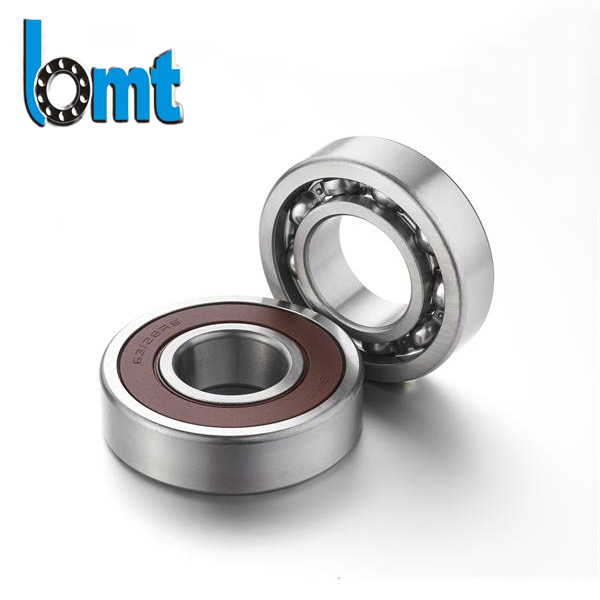
Engineering Solutions: Tailoring the Standard Bearing
To meet these challenges, the standard deep groove ball bearing is transformed through specialized materials, treatments, and designs.
1. Conquering Temperature Extremes
High-Temperature Bearings: Utilize heat-stabilized steels (like tool steels), specially formulated high-temperature greases (silicone, perfluoropolyether), and cages made from silver-plated steel or high-temperature polymers (polyimide). These can operate continuously at temperatures exceeding 350°C.
Cryogenic Bearings: Designed for liquefied gas pumps and aerospace applications. They use materials that retain toughness at very low temperatures (e.g., specific stainless steels), special lubricants like molybdenum disulfide or PTFE-based compounds, and precise internal clearance to account for severe material contraction.
2. Battling Corrosion and Chemicals
Stainless Steel Bearings: The primary defense. Martensitic 440C stainless steel offers good corrosion resistance and hardness. For more aggressive environments (food, pharmaceutical, marine), highly corrosion-resistant AISI 316 stainless steel or ceramic (silicon nitride) balls are employed.
Special Coatings and Treatments: Surfaces can be coated with black oxide, zinc-nickel, or engineered polymers like Xylan® to provide an inert barrier against corrosive agents.
3. Sealing Against Contamination
In severely dirty or wet environments, the sealing system is the first line of defense. This goes beyond standard rubber seals.
Heavy-Duty Sealing Solutions: Triple-lip contact seals, made from chemical-resistant compounds like FKM (Viton®), are used. For the most abrasive environments, labyrinth seals combined with grease purging systems can be specified to create a nearly impenetrable barrier.
4. Operating in Special Environments
Vacuum and Cleanroom Bearings: Use vacuum-degassed steels and special dry lubricants (e.g., silver, gold, or MoS2 coatings) or are designed to run unlubricated with ceramic components to prevent outgassing.
Non-Magnetic Bearings: Required in MRI machines and precision instruments. These are crafted from austenitic stainless steels (AISI 304) or ceramics, ensuring zero magnetic interference.
Application Spotlight: Where Extreme Bearings Prove Their Worth
Food & Beverage Processing: 316 stainless steel deep groove ball bearings with FDA-approved lubricants withstand daily high-pressure washdowns with caustic cleaners.
Mining & Quarrying: Bearings with ultra-heavy-duty seals and tungsten carbide coatings survive in slurry pumps and crushers filled with abrasive mud.
Aerospace Actuators: Lightweight, vacuum-compatible bearings ensure reliable operation in the extreme temperature and pressure swings of flight.
Conclusion: The Adaptable Workhorse
The deep groove ball bearing proves that a fundamentally sound design can be adapted to thrive almost anywhere. By strategically selecting materials, lubricants, seals, and heat treatments, engineers can specify a deep ball bearing that is no longer just a standard component, but a custom-engineered solution for survival. This adaptability ensures that even in the planet’s harshest conditions, the principles of smooth, reliable rotation can endure. Specifying the correct extreme-environment bearing is not an extra cost—it is an investment in guaranteed uptime and mission success.
Post time: Dec-16-2025