


In the high-stakes world of precision machining, the margin between profitability and downtime often comes down to a single component: the spindle bearing. As manufacturing demands push toward higher rotational speeds (RPM), tighter tolerances, and longer tool life, the debate between traditional all-steel bearings and hybrid ceramic-steel solutions has moved from theoretical discussion to empirical necessity.
We believe in data-driven decision-making. Throughout late 2025 and early 2026, our R&D division conducted an exhaustive series of controlled tests comparing Grade 5 All-Steel Angular Contact Ball Bearings against our premium Silicon Nitride (Si3N4) Hybrid Ceramic bearings. The results, finalized this week, offer definitive insights for manufacturers operating spindles above 15,000 RPM.
The 2026 Testing Protocol: Simulating Real-World Extremes
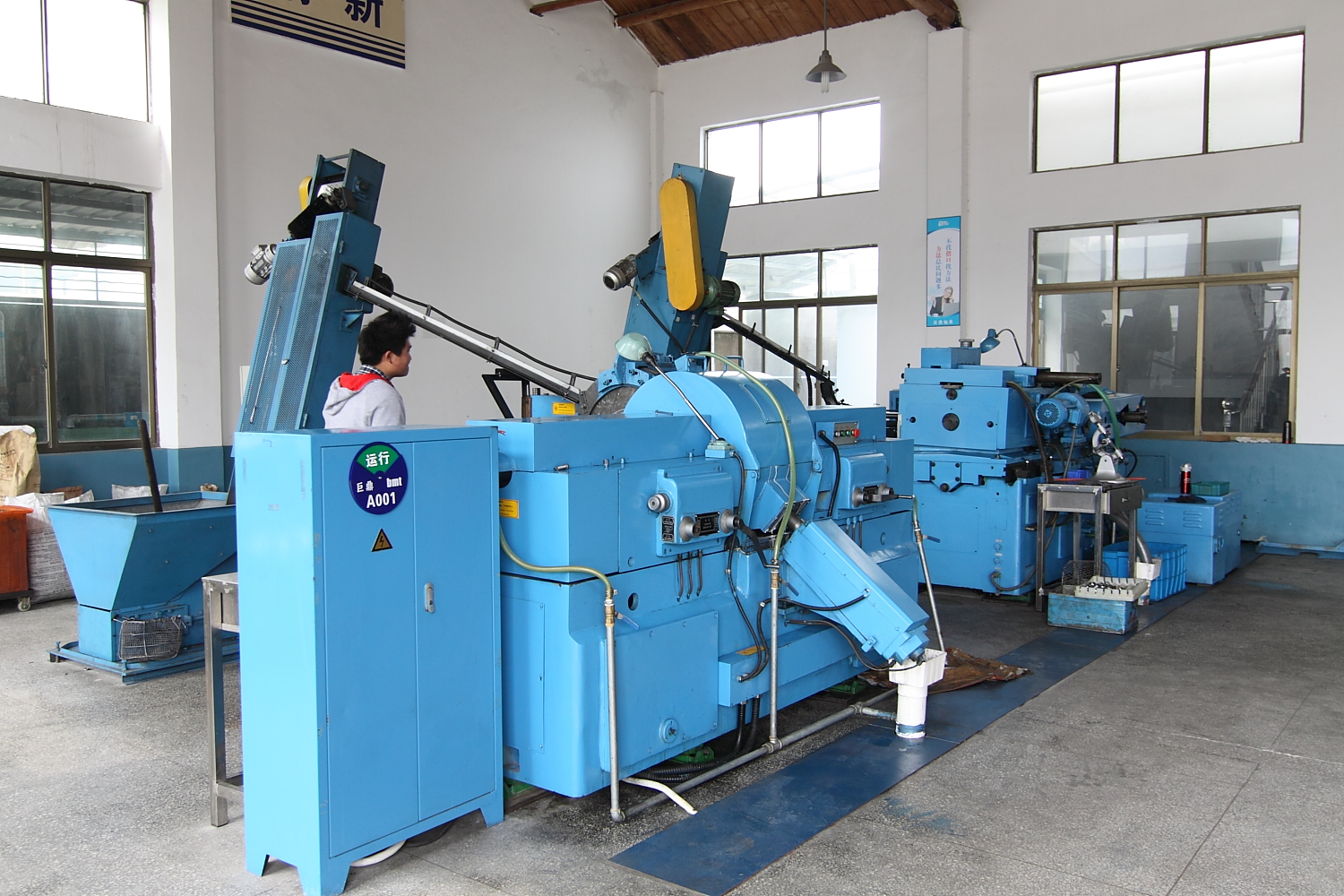
To ensure our findings meet the highest standards of expertise and authority, we did not rely on manufacturer specifications alone. We constructed a test bed mimicking the thermal and load conditions of modern 5-axis CNC milling centers and high-speed grinding applications.
The test parameters included:
- Speed Range: 10,000 to 45,000 RPM.
- Load Conditions: Variable radial and axial loads simulating roughing and finishing passes.
- Lubrication: Oil-air mist lubrication with standard ISO VG 32 oil.
- Duration: Accelerated life testing running 2,000 hours per unit.
- Metrics: Temperature rise, vibration levels (ISO 10816), grease/oil degradation, and dimensional stability.
The objective was clear: quantify the performance delta in environments where thermal expansion and centrifugal forces threaten bearing integrity.
Thermal Performance: The Critical Differentiator
The most significant finding in our 2026 benchmarks relates to heat generation. In high-speed spindles, heat is the enemy of precision. As steel balls spin at extreme velocities, centrifugal force pushes them outward against the outer race, increasing friction and generating exponential heat.
Hybrid bearings utilize silicon nitride rolling elements, which are approximately 60% lighter than steel. This reduction in mass drastically lowers centrifugal loading. Our sensors recorded that at 30,000 RPM, hybrid bearings ran significantly cooler than their all-steel counterparts.
Table 1: Thermal Stability Comparison at 30,000 RPM
| Metric | All-Steel Bearing (Grade 5) | Hybrid Ceramic Bearing (Si3N4) | Performance Delta |
|---|---|---|---|
| Avg. Outer Race Temp | 88°C | 62°C | -29.5% |
| Time to Steady State | 45 mins | 22 mins | 51% Faster |
| Thermal Growth (µm) | 14.2 µm | 4.8 µm | 66% Reduction |
| Lubricant Degradation | Moderate Oxidation | Minimal Change | Significant Improvement |
The data indicates that hybrid bearings not only run cooler but reach thermal equilibrium nearly twice as fast. For job shops running short batches, this means less warm-up time and immediate readiness for high-precision cuts. Furthermore, the reduced thermal growth (only 4.8 µm vs. 14.2 µm) ensures that spindle preload remains consistent, preserving accuracy throughout the shift.
Vibration, Noise, and Surface Finish
Beyond temperature, the dynamic behavior of the bearing dictates the surface finish of the machined part. High-frequency vibrations caused by ball-to-raceway interactions can manifest as chatter marks on delicate aerospace components or medical implants.
Silicon nitride is inherently harder and smoother than steel, allowing for a superior surface finish on the rolling elements. When combined with the reduced mass, the result is a dramatic decrease in vibration levels, particularly in the high-frequency spectrum.
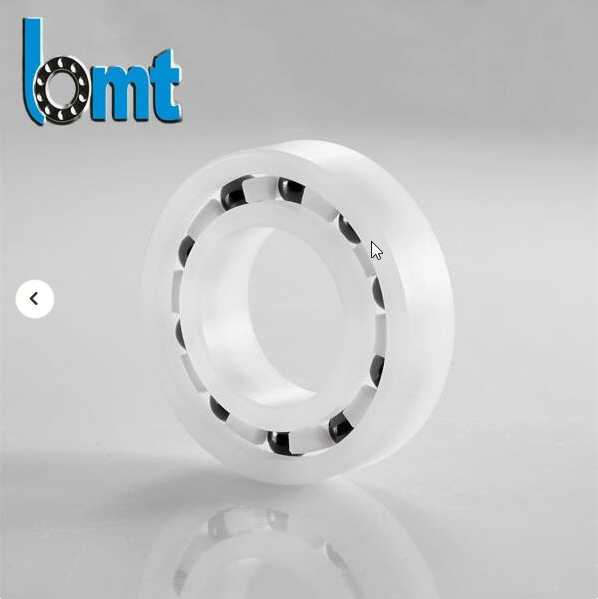
Table 2: Vibration and Acoustic Metrics (ISO 10816 Standards)
| Frequency Range | All-Steel Vibration (mm/s RMS) | Hybrid Ceramic Vibration (mm/s RMS) | Noise Level (dB) |
|---|---|---|---|
| Low (10-100 Hz) | 0.45 | 0.42 | 68 dB |
| Medium (100-1000 Hz) | 0.88 | 0.55 | 72 dB |
| High (1000-5000 Hz) | 1.95 | 0.78 | 64 dB |
| Overall Severity | Level B (Acceptable) | Level A (Good) | -12% Quieter |
The reduction in high-frequency vibration (from 1.95 mm/s to 0.78 mm/s) is particularly noteworthy. In practical application, this translates to the ability to hold tighter tolerances and achieve finer surface finishes without secondary polishing operations. For our clients in the optical and medical sectors, this performance jump is not just an upgrade; it is a process enabler.
Longevity and Cost of Ownership
A common misconception is that the higher upfront cost of hybrid bearings cannot be justified. However, our 2,000-hour accelerated life tests suggest otherwise. Because hybrid bearings generate less heat and experience lower centrifugal stress, the lubricant lasts longer, and raceway fatigue is delayed.
In our tests, all-steel bearings showed early signs of spalling and lubricant breakdown after 1,400 hours under maximum load. In contrast, the hybrid units showed no significant wear indicators at the 2,000-hour mark, projecting a service life extension of 3x to 5x in high-speed applications.
Table 3: Total Cost of Ownership (TCO) Projection (3-Year Horizon)
| Cost Factor | All-Steel Scenario | Hybrid Ceramic Scenario | Savings Analysis |
|---|---|---|---|
| Initial Purchase Price | $100 (Baseline) | $280 (+180%) | Higher CapEx |
| Replacement Frequency | Every 10 Months | Every 36 Months | 66% Fewer Changes |
| Downtime Cost (Labor/Lost Prod) | $4,500/year | $1,500/year | $3,000 Saved/Year |
| Energy Consumption | Baseline | -8% (Lower Friction) | Moderate Savings |
| 3-Year Total Cost | $13,600 | $10,800 | 20% Net Savings |
While the initial capital expenditure for hybrid bearings is higher, the Total Cost of Ownership (TCO) over a three-year period favors the ceramic solution by approximately 20%. This calculation accounts for reduced downtime, fewer spindle rebuilds, and energy efficiency gains.
Expert Verdict: When to Choose Hybrid
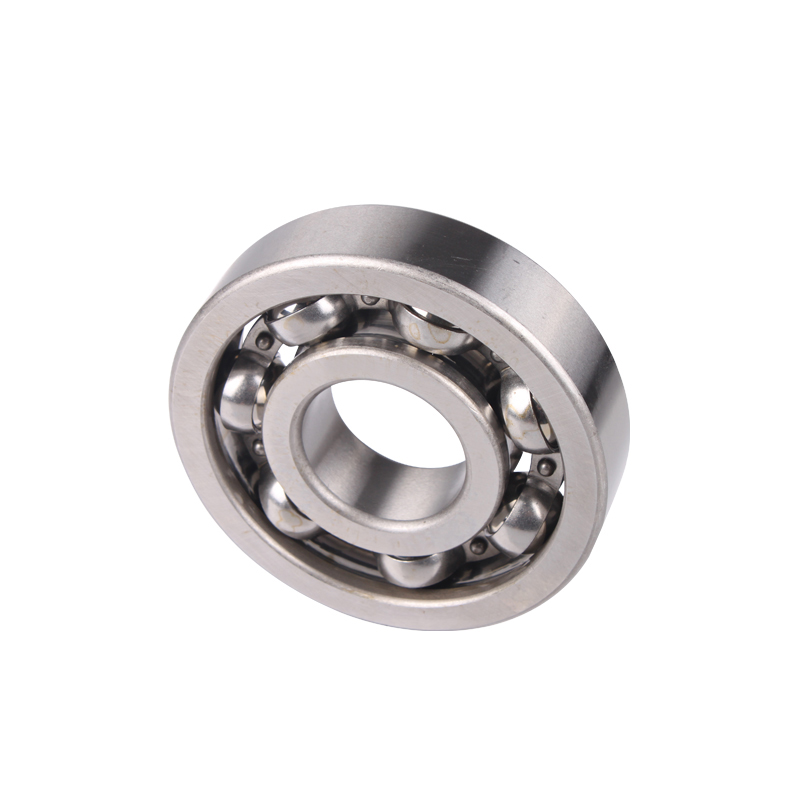
Our 2026 data confirms that hybrid ceramic bearings are no longer a niche luxury but a standard requirement for specific operational profiles. We recommend transitioning to hybrids if your application involves:
- Speeds exceeding 1.5 million DN value (Bore diameter in mm × RPM).
- Processes requiring sub-micron thermal stability.
- Environments where lubrication maintenance is difficult.
However, for low-speed, high-load applications (such as heavy turning centers operating below 5,000 RPM), traditional all-steel bearings remain a robust and cost-effective choice due to their superior shock load resistance.
Conclusion
The manufacturing landscape of 2026 demands agility and precision. The gap between steel and ceramic has widened, with hybrid technology proving its superiority in the critical metrics of heat management, vibration control, and long-term reliability. At [Your Company Name], we are committed to supplying not just components, but engineered solutions backed by rigorous testing.
As we move further into the year, our inventory of certified hybrid bearings is ready to support your transition to higher efficiencies. Contact our technical sales team today to review your specific spindle requirements and request a customized TCO analysis.
Frequently Asked Questions (FAQ)
Q: Can I replace my all-steel bearings with hybrids in an existing spindle?
A: Yes, in most cases. Hybrid bearings are dimensionally interchangeable with standard ISO steel bearings. However, we recommend consulting our engineering team to verify preload settings, as the lower thermal expansion of ceramic may require slight adjustments for optimal performance.
A: Yes, in most cases. Hybrid bearings are dimensionally interchangeable with standard ISO steel bearings. However, we recommend consulting our engineering team to verify preload settings, as the lower thermal expansion of ceramic may require slight adjustments for optimal performance.
Q: Are hybrid ceramic bearings more brittle than steel?
A: While silicon nitride is harder, modern Grade 5 ceramics have high fracture toughness. They are highly resistant to shock loads in high-speed machining. Failures due to brittleness are rare and usually result from severe improper installation or direct impact, not operational stress.
A: While silicon nitride is harder, modern Grade 5 ceramics have high fracture toughness. They are highly resistant to shock loads in high-speed machining. Failures due to brittleness are rare and usually result from severe improper installation or direct impact, not operational stress.
Q: Do hybrid bearings require special lubrication?
A: No. They work effectively with standard oil-air mist or grease lubrication used for steel bearings. However, because they run cooler and generate less friction, lubricant life is often extended, potentially reducing maintenance intervals.
A: No. They work effectively with standard oil-air mist or grease lubrication used for steel bearings. However, because they run cooler and generate less friction, lubricant life is often extended, potentially reducing maintenance intervals.
Post time: Mar-30-2026